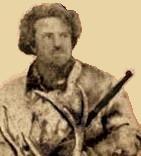
Walter Earl Durand
Spree killer Monroe Hickson
Spree killer · USA · 1946
Monroe Hickson was a native of South Carolina. He was nicknamed "Blue Boy". He…
4 victims
Monroe Hickson
Spree killer · USA · 1946
Monroe Hickson was a native of South Carolina. He was nicknamed "Blue Boy". He…
4 victims
 Paul John Knowles
Spree killer · USA · 1974
Paul John Knowles (April 17, 1946 – November 18, 1974) was an American spree ki…
35 victims
Paul John Knowles
Spree killer · USA · 1974
Paul John Knowles (April 17, 1946 – November 18, 1974) was an American spree ki…
35 victims
 Mark Barton
Spree killer · USA · 1999
Mark Orrin Barton (1955 – July 29, 1999) committed a spree killing in Stockbrid…
12 victims
Mark Barton
Spree killer · USA · 1999
Mark Orrin Barton (1955 – July 29, 1999) committed a spree killing in Stockbrid…
12 victims
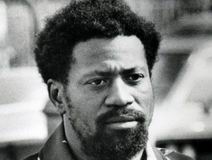 Bobby Joe Maxwell
Spree killer · USA · 1978
Name: Bobby Joe Maxwell Sex: M Race: B Type: T Motive: PC-nonspecific Method of…
11 victims
Bobby Joe Maxwell
Spree killer · USA · 1978
Name: Bobby Joe Maxwell Sex: M Race: B Type: T Motive: PC-nonspecific Method of…
11 victims
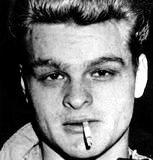 Charles Starkweather
Spree killer · USA · 1957
Charles Raymond Starkweather was born in Lincoln, Nebraska, on November 24, 193…
11 victims
Charles Starkweather
Spree killer · USA · 1957
Charles Raymond Starkweather was born in Lincoln, Nebraska, on November 24, 193…
11 victims
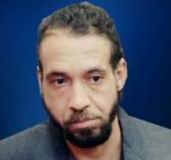 Julio Gonzalez
Mass murderer · USA · 1990
Julio Gonzalez was sentenced to 174 twenty-five-year sentences (a total of 4,35…
87 victims
Julio Gonzalez
Mass murderer · USA · 1990
Julio Gonzalez was sentenced to 174 twenty-five-year sentences (a total of 4,35…
87 victims
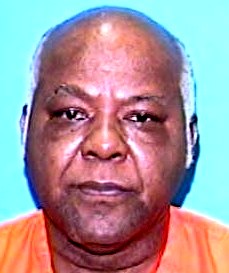 Jack Dempsey Ferrell
Murderer · USA · 1981
Defendant: Jack Dempsey Ferrell Date of birth: 08/05/40 District/County/Case nu…
2 victims
Jack Dempsey Ferrell
Murderer · USA · 1981
Defendant: Jack Dempsey Ferrell Date of birth: 08/05/40 District/County/Case nu…
2 victims
 James Kraig Kahler
Mass murderer · USA · 2009
James Kraig Kahler resided in Columbia, Mo., after moving back to Kansas shortl…
4 victims
James Kraig Kahler
Mass murderer · USA · 2009
James Kraig Kahler resided in Columbia, Mo., after moving back to Kansas shortl…
4 victims
- Gender
- male
- Country
- USA
- Location
- Park County, Wyoming, USA
- Date of birth
- January 9, 1913
- Age at first offence
- 26
- Characteristics
- escape, bank r obbery
- Victim profile
- Deputy Sheriff D. M. Baker, 69, and Town Marshal Chuck Lewis, 44 / O.H. Linabary and Art Argento / Johnny Gawthrop (bank teller)
- Method of murder
- Shooting
- Date(s) of murder
- March 16-24, 1939
- Years active
- 1939
- Date of arrest
- —
- Status
-
Died in custody
Killed during a bank robbery on March 24, 1939
Case record: Walter Earl Durand
Identity
Walter Earl Durand (1913-1939) was an only son of Walter W. and Effie Durand. His parents moved from Rockville, Missouri, to Powell, Wyoming, in the years before his death. He had two older sisters, Laura and Ina Mae, and a younger sister, Mildred.
Background
Durand lived off the land in the mountains of Wyoming during the years following the Depression. He taught himself to live in the wilderness and was described as a crack shot with a variety of weapons.
He lived in a wall tent behind his parents’ home. He quit school after the eighth grade and devoted himself to a life in the outdoors. His sister Mildred described him working on farms haying and taking care of cattle on the range to earn money for things he needed. He spent weeks at a time in the Absaroka Mountains west and north of Cody and fought forest fires in Oregon. He traveled on horseback and foot to Mexico and back. Durand had a natural talent for hunting and trapping, according to Mildred.
A family friend stated, "No one could exaggerate what a good shot he was." It was said he could put four rifle bullets through a thrown baseball before it hit the earth. When the rifle ceased to be a challenge, he began to use a bow and arrow.
Durand was described as six feet two inches tall, blond and blue-eyed, weighing close to 250 pounds. He ran miles every day and reportedly could cover 40 miles a night at a lope. His family said he read the Bible five times through, and he was particularly fond of a small Bible given to Earl in 1917 that had been given to his aunt in 1872.
The offence
On March 13, 1939, Durand and three companions, Gus Knopp and two teenage boys, killed four elk out of season out of the north fork of the Shoshone River west of the town of Cody, Wyoming, on the road to Yellowstone Park.
On March 24, 1939, Durand drove a car toward Powell and then approached the First National Bank. He announced he was robbing the bank and ordered employees and customers to line up facing a wall. He took between $2000 and $3000 from cash drawers. During the robbery he shot out windows in the bank and nearby buildings for about ten minutes, using an estimated 40-60 rounds. He tied up the bank president and two other bank employees and forced them to walk out in front of him. One hostage was shot and killed when a volley of bullets met them at the door, and Durand returned fire.
Tipton Cox, a seventeen year old Powell high school junior skipping his afternoon classes, was across the street at a gas station and was handed a rifle by the gas station manager during the robbery. Cox fired at Durand when Durand leveled his rifle at him. The bullet hit Durand in the chest, knocked him off his feet, and caused him to stagger back into the bank. Durand shot himself once in the neck. Within moments, the bank president freed himself, picked up Durand’s own rifle, and shot Durand once in the head.
Investigation
Game wardens Dwight King and Boyd Bennion began an investigation after a resident reportedly notified the authorities about the March 13 poaching. They waited at Wylie Sherwin’s Trail Shop at the Shoshone Forest boundary for the hunters to return with evidence.
A Cody Enterprise quotation described a car stopping in pitch darkness and an attempted halt by the wardens, ending with the driver missing Warden King by only a few inches. The quotation continued: "Finally in pitch darkness, a car came roaring down the highway. The two wardens tried to halt it by standing in its way. Slowing down only slightly, it missed Warden King by only a few inches. Warden Bennion sprang onto the running board, whereupon the occupants tried to throw him off until he poked his gat [pistol] into the driver's ribs, saying, 'Stop, or I'll stop you!'"
Durand, carrying his rifle, jumped from the car on the passenger side and disappeared into the darkness. The game wardens brought Knopp, the two boys, and the portions of the elk found in the trunk of the car into Cody to the jail.
After Durand’s jail escape on March 16, police and a posse searched for him for days. Sheriff Blackburn requested bloodhounds from the Colorado State Penitentiary at Canyon City. The bloodhounds were not successful. Durand later said he spent the time hiding "in the willows along Bitter creek," about a mile and a half north of Powell.
As Durand’s escape approached the Wyoming/Montana border, Montana mobilized the National Guard armed with a mortar and a howitzer. Pilot Bill Monday flew to Casper, Wyoming, to pick up supplies and returned to deliver howitzer and tear gas-related equipment.
Arrest and pre-bank proceedings
After his initial elk poaching, Durand was arrested and jailed in Cody.
Two game wardens began an investigation and eventually Durand was involved in an encounter that led to his arrest alongside Gus Knopp and two teenage boys. In the absence of Sheriff Frank Blackburn who was in California, his daughter Janet admitted the three culprits to the jail. The ten pieces of elk were to be sold at auction three days later.
Court outcomes in early proceedings
Knopp was sentenced by Judge W. S. Owens to two months in jail and a $100 fine for having two elk in his possession. The two youths were paroled after what was described as a blistering lecture by Judge Owens.
Durand pleaded guilty to killing two elk and was sentenced to six months in jail and a $100 fine.
Later, Oliver Steadman filed a felony charge against Durand charging him with killing a cow belonging to John Yost, after the oral tradition and multiple accounts about Durand being teased or discussed regarding the felony cattle killing charge while in jail.
Timeline
- January 9, 1913 — Walter Earl Durand was born.
- March 13, 1939 — Durand and Gus Knopp and two teenage boys killed four elk out of season out of the north fork of the Shoshone River west of the town of Cody on the road to Yellowstone Park.
- March 16, 1939 — Durand escaped the Cody jail by assaulting Undersheriff Noah Riley with a milk bottle and taking Riley’s revolver and an additional rifle; he forced Riley to drive him to his parents’ home near Powell; Durand shot and killed Deputy Sheriff D. M. Baker and Town Marshal Chuck Lewis in the driveway; Charley Lewis died later that night.
- March 19, 1939 — A funeral was held for Charley Lewis, age 44, with 400 veterans from northwest Wyoming gathering; the search for Durand continued.
- March 20, 1939 — D. M. Baker, age 70, was buried; Sheriff Blackburn located police-trained bloodhounds at the Colorado State Penitentiary at Canyon City.
- March 21, 1939 — Durand appeared at the Herf Graham home northeast of Powell, took Herf’s note of the serial number of a rifle, insisted Glasgow’s gun be returned, left a letter for Sheriff Blackburn, and later demanded ammunition at the Harley Jones farm.
- March 22, 1939 — Durand arrived at the Art Thornberg home around 4:00 a.m., asked to be driven to the vicinity of the Clarks Fork Canyon, and afterward the Thornbergs alerted Sheriff Blackburn.
- March 23, 1939 — Tear gas guns and grenades were obtained and attempted; Blackburn recovered the bodies of Art Argento and Orville Linaberry after they were killed during an attempt to rush Durand’s position; Durand escaped again.
- March 24, 1939 — Durand commandeered Harry Moore’s car, traveled through the Powell and Deaver area, parked near the First National Bank, robbed the bank and shot inside it; Tipton Cox shot Durand in the chest; Durand died after the bank president shot him in the head.
Jail escape and killings of law enforcement officers
On March 16, during the evening meal, Undersheriff Noah Riley brought Durand his supper. When Riley opened Durand’s cell, Durand grabbed the milk bottle, hit Riley over the head, took Riley’s revolver and an additional rifle, and prepared to escape. With Riley as a hostage, Durand forced him to drive him to his parents’ home near Powell, about 25 miles away, to get provisions and gear.
Durand shot and killed Deputy Sheriff D. M. Baker, age 69, and Town Marshal Chuck Lewis, age 44, in the driveway of his parents’ home. Baker died at the scene. Charley Lewis was taken to the hospital by Durand’s parents and died later that night; the bullet that killed him pierced his side beneath his heart and shattered on the backbone, cutting the spinal cord.
Riley escaped during the commotion after Lewis and Baker were shot and was injured with a brain concussion, and he was treated and ordered to rest.
Manhunt
By early morning on March 17, a posse of nearly 50 men under Game Warden Tex Kennedy left Cody in a snowstorm with orders to shoot to kill. Eventually four groups totaling approximately 100 men were deployed to patrol hills and the area around Durand’s home. By daylight on Friday, local pilot Bill Monday searched from the air for tracks and neither he nor the posse found any sign of Durand. Searches continued without success as Sheriff Blackburn arrived.
A confrontation quote from Sheriff Blackburn described the situation: "We haven't got him cornered by any means. He's got us cornered."
Bloodhounds arrived from the Colorado State Penitentiary and were not successful. Their handler suspected tracking difficulty because Durand was wearing rubber boots. During the days of hiding, Durand eluded arrest by fleeing to and hiding in the mountains.
Attempts to storm Durand’s position resulted in the deaths of Arthur Argento (age 50) and Orville Linaberry (age 40), each killed when they approached within about forty yards of Durand and were shot. Argento and Linaberry’s shoes, laces, and weapons were later described as taken or missing, and their bodies were not retrieved until later during Blackburn’s decision to retrieve them.
Durand’s letter and related quotations
On March 21 Durand left a letter for Sheriff Blackburn at the Herf Graham home. The return address on the envelope was Earl Durand, Undertaker's Office, Powell, Wyoming. Before the letter contents were given, Durand was described as ending with: "Of course I know that I'm done for and when you kill me I suggest you have my head mounted and hang it up in the courthouse for the sake of law and order. Your beloved enemy, Earl Durand."
The Tribune reprinted Durand’s letter and the original letter followed verbatim: "My Dear Mr. Blackburn: That was one dirty trick for you to jail those 2 boys just because I got away. If you send them over the road I will kill you and that blankety blank district attorney if I live long enough and possibly can. Tell King and Kennedy to always carry a pistol. If I ever meet them I will give them a chance for an even draw--something I would give you if you put up those boys. Tell the man whose beef I killed that if I live long enough to get back in the mts. that he has nothing to fear from me. I hope I never see him again. When you get after me better take about 20 men? for your body guard and put braces on their knees. Of coarse I know that I'm done for and when you kill me I sugest you have my head mounted and hang it up in the court house for the sake of law and order. p.s. I know where King lives, so he may expect me around any time to shake hands. Durand lists his return address as the county morgue."
Bank robbery on March 24, 1939
On March 24, Harry Moore, a radio operator stationed at the Hopkins ranch, drove toward the posse base camp with John Simpson and Simpson’s 86-year-old father Peter. A man sitting on a boulder flagged down the car. The man identified himself as a posse member and requested a ride to the base camp, explaining he had left his bedroll by the road.
Durand identified himself to Harry Moore and requested the car be turned around headed toward Powell. The route from Clark went through Badger Basin along the Sand Coulee route to Ralston, then through the south outskirts of Powell to Deaver, 16 miles away, to the railroad depot where Durand reportedly picked up 300 rounds of ammunition he had previously ordered. Durand took Moore into the depot with him, leaving the Simpsons in the car.
At Deaver, Durand noticed the car was low on gas and filled it up for $2.70, which he told Moore was only right under the circumstances. They returned to Powell. Durand stopped at his parents’ home behind which he lived in a tent and picked up belongings. Durand told his parents goodbye.
Durand directed Harry Moore to drive north of Powell toward the Pine Bluffs coal mine, arriving about 12:30 PM. He told the men he was taking the car and they could walk three miles to the nearest ranch. He asked Moore if the car was insured and seemed pleased to find it was covered by theft insurance. As Durand drove away, he called out, "Come to my funeral, boys," and honked the horn as he disappeared over the hill.
By 1:30, Durand parked Moore’s Buick 100 feet east of the First National Bank in Powell. Carrying a pack on his back and a .30-.30 rifle, he approached the bank president Bob Nelson and announced he was robbing the bank. Nine people were in the bank at the time: five customers and four employees. The employees named were Bob Nelson, Vice President Edgar Swallow, Maury Knutson, and teller Johnny Gawthrop. The customers named were Dr. J.C. Stahn, Harry Hecht, E. P. Guenther, Mrs. Jimmie Dunton, and her mother, Mrs. Laura Dooley.
Durand ordered employees and customers to line up facing the wall. Maurice Knutson convinced Durand the safe could not be opened because of a time lock. Durand emptied cash drawers, taking between $2000 and $3000. Durand then shot out the windows.
At a point where the bank president and two other hostages were forced out, Johnny Gawthrop was mortally wounded. Tipton Cox, described as seventeen, was across the street at a gas station and was given a rifle by the gas station manager. Guns were fired from all directions during the panic.
A detailed first-person account by Maury Knutson described the sequence inside the bank. Knutson said the vault shot hit the vault and then: "Earl Durand said, 'I want more money just the same.'" Knutson described the safe time lock and his attempt to comply, and he quoted Gawthrop’s statement: "he had set the time lock and that it couldn't open until after 3:00." Knutson also stated: "'I want more money just the same.'" Knutson said Durand called him a liar and described his own fear, describing Durand bared his teeth. Knutson then described opening the vault and getting money from the safe deposit box, stating that there was about $2,000 in the box as he recalled. He described being tied, and he quoted Durand rejecting Edgar Swallow: "No, I don't want you. You get back in line. I want this man." Knutson further quoted Durand’s planned actions and described the binding with rope and the onslaught of firing.
Knutson’s account included a quote about the bank president picking up Durand’s rifle after cutting him loose. He then stated Durand staggered back into the bank and: "got on the other side of the vestibule two to three feet from me and pulled out one of his six-shooters and killed himself." Knutson described additional firing after Durand’s suicide and described his own gunfire and fear.
Knutson also described the crowd and that he screamed: "put his gun down." He described sending a telegram to his parents in Wisconsin. He concluded that townspeople did not realize it was Durand until he stepped from the door shielding himself behind Johnny Gawthrop.
Durand was shot in the chest by Tipton Cox. Durand then crawled back into the bank lobby and managed to shoot himself once in the neck. Within moments, Bob Nelson freed himself, picked up Durand’s own rifle, walked into the bank, and shot Durand once in the head.
Death, funeral, and burial
Durand died after being shot during the bank robbery on March 24, 1939.
His body was taken to Easton's Funeral Home. A demand developed for people to see him, and Durand was placed on a couch in the foyer so that people could file by. After crowds gathered, a private funeral was held on Sunday afternoon at 4:00. A short procession of cars escorted Earl Durand to Crown Hill Cemetery east of Powell. Durand’s body was buried there; only Durand’s body was buried.
Other deaths during the manhunt
Charley Lewis was buried on Sunday morning March 19 after being survived by a wife and two daughters, ages 14 and 16. D. M. Baker was buried Monday afternoon March 20 and was survived by his wife and three grown children.
Arthur Argento and Orville Linaberry were killed during the attempt to rush Durand’s position. Argento was survived by his wife and four children ranging in age from six to twenty-four. Linabary had two sons, ages seven and eleven.
Other details
Durand’s escape included taking the posse’s radio operator’s radio operator car and forcing him to drive him back to Powell, and Durand also slipped from his perch in the night, taking Linaberry’s shoes, the laces from Argento’s boots, Argento’s deputy badge, and their weapons, and then disappeared.
Durand used guns and forced hostages during the manhunt and the bank robbery. The bank robbery was described as widely broadcast, and people poured into the streets and gathered around the bank, with crowds seeking shelter behind windows and doorways and on roofs.
A funeral and burial location were given for Durand: Crown Hill Cemetery east of Powell. His family held the private ceremony with about fifty family friends gathered.
Hollywood portrayals were also mentioned: a 1974 movie titled The Legend of Earl Durand premiered at the Teton Theatre in Powell, Wyoming, on October 8, 1974, and a 1939 movie Wyoming Outlaw starring John Wayne was described as being released by Republic Studios on June 29, 1939.

Spotted an error, or have more information about this case?