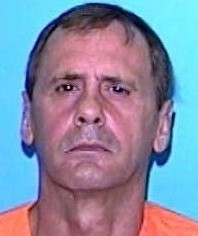
James Armando Card
Murderer Ervil LeBaron
Murderer · USA · 1972
Ervil Morrell LeBaron (1925 to August 16, 1981) was the leader of a polygamous…
35 victims
Ervil LeBaron
Murderer · USA · 1972
Ervil Morrell LeBaron (1925 to August 16, 1981) was the leader of a polygamous…
35 victims
 Brian Kevin Rosenfeld
Murderer · USA · 1985
Brian Kevin Rosenfeld Brian Kevin Rosenfeld was sentenced to three concurrent l…
23 victims
Brian Kevin Rosenfeld
Murderer · USA · 1985
Brian Kevin Rosenfeld Brian Kevin Rosenfeld was sentenced to three concurrent l…
23 victims
 Marvin Gray
Murderer · USA · 1975
Marvin Gray was convicted killer who claimed responsibility for 23 slayings and…
23 victims
Marvin Gray
Murderer · USA · 1975
Marvin Gray was convicted killer who claimed responsibility for 23 slayings and…
23 victims
 Yahweh ben Yahweh
Murderer · USA · 1980
Yahweh ben Yahweh was born and legally named Hulon Mitchell Jr. (October 27, 19…
23 victims
Yahweh ben Yahweh
Murderer · USA · 1980
Yahweh ben Yahweh was born and legally named Hulon Mitchell Jr. (October 27, 19…
23 victims
 Russell Ellwood
Murderer · USA · 1991
Russell Ellwood was a former taxi driver. Authorities suspected him of killing…
20 victims
Russell Ellwood
Murderer · USA · 1991
Russell Ellwood was a former taxi driver. Authorities suspected him of killing…
20 victims
 Dexter Lee Vinson
Murderer · USA · 1997
Dexter Lee Vinson was a state prisoner convicted of capital murder and sentence…
1 victim
Dexter Lee Vinson
Murderer · USA · 1997
Dexter Lee Vinson was a state prisoner convicted of capital murder and sentence…
1 victim
 Richard Cottingham
Serial killer · USA · 1967
Richard Francis Cottingham was a serial killer from New Jersey who operated in…
6 victims
Richard Cottingham
Serial killer · USA · 1967
Richard Francis Cottingham was a serial killer from New Jersey who operated in…
6 victims
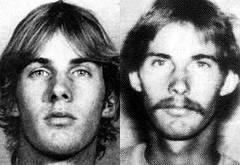 Patrick Purdy
Mass murderer · USA · 1989
January 17, 1989 — An anonymous person phoned the Stockton Police Department wa…
5 victims
Patrick Purdy
Mass murderer · USA · 1989
January 17, 1989 — An anonymous person phoned the Stockton Police Department wa…
5 victims
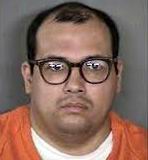 Humberto Leal
Murderer · USA · 1994
Name: Humberto Leal Relationship/role: Defendant Humberto Leal was a Mexican na…
1 victim
Humberto Leal
Murderer · USA · 1994
Name: Humberto Leal Relationship/role: Defendant Humberto Leal was a Mexican na…
1 victim
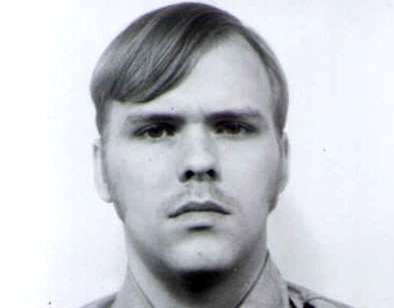 Steven Judy
Serial killer · USA · 1970
Steven Judy was executed by electrocution in Indiana on March 9, 1981. He was b…
11 victims
Steven Judy
Serial killer · USA · 1970
Steven Judy was executed by electrocution in Indiana on March 9, 1981. He was b…
11 victims
- Gender
- male
- Country
- USA
- Location
- Bay County, Florida, USA
- Date of birth
- October 16, 1946
- Age at first offence
- 35
- Characteristics
- abduction, armed robbery, kidnapping, rape
- Victim profile
- Janis Franklin (clerk at Western Union)
- Method of murder
- Stabbing with knife
- Date(s) of murder
- June 3, 1981
- Years active
- 1981
- Date of arrest
- 5 days after
- Status
-
Sentenced to death
Sentenced to death on January 28, 1982; resentenced to death on June 21, 1999
Case identifiers
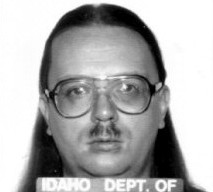
- Name: James Armando Card
- Other aliases: James T. Conte or Mike Johnson
- Date of birth: 10/16/46
- Offense date: 06/03/81
- DC number: 081792
- Case: Fourteenth Judicial Circuit, Bay County, Case #81-518
- Fourteenth Judicial Circuit, Bay County (trial originally charged there); transferred to Okaloosa County (First Circuit) for trial
- Sentencing judge (initial sentencing): The Honorable W. Fred Turner
- Resentencing judge: The Honorable Dedee Costello
- Trial attorneys: Thomas Ingles & Herbert Green – Assistant Public Defenders Attorney
- Direct appeal attorney: Steven L. Bolotin – Assistant Public Defender Attorney
- Resentencing attorney: Steven L. Seliger, Esq. – Private Attorney
- Collateral appeals attorney: Clyde M. Taylor, Jr. – Registry
Timeline
- 06/03/81 — Janis Franklin was abducted from her office during a robbery; Card made plans to meet Vicky Elrod
- 06/08/81 — Card was arrested
- 09/08/81 — Card’s defense counsel filed a motion for change of venue due to publicity surrounding the case
- 09/30/81 — Motion for change of venue was granted; the case was transferred from Bay County (Fourteenth Circuit) to Okaloosa County (First Circuit)
- 01/22/82 — The jury found the defendant guilty on all counts
- 01/22/82 — Upon advisory sentencing, the jury voted for the death penalty by a 7 to 5 majority
- 01/28/82 — Sentencing: Count I First-Degree Murder – Death; Count II Armed Robbery – Life; Count III Kidnapping – Life
- 02/15/82 — Card filed a Direct Appeal in the Florida Supreme Court
- 06/07/84 — The Florida Supreme Court affirmed the convictions and sentence of death
- 09/19/84 — Card filed a Petition for Writ of Certiorari in the United States Supreme Court
- 11/05/84 — United States Supreme Court denied certiorari
- 03/23/87 — Card filed a Petition for Writ of Certiorari in the United States Supreme Court
- 05/18/87 — United States Supreme Court denied certiorari
- 08/19/97 — State Circuit Court vacated Card’s death sentence and ordered a resentencing following an examination of Card’s claim of improper sentencing procedure
- 06/21/99 — Resentencing: upon advisory sentencing, the new jury voted for the death penalty by an 11 to 1 majority; Count I First-Degree Murder – Death; Count II Armed Robbery – Life; Count III Kidnapping – Life
- 10/11/01 — The Florida Supreme Court affirmed the death sentence
- 06/28/02 — United States Supreme Court denied a Petition for Writ of Certiorari
- 06/30/03 — Card filed a 3.851 Motion in the State Circuit Court (amended on 04/02/04)
- 06/09/06 — The 3.851 Motion was denied
- 01/05/05 — Card filed a 3.853 Motion in the State Circuit Court
- 11/17/05 — The 3.853 Motion was denied
- 07/12/06 — Card filed a 3.851 Motion Appeal and a 3.853 Motion Appeal in the Florida Supreme Court (both pending)
The offence
James Card was convicted and sentenced to death for the murder of Janis Franklin on 06/03/81.
Janis Franklin, a clerk at Western Union in Panama City, was abducted from her office during a robbery on the afternoon of 06/03/81. During the robbery, the Western Union office was robbed of approximately $1200. Blood was found on the floor and counters of the office. The office safe was slightly ajar and the cash drawer had been removed and was on the floor. Franklin was missing from her office. Her body was found the next day beside a dirt road in a secluded area 8.4 miles from the Western Union office. Her blouse was torn. Her fingers were severely cut and her throat had been cut.
Her body was missing for over a day, and it was found about eight miles from the abduction site, off a dirt road in a secluded area. Her throat had been cut and her fingers were severed almost completely through.
Investigation
During the days immediately following the discovery of the body, police investigated and ruled out at least thirty persons as potential suspects.
Suspicion did not focus on Card until June 8, 1981, when Vicky Sue Elrod, an acquaintance of Card’s, informed police that Card had told her that he had committed the murder.
Arrest
Card was arrested on June 8, 1981.
People involved
- Janis Franklin — victim; clerk at Western Union in Panama City
- Vicky Sue Elrod — acquaintance of Card; state’s main witness; testified that Card confessed to her
- Camille Cardwell (now Camille Payne) — proposed witness for Card; proffered testimony was excluded as hearsay; later provided an affidavit and testified at an evidentiary hearing
- Albert Powell — prosecution witness; testified he thought Card looked like a man he saw in the Western Union office
- Chris Thomas — prosecution witness; testified he thought Card looked like a man he saw in the Western Union office
- Officer Charles W. Polk — defense testimony referenced in the appellate opinion; testified about an old tire track on the road
- Suzanne Harang — forensic serologist; testified she could not determine whether blood found in Card’s car came from the victim because she could not determine the victim’s blood type
- George Dobos — Panama City police officer; examined regarding a description given to him by Chris Thomas
- Officer Slusser — examined regarding the Panama City Police Department’s investigation of the crime
- Judge Turner — The Honorable W. Fred Turner; presided over trial and imposed sentencing
- Dedee Costello — The Honorable Dedee Costello; resentencing judge
Trial
Venue and court proceedings
Card was charged in Bay County, Florida, with first degree murder, robbery, and kidnapping. Venue was transferred to Okaloosa County, where the trial was held. The jury returned guilty verdicts on all three counts. The case was returned to Bay County after the penalty phase, where Judge Turner imposed consecutive sentences of life imprisonment on the robbery and kidnapping convictions, and a death sentence for the first degree murder conviction.
Card’s defense counsel filed a motion for change of venue on 09/08/81. The Honorable W. Fred Turner issued an order granting that motion on 09/30/81.
Charges and jury verdicts
The jury found the defendant guilty on all counts. The indictment listed:
- Count I: First-Degree Murder
- Count II: Armed Robbery
- Count III: Kidnapping
Advisory sentencing and aggravating circumstances (initial sentencing)
Upon advisory sentencing, the jury voted for the death penalty by a 7 to 5 majority.
Judge Turner found five aggravating circumstances under Fla.Stat. Sec. 921.141(5):
- The murder was committed while the defendant was engaged in the commission of a kidnapping
- The murder was committed for the purpose of avoiding or preventing a lawful arrest
- The murder was committed for pecuniary gain
- The murder was especially heinous, atrocious, or cruel
- The murder was committed in a cold, calculated, and premeditated manner without any pretense of moral or legal justification
Judge Turner imposed:
- Count I First-Degree Murder — Death
- Count II Armed Robbery — Life
- Count III Kidnapping — Life
Prosecution evidence and witness testimony
Vicky Elrod was the state’s main witness and testified that Card confessed to the murder and described what he had done.
Elrod testified Card telephoned her at about 6:30 on the morning of June 3 to tell her he might be coming to see her in Pensacola to repay her $50.00 that she had loaned him. Elrod testified she received another phone call at about 5:30 p.m. saying Card was coming to Pensacola and needed to see her. Elrod met with Card at a motel in Pensacola at 9:30 that night. Elrod testified Card took a large stack of bills out of a blue pouch. Elrod testified she asked Card if he had robbed a convenience store, and he told her he had robbed a Western Union station and had killed the woman who worked there. Elrod testified Card described scuffling with the victim, tearing her blouse, and cutting her with his knife. She testified he said that after taking the money, he took the victim in his car to a wooded area, had no intention of hurting her until she had gotten out of the car, and then went behind her and cut her throat, while she was bleeding.
Elrod further testified Card told her to exchange the tires from her car, stating that the tire prints were the only thing that could connect him to the crime. She also testified Card showed her an old silver dollar that was in the blue pouch.
The other highly incriminating evidence included forensic testimony that tire tracks at the murder scene indicated that a car at the scene had three different types of tires. Casts made from these tracks matched the tread of each of the tires on Card’s car.
Two men, Albert Powell and Chris Thomas, testified that they thought Card looked like the man they saw in the Western Union office at around 3:00 p.m. on June 3, 1981. Powell testified that he saw two men in the Western Union office prior to the offense and refused to swear on oath that Card was the man he saw.
A policeman testified two different sets of footprints were found at the scene where the victim’s body was located; the footprints were not positively identified as those of Card.
A forensic serologist, Suzanne Harang, testified she could not determine whether blood found in Card’s car came from the victim because she could not determine the victim’s blood type.
Defense position and excluded proffer testimony
Card attempted to introduce testimony of Camille Cardwell (now Camille Payne). The proffer indicated Cardwell would testify that a few weeks before the offense she heard her boyfriend, John Green, and several of his friends, including Tom Wilmot, planning the robbery of a place where people sent in money orders, and that they planned to use a knife between 2:00 p.m. and 3:00 p.m. The trial court excluded the testimony as hearsay.
Card proffered a statement from Cardwell to support alternative explanations for the crime. The proffer was denied as inadmissible hearsay.
Witnesses called at trial (as referenced in the appellate opinion)
Among other witnesses, the defense also called:
- Panama City police officer George Dobos, examined regarding a description given to him by Chris Thomas of a man Thomas had seen in the Western Union office
- Chris Thomas, examined regarding the description he gave the police
- Officer Slusser, examined regarding the Panama City Police Department’s investigation of the crime
- Officer Charles W. Polk, examined regarding a report he wrote stating that he drove down the road where the body was found at approximately 7:30 p.m. on June 3, 1981, and that the body was not there and that there was only an old tire track going down the road
Cardwell’s testimony was excluded as hearsay. The appellate opinion noted that the defense called these individuals and that all had also testified for the prosecution.
Jury and sentencing vote (initial)
- Advisory sentencing vote for death: 7 to 5
Post-trial and direct appeal
Card filed a Direct Appeal in the Florida Supreme Court on 02/15/82. Card argued:
- The trial court erred in failing to admit proffered testimony that he claimed was exculpatory and could offer an alternative explanation for the crime
- The court erred in its application of several aggravating factors
The Florida Supreme Court affirmed the convictions and sentence of death on 06/07/84.
Card filed a Petition for Writ of Certiorari in the United States Supreme Court on 09/19/84; it was denied on 11/05/84.
Resentencing (after vacatur)
Vacatur and order for resentencing
On 08/19/97, the State Circuit Court vacated Card’s death sentence and ordered resentencing following an examination of Card’s claim of improper sentencing procedure.
Resentencing advisory verdict and sentence
On 06/21/99, upon advisory sentencing, the new jury voted for the death penalty by an 11 to 1 majority.
The defendant was resentenced as followed:
- Count II: Armed Robbery — Life
- Count III: Kidnapping — Life
Post-conviction and federal habeas procedural history (as described in the appellate opinion)
Card filed a state petition for a writ of habeas corpus and pursued an appeal from the order denying his motion to vacate sentence pursuant to Florida Rule of Criminal Procedure 3.850. The Florida Supreme Court denied all relief in:
- Card v. State, 497 So.2d 1169 (Fla.1986), cert denied, 481 U.S. 1059 (1987)
Card again petitioned the Florida Supreme Court for a writ of habeas corpus in 1987; the court denied relief in:
- Card v. Dugger, 512 So.2d 829 (Fla.1987)
A petition for writ of error coram nobis was also filed and denied.
Federal habeas petition (Eleventh Circuit appeal)
The case reached the United States Court of Appeals, Eleventh Circuit:
- James Armando Card v. Richard L. Dugger, Respondent-Appellee
- No. 88-3729
- Sept. 4, 1990
- Appeal from the United States District Court for the Northern District of Florida
- Panel: KRAVITCH, HATCHETT and ANDERSON, Circuit Judges
- Opinion: KRAVITCH, Circuit Judge
Card was described as a Florida prisoner sentenced to death who appealed from the district court’s denial of his petition for habeas corpus.
Claims raised in federal habeas
Card’s federal petition asserted eight claims: I. Ineffective assistance of counsel in the guilt phase of trial II. Ineffective assistance of counsel at the penalty phase of trial III. Trial judge erroneously excluded testimony indicating that someone other than Card committed the crime IV. Trial and sentencing were conducted before a court lacking jurisdiction under state law V. Denied right to a pretrial competency hearing; and right not to undergo criminal proceedings while incompetent VI. Ineffective assistance of counsel on direct appeal VII. Trial judge erred under Hitchcock in failing to find and consider statutory and nonstatutory mitigation VIII. Prosecutor’s argument, instruction, and comment violated rights under Caldwell
The district court held an evidentiary hearing on claims I and II only and denied relief on all claims. The appellate decision affirmed denial as to all claims other than claim V relating to competency; it remanded for the limited purpose of requiring the district court to set forth its reasons for failing to hold an evidentiary hearing on claim V.
Ineffective assistance of trial counsel (guilt phase) — claims and holdings
The appellate opinion analyzed ineffective assistance claims under the two-prong test of Strickland v. Washington.
Claim I.A — Camille Cardwell testimony
Card asserted trial counsel was ineffective in failing to present Camille Cardwell’s testimony suggesting someone other than Card committed the robbery and murder.
The appellate opinion detailed:
- Police took a statement from Camille Cardwell on June 5, 1981, two days after Franklin’s body was discovered
- Cardwell told police she overheard three men planning the robbery approximately two weeks before the murder
- Cardwell’s statement included that she left Panama City on the 25th or 26th of May, 1981, and that she heard nothing else about the robbery until hearing about it on television on June 4, 1981
- Defense counsel did not speak with Cardwell until after the trial had begun
- Counsel proffered Cardwell’s testimony at trial; the proffer was denied as inadmissible hearsay
- Cardwell later provided an affidavit sworn in September 1987 stating that when counsel spoke with her during trial, she attempted to tell him she heard John Green and others planning the robbery on the morning of June 3, 1981, and that counsel did not seem interested and told her he would only question her regarding her statement to police
At the federal evidentiary hearing, Cardwell stated she was not around on the day of the robbery and there was nothing about the plan she heard that she did not tell police when questioned shortly after the murder.
The appellate opinion held counsel was not ineffective in failing to investigate further and present Cardwell’s testimony, but it reached that conclusion on grounds different from the district court.
Tactical and investigatory decisions regarding Cardwell and impeachment
The opinion stated Green did not act unreasonably in failing to interview Cardwell before trial or to investigate leads available through her statement to police. It stated Cardwell had not informed Green prior to or at trial that she heard individuals planning on the morning of June 3.
The appellate opinion also discussed that:
- Green explained he did not further investigate or present witnesses Tew and Tarbaux after Cardwell was excluded, and instead presented Officer Polk because Tew and Tarbaux’s accounts contradicted Polk’s testimony regarding an old tire track
- The appellate opinion described Green’s decision as a reasonable tactical decision
Claim I.B — impeachment of Vicky Elrod
Card alleged counsel failed to impeach Elrod’s testimony. The allegations included:
- Telephone records indicating calls at times different from Elrod’s testimony
- Elrod’s testimony that Card told her he had gotten money out of the safe, despite evidence that money was kept in the cash drawer, not the safe
- Elrod’s testimony that Card told her he had found the victim’s wallet on the seat of the car, despite evidence that the wallet was normally kept in the victim’s purse left at the Western Union station
- Alleged motive to fabricate due to animosity arising from disagreements during their drug transactions
The appellate opinion stated Green conducted a competent cross-examination of Elrod and concluded that none of the evidence Card claimed could have been introduced directly contradicted or undermined Elrod’s testimony.
Claim I.C — impeachment of Powell and Thomas
Card alleged counsel failed to impeach Powell and Thomas. Powell’s prior description did not match Card’s appearance, and Thomas’s description and composite sketch did not resemble Card. At trial, Thomas and Powell testified the man looked like Card; Powell could not swear Card was the man because of passage of time.
The appellate opinion described Green’s tactical decisions and concluded they did not rise to deficient performance under Strickland.
Claim I.D — forensic serology cross-examination
Card alleged counsel failed to impeach a forensic serology expert because investigators had determined the victim had type “O” blood.
The appellate opinion stated the failure to impeach was not deficient performance under Strickland because cross-examination at trial was sufficient to show weaknesses, and it noted that on cross-examination the serologist testified the blood stains in the car could not have come from Janice Franklin but did match the blood of Card’s son.
Overall disposition of Claim I
Because the appellate opinion found counsel’s performance was not deficient, it stated it did not reach prejudice for the guilt phase ineffectiveness claim.
Ineffective assistance of counsel (penalty phase) — claims and findings
The appellate opinion analyzed counsel’s penalty phase performance under Strickland.
Claim II.A — failure to call family members
Card argued trial counsel failed to call family members to testify about his background at sentencing. The only witness during penalty phase was Dr. James Hord, called by defense attorney Ingles.
The appellate opinion described Dr. Hord’s testimony that Card showed a “sociopathic personality adjustment pattern,” including:
- Impulsive reaction to stress
- Poor long-range judgment, little forethought, and little awareness beyond the immediate situation
- Relation of the diagnosis to events surrounding the robbery, kidnapping, and murder of Ms. Franklin
- Conclusion that at the time of killing Card was acting under extreme mental or emotional disturbance and his capacity to conform conduct to the requirements of law was substantially impaired
- Testimony about how sociopathic behavior arose from interruptions in childhood identification between an individual and his parents
- Testimony that Dr. Hord outlined Card’s harsh treatment by his natural father and step-father during early childhood and described instances of cruelty
- Testimony that Card’s mother put him into psychiatric care for a short time at the age of five or six years
- Testimony that a prison term could rid Card of his sociopathic behavior
Dr. Hord did not mention poor school performance, medical history including records of head injuries, criminal history as a juvenile and an adult, or discharge from the Army “for reasons of total unsuitability.”
The appellate opinion described Green’s explanation of why Ingles did not present Card’s mother (Gloria Chenoweth) and sister (Darla D’Agostino) directly:
- Card exhibited violent-type behavior toward members of his family and the defense did not want that presented to the jury
- The defense sought to avoid the risk of introducing prior record and prior alleged violence through family members
The appellate opinion also discussed Dr. Wray’s letter and described that the letter stated:
- Dr. Wray made a trip to Crestview on January 20, 1982 to evaluate the history of Card’s mother and sister
- Data received by Dr. Wray was verbally transmitted to Mr. Ingles
- Ingles had full benefit of the evaluations
- Dr. Wray reported the family confirmed a fairly extensive criminal record and described an incident where Card became severely angry and picked up a table and threw it at his mother
- Dr. Wray reported that Card’s sister’s statements and that one occasion Card threatened Darlene’s husband, Mike, with a knife, which Mike took away
The appellate opinion concluded counsel was not ineffective for failing to have family members testify.
Claim II.B — failure to provide adequate background to mental health experts
Card argued Ingles was ineffective for not providing background materials to mental health experts, and that experts failed to conclude organic brain damage and schizophrenia because of that failure. Card also alleged inadequacies in testing and that significant mitigation would have been forthcoming.
The appellate opinion described information Ingles had at sentencing, including:
- A September 31, 1981 report from Dr. Berland
- A September 23, 1981 report from Dr. Cartwright
- Written reports from October 10, 1981 and November 26, 1981 from Dr. Wray
- An oral report from Dr. Wray later contained in the January 27, 1982 letter
The appellate opinion stated Dr. Hord conducted his own examination, tests, talked with family members, and consulted with Ingles before testifying.
It also stated there was no indication experts felt incapable of basing conclusions on their own testing, and that counsel was not obligated to track down every record.
The opinion also noted it was unclear whether additional materials would have changed expert evaluations.
Overall disposition of Claim II
The appellate opinion found counsel’s performance was not deficient and did not reach prejudice.
Exclusion of Camille Cardwell testimony as hearsay (claim III)
Card argued exclusion violated sixth, eighth, and fourteenth amendment rights under Chambers v. Mississippi.
The appellate opinion described Chambers and its reliability factors:
- Time of the declaration and party to whom it was made
- Existence of corroborating evidence
- Extent to which the declaration was against a declarant’s penal interest
- Availability of the declarant as a witness for cross-examination
The appellate opinion held Card’s reliance on Chambers was misplaced and concluded the trial court did not err in denying relief based on exclusion of Cardwell’s testimony as inadmissible hearsay.
The opinion concluded Card did not show a sufficient nexus between the statements overheard by Cardwell and the crime for which Card was charged.
Jurisdiction claim (claim IV) and procedural bar analysis
Card argued the state trial court lacked jurisdiction because Judge Turner allegedly did not have authority to preside over the case in the First Judicial Circuit without a temporary assignment order from the Chief Justice of the Florida Supreme Court.
The appellate opinion described:
- Offense committed in Bay County, Fourteenth Judicial Circuit; indictment returned there
- Card moved for change of venue due to publicity; case moved to Okaloosa County, adjacent First Circuit
- Despite transfer, Judge Turner continued to preside over the case
- After penalty phase, case returned to Bay County where Judge Turner sentenced the defendant
It described Florida Supreme Court analysis in post-conviction relief, including:
- Turner was not authorized because he failed to procure a temporary assignment
- A technical flaw did not strip the circuit court of subject matter jurisdiction, as circuit courts have jurisdiction over all felony trials
- Failure to obtain temporary assignment did not make the judgment void; it was voidable and objections had to be made immediately
- Turner presided as a de facto judge, with actions voidable rather than void
- Timely objection was waived when not raised
The appellate opinion then addressed federal procedural default, including the independent and adequate state ground doctrine and the requirements of plain statement rule and adequacy.
It concluded the claim was procedurally barred and affirmed that finding.
It also held counsel was not ineffective for failing to object to Turner’s presiding despite the assignment flaw because any default could have been immediately cured by administrative action of the Florida Supreme Court.
Competency claim (claim V) — remand
Card contended his due process rights were abridged by failure to afford a pretrial competency hearing and that he was incompetent to stand trial.
The appellate opinion described the legal standards from:
- Dusky v. United States
- Pate v. Robinson
It stated the district court had used an improper legal standard when deciding whether a hearing should have been held, and it described the factors for competency-hearing analysis:
- Evidence of irrational behavior
- Demeanor at trial
- Prior medical opinion on competence to stand trial
It stated that the factual findings were supported by the record and affirmed that the trial court did not err in failing to hold a competency hearing.
However, it remanded as to Card’s actual competency to stand trial claim, stating it was concerned the district court limited its analysis to evidence before the state trial court, and that it did not address later reports referenced by Card, including 1986 and 1987 reports of Doctors Smith and Carbonell. The appellate opinion remanded for the district court to set forth reasons for failing to hold an evidentiary hearing on claim V.
Ineffective assistance of appellate counsel (claim VI) — jurisdiction and Richardson hearing
Card alleged appellate counsel was ineffective for failing to raise:
- The trial court’s lack of jurisdiction
- Failure to conduct a hearing pursuant to Richardson v. State on an alleged discovery violation
The appellate opinion addressed:
- The jurisdiction ineffective assistance claim: it agreed with the Florida Supreme Court that Card could not show deficient performance under Strickland because trial counsel did not object and state law made such objection untimely
- The Richardson hearing ineffective assistance claim: it affirmed the district court’s holding that Card failed to demonstrate cause for failing to raise it in his first state habeas petition, so the claim was procedurally barred
Hitchcock claim (claim VII)
Card alleged the district court erred in failing to find mitigating circumstances and in failing to consider evidence of nonstatutory mitigating circumstances in violation of Hitchcock v. Dugger.
The appellate opinion described that Card claimed two statutory mitigating circumstances under Fla.Stat. Sec. 921.141(6)(b) and (f): extreme mental or emotional disturbance and substantial impairment of capacity to conform conduct to law.
It described that the trial judge found Dr. Hord’s testimony insufficient to establish either statutory mitigating circumstance and that this was affirmed by the Florida Supreme Court.
The appellate opinion stated it did not reweigh the aggravating and mitigating factors and would not decide whether the state court’s finding of no mitigating circumstances was supported.
It then addressed Hitchcock nonstatutory mitigation:
- The appellate opinion stated the judge’s sentencing report did not make specific mention of nonstatutory mitigating factors
- It reviewed jury instructions, comments, and the record and concluded there was no Hitchcock violation
- It quoted the prosecutor’s closing argument statement to the jury: "The defense has a catch-all under the mitigating circumstances that says, 'We give you some specific ones, and then you can use anything else you can come up with.' "
- It concluded there had been awareness of the rule in Lockett and that the judge considered “all the evidence” including nonstatutory mitigation
Caldwell claim (claim VIII)
Card alleged Caldwell v. Mississippi error due to prosecutorial remarks diminishing the jury’s sense of responsibility by misinforming the jury about appellate review.
- Caldwell decided June 11, 1985
- Card’s first state habeas petition filed June 2, 1986 did not include a Caldwell claim
- Card raised the Caldwell claim for the first time in a second state petition filed September 11, 1987
- The Florida Supreme Court denied the claim under abuse of the writ, stating Caldwell was available earlier
The appellate opinion held the Caldwell claim was procedurally barred:
- It ruled Florida’s abuse-of-the-writ finding was an independent and adequate state ground
- It held Card failed to establish cause and prejudice to excuse default
- It found no fundamental miscarriage of justice, noting that the trial judge found five aggravating circumstances and no mitigating circumstances
Outcome
The appellate opinion:
- Affirmed the district court’s denial of habeas relief as to all claims other than claim V regarding competency to stand trial
- Remanded for the limited purpose of allowing the district court, within sixty days, to set forth its reasons for failing to hold an evidentiary hearing on claim V
Other details
- Robbery amount: approximately $1200
- Body location described as about eight miles from the Western Union office and 8.4 miles from the Western Union office
- Blood evidence was found on the floor and counters of the office
- The office safe was slightly ajar and the cash drawer was removed and on the floor
- Trial advice: advisory sentencing and jury recommendations
- The appellate opinion described that trial judge Turner found five aggravating circumstances under Fla.Stat. Sec. 921.141(5)
- A note in the appellate opinion referenced state review citations and numbered opinions and forms for Florida Supreme Court and case caption information, including:
- Florida Supreme Court opinion 68862, opinion 71118, opinion 82435, SC00-182, SC06-1383
- United States Court of Appeals, Eleventh Circuit: 911 F.2d 1494
- James Armando Card, Petitioner-Appellant, v. Richard L. Dugger, Respondent-Appellee; No. 88-3729
- Execution-setting information (warrant and date): Governor Bob Graham signed a death warrant on 05/07/86, setting execution for 06/04/86
- Card filed a Motion to Vacate Judgment and Sentence (3.850) in State Circuit Court on 06/03/86, which was denied on the same day
- Florida Supreme Court issued an emergency stay of execution on 06/03/86 to review Card’s filings
- The Florida Supreme Court denied all relief on 10/09/86, affirming denial of the 3.850 appeal and denying the Habeas Petition
- A second death warrant was signed by Governor Bob Martinez on 08/18/87
- Card filed a Federal Petition for Writ of Habeas Corpus in the United States District Court, Northern District, on 09/16/87; the District Court granted a stay of execution on 09/16/87, denied the habeas petition, and vacated the stay on 07/01/88
- Card appealed the District Court’s decision in the United States Court of Appeal for the 11th Circuit on 09/01/88; the Court of Appeals affirmed in part and remanded for an evidentiary hearing regarding examination of Card’s trial competency on 09/04/90
- The District Court denied relief on 10/22/93 after an evidentiary hearing; the Court of Appeals affirmed on appeal (date given: 10/22/93 and subsequent appeal affirmed after that hearing)
- The United States Supreme Court denied Card’s Petition for Writ of Certiorari on 10/04/93
- Card filed a second 3.850 Motion on 03/11/92, denied on 04/20/93
- The Supreme Court denied Certiorari on 10/07/96 after the case was remanded for an evidentiary hearing on sentencing practices in the penalty phase of Card’s trial
- Resentencing followed and Card was resentenced to death on 06/21/99
- Card later appealed resentencing, claiming the resentencing judge erred in not recusing herself, and errors in application of aggravating factors and negation of mitigating evidence; also contended the State’s closing statement was unfair and prejudiced the advisory sentencing of the jury
- The Florida Supreme Court affirmed the death sentence on 10/11/01
- United States Supreme Court denied certiorari on 06/28/02
- Appellate penalty phase: Dr. James Hord testified; he did not mention certain school, medical, juvenile, adult, or Army discharge history in his testimony
- The appellate opinion referenced a sem*n-related report received by counsel on the day of trial suggesting the victim might have been raped; counsel proceeded to trial rather than continue because of risk of the state adding a charge
Spotted an error, or have more information about this case?