
Ruben Ramirez Cardenas
Murderer Dr. Wouter Basson
Murderer · 1992
Wouter Basson (born July 6, 1950) was a South African cardiologist and the form…
230 victims
Dr. Wouter Basson
Murderer · 1992
Wouter Basson (born July 6, 1950) was a South African cardiologist and the form…
230 victims
 Ershad Sikder
Murderer · Bangladesh · 1990
Ershad Sikder was an influential political figure in the south-western city of…
30 victims
Ershad Sikder
Murderer · Bangladesh · 1990
Ershad Sikder was an influential political figure in the south-western city of…
30 victims
 Russell Ellwood
Murderer · USA · 1991
Russell Ellwood was a former taxi driver. Authorities suspected him of killing…
20 victims
Russell Ellwood
Murderer · USA · 1991
Russell Ellwood was a former taxi driver. Authorities suspected him of killing…
20 victims
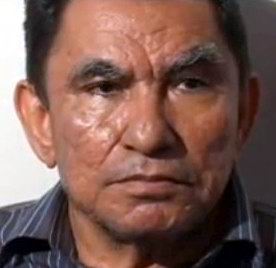 Anisio Ferreira de Sousa
Murderer · Brazil · 1989
September 4, 2003 — Anísio Ferreira de Sousa was sentenced to 77 years in priso…
19 victims
Anisio Ferreira de Sousa
Murderer · Brazil · 1989
September 4, 2003 — Anísio Ferreira de Sousa was sentenced to 77 years in priso…
19 victims
 Umesh Reddy
Murderer · India · 1998
Umesh Reddy was sentenced to death on October 27, 2006. The Karnataka High Cour…
18 victims
Umesh Reddy
Murderer · India · 1998
Umesh Reddy was sentenced to death on October 27, 2006. The Karnataka High Cour…
18 victims
 Carman Deck
Murderer · USA · 1996
Carman L. Deck was convicted of two counts of first degree murder, two counts o…
2 victims
Carman Deck
Murderer · USA · 1996
Carman L. Deck was convicted of two counts of first degree murder, two counts o…
2 victims
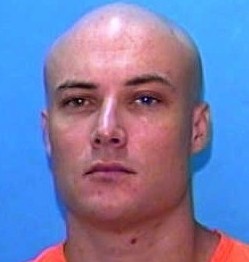 Bobby Allen Raleigh
Murderer · USA · 1994
Name: Bobby Allen Raleigh · Date of birth: 07/22/74 · Jurisdiction: Seventh Jud…
2 victims
Bobby Allen Raleigh
Murderer · USA · 1994
Name: Bobby Allen Raleigh · Date of birth: 07/22/74 · Jurisdiction: Seventh Jud…
2 victims
 Sipho Dube
Serial killer · South Africa · 2001
Sipho Dube was convicted of seven murders and three rapes and was sentenced to…
7 victims
Sipho Dube
Serial killer · South Africa · 2001
Sipho Dube was convicted of seven murders and three rapes and was sentenced to…
7 victims
 Peter Tobin
Serial killer · United Kingdom · 1991
Peter Britton Tobin (born 27 August 1946) was a convicted Scottish serial kille…
3 victims
Peter Tobin
Serial killer · United Kingdom · 1991
Peter Britton Tobin (born 27 August 1946) was a convicted Scottish serial kille…
3 victims
 Rudy Bladel
Serial killer · USA · 1963
Rudy Bladel was a laid off railroad worker who used a shotgun to kill railroad…
7 victims
Rudy Bladel
Serial killer · USA · 1963
Rudy Bladel was a laid off railroad worker who used a shotgun to kill railroad…
7 victims
- Gender
- male
- Country
- —
- Location
- —
- Date of birth
- April 7, 1970
- Age at first offence
- 27
- Characteristics
- kidnapping, rape
- Victim profile
- Mayra Laguna (female, 16)
- Method of murder
- Strangulation Loca tion : Hidalgo County, Texas, USA
- Date(s) of murder
- February 22, 1997
- Years active
- 1997
- Date of arrest
- —
- Status
-
Sentenced to death
Sentenced to death on July 29, 1998
Case details
Ruben Ramirez Cardenas (TDCJ Number 999275) was a Mexican national. He was Hispanic, male, and had Black hair. His height was 5' 6" and his weight was 204. His date of birth was 04/07/1970.
Timeline
- 02/22/1997 — The parents of Mayra Laguna reported their daughter was missing. During the investigation, police spoke with Cardenas, Mayra's first cousin, who voluntarily went to the police station, where he was interrogated by nine different law enforcement officers over more than ten hours; Cardenas was not advised of his right to consular access. Cardenas was thereafter arrested when his friend, and later co-defendant, implicated him in the crime. After his arrest, Cardenas gave a statement in which he admitted that he had killed Mayra and led police to the scenes where he raped the victim and disposed of her body.
- 02/22/1997 — Cardenas and a co-defendant committed capital murder against a 16-year old Hispanic female.
- 07/29/1998 — Cardenas was sentenced to death. At the time he received the sentence, he was 28 and education level 11 was listed.
- 03/29/2005 — The United States Court of Appeals, Fifth Circuit affirmed the district court's denial of habeas relief and denied a COA with respect to the issues raised by Cardenas.
- March 2004 — The International Court of Justice issued its judgment in Avena and other Mexican Nationals (Mex. v. U.S.), 2004 I.C.J. 128 (Mar. 31).
- 31) (not a date) — The ICJ held that the Mexican nationals whose rights under Article 36 of the Vienna Convention were violated were entitled to full judicial review of their capital murder convictions and death sentences.
- 2000 — The Supreme Court stated that Simmons only requires parole evidence when the defendant could be given a life sentence and is ineligible for parole under state law, as referenced in the discussion of Cardenas's claims (Ramdass v. Angelone, 530 U.S. 156).
- 1994 — Simmons v. South Carolina was discussed in relation to parole eligibility and juror information requirements (512 U.S. 154).
- 1998 — Breard v. Greene was discussed in relation to procedural default of Vienna Convention claims (523 U.S. 371).
- 1989 — Teague v. Lane was discussed in relation to retroactivity principles (489 U.S. 288).
Background
Cardenas was convicted of capital murder and sentenced to death. His conviction was affirmed by the Texas Court of Criminal Appeals. His habeas appeal was denied. His federal habeas petition and subsequent application for a COA were also denied.
Cardenas filed a petition for a writ of habeas corpus in the United States District Court for the Southern District of Texas pursuant to 28 U.S.C. § 2254. The district court denied the petition as well as Cardenas' request for a COA.
The case before the United States Court of Appeals, Fifth Circuit was Ruben Ramirez CARDENAS, Petitioner-Appellant, v. Doug DRETKE, Director, Texas Department of Criminal Justice, Correctional Institutions Division, Respondent-Appellee. The docket number was No. 03-41425.
The offence
On 02/22/97, in Edinburg, Cardenas and a co-defendant committed the offense of capital murder against a 16-year old Hispanic female (Mayra Laguna). Cardenas entered the victim's residence through a window, tied her up with duct tape, and put her in a vehicle with the co-defendant. Cardenas and the co-defendant then drove to a remote location.
Cardenas raped the victim, beat her severely with his fists, and strangled her, causing her death. Cardenas dumped her body into a nearby canal.
Investigation
In the course of investigating Mayra's whereabouts, the police spoke with Cardenas, Mayra's first cousin, who voluntarily went to the police station. For more than ten hours, Cardenas remained at the police station and was interrogated by nine different law enforcement officers about Mayra's disappearance.
Although a Mexican national, Cardenas was never advised by authorities of his right to consular access. After his arrest, Cardenas gave a statement to authorities wherein he admitted that he had killed Mayra and led police to the scenes where he raped the victim and disposed of her body.
Arrest
Trial
Cardenas filed habeas corpus proceedings in federal court raising multiple constitutional issues connected to jury selection and sentencing, as well as issues connected to parole eligibility information and consular notification under the Vienna Convention.
Sentencing
Cardenas was sentenced to death on July 29, 1998.
Cardenas argued that the trial court refused to allow discussion of the possibility of parole at trial. Cardenas conceded that the Constitution only requires that jurors be told when a defendant who could receive a life-imprisonment sentence is ineligible for parole. He argued due process, cruel and unusual punishment, and compulsory process violations related to this refusal.
Appeals
Cardenas sought a COA from the United States Court of Appeals, Fifth Circuit on four issues pursuant to 28 U.S.C. § 2253(c)(2):
- The trial court violated his constitutional rights by excluding venire members opposed to the death penalty.
- His counsel provided ineffective assistance by failing to oppose the exclusion of venire members opposed to the death penalty.
- The trial court violated the Constitution by refusing to allow discussion of his parole eligibility during sentencing.
- The failure to advise him of his right to consular assistance under the Vienna Convention requires review by the district court to determine if it prejudiced the fairness of his trial.
The Fifth Circuit evaluated whether Cardenas made a substantial showing of the denial of a constitutional right in order to receive a COA, applying standards drawn from Slack v. McDaniel and Miller-El v. Cockrell.
On the venire-exclusion claim, the Fifth Circuit concluded that Cardenas's claim was procedurally barred from federal review because he failed to raise a contemporaneous objection to the jurors' exclusion. The Texas contemporaneous objection rule was treated as an adequate and independent state ground that procedurally bars federal habeas review.
On the ineffective-assistance claim, the Fifth Circuit concluded that objections to the exclusion of the prospective jurors would have been unnecessary and baseless because the jurors were properly excluded, and therefore it was not debatable among jurists of reason that counsel was objectively unreasonable or that Cardenas was prejudiced.
On the parole-eligibility claim, Cardenas argued constitutional violations in connection with the trial court's refusal to permit discussion of parole implications of a life sentence. The Fifth Circuit applied its prior holdings that Simmons does not apply to Texas because it does not have an alternative of life-without-parole to the death penalty, and further treated the Eighth Amendment claim as failing due to the court's consistent finding that the Eighth Amendment does not require that a jury be informed of parole eligibility.
On the Vienna Convention claim, the Fifth Circuit addressed the state concedes Cardenas was never informed of his consular rights under the Vienna Convention prior to his confession. Cardenas argued he would have invoked those rights if he had been informed. The Fifth Circuit then discussed Avena and other Mexican Nationals, procedural default rules, Breard v. Greene, and the court's binding prior decision that the Vienna Convention did not confer individually enforceable rights in the cited holdings. The Fifth Circuit also stated that it was not disputed that Cardenas: (1) was given Miranda warnings; (2) was advised of his right to legal representation before he confessed to killing Mayra; (3) voluntarily waived his right to advisement by an attorney; and (4) was provided with legal representation upon his request. The Fifth Circuit further stated that the ICJ determined Mexican consular authorities learned of his detention in time to provide assistance but decided not to assist with legal representation. The Fifth Circuit concluded Cardenas failed to show he was harmed by lack of notification concerning his arrest, and therefore it was not reasonably debatable whether he was prejudiced by failure to advise him of his Vienna Convention right to consular assistance without delay.
The Fifth Circuit affirmed the district court's denial of habeas relief and denied a COA with respect to the issues raised.
Outcome
The Fifth Circuit affirmed the district court's denial of habeas relief and denied a COA.
Aftermath
Cardenas remained on death row following his death sentence.
Other details
Cardenas was listed with prior occupation as a laborer. His prior prison record was none.
The case identified co-defendants and victim details. The material listed: Co-defendants Castillo, Tony; and the victim was identified as Mayra Laguna (Hispanic female).
A set of notes appeared with the case material:
- A note stated that Cardenas maintained that he did not kill Mayra intentionally and that she had left her parents' house with him voluntarily.
- A note stated that a procedural bar may be overcome if the petitioner can show cause and prejudice, or that failure to consider the claim will result in a "fundamental miscarriage of justice." It added that Cardenas failed to allege, much less show, cause or prejudice.
- A note described the ICJ's discussion concerning consular officers arranging for legal representation and mentioned that Mexico argued it could provide financial and other assistance for investigating a defendant's family background and mental condition. It included language that the exercise of rights depends upon notification by the authorities of the receiving state, while noting that information drawn by other means may still enable consular officers to assist in arranging legal representation.
- A note stated that Cardenas argued in his petition to the district court that his "counsel at trial failed to challenge the admissibility of his inculpatory statements on the ground that they were obtained without first advising him of his right to consular assistance under the Vienna Convention, a treaty of the United States, in violation of the Texas Code of Criminal Procedure, article 38.23." It stated that the district court treated the argument as an ineffective-assistance-of-counsel claim instead of a separate claim and concluded that the Vienna Convention did not create individual rights, and that even if statements were taken in violation, Cardenas failed to show prejudice.
Special concurrence
DENNIS, Circuit Judge, specially concurring:
I concur, but I disagree with part of the majority opinion.
Cardenas said that he would not have waived his Miranda rights, cooperated with the police interrogation, or given a confession had he been advised of his right to assistance by the Mexican consular officials. Consequently, I think that Cardenas made a showing that he was harmed by the state's failure to advise him of his Vienna Convention right to consular assistance without delay. Accordingly, I disagree with the majority's statement that it is not reasonably debatable whether Cardenas was prejudiced by the state's dereliction.


Spotted an error, or have more information about this case?