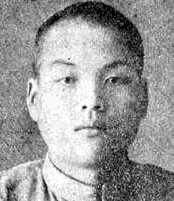
Mutsuo Toy
Spree killer Akira Nishiguchi
Spree killer · Japan · 1963
Akira Nishiguchi (西口 彰, Nishiguchi Akira) was a Japanese serial killer and frau…
5 victims
Akira Nishiguchi
Spree killer · Japan · 1963
Akira Nishiguchi (西口 彰, Nishiguchi Akira) was a Japanese serial killer and frau…
5 victims
 Norio Nagayama
Spree killer · Japan
Norio Nagayama (永山 則夫, Nagayama Norio, June 27, 1949 - August 1, 1997) was a Ja…
4 victims
Norio Nagayama
Spree killer · Japan
Norio Nagayama (永山 則夫, Nagayama Norio, June 27, 1949 - August 1, 1997) was a Ja…
4 victims
 Walter Earl Durand
Spree killer · USA · 1939
Walter Earl Durand (1913-1939) was an only son of Walter W. and Effie Durand. H…
5 victims
Walter Earl Durand
Spree killer · USA · 1939
Walter Earl Durand (1913-1939) was an only son of Walter W. and Effie Durand. H…
5 victims
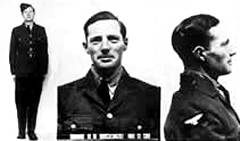 Gordon Cummins
Spree killer · United Kingdom · 1942
Gordon Frederick Cummins was called “The Count” due to his claims of noble birt…
4 victims
Gordon Cummins
Spree killer · United Kingdom · 1942
Gordon Frederick Cummins was called “The Count” due to his claims of noble birt…
4 victims
 Walter Storey
Murderer · USA · 1990
Walter Timothy Storey (also known as Walter Storey) was convicted in the case S…
1 victim
Walter Storey
Murderer · USA · 1990
Walter Timothy Storey (also known as Walter Storey) was convicted in the case S…
1 victim
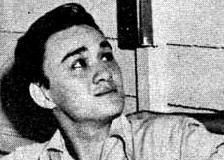 Narding Anzures
Murderer · Philippines · 1948
Bernardo “Narding” Anzures was a Filipino former child actor who was tried and…
2 victims
Narding Anzures
Murderer · Philippines · 1948
Bernardo “Narding” Anzures was a Filipino former child actor who was tried and…
2 victims
 Brian Steckel
Murderer · USA · 1994
Brian Steckel was a convicted murderer who was executed in Delaware. · Septembe…
1 victim
Brian Steckel
Murderer · USA · 1994
Brian Steckel was a convicted murderer who was executed in Delaware. · Septembe…
1 victim
 Michael Dewayne Johnson
Murderer · USA · 1995
Michael Dewayne Johnson was a death row inmate in Texas. Johnson had no prior c…
1 victim
Michael Dewayne Johnson
Murderer · USA · 1995
Michael Dewayne Johnson was a death row inmate in Texas. Johnson had no prior c…
1 victim
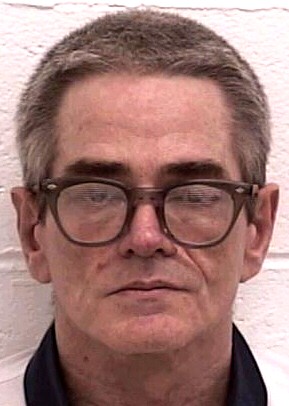 James Willie Brown
Murderer · USA · 1975
James Willie Brown was a white male who was scheduled for execution in Georgia…
1 victim
James Willie Brown
Murderer · USA · 1975
James Willie Brown was a white male who was scheduled for execution in Georgia…
1 victim
- Gender
- male
- Country
- Japan
- Location
- Tsuyama city, Okayama, Japan
- Date of birth
- March 5, 1917
- Age at first offence
- 21
- Characteristics
- spree killer, revenge, torture, rape, serial rapist
- Victim profile
- Men, women and children ( neighbors)
- Method of murder
- U sing a Browning shotgun, a Japanese sword and an axe
- Date(s) of murder
- May 21, 1938
- Years active
- 1938
- Date of arrest
- —
- Status
-
Died in custody
Committed suicide by shooting himself in the chest on May 21, 1938
Identification
Mutsuo Toi (都井 睦雄; Toi Mutsuo) was a Japanese spree killer.
Background
Mutsuo Toi was born on March 5, 1917, in Okayama Prefecture, Japan. His parents died of tuberculosis when he was a baby, and he was brought up by his grandmother. His sister was brought up as well.
Mutsuo Toi was originally outgoing, but he became socially withdrawn at the age of 17. After his sister married in 1934, he became hikikomori.
He was interested in the story of Sada Abe, who killed her lover sadistically in May 1936. Mutsuo Toi read a book of Sada Abe’s testimony in January 1937. He began writing a novel.
In May 1937, he was diagnosed as suffering from tuberculosis. He grew desperate because tuberculosis was regarded as a fatal illness at the time. Women became cold against him after they knew his illness, and he hated women. He had sex with many women after that, but he was despised as hypersexuality.
He took part in a traditional rural Japanese activity called Yobai (夜這い), described as “night-crawling,” which involved creeping into young women’s beds during the night to seek sexual intercourse. He also often stole into houses to see women.
The offence
For revenge against the women, Mutsuo Toi decided to attack their houses and kill them. He waited for the time when the women returned to their houses. When the authorities became concerned, his licence of guns was revoked. He prepared swords and guns secretly.
Timeline
- 20 May 1938 — Mutsuo Toi cut the electricity line to the village of Kaio close to Tsuyama city, leaving the community in darkness.
- 21 May 1938 (around 1:30am) — Mutsuo Toi began his spree, first killing his grandmother by decapitating her with an axe; he then prowled through the village entering the homes of neighbours.
- 21 May 1938 (in about an hour and a half) — Mutsuo Toi killed 29 neighbours and seriously injured three others, using a Browning shotgun, a Japanese sword, and an axe.
- 21 May 1938 (at dawn) — Mutsuo Toi committed suicide by shooting himself in the chest.
Investigation
The authorities were concerned about Mutsuo Toi, and his gun license was revoked.
Arrest
No arrest was described.
Trial
No trial was described.
Sentencing
No sentencing was described.
Appeals
No appeal history was described.
Outcome
The Tsuyama massacre (津山事件; Tsuyama jiken) was a spree killing that occurred on 21 May 1938 in the rural village of Kaio close to Tsuyama city in Okayama, Japan. The massacre involved the deaths of 30 people and the serious injury of 3.
Mutsuo Toi killed 30 people, including his grandmother, with a shotgun, Japanese sword, and axe. He also seriously injured three others before killing himself with the shotgun.
He committed suicide after finishing the massacre.
Aftermath
Mutsuo Toi left several long notes. In the notes, he said he killed the neighbours because they insulted him after he was found to have tuberculosis, which was considered incurable at the time. He regretted that he could not shoot several people he had intended to, while shooting other people he had not intended to. He wrote that he killed his grandmother at first because he could not bear leaving her as the “murderer’s grandmother.”
At the time, the massacre was regarded as the world’s worst massacre by a single criminal for a long time, up until Woo Bum-kon killed 57 people in 1982 in South Korea.
Mutsuo Toi’s sister also died of tuberculosis after his death.
Other details
Mutsuo Toi took part in “night-crawling” or Yobai (夜這い), which was described as seeking sexual intercourse by creeping into young women’s beds during the night.
He strapped two electric torches to his head and prowled through the village like a youth engaged in “night-crawling” or Yobai (夜這い), entering the homes of his neighbours.
The number of victims in the Tsuyama massacre was described as 30 people killed (including his grandmother) and 3 seriously injured, with some details given as to timing of deaths:
- 27 neighbours died at the scene of the incident.
- Two others were fatally wounded and died of their injuries later.
The massacre was described as almost half of the residents of the small community.
He began preparing the previous evening (20 May 1938). He started his spree at around 1:30am on 21 May.
Mutsuo Toi was described as a 21-year-old man. He was said to be 76-year-old when his grandmother was described as being killed.
He took up a rifle and Japanese swords after the initial killing and killed 29 neighbours in about an hour and a half.
He killed 29 neighbours, then seriously injured three others, and committed suicide after finishing the massacre.
A novel title was mentioned: 雄図海王丸 (“Yutokaiomaru”).
The Sada Abe story was described as becoming the basis for the 1976 film In the Realm of the Senses (Japanese: 愛のコリーダ).

Spotted an error, or have more information about this case?