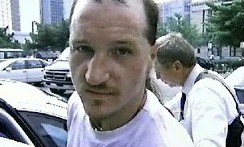
Hank Earl Carr
Murderer Russell Ellwood
Murderer · USA · 1991
Russell Ellwood was a former taxi driver. Authorities suspected him of killing…
20 victims
Russell Ellwood
Murderer · USA · 1991
Russell Ellwood was a former taxi driver. Authorities suspected him of killing…
20 victims
 Robert Martines Perez
Murderer · USA · 1994
Name: Robert Martines Perez · Other name used in proceedings: Robert Martinez P…
15 victims
Robert Martines Perez
Murderer · USA · 1994
Name: Robert Martines Perez · Other name used in proceedings: Robert Martinez P…
15 victims
 Billy Frank Vickers
Murderer · USA · 1993
Billy Frank Vickers Vickers was executed by lethal injection in Texas on Januar…
14 victims
Billy Frank Vickers
Murderer · USA · 1993
Billy Frank Vickers Vickers was executed by lethal injection in Texas on Januar…
14 victims
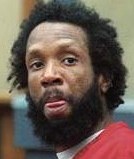 Daryl Mack
Murderer · USA · 1988
Daryl Linnie Mack was executed in Nevada on April 26, 2006 for the rape and mur…
2 victims
Daryl Mack
Murderer · USA · 1988
Daryl Linnie Mack was executed in Nevada on April 26, 2006 for the rape and mur…
2 victims
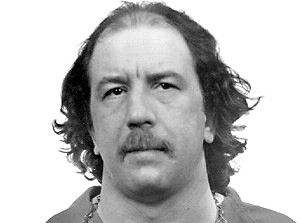 Charles E. Barker
Murderer · USA · 1993
Defendant: Charles E. Barker. · May 25, 2004 — The Indiana Supreme Court issued…
2 victims
Charles E. Barker
Murderer · USA · 1993
Defendant: Charles E. Barker. · May 25, 2004 — The Indiana Supreme Court issued…
2 victims
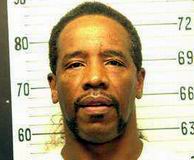 Michael Eugene Sample
Murderer · USA · 1981
Michael Eugene Sample was sentenced to death on February 7, 1983. He and his co…
2 victims
Michael Eugene Sample
Murderer · USA · 1981
Michael Eugene Sample was sentenced to death on February 7, 1983. He and his co…
2 victims
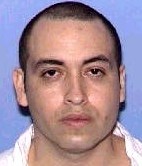 Humberto Garza
Mass murderer · USA · 2003
Name: Humberto Garza · Also known as: “Gallo” · TDCJ number: 999495 · Date of b…
6 victims
Humberto Garza
Mass murderer · USA · 2003
Name: Humberto Garza · Also known as: “Gallo” · TDCJ number: 999495 · Date of b…
6 victims
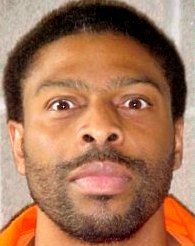 Theodore Washington
Murderer · USA · 1987
Theodore “Teddy” Washington was tried jointly with Fred Robinson and Jimmy Lee…
1 victim
Theodore Washington
Murderer · USA · 1987
Theodore “Teddy” Washington was tried jointly with Fred Robinson and Jimmy Lee…
1 victim
 Artem Anoufriev
Serial killer · Russia · 2010
Artem Anoufriev (born in October 4, 1992) was one of two serial killers from Ir…
6 victims
Artem Anoufriev
Serial killer · Russia · 2010
Artem Anoufriev (born in October 4, 1992) was one of two serial killers from Ir…
6 victims
- Gender
- male
- Country
- USA
- Location
- Brooksville, Florida, USA
- Date of birth
- 1968
- Age at first offence
- 30
- Characteristics
- escape attempt, police officer, domestic violence, abuse
- Victim profile
- His girlfriend's four-year-old son / Tampa Detectives Randy Bell, 44, and Rick Childers, 46, and Florida Highway Patrol Trooper James B. Crooks, 23
- Method of murder
- Shooting
- Date(s) of murder
- May 19, 1998
- Years active
- 1998
- Date of arrest
- —
- Status
-
Died in custody
Committed suicide by shooting himself the same day
Case record: Hank Earl Carr
Hank Earl Carr (d. 1998) was a suspected offender involved in a violence spree that began after the shooting death of a 4-year-old boy. Carr shot law-enforcement personnel and later barricaded himself in a convenience store with a hostage before killing himself by a gunshot.
Background
Carr lived at 709 1/2 E. Crenshaw St. in Tampa with Bernice Bowen and her two children, Joey and Kayla.
Joey and Kayla were Bowen’s children. Carr was the boyfriend/partner of Bowen.
In later testimony and accounts from people who knew Carr and Bowen, Carr was described as abusing Bowen and her children. Evelyn Sacks, Carr’s ex-girlfriend in Ohio and the mother of two children to Carr, said:
"He would beat me constantly,"
"I'm glad he's dead. Live like that, die like that."
Acquaintances described the household as having problems and possible abuse, and there were concerns about weapons and the children.
Former neighbors Charles Campbell and Catherine Phillips said Carr was armed nearly all the time, including carrying guns “around in his pants” and sitting outside shooting squirrels. Catherine Phillips said:
“It was like a constant thing,”
“He'd carry the guns around in his pants and sit out there shooting squirrels.”
In January (year not specified in the material), Campbell said Carr dropped a pistol on the floor of the apartment and the gun went off, sending a bullet through the floor to a room below; no one was injured.
Concerned about weapons and possible abuse to Joey and Kayla, Campbell called the state Department of Children and Families. An agency spokesman, Tom Jones, confirmed the department received two reports of problems at the household and that caseworkers visited but “could not substantiate the allegations.”
Bowen worked on and off as a dancer at the Starlite Lounge strip club on Nebraska Avenue for eight months in 1996 and 1997. Manager Dennis Valdez said that on some nights Bowen came to work with black eyes and bruises on her neck and arm that she covered with makeup. Valdez said:
“She comes in, she's half beat up,”
“She was absolutely and positively terrified of him, and I think she loved him.”
Valdez also said Bowen feared Carr would kill her.
Carr was described as having a criminal record dating back to 1986 and as having prior violent encounters with police. Police chief Bennie Holder said:
“He always had a handcuff key with him.”
The offence
Carr shot his girlfriend’s 4-year-old son, Joey, with a rifle at a home and later events included killing three law-enforcement personnel.
Carr maintained that the shooting of his girlfriend’s son was an accident. In a radio interview at the store, Carr said:
“What happened to my son was an accident. It was a terrible accident, and I don't even think I deserve to live.”
Carr also said he did not think he deserved to live and that he did not believe he would survive.
Carr carried the boy into a fire station and the boy died after being shot in the head.
After Carr was apprehended and handcuffed, he escaped, disarmed a detective, and shot and killed two Tampa detectives.
After that, Carr carjacked a pickup truck and fled while police pursued him. During the pursuit he killed a Florida Highway Patrol trooper.
Carr later entered a convenience store, took a hostage, and remained barricaded there until he died from a self-inflicted gunshot wound.
Investigation
Police initially treated the boy’s head injury as an accident when Carr was questioned and when they investigated the shooting. A police spokesman, Steve Cole, said:
“We were treating this as an accidental shooting, but then all of a sudden the guy just took off,”
“That put a whole new perspective on our investigation. That's a little bit squirrelly.”
Carr provided different accounts of how the shooting occurred. In one account, Carr said he might have hit the butt of the rifle against the wall, causing it to discharge accidentally.
Police later questioned Carr at his home, then took him back to headquarters for questioning, and then took him back to the apartment where he had been shooting the child so detectives could “walk through” the scene.
Arrest and escape
Carr was arrested after he fled from detectives shortly after the boy’s death.
The material records that Carr successfully escaped from handcuffs by using a key he carried on his person while riding in the back of a detective’s car. Tampa Police Department detectives Randy Bell and Ricky Childers were transporting Carr at the time.
The account states that Carr unlocked his handcuffs, disarmed Childers by taking his Glock handgun, and in the ensuing struggle shot both detectives in the face, killing them at the scene.
A subsequent report said:
“Carr used a cheap master key to escape from handcuffs while riding in the the back of a detective's car, police confirmed Wednesday.”
Police reported that Carr anticipated encounters with law enforcement and “always had a handcuff key with him.” Tampa Police Chief Bennie Holder said:
“That was his M.O.”
Timeline
- 9:50 a.m. — Carr and Bernice Bowen carried Joey, age 4, to a Tampa fire station; Joey had been shot once in the head and died.
- 10:30 a.m. — Carr bolted from detectives during questioning, raising suspicion.
- 2 p.m. — Carr escaped his handcuffs and shot Detective Ricky Childers and Detective Randy Bell, then carjacked a white Ford Ranger and headed north on Interstate 275.
- 2:30 p.m. — Florida Highway Patrol Trooper James B. Crooks stopped the Ford Ranger; Carr shot Crooks with a rifle.
- 3 p.m. — Carr crossed into Hernando County and ran over a device used to puncture tires; he fired at pursuing officers and then drove to a Shell gasoline station on State Road 50 and took Stephanie Diane Kramer hostage.
- 7:30 p.m. — Carr released Kramer by the front door.
- 7:20 p.m. — Carr released Kramer and shot himself as a SWAT team forcibly entered the building.
- 4 1/2 hours — No shots were fired during the standoff period in the convenience store.
- 10:15 p.m. — Christopher Espinosa was out of surgery and in stable condition.
Trial and sentencing
The provided material did not include Carr’s conviction, sentencing, or trial outcome.
Outcome
Carr died by suicide from a gunshot wound to the head on May 19, 1998, after barricading himself in a convenience store with hostage Stephanie Kramer. Officers found Carr’s body after explosives and tear gas were used.
The material also records that Joey died, and that the number killed by Carr was four, including the two Tampa detectives and Trooper James B. Crooks.
Aftermath
Victims and other casualties mentioned
- Tampa Police Department detectives Randy Bell (age 44) and Rick Childers (age 46).
- Florida Highway Patrol Trooper James B. Crooks (age 23).
- Joey Bennett, a 4-year-old boy.
- Christopher Espinosa, 56, of Brooksville, was shot in the shoulder while behind the wheel of a J & L Trucking Co. tractor-trailer; he was admitted to Oak Hill Hospital in Spring Hill, surgery occurred, and he was stable after surgery.
- The material also mentions another truck driver, Kevin Luke (age 26, of Corbin, Ky.), who narrowly escaped serious injury when a bullet struck the headrest of his seat; he had minor glass cuts and returned to Kentucky.
- Hostage: Stephanie Diane Kramer, 27-year-old clerk of Dade City, described as pregnant in one account.
Media and public response
The material describes controversy about handcuffing procedures and criticisms of local media coverage during the standoff. The WFLA radio station conducted phone interviews with Carr during the crisis, and the material says the interviews later drew criticism from journalism experts and police. It also says camera crews for local television stations were broadcasting live shots of the area surrounding the convenience store.
The material states that Gov. Lawton Chiles ordered American flags flown at half-staff at all state buildings.
Tampa Mayor Dick Greco made a statement about the event, saying:
“I've never seen anything like this in my life.”
Stephanie Kramer’s hostage episode: selected recorded statements and exchanges
Negotiator Don Richards spoke to Carr during the standoff. The following exchanges are reproduced verbatim in the material.
Hank Earl Carr, speaking during the standoff:
“Um, the lady that works here. No harm will come to her, she's been very nice, very cooperative.”
“If anything, I'll shoot myself.”
“But my wife is supposed to be on the way.”
“They're going to let me talk to her, hopefully she can talk me into making the right decision.”
“Basically, I want to tell her that I'm sorry, and that it was an accident.”
“She was there, she knows it was an accident.”
“And I'm waiting on them.”
Don Richards asked:
“Joseph, could you let that lady out?”
Carr responded:
“Not at this time. Not until I hear from my wife.”
“Which may be time to call now, I don't know what's going on.”
Don Richards asked:
“Joseph, what is preventing you from putting down that weapon and just walking out?”
Carr responded:
“I don't have the weapon, the weapon is laying right here beside me.”
“I haven't had the weapon in my hand for over 15, 20 minutes, now.”
“I'm not in no way threatening this lady.”
“She's visibly upset, but she knows she's going to live.”
“She will live.”
Don Richards asked:
“Why don't you just open that door and walk out very slowly?”
Carr responded:
“Well, there's snipe shooters ... and they're all laying under their cars and all.”
“The police have surrounded ... there's cops everywhere.”
“I'm not going out there.”
“They done shot at me all day.”
“They've been shooting at me for the last 30 miles, you know?”
Don Richards said:
“But if you are not a threat to them, then you should be able to get out OK.”
“Isn't that sort of logical?”
Carr responded:
“Well, I'm already shot.”
“Logically, I don't want to fry in the electric chair.”
“I don't want to go to prison.”
“I don't want to have to eat the food.”
“I don't want to have to live with people.”
“I just ... I don't want to go to prison.”
“I don't want to go.”
Don Richards said:
“The best advice I can give you would be to let that lady, who has nothing to do with any of this, out of that store.”
“And, you know, and to follow her yourself.”
Carr responded:
“Do me a favor.”
“My real name isn't Joseph Lee Bennett.”
Don Richards asked:
“What is it?”
Carr responded:
“Hank Earl Carr.”
Don Richards asked:
“Hank Carr?“
Carr responded:
“Yep.”
Don Richards asked:
“How do you spell that?”
Carr responded:
“C-A-R-R.”
“H-A-N-K.”
Don Richards asked:
“Can we call your wife, Hank?”
Carr responded:
“I'm trying to get them to get a hold of her, so I can talk to her now.”
“That's why I'm fixin' to get off the phone, in case she calls.”
“In case they're bringing her in to try to talk me out of this.”
“She's the only one that can.”
“I know you're trying, I appreciate that.”
Don Richards said:
“That lady has nothing to do with any of this, and, you know, she's treated you well.”
Carr responded:
“She's only served her purpose.”
“She's just keeping me alive long to where I can see my wife.”
Don Richards said:
“Well, again, let her out and ...”
Carr responded:
“I just wanted to tell my story.”
“My son was an accident.”
“We don't keep loaded guns around the kids.”
“That gun was supposed to be empty.”
“I don't understand what happened.”
Don Richards said:
“A lot of people are going to be asking a lot of questions for a long time about this particular day in the history of Tampa Bay.”
“Hank, let that lady out and then follow her with your hands up.”
“What's your wife's name, Hank?”
Carr responded:
“Bernice Marie Bowen”
Don Richards asked:
“Bernice. Let that lady out and then follow her with your hands up and the situation probably can come to a ...”
Carr responded:
“Right after I talk to Bernice, I'll probably give her the guns and let her go out and then I'll just lay on the floor here and they can come and get me.”
“But for right now, I want to talk to my wife before I do anything.”
Don Richards said:
“This situation could end peacefully, Hank.”
“Please.”
“Please. OK?”
Carr responded:
“Ya'll got the story?”
Don Richards responded:
“I think we do.”
Carr responded:
“Thanks, buddy.”
Don Richards responded:
“OK.”
Carr responded:
“Bye.”
Bernice Bowen: related legal proceedings mentioned
The material includes other legal outcomes involving Bernice Bowen, including convictions and appellate reversals, but does not indicate that these outcomes changed Carr’s death or legal status.
The material says that in 1999 Bowen was convicted of child neglect for allowing a violent felon around her children and was sentenced to 15 years in prison.
The material says that later in 1999 Bowen was charged with aiding and abetting Carr’s escape and the deaths of her son and the three police officers, by not telling police Carr’s real name. The material says prosecutors claimed that if she had told police, police would have known he was a convicted felon and used tougher measures. Bowen was sentenced to 21.5 years in prison to run concurrently with the child neglect sentence.
The material says those convictions were thrown out on appeal in 2001. It says a state appeals court found that prosecutors focused too much on what Bowen should have done to prevent Carr’s rampage rather than what she did after the crimes were committed. It also says the court acquitted her of aiding and abetting the deaths of her son and Trooper Crooks. The material then says Bowen was convicted of the remaining charges in 2002 and sentenced to 20 years in prison. It records that sentencing guidelines called for only 6–11 years, and that the judge said Bowen’s lies to police endangered the public. The material says this sentence runs concurrently with her child abuse sentence and that she is eligible for release in 2017.
Other details
The material records that Carr shot himself in the head after releasing hostage Kramer and after police used tear gas and explosives in the convenience store.
The material also includes statements from participants and witnesses during the broader events, but does not list any charges or convictions for Carr beyond his death.
Carr claimed in his radio interview:
“Hank Carr: I turned around to put it up, and I guess the butt hit the side of the wall and it went off. It discharged a round right through my son's face.”
and also:
“I was scared, I panicked, I flipped out.”
He said he later attempted to get his son medical attention:
“I tried to get him medical attention.”
Carr said he was not under arrest when he took off after leaving the fire station and going back for his daughter and to get the rifle for the cops.
Carr described being questioned, being called a liar, and later taking a pistol from an officer and shooting both detectives. He described the bullets:
The material also records that Carr said:
“I can't see giving myself up to fry in the electric chair.”
and:
“It's unlikely that I'll come out of this alive.”
A negotiator statement included:
“We truly believed that he wasn't going to give up easily.”
“He was either going to kill himself - which he did - or he was going to come out and force us to do it.”
Autopsy findings referenced in the material included that Carr had been shot in the buttocks during the chase and that later an autopsy showed the .40-caliber bullet was pressing against his spine.
Spotted an error, or have more information about this case?