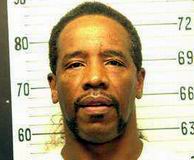
Michael Eugene Sample
Murderer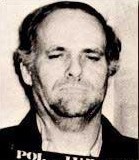 Ervil LeBaron
Murderer · USA · 1972
Ervil Morrell LeBaron (1925 to August 16, 1981) was the leader of a polygamous…
35 victims
Ervil LeBaron
Murderer · USA · 1972
Ervil Morrell LeBaron (1925 to August 16, 1981) was the leader of a polygamous…
35 victims
 Brian Kevin Rosenfeld
Murderer · USA · 1985
Brian Kevin Rosenfeld Brian Kevin Rosenfeld was sentenced to three concurrent l…
23 victims
Brian Kevin Rosenfeld
Murderer · USA · 1985
Brian Kevin Rosenfeld Brian Kevin Rosenfeld was sentenced to three concurrent l…
23 victims
 Marvin Gray
Murderer · USA · 1975
Marvin Gray was convicted killer who claimed responsibility for 23 slayings and…
23 victims
Marvin Gray
Murderer · USA · 1975
Marvin Gray was convicted killer who claimed responsibility for 23 slayings and…
23 victims
 Yahweh ben Yahweh
Murderer · USA · 1980
Yahweh ben Yahweh was born and legally named Hulon Mitchell Jr. (October 27, 19…
23 victims
Yahweh ben Yahweh
Murderer · USA · 1980
Yahweh ben Yahweh was born and legally named Hulon Mitchell Jr. (October 27, 19…
23 victims
 Russell Ellwood
Murderer · USA · 1991
Russell Ellwood was a former taxi driver. Authorities suspected him of killing…
20 victims
Russell Ellwood
Murderer · USA · 1991
Russell Ellwood was a former taxi driver. Authorities suspected him of killing…
20 victims
 Carlyle Harris
Murderer · USA · 1891
Carlyle Harris was executed by electrocution at Sing Sing Prison on May 7, 1893…
1 victim
Carlyle Harris
Murderer · USA · 1891
Carlyle Harris was executed by electrocution at Sing Sing Prison on May 7, 1893…
1 victim
 Genzo Kurita
Serial killer · Japan · 1948
Genzo Kurita ( 栗田 源蔵 , Genzo Kurita , 1926 - October 14, 1959) was a Japanese s…
8 victims
Genzo Kurita
Serial killer · Japan · 1948
Genzo Kurita ( 栗田 源蔵 , Genzo Kurita , 1926 - October 14, 1959) was a Japanese s…
8 victims
 Werner Boost
Serial killer · Germany · 1953
Werner Boost was a German offender who carried out attacks on lovers’ lanes and…
5 victims
Werner Boost
Serial killer · Germany · 1953
Werner Boost was a German offender who carried out attacks on lovers’ lanes and…
5 victims
 Gwendolyn Graham
Serial killer · USA · 1987
Gwendolyn Graham worked as a nurse’s aide at the Alpine Manor Nursing Home in W…
5 victims
Gwendolyn Graham
Serial killer · USA · 1987
Gwendolyn Graham worked as a nurse’s aide at the Alpine Manor Nursing Home in W…
5 victims
 Ryan Matthews
Homicide ? · USA · 1997
Ryan Matthews was an African American juvenile who was 17 years of age at the t…
1 victim
Ryan Matthews
Homicide ? · USA · 1997
Ryan Matthews was an African American juvenile who was 17 years of age at the t…
1 victim
- Gender
- male
- Country
- USA
- Location
- Shelby County, Tennessee, USA
- Date of birth
- May 23, 1956
- Age at first offence
- 25
- Characteristics
- robbery
- Victim profile
- Benjamin Cooke and Steve Jones ( store clerks)
- Method of murder
- Shooting (.32 caliber handgun)
- Date(s) of murder
- August 29, 1981
- Years active
- 1981
- Date of arrest
- Next day
- Status
-
Sentenced to death
Sentenced to death on February 7, 1983
Case overview
Michael Eugene Sample was sentenced to death on February 7, 1983. He and his co-defendant, Larry McKay, were convicted of two counts of felony murder each for the shooting deaths of two Shelby County store clerks during a 1981 robbery. Sample sought post-conviction relief in a capital case, raising issues including the suppression of exculpatory evidence and constitutional error in the jury’s reliance on a felony murder aggravating circumstance. The Supreme Court of Tennessee reversed the Court of Criminal Appeals’ judgment and remanded for further proceedings on the exculpatory evidence issue. The Court held that the felony murder aggravating circumstance error was harmless beyond a reasonable doubt.
Timeline
- August 29, 1981 — Melvin Wallace, Jr. entered the L & G Sundry Store and saw two employees, Benjamin Cooke and Steve Jones, being held at gunpoint during the robbery; Wallace was shot and survived; Cooke and Jones were killed.
- August 30, 1981 — The day after the offenses, police officers apprehended Sample and McKay and found a .32 caliber handgun in their car; bullets fired from the weapon matched those found in all three victims.
- August 31, 1981 — Two days after the offenses, Wallace identified Sample and McKay from a lineup.
- 1984 — Sample’s and McKay’s convictions and sentences were upheld on direct appeal in State v. McKay, 680 S.W.2d 447 (Tenn.1984), cert. denied, 470 U.S. 1034, 105 S.Ct. 1412, 84 L.Ed.2d 795 (1985).
- July 1, 1986 — The three-year statute of limitations began to run for post-conviction cases final before the enactment of Tenn.Code Ann. § 40-30-102 (1990).
- January 1995 — The post-conviction action for relief was filed; Sample alleged suppression of exculpatory evidence and jury reliance on a felony murder aggravating circumstance violating article I, § 16 of the Tennessee Constitution.
- September 30, 1996 — The Court of Criminal Appeals affirmed the denial of post-conviction relief in Sample v. State, Nos. 02C01-9505-CR-000131 and 02C01-9505-CR-00139, 1996 WL 551754, 1996 Tenn.Crim.App. LEXIS 597.
- August 02, 2002 — The Supreme Court of Tennessee issued the opinion in the post-conviction capital case.
Background
Sample and Larry McKay were convicted of felony murder and sentenced to death for the 1981 killing of two men during an armed robbery in Memphis, Tennessee. The Supreme Court of Tennessee addressed two issues in a post-conviction capital case:
- whether the trial court properly ruled that Sample’s claim that the prosecution suppressed exculpatory evidence was barred by the statute of limitations; and
- whether the trial court properly determined that the jury’s reliance on the felony murder aggravating circumstance in imposing a death sentence for felony murder violated article I, § 16 of the Tennessee Constitution and, if so, whether the error was harmless beyond a reasonable doubt.
The Court of Criminal Appeals affirmed the denial of post-conviction relief. The Supreme Court of Tennessee held that the decision in Wright v. State, 987 S.W.2d 26 (Tenn.1999), did not create a per se rule requiring dismissal of all late-arising suppression of exculpatory evidence claims. The Court concluded that the record in this case preponderated against the trial court’s determination that Sample’s liberty interest in raising such an issue was outweighed by the State’s interest in finality. The Supreme Court remanded for further proceedings on the exculpatory evidence claim.
The Supreme Court further held that the violation of article I, § 16 of the Tennessee Constitution under the present facts was harmless error beyond a reasonable doubt under State v. Howell, 868 S.W.2d 238 (Tenn.1993). The Supreme Court reversed the Court of Criminal Appeals’ judgment and remanded to the trial court for further proceedings consistent with the opinion.
The offence
On August 29, 1981, Melvin Wallace, Jr. entered the L & G Sundry Store and saw two employees, Benjamin Cooke and Steve Jones, being held at gunpoint. Wallace tried to flee but was shot in the leg by Sample. While Wallace lay on the floor, he heard Sample demand money and threaten to kill everyone. Wallace saw McKay shoot Cooke. When Sample realized Wallace was still alive, he shot Wallace in the back. Sample then put a gun to Wallace’s head, but it misfired. Wallace and Sample engaged in a struggle, and Wallace lost consciousness when the gun fired near his head. Wallace survived the shootings, but Cooke and Jones were killed.
The Supreme Court described the convictions and sentences as two counts of felony murder for each defendant.
Investigation
The day after the offenses, police officers apprehended Sample and McKay and found a .32 caliber handgun in their car. Bullets fired from this weapon matched those found in all three victims. Two days after the offenses, Wallace identified Sample and McKay from a lineup. At trial, Wallace again identified Sample and McKay as the persons who committed the offenses.
Charles Rice testified that he fled from the scene when he saw the robbery in progress and also identified Sample and McKay as the perpetrators.
Trial
Both Sample and McKay were convicted of two counts of felony murder. At a sentencing hearing to determine punishment, Sample introduced mitigating evidence. The Supreme Court described multiple family and work-character witnesses and Sample’s own testimony.
Sample introduced mitigating evidence that he was an “exceptionally good” and “very conscientious” employee. Several family members testified about Sample’s work history, character, and qualities as a husband, father, and son-in-law. Sample’s mother testified that he was a good son and asked the jury to spare his life. Sample testified that he did not commit these crimes and asked the jury to spare his life for the sake of his son and wife.
The jury sentenced Sample to death based on three aggravating circumstances:
- that he created a great risk of death to two or more persons other than the victims who were murdered;
- that he committed the murder to avoid, interfere with or prevent a lawful arrest or prosecution; and
- that the murders were committed in the course of committing a felony.
The aggravating circumstances were cited as Tenn.Code Ann. § 39-2404(i)(3), (6), (7) (Supp.1981).
Sentencing
At sentencing, the prosecution and the jury relied on the three aggravating circumstances. The Supreme Court later described the Middlebrooks-related issue as involving the jury’s reliance on the felony murder aggravating circumstance duplicating the elements of felony murder.
In reviewing the Howell factors in the harmless error analysis, the Supreme Court noted:
- There were two valid aggravating circumstances relied upon by the jury in imposing the death sentences, in addition to the invalid felony murder aggravating circumstance: that Sample knowingly created a great risk of death to two or more persons other than the victim murdered, during the act of murder; and that the murders were committed to avoid arrest or prosecution.
- The record showed that Sample engaged in conduct that knowingly created a great risk of death to two or more persons in the store other than the murder victims, with at least seven gunshots fired between Sample and McKay.
- Regarding avoiding arrest or prosecution, the Supreme Court stated that the aggravating circumstance applied whenever evidence demonstrated avoidance of arrest or prosecution was one of the motives for the killing, and that it need not be the sole motive.
- The trial court found it was “abundantly clear from the record that the shootings occurred in order for [Sample and McKay] to avoid arrest and prosecution.”
- The prosecution mentioned the felony murder aggravating circumstance on several occasions in its closing argument following sentencing, but more significance was attributed to the other aggravating factors; the Court of Criminal Appeals likewise observed that the issue was not dwelled upon or given undue emphasis.
- The Supreme Court concluded that the jury would have imposed the same verdict had it given no weight to the invalid aggravating circumstance.
Appeals
Direct appeal
Sample’s and McKay’s convictions and sentences were upheld on direct appeal in State v. denied, 470 U.S. 1034, 105 S.Ct. 1412, 84 L.Ed.2d 795 (1985).
Post-conviction proceedings
Sample filed the post-conviction action for relief in January 1995. The petition alleged due process and fair trial violations under the Fourteenth Amendment to the United States Constitution and article I, § 8 of the Tennessee Constitution by suppressing exculpatory evidence. The petition also alleged that the jury’s reliance upon the felony murder aggravating circumstance violated article I, § 16 of the Tennessee Constitution under State v. Middlebrooks.
The trial court initially dismissed the post-conviction petition without requiring the State to file an answer, conducting an evidentiary hearing, or addressing the merits. When the dismissal was appealed, the Court of Criminal Appeals recognized that the petition was filed after the expiration of the three-year statute of limitations then applicable to post-conviction cases under Tenn.Code Ann. § 40-30-102 (1990), but held the trial court erred in summarily dismissing the petition without determining whether the exculpatory evidence issue should be heard as a later-arising claim. The Court of Criminal Appeals also held that the trial court erred in failing to determine whether the article I, § 16 violation was harmless error beyond a reasonable doubt.
On remand, the trial court determined the exculpatory evidence issue was barred by the statute of limitations after applying Wright v. State, 987 S.W.2d 26 (Tenn.1999). The trial court also found the article I, § 16 violation was harmless beyond a reasonable doubt. On further appeal, the Court of Criminal Appeals affirmed the trial court’s conclusion that the exculpatory evidence issue was barred by the statute of limitations, while expressing concern that Wright might unfairly prevent petitioners from litigating late-arising exculpatory evidence issues through no fault of their own. The Supreme Court granted review.
Exculpatory evidence claim (Brady)
The Supreme Court explained that the United States Supreme Court had held: “suppression by the prosecution of evidence favorable to an accused upon request violates due process where the evidence is material either to guilt or punishment, irrespective of the good faith or bad faith of the prosecution.”
Evidence was favorable where it exculpated the accused, mitigated punishment, or impeached prosecution witnesses. Evidence was material when there was a reasonable probability that the result of the proceeding would have been different had exculpatory evidence been disclosed.
Sample’s petition alleged that the prosecution violated these due process principles by suppressing police records that included statements made by Melvin Wallace. The petition alleged, among other examples, that:
- Wallace told Sgt. J.D. Welch that he did not notice Sample during the robbery.
- Wallace told Sgt. Welch that he had been shot by McKay.
- Wallace told Officer J.D. Douglas that he could identify McKay but not the second man involved in the offense.
- Wallace gave physical descriptions that did not match either McKay or Sample. The petition alleged these statements were exculpatory and material because they contradicted Wallace’s critical eyewitness testimony at trial.
The petition also alleged that the prosecution suppressed exculpatory evidence including:
- reports that Sample’s fingerprints were not found at the scene;
- reports that other potential suspects were near the scene at the time of the offenses;
- descriptions given to the dispatcher that matched neither Sample nor McKay;
- descriptions given to officers by witness Charles Rice that matched neither Sample nor McKay;
- inconsistent statements made by Rice regarding the offenses;
- reports that drugs were commonly sold from the L & G grocery store.
Sample asserted that the claim was not raised within the three-year statute of limitations because he was unaware the prosecution suppressed exculpatory evidence until he had access to investigative files pursuant to the decision in Capital Case Resource Center of Tennessee, Inc. v. Woodall, No. 01A01-9104-CH-00150, 1992 WL 12217, 1992 Tenn. Ct.App. LEXIS 94 (Jan. 29, 1992), which held that the Tennessee Public Records Act applied to criminal cases under collateral review. The petition further alleged that, after remand, Sample requested exculpatory evidence both before trial and after the Woodall decision and did not obtain possession of the evidence until September of 1993.
The trial court nonetheless determined the claim was barred by the statute of limitations.
Statute of limitations and due process balancing
At the time Sample filed the petition, the Post Conviction Procedure Act required that a prisoner in custody under a sentence of a court of this state petition for post-conviction relief within three years of the date of the final action of the highest state appellate court to which an appeal is taken, or consideration of such petition would be barred. The Supreme Court noted that because Sample’s direct appeal was decided in 1984, the parties agreed that the three-year statute began to run on July 1, 1986, and that Sample’s January 1995 petition was filed after the limitations period expired.
Sample argued that the exculpatory evidence claim could not have been raised before the limitations period expired because he did not have access to investigative files until Woodall in January 1992 and did not obtain actual possession of the exculpatory evidence until September 1993. Sample argued that applying the statute of limitations would deny him a reasonable opportunity to raise the claim and violate due process. The State argued the claim was barred because Woodall was decided in January 1992 and the petition was not filed until January 1995, and the petitioner was not denied a reasonable opportunity to have the claim heard.
The Supreme Court described its due process jurisprudence, including Burford v. State, Sands v. State, and Wright v. State. The Court recognized that due process requires potential litigants be provided an opportunity for presentation of claims at a meaningful time and in a meaningful manner, using a balancing test to determine whether the time period provided a reasonable opportunity to have the claimed issue heard and determined.
The Supreme Court concluded that its earlier decision in Wright did not create a per se rule dismissing all late-arising suppression of exculpatory evidence claims. It held that due process balancing must consider case-specific factors and that, unlike Wright, Sample’s petition was accompanied by exhibits and records containing apparent exculpatory evidence and detailed Sample’s efforts to obtain exculpatory evidence both before and after Woodall. The Supreme Court also noted that the State did not explain why the prosecution did not respond to repeated requests and did not otherwise convincingly respond to Sample’s assertions regarding his efforts to secure evidence.
The Supreme Court concluded that its decision in Wright did not require dismissal and that the record preponderated against the trial court’s determination that Sample’s liberty interests were outweighed by the State’s finality interests.
Middlebrooks error and harmlessness (article I, § 16)
Sample alleged that the jury’s reliance on the felony murder aggravating circumstance to impose a death sentence for the offense of felony murder violated article I, § 16 of the Tennessee Constitution under State v. Middlebrooks. The Supreme Court explained that in Middlebrooks it held the felony murder aggravating circumstance duplicated elements of the offense of felony murder and, when applied to felony murder, failed to narrow the class of death-eligible murderers as required by article I, § 16 and the Eighth Amendment.
The Supreme Court stated that Middlebrooks errors were properly recognized in post-conviction proceedings and that the critical inquiry was harmlessness under State v. Howell. Under Howell, a resentencing hearing was not required if the reviewing court concluded beyond a reasonable doubt that the sentence would have been the same had the jury given no weight to the invalid felony murder aggravating factor. The Howell analysis required examining the record for factors potentially influencing the sentence, including number and strength of remaining valid aggravating circumstances, prosecutor’s argument at sentencing, evidence admitted to establish the invalid aggravator, and the nature, quality, and strength of mitigating evidence.
The Supreme Court determined that:
- Two valid aggravating circumstances supported the death sentence: great risk of death to two or more persons other than the murder victims, and murders committed to avoid arrest or prosecution.
- The trial court found Sample and McKay were convicted of murdering two people and that a third person was shot and left to die; the Court of Criminal Appeals observed that Sample and McKay acted jointly to kill three people and fired at least seven gunshots between them, with the great risk of death applying to victims at risk from the murders.
- For avoiding arrest or prosecution, the trial court found it was abundantly clear the shootings occurred to avoid arrest and prosecution, and the Court of Criminal Appeals stated that Sample and McKay killed two eyewitnesses to the robbery and then fled after believing a third eyewitness had been killed.
- No additional evidence was admitted to support the invalid felony murder aggravating circumstance beyond evidence admitted to prove felony murder in the guilt phase.
- The prosecutor’s closing argument mentioned the felony murder aggravator several times, but more significance was attributed to the other aggravating factors, and the prosecution did not dwelled upon or give undue emphasis to the felony murder aggravating circumstance.
- Mitigating evidence included evidence Sample asked the jury to spare his life for his wife and child and evidence regarding family support and work background, with foremen describing him as exceptionally good and very conscientious and with no problem with people he oversaw, plus testimony from family members and Sample’s own testimony.
After applying the Howell factors and considering individualized sentencing, the Supreme Court held that the verdict would have been the same had the jury given no weight to the invalid aggravating circumstance.
Outcome
The Court held that:
- the trial court erred in treating Sample’s exculpatory evidence suppression claim as barred by the statute of limitations; and
- the Middlebrooks error involving the felony murder aggravating circumstance was harmless beyond a reasonable doubt under Howell.
Aftermath
Costs of the appeal were taxed to the State of Tennessee for which execution may issue if necessary.
Other details
Parties and opinions
Justice E. Riley Anderson delivered the opinion. The opinion stated it was joined by Adolpho A. Birch, Jr. and Janice M. Holder. The Supreme Court listed counsel for the appellant and appellee, including David M. Eldridge and Harry R. Reinhart for Michael Eugene Sample, and Melvin E. Moore, Jennifer L. Smith, Erik W. Daab, William L. Gibbons, Reginald Henderson, and John W. Campbell for the State of Tennessee.
Concurrences and separate opinions
A concurring opinion emphasized the majority’s response to dissenting characterizations of Workman v. State, including quotations from the Workman majority opinion regarding due process tolling and the balancing of governmental and private interests.
A separate concurring and dissenting opinion discussed shortcomings in Workman v. State, described Workman’s procedural history and timing relative to scheduled execution, and concluded that the majority’s reliance on Workman as authority for timeliness was improper in that author’s view.
Footnote information included in the text
The opinion included footnotes, including references to Tennessee Code Annotated provisions, earlier robbery allegations, and prior post-conviction suits that were denied and affirmed on appeal, listing:
- McKay & Sample v. State, No. 25, 1989 WL 17507, 1989 Tenn.Crim.App. LEXIS 153 (March 1, 1989);
- Sample & McKay v. State, No. 02C01-9104-CR-00062, 1995 WL 66563, 1995 Tenn.Crim.App. LEXIS 115 (Feb. 15, 1995);
- State v. McKay & Sample, No. 02C01-9506-CR-00175, 1996 WL 417664, 1996 Tenn.Crim.App. LEXIS 460 (July 26, 1996).

Spotted an error, or have more information about this case?