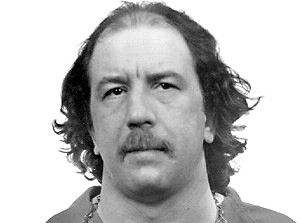
Charles E. Barker
Murderer Brian Kevin Rosenfeld
Murderer · USA · 1985
Brian Kevin Rosenfeld Brian Kevin Rosenfeld was sentenced to three concurrent l…
23 victims
Brian Kevin Rosenfeld
Murderer · USA · 1985
Brian Kevin Rosenfeld Brian Kevin Rosenfeld was sentenced to three concurrent l…
23 victims
 Russell Ellwood
Murderer · USA · 1991
Russell Ellwood was a former taxi driver. Authorities suspected him of killing…
20 victims
Russell Ellwood
Murderer · USA · 1991
Russell Ellwood was a former taxi driver. Authorities suspected him of killing…
20 victims
 Robert Martines Perez
Murderer · USA · 1994
Name: Robert Martines Perez · Other name used in proceedings: Robert Martinez P…
15 victims
Robert Martines Perez
Murderer · USA · 1994
Name: Robert Martines Perez · Other name used in proceedings: Robert Martinez P…
15 victims
 Billy Frank Vickers
Murderer · USA · 1993
Billy Frank Vickers Vickers was executed by lethal injection in Texas on Januar…
14 victims
Billy Frank Vickers
Murderer · USA · 1993
Billy Frank Vickers Vickers was executed by lethal injection in Texas on Januar…
14 victims
 Lorenzo Fayne
Serial killer · USA · 1989
Lorenzo Fayne grew up in Milwaukee and lived in the 2400 block of W. Lloyd St.…
6 victims
Lorenzo Fayne
Serial killer · USA · 1989
Lorenzo Fayne grew up in Milwaukee and lived in the 2400 block of W. Lloyd St.…
6 victims
 Paul Woodward
Murderer · USA · 1986
Paul E. Woodward was convicted of capital murder (with the underlying crime of…
1 victim
Paul Woodward
Murderer · USA · 1986
Paul E. Woodward was convicted of capital murder (with the underlying crime of…
1 victim
 Huang Hu
Frustrated murderer · China · 2002
Huang Hu was born in 1973 in Wuchuan, Guangdong, China. He died on January 3, 2…
0 victims
Huang Hu
Frustrated murderer · China · 2002
Huang Hu was born in 1973 in Wuchuan, Guangdong, China. He died on January 3, 2…
0 victims
 Fred Marion Gilreath
Murderer · USA · 1979
May 11, 1979 — Linda Gilreath and her father, Gerrit Van Leeuwen, returned to t…
2 victims
Fred Marion Gilreath
Murderer · USA · 1979
May 11, 1979 — Linda Gilreath and her father, Gerrit Van Leeuwen, returned to t…
2 victims
- Gender
- male
- Country
- USA
- Location
- Marion County, Indiana, USA
- Date of birth
- January 19, 1958
- Age at first offence
- 35
- Characteristics
- —
- Victim profile
- Francis Benefiel, 66, and Helen Benefiel, 65 (Grandparents of Barker's former girlfriend)
- Method of murder
- Shooting
- Date(s) of murder
- August 3, 1993
- Years active
- 1993
- Date of arrest
- —
- Status
-
Sentenced to death
Sentenced to death on December 30, 1996.
Case information
- Defendant: Charles E. Barker.
Timeline
- May 25, 2004 — The Indiana Supreme Court issued a decision in the interlocutory appeal and held that the trial court’s order dismissing the State’s request for the death penalty was reversed, with remand for reinstatement of the death penalty request and for penalty phase proceedings as previously ordered by the Court.
- June 27, 2003 — The trial court found that Indiana Code § 35-50-2-9 was unconstitutional and dismissed the State’s request for the death penalty, directing that the case be scheduled for a sentencing proceeding where a term of years was the only available option.
- August 1993 — The murder for which Barker awaited sentencing was committed in August of 1993.
- June 30, 2002 — The 2002 amendment to the Indiana death penalty/life without parole statute applied to defendants sentenced after June 30, 2002.
- 2004 — The Indiana Supreme Court referenced resolving similar constitutional questions in Ritchie v. State and Helsley v. State.
Background
Charles E. Barker entered a guilty plea to all charges in the Marion Superior Court and was sentenced to Life Without Parole on two counts of Murder.
The offence
Barker was convicted of:
- Two counts of murder
- One count each of kidnapping, confinement, burglary, and carrying a handgun without a license
Investigation
No investigation facts were included in the provided material.
Arrest
No arrest facts were included in the provided material.
Trial
Penalty phase and instruction issue
The jury recommended and the trial court imposed the death penalty. A prior reversal and remand occurred because the penalty phase jury was not instructed on the possibility of life without parole, as required by statute. Barker v. State, 695 N.E.2d 925 (Ind. 1998).
Reversal and remand for constitutional issues
On remand, Barker successfully moved to dismiss the death penalty request on grounds that Indiana’s death penalty statute was facially unconstitutional in light of Apprendi v. New Jersey, 530 U.S. 466, 120 S.Ct. 2348, 147 L.Ed.2d 435 (2000). State v. Barker, 768 N.E.2d 425 (Ind. 2002).
New penalty phase proceedings and further motions
The new penalty phase proceedings were to be governed by the 2002 amendment to the Indiana death penalty/life without parole statute, which applies to defendants sentenced after June 30, 2002. Ind. Code § 35-50-2-9(e).
Barker again moved to dismiss the death penalty request upon grounds not previously asserted. The trial court granted the motion and concluded that Indiana’s amended death penalty statute was unconstitutional, dismissed the death penalty request, and directed that the case be scheduled for a sentencing proceeding where a term of years was the only available option.
Sentencing
Barker initially received:
- Life Without Parole on two counts of Murder
- Consecutive sentences:
- Kidnapping (50 years)
- Confinement (20 years)
- Burglary (20 years)
- Carrying a Handgun Without a License (1 year)
After remand, the jury recommended and the trial court imposed the death penalty, but the penalty phase process was affected by instruction error. Barker v. State, 695 N.E.2d 925 (Ind. 1998).
The Indiana Supreme Court later reversed the trial court’s order dismissing the State’s request for the death penalty and remanded for reinstatement of the death penalty request and for penalty phase proceedings as previously ordered by the Court.
Appeals
Case caption and court
- Court: Indiana Supreme Court
- Case number: 49S00-0308-DP-392
- Parties: State of Indiana (Appellant) v. Charles E. Barker (Appellee)
- Trial court number: 49G05-9308-CF-95544
- Judge: Honorable Grant W. Hawkins
- Type of appeal: Interlocutory appeal from the Marion Superior Court.
Issues in interlocutory appeal
The interlocutory appeal concerned a trial court order dismissing the State’s request for the death penalty and ordering a sentencing proceeding where a term of years was the only option.
1. “Weighing” not a “Fact”
Indiana Code § 35-50-2-9 provided in relevant part:
"(e) . . . the jury shall recommend to the court whether the death penalty or life imprisonment without parole, or neither, should be imposed.
The jury may recommend: (1) the death penalty; or (2) life imprisonment without parole; only if it makes the findings described in subsection (l).
If the jury reaches a sentencing recommendation, the court shall sentence the defendant accordingly. . . . . . .
(l) Before a sentence may be imposed under this section, the jury, in a proceeding under subsection (e), or the court, in a proceeding under subsection (g), must find that:
(1) the state has proved beyond a reasonable doubt that at least one (1) of the aggravating circumstances listed in subsection (b) exists; and
(2) any mitigating circumstances that exist are outweighed by the aggravating circumstance or circumstances.
Ind. Code § 35-50-2-9."
The State contended the trial court erred in concluding that, because the statute did not require a penalty phase jury to find that mitigating circumstances outweighed aggravating circumstances beyond a reasonable doubt, the Indiana death penalty statute was unconstitutional.
The defendant argued that under the Ring/Apprendi rule, “weighing” had to be proven beyond a reasonable doubt as it effectively acted like an element required to support a higher sentence.
After briefing was completed, the Court addressed the same question in Ritchie v. State, ___ N.E.2d ___ (Ind. 2004), holding that:
"[n]either federal constitutional doctrine under Apprendi and Ring nor Indiana state jurisprudence leads to the requirement that weighing be done under a reasonable doubt standard." Id. at ___ (slip op. at 8).
The Court also held:
"the Indiana Death Penalty Statute does not violate the Sixth Amendment as interpreted by Apprendi and Ring. Once a statutory aggravator is found by a jury beyond a reasonable doubt, the Sixth Amendment as interpreted in Ring and Apprendi is satisfied." Id. at ___ (slip op. at 10).
Based on that conclusion, the Court held that because there was no constitutional requirement that the weighing factor be found beyond a reasonable doubt, the trial court erred in concluding otherwise.
2. The “Hung Jury” provision
The defendant contended the statute unconstitutionally permitted a death sentence to be imposed by a judge alone in cases where the jury could not reach a sentencing decision, referencing Ind. Code § 35-50-2-9(f) (“Subsection 9(f)”):
"If a jury is unable to agree on a sentence recommendation after reaso nable deliberations, the court shall discharge the jury and proceed as if the hearing had been to the court alone." Ind. Code § 35-50-2-9(f).
The defendant argued that this provision violated Ring and rendered the entire death penalty statute unconstitutional, and that the Court had no power to sever the provision. Barker’s procedural history did not include a hung jury; the material stated that the penalty phase jury unanimously recommended death, but due to instruction error the case was reversed and remanded for a new penalty phase procedure.
The Court referenced the State’s written argument to the trial court:
"The State concedes that the procedure set forth in IC 35-50-2-9(f), if it were followed by a trial court in sentencing a defendant to death (or to life without parole), would be in violation of Ring." Appellant's Appendix at 142.
The Court declined to accept the concession and explained that the federal constitution required aggravating circumstances to be determined by a jury beyond a reasonable doubt, but did not require the weighing—whether by judge or jury—to be under a reasonable doubt standard. The Court described how subsection 9(d) required a special verdict form for each aggravating circumstance alleged and how subsection 9(f) could apply if a jury unanimously found aggravators proven beyond a reasonable doubt but could not unanimously agree on whether mitigating circumstances were outweighed.
The Court stated that if a penalty phase jury was unable to reach a unanimous decision as to aggravating circumstances, Ring and Apprendi would prohibit a trial judge from proceeding under Subsection 9(f), and a new penalty phase trial would be required, citing Bostick v. State, 773 N.E.2d 266, 273-74 (Ind. 2002).
The Court analogized to a hung jury and stated:
"a mistrial should be declared and the case submitted to a new jury."
The Court also held that subsection 9(f) could be severed without invalidating the entire statute, citing Brady v. State, 575 N.E.2d 981, 988-89 (Ind. 1991), and discussed severability, including:
"A statute bad in part is not necessarily void in its entirety. Provisions within the legislative power may stand if separable from the bad. But a provision, inherently unobjectionable, cannot be deemed separable unless it appears both that, standing alone, legal effect can be given to it and that the legislature intended the provision to stand, in case others included in the act and held bad should fall."
The Court then held that it did not find subsection 9(f) unconstitutional as written, but held:
- subsection 9(f) “may not be constitutionally applied” to permit a judge to impose a sentence where a jury had been unable to decide whether aggravating circumstances were proven beyond a reasonable doubt.
The Court concluded this did not impede the State’s death penalty request in Barker’s case.
3. “Recommend” and special verdict language
The defendant contended the amended death penalty statute was unconstitutional because it “systematically diminishes the jury's sense of responsibility,” quoting the defendant’s brief arguments:
- “systematically diminishes the jury's sense of responsibility.”
- “nowhere does it state or suggest the jury's role is anything other than advisory.”
The Court rejected the argument and relied on the amended statutory language:
The Court stated:
"there is only one sentencing determination, which is done by the jury."
The Court also addressed concerns about special verdict forms and the possibility of a court sentencing to death even if the jury recommended less than death, concluding that after a penalty phase jury reached a recommendation against the death penalty (or life without parole), a trial court could not enter judgment providing for a greater sentence, given the amended subsection 9(e).
The Court described statutory changes as including that the amendment deleted language previously providing the court was not bound by the jury’s recommendation, and held:
"once a penalty phase jury reaches a recommendation against the death penalty (or life imprisonment without parole), a trial court may not thereafter enter judgment providing for a greater sentence."
Ex post facto argument
The defendant argued that application of the amended death penalty statute violated prohibitions on ex post facto laws. The Court addressed:
- the murder was committed in August of 1993
- the statute as amended in 2002 applied to sentencing hearings held after June 30, 2002
- recent Indiana Supreme Court cases that determined the amended statute could be applied without violating ex post facto prohibitions.
The Court referenced Helsley v. State, ___ N.E.2d ___ (Ind. 2004) (slip op. at 10), Stroud, ___ N.E.2d at ___ (slip op. at 17), and Ritchie.
Outcome
The Indiana Supreme Court reversed the trial court’s June 27, 2003 order finding Indiana Code § 35-50-2-9 unconstitutional and dismissing the State’s request for the death penalty.
The Supreme Court remanded for reinstatement of the State’s death penalty request and for penalty phase proceedings as previously ordered by the Court.
Aftermath
Concurrences
- Shepard, C.J., concured.
- Sullivan, J., concurred with a separate opinion.
- Boehm, J., concurred except as to the description of the effect of the 2002 amendments to the Death Penalty Statute, as to which his views were set forth in his separate opinion in Helsley v. State, __ N.E.2d __ (Ind. 2004) (slip op. at 15).
- Rucker, J., concurred in result with a separate opinion.
Separate opinion by Sullivan, Justice (concurring)
The material stated that in Bostick v. State, 773 N.E.2d 266, 274-75 (Ind. 2002), Sullivan had dissented from the proposition that remand for a new penalty phase was a permissible option under Indiana Code § 35-50-2-9 where the jury was unable to reach a unanimous sentencing recommendation. The concurrence acknowledged stare decisis for this and future cases.
Separate opinion by Rucker, Justice (concurring in result)
Rucker agreed the Indiana death penalty statute was not unconstitutional, but differed from the majority’s conclusion that “neither federal constitutional doctrine under Apprendi and Ring nor Indiana state jurisprudence leads to the requirement that weighing be done under a reasonable doubt standard.”
Rucker described a view that death eligibility required:
- the existence beyond a reasonable doubt of at least one statutory aggravating circumstance
- and that the aggravating circumstances outweigh mitigating circumstances citing Ind. Code § 35-50-2-9(l) and Brown v. State, 698 N.E.2d 1132, 1144 (Ind. 1998).
Rucker discussed Apprendi and Ring language and argued it required jury findings beyond a reasonable doubt for facts that increased punishment beyond the authorized maximum, including the “weighing” requirement as a matter of effect. Rucker then stated that, despite his view, he would not declare the weighing portion unconstitutional and would instead construe the statute as implicitly requiring the jury to find beyond a reasonable doubt that mitigating circumstances that exist are outweighed by the aggravating circumstance or circumstances, citing Ritchie for statutory construction to avoid constitutional problems.
Other details
- Footnote in the material included the hung jury provision quoted above.
- The material included additional footnotes: one pointing to an examination of alternative penalty phase outcomes in Saylor v. State, and one quoting the trial court’s statement that subsection 9(f) “although improper, does not jeopardize the constitutionality of I.C. § 35-50-2-9 inasmuch as the statutory framework remains intact, and viable, in the absence of the offending subsection.”
- The material included a footnote referencing Bostick and the State seeking life without parole under the same statutory provision governed by Ind. Code § 35-50-2-9(f).
- Another footnote stated that Barker did not challenge the authority of a trial court under the statute to sentence to a penalty lesser than that unanimously recommended by a penalty phase jury, and the Court declined to address the question.

Spotted an error, or have more information about this case?