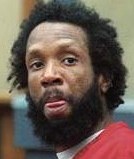
Daryl Mack
Murderer Brian Kevin Rosenfeld
Murderer · USA · 1985
Brian Kevin Rosenfeld Brian Kevin Rosenfeld was sentenced to three concurrent l…
23 victims
Brian Kevin Rosenfeld
Murderer · USA · 1985
Brian Kevin Rosenfeld Brian Kevin Rosenfeld was sentenced to three concurrent l…
23 victims
 Yahweh ben Yahweh
Murderer · USA · 1980
Yahweh ben Yahweh was born and legally named Hulon Mitchell Jr. (October 27, 19…
23 victims
Yahweh ben Yahweh
Murderer · USA · 1980
Yahweh ben Yahweh was born and legally named Hulon Mitchell Jr. (October 27, 19…
23 victims
 Russell Ellwood
Murderer · USA · 1991
Russell Ellwood was a former taxi driver. Authorities suspected him of killing…
20 victims
Russell Ellwood
Murderer · USA · 1991
Russell Ellwood was a former taxi driver. Authorities suspected him of killing…
20 victims
 Robert Martines Perez
Murderer · USA · 1994
Name: Robert Martines Perez · Other name used in proceedings: Robert Martinez P…
15 victims
Robert Martines Perez
Murderer · USA · 1994
Name: Robert Martines Perez · Other name used in proceedings: Robert Martinez P…
15 victims
 Michael Dean Gonzales
Murderer · USA · 1995
Michael Dean Gonzales was convicted of capital murder and sentenced to death. A…
2 victims
Michael Dean Gonzales
Murderer · USA · 1995
Michael Dean Gonzales was convicted of capital murder and sentenced to death. A…
2 victims
 Christopher Britton
Murderer · 2001
Name: Christopher Britton · TDCJ Number: 999426 · Full name: Christopher Wade B…
1 victim
Christopher Britton
Murderer · 2001
Name: Christopher Britton · TDCJ Number: 999426 · Full name: Christopher Wade B…
1 victim
 Gary Ridgway
Serial killer · USA · 1982
Gary Leon Ridgway Ridgway was born 18-February-1949 in Salt Lake City, UT. He w…
49 victims
Gary Ridgway
Serial killer · USA · 1982
Gary Leon Ridgway Ridgway was born 18-February-1949 in Salt Lake City, UT. He w…
49 victims
 Jody Lynn Bowman
Homicide · USA · 2003
Jody Lynn Bowman was acquitted of a murder charge by a Florida jury in May 2004…
1 victim
Jody Lynn Bowman
Homicide · USA · 2003
Jody Lynn Bowman was acquitted of a murder charge by a Florida jury in May 2004…
1 victim
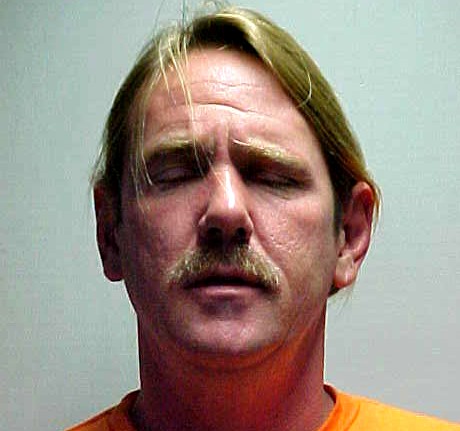 Frank Dale McCray
Murderer · USA · 1987
Frank Dale McCray was convicted in Maricopa County Superior Court and sentenced…
1 victim
Frank Dale McCray
Murderer · USA · 1987
Frank Dale McCray was convicted in Maricopa County Superior Court and sentenced…
1 victim
 Darrell Glenn Carr
Murderer · 1991
Darrell Glenn Carr was sentenced to death on March 10, 1993.
1 victim
Darrell Glenn Carr
Murderer · 1991
Darrell Glenn Carr was sentenced to death on March 10, 1993.
1 victim
- Gender
- male
- Country
- USA
- Location
- Washoe County, Nevada, USA
- Date of birth
- October 28, 1958
- Age at first offence
- 30
- Characteristics
- rape, convicted rapist, torture
- Victim profile
- Betty Jane May, 55 / Kim Parks (prostitute - Mack was Park's pimp)
- Method of murder
- Strangulation
- Date(s) of murder
- 1988 / 1994
- Years active
- 1988–1994
- Date of arrest
- —
- Status
-
Executed
Executed by lethal injection in Nevada on April 26, 2006
Case overview
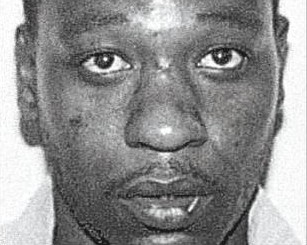
Daryl Linnie Mack was executed in Nevada on April 26, 2006 for the rape and murder of Betty Jane May in Reno.
Timeline
- October 28, 1988 — Betty Jane May was found dead in her basement room at a boarding house in Reno.
- April 8, 1994 — Mack helped Kim Parks move from one hotel to another and expected to receive some money she had earned.
- 1994 — A blood sample was taken from Mack in relation to the Kim Parks investigation.
- 1999 — DNA testing of evidence from May’s murder was requested and compared to a blood sample from Mack taken in 1994.
- February 2001 — Detective David Jenkins obtained a saliva sample from Mack pursuant to a seizure order.
- 2002 — Mack waived jury trial and was found guilty by the court; a three-judge panel sentenced him to death; the date was set for execution in connection with later appeal proceedings.
- June 24, 2002 — The United States Supreme Court issued an opinion in Ring v. Arizona.
- August 2004 — Mack had been ready to drop his appeals since August 2004.
- December 1, 2005 — A date was set for execution after Mack waived further challenges.
- February — A state Supreme Court stay was lifted after the court dismissed a petition filed by Viola Mack.
- April 26, 2006 — Mack was executed by lethal injection in Nevada; he was pronounced dead at 9:06 p.m.
People involved
- Betty Jane May (victim) — 55-year-old woman found dead in her basement room at a boarding house in Reno. She was a mother of three and left behind a son and two daughters.
- Steven Floyd (witness/neighbor) — Lived next door in the boarding house; after drinking at a nearby bar he went to May’s home to try to borrow some money and discovered May’s body.
- Jim and Kelly Bassett (boarding house managers) — Floyd told the landlords, Jim and Kelly Bassett, and the police were called.
- Daryl Linnie Mack (defendant) — Male, Black; executed by lethal injection. He waived jury trial and was sentenced to death by a three-judge panel.
- Dan Greco (prosecutor) — Chief deputy Washoe County district attorney who oversaw Mack’s prosecution.
- Glen Whorton (Department of Corrections director) — Spoke about Mack’s final words.
- Dr. Bruce Bannister (medical director for prison) — Walked into the chamber and bent over Mack with a stethoscope at 9:06 p.m.
- Howard McKibben (U.S. District Judge) — Ordered changes to allow the public to view executions from when condemned inmates were escorted into the execution chamber through to being declared dead.
- Michael Pescetta (Assistant Federal Public Defender) — Filed a “friend of the court” competency petition on behalf of Viola Mack.
- Viola Mack (mother of the defendant) — Filed a petition challenging Mack’s competence to waive appeals.
- Robert Perry (Washoe District Judge) — Heard competency and related proceedings when Mack sought to waive appeals; later considered issues after a “next friend” petition.
- James W. Hardesty (district judge) — Found Mack guilty after he sought a bench trial instead of a jury; he later became a Nevada Supreme Court justice (as referenced).
- Marc Picker and Scott Edwards (defence counsel) — Picker handled work on subsequent appeals after Mack began efforts to withdraw.
- David Jenkins (detective) — Took over investigation after the case lay dormant; requested DNA testing.
- Gary Hatlestad (Deputy District Attorney) — Handled the appeals and asked Mack questions to confirm he wanted to waive challenges.
Background
Betty Jane May lived alone in a boarding house room and was found dead in 1988.
Mack was already incarcerated in connection with another murder. During later proceedings regarding May’s murder, Mack was serving a life without parole sentence for murdering Kim Parks in 1994 in a Reno motel.
The offence
On October 28, 1988, Betty May was found dead in her basement room at a boarding house in Reno.
Steven Floyd, who lived next door, had been drinking at a nearby bar that night and returned home to try to borrow money. He knew May and saw that her light was on, so he went to her room. He knocked on her door, which was slightly open, but there was no response. He opened the door and saw May kneeling by her bed with her upper body facedown on the bed. He turned her over and realized that she was dead.
An autopsy was performed the next morning. Fingernail scrapings and evidentiary swabs from May’s vagina and left foot were collected; the swabs tested positive for semen.
May had abrasions on her neck, bruises on her inner thighs, lacerations of her fingertips, lips, and nose, blood in her vagina, and a hemorrhage within her cervix. She was wearing a blue blouse that was bloodstained.
The medical experts at trial agreed that May was manually strangled to death. The trial also established that she suffered forceful traumatic sexual penetration not long before her death and that she had been sexually assaulted.
Investigation
The case lay dormant for almost 12 years without leads. About 12 years after the 1988 killing, Detective David Jenkins took over investigation and requested DNA testing of the evidence.
Police had taken a blood sample from Mack in 1994. In February 2001, Jenkins obtained a saliva sample from Mack pursuant to a seizure order.
A criminalist for the Washoe County Sheriff testified that semen taken from May’s body and the blood stains on her blouse matched Mack’s DNA profile. Blood and tissue found under May’s fingertips was consistent with Mack’s DNA.
Arrest / charging
The State charged Mack with the first-degree murder of May: with deliberation and premeditation and/or during the perpetration or attempted perpetration of a sexual assault.
Trial
Jury waiver and bench trial
Before trial, Mack personally informed the district court that he would “like to waive the jury trial and have a judge trial alone.” The court continued the matter to allow Mack to discuss the decision with counsel. Mack repeated his request. When the court asked if he understood what would happen if he were found guilty, Mack said he understood there would be “another phase where a three-judge panel would decide, you just won't solely decide the sentencing phase of it.”
The court continued the matter again to allow Mack to look at jury questionnaires before making a decision. At a subsequent hearing, the court canvassed Mack and determined that he had reviewed the questionnaires and had considered and discussed the consequences of waiving a jury trial with counsel. The court granted the request.
Mack signed a statement acknowledging the advice he received and his decision to waive a jury trial. The signed statement stated:
“I understand that by choosing to have my trial heard by a judge, and if I am convicted of first-degree murder, my sentence will be decided by a three-judge panel.
I have discussed these matters with my counsel and I have decided to waive my right to a jury trial.”
At the guilt phase, the State presented evidence summarized from the investigation. The only defense evidence was aimed at attacking the credibility of Floyd, who discovered May’s body.
Verdict
The district court found Mack guilty of first-degree murder under both theories advanced by the State.
Sentencing
A three-judge panel was convened and a penalty hearing was held.
Aggravating circumstances
The State sought the death penalty alleging two aggravating circumstances:
- Mack committed the murder while under sentence of imprisonment.
- Mack committed the murder while committing or fleeing after committing a sexual assault.
For the under-sentence-of-imprisonment aggravator, the State presented that Mack committed the instant murder while under sentence of imprisonment for a burglary conviction in California in June 1988.
For the sexual assault aggravator, the State relied on guilt-phase evidence.
The State introduced evidence of numerous other convictions including:
- battery causing substantial bodily harm in 1980
- burglary and two counts of possession of stolen property in 1980
- burglary and possession of stolen property in 1983
- conspiracy to commit larceny from the person in 1991
The State also showed that Mack was convicted of first-degree murder and sentenced to life in prison without possibility of parole for strangling a woman to death in 1994.
Evidence of prison disciplinary violations since his incarceration in 1994 was also presented.
Mitigating circumstances
A daughter and a son of May testified about the loss of their mother.
The defense presented witnesses who expressed a belief that Mack’s life was worth saving, including Mack’s uncle, two childhood friends, the mother of a childhood friend, and Mack’s older brother. The brother testified that their father had been violent to their mother.
Mack’s mother and sister and several friends of the family submitted letters on his behalf.
A correctional casework specialist from Ely State Prison testified that she did not consider Mack to be a violent inmate and that disciplinary problems appeared related to changes in medication Mack was taking to maintain his mental stability. She also stated Mack was helpful with other inmates and that she believed Mack’s life was worth saving.
Mack spoke in allocution. He offered condolences to May’s family and apologized to his own family, and said he could not find words to express his shame. He asked the panel for the opportunity to continue his rehabilitation in prison.
The panel found mitigation including that Mack suffered from anxiety and psychotic disorders since his incarceration in 1994, though there was no evidence of a mental disorder at the time of the murder. The panel also found mitigation for a satisfactory adjustment to a maximum security setting, cooperation with institutional and court personnel, assistance to other inmates for their adjustment and rehabilitation, rehabilitation from abuse of controlled substances during incarceration, expressions of regret that May was dead, a stable family with some limited contact, exposure to male-on-female violence as a child without evidence that Mack was subjected to violence himself, and that he had not committed acts of violence during incarceration despite threatening remarks.
The panel did not consider the under-sentence-of-imprisonment aggravator in weighing because it concluded it deserved little weight.
Sentence imposed
The panel found both aggravators beyond a reasonable doubt and found that the mitigating circumstances did not outweigh the sexual assault aggravating circumstance alone. The panel imposed a sentence of death.
Appeals
Mack’s direct appeal argued that his death sentence was determined by a three-judge panel in violation of his constitutional right to a jury trial.
The Nevada Supreme Court concluded Mack’s waiver of a jury trial was intentional and voluntary and that his claim lacked merit. It held that Mack validly waived his right to have his sentence determined by a jury and affirmed the death sentence.
Mack also raised issues connected to Ring v. Arizona and the argument that he needed a jury penalty hearing. The court held that Ring did not apply to the circumstances of a defendant who requested a bench trial and waived a jury trial, and that he was well aware of the consequences.
Competency / “next friend” petition and execution stay
Two of three psychiatrists evaluated Mack and found him competent to waive his appeals.
Mack’s mother, Viola Mack, filed a challenge in the Nevada Supreme Court asserting that the district court failed to conduct a “full and fair hearing” to determine whether Mack was competent to waive available appeals. She also asserted that Mack was being given a powerful psychotropic drug involuntarily to render him competent to be executed, violating constitutional rights.
Michael Pescetta, Assistant Federal Public Defender, filed the petition described as a “next friend” appeal and argued that the district court failed to conduct a “full and fair” competency hearing and failed to consider that Mack’s claim of innocence might be delusional. The Nevada Supreme Court rejected the arguments and removed the stay, setting a new execution date of April 26.
The scheduled execution had previously been stayed; the stay was lifted after the Nevada Supreme Court dismissed the petition filed by Viola Mack.
Execution
On April 26, 2006, Mack was executed by lethal injection at Nevada State Prison.
CARSON CITY, Nev. (AP) stated that prison officials pronounced him dead at 9:06 p.m. It also stated he was the first Nevada convict executed based solely on DNA evidence. The execution was described as having been the state’s 12th execution and the first of a black convict since the U.S. Supreme Court reinstated capital punishment in 1976.
Mack was described as refusing to give interviews while awaiting execution.
Before the lethal drugs took effect, Mack said:
“Allah is great, Allah is great”
The state Corrections director Glen Whorton also stated:
“Obviously he was very resigned toward this and he was intent on going through. ... He was resolute throughout.”
Before his execution, Charles May and other family members watched. Charles May witnessed the execution and read a handwritten statement from notebook paper on behalf of himself and his two sisters. Mack’s last meal was described as a fish fillet sandwich, french fries and a soft drink (and elsewhere as a fish sandwich with fries and a lemon-lime soft drink).
Fritz Schlottman, spokesman for the Department of Corrections, stated that Mack converted to Islam while in prison and spent days leading up to the execution reading the Quran and praying.
Outcome
The judgment of conviction for first-degree murder was affirmed, and Mack’s sentence of death was upheld.
Other details
Family and victims’ relatives
- May’s son, Charles May (of Reno), witnessed the execution and made statements outside the prison.
- May’s daughters included Denise Notinelli (of Los Angeles) and Alana Coy (of Kentucky), and they also witnessed the execution.
Prison and execution-procedure openness
A U.S. District Judge Howard McKibben ordered the corrections department to change its procedure to allow the public to view executions from the moment the condemned inmates were escorted into the execution chamber through to, and including, the time the condemned inmates were declared dead.
The Department of Corrections released a copy of its “Confidential Execution Manual -- procedures for executing the death penalty,” with some portions blocked out for security reasons.
Drugs of choice and quantities (as described in the execution protocol)
The protocol described “Drugs of Choice” as:
“the lethal substances and amounts to be used in the execution are: Sodium Thiopental 5 grams. Pavulon 20 milligrams. Potassium Chloride 160 milliequivalents.”
The protocol also stated:
“Personal differences exist.”
“At times dosages have to be increased for certain individuals, although the above doses are lethal for most individuals. It will be the responsibility of the physician, working in conjunction with the staff pharmacist, to ensure that the above is sufficient to cause death.”
The protocol further stated:
“the attending physician will then determine whether these injections were sufficient to cause death,”
“If they are determined by the physician not to be sufficient, the injection procedure will be repeated into the alternate IV.”
Execution-room observations with timestamps
The account of the execution included time-stamped observations such as:
- At 8:54 p.m., four of the guards left while one opened Mack’s shirt and attached cables to his chest to monitor his heart.
- At 8:59 p.m., Whorton left the chamber and closed the door; Mack was alone.
- At 9:01 p.m., he took several deep breaths, then his chest stopped moving.
- By 9:02 p.m., his eyes and mouth were slightly open, but all chest and stomach movement had stopped.
- At 9:06 p.m., Dr. Bruce Bannister walked into the chamber with a stethoscope; Mack was dead.
Names, aliases, and identifying details included in the materials
- Inmate name was listed as MACK, DARYL L.
- NDOC ID was listed as 44532
- Gender: Male
- Ethnicity: Black
- DOB listed as 8/28/1958
- Height listed as 6' 3"
- Weight listed as 170 lbs
- Build listed as Medium
- Complex listed as Dark Hair Color: Black Eye Color: Brown
- Alias(es) listed as:
- BENNETT STEVE
- DICKSON AVERY
- MACK DARRYL LINN
Statement attributed to Mack during penalty proceedings
Mack made a statement to the three judges during penalty proceedings. It included:
“Betty May died a terrible death. No human being deserves such a fate”
“I would like to offer my condolences to her entire family. I hope the resolution of this case will help their hearts to heal; although I did not sexually abuse Ms. Betty May, just like I didn't sexually abuse Ms. Kim Parks.
I apologize to my own family,”
“I cannot find the words to express the shame I feel.”
“I know that I will die without ever being released from the Nevada Department of Prisons.”
Spotted an error, or have more information about this case?