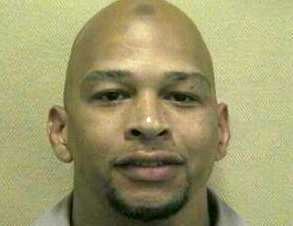
Rae Carruth
Murderer Russell Ellwood
Murderer · USA · 1991
Russell Ellwood was a former taxi driver. Authorities suspected him of killing…
20 victims
Russell Ellwood
Murderer · USA · 1991
Russell Ellwood was a former taxi driver. Authorities suspected him of killing…
20 victims
 Robert Martines Perez
Murderer · USA · 1994
Name: Robert Martines Perez · Other name used in proceedings: Robert Martinez P…
15 victims
Robert Martines Perez
Murderer · USA · 1994
Name: Robert Martines Perez · Other name used in proceedings: Robert Martinez P…
15 victims
 Billy Frank Vickers
Murderer · USA · 1993
Billy Frank Vickers Vickers was executed by lethal injection in Texas on Januar…
14 victims
Billy Frank Vickers
Murderer · USA · 1993
Billy Frank Vickers Vickers was executed by lethal injection in Texas on Januar…
14 victims
 Jessica McCord
Murderer · USA · 2002
Jessica McCord and her ex-husband Alan Bates had a bitter divorce and an even m…
2 victims
Jessica McCord
Murderer · USA · 2002
Jessica McCord and her ex-husband Alan Bates had a bitter divorce and an even m…
2 victims
 Daniel Luff
Homicide · New Zealand · 2002
Daniel Luff was 17 years old and had dated Stephanie Cocker for several months.…
1 victim
Daniel Luff
Homicide · New Zealand · 2002
Daniel Luff was 17 years old and had dated Stephanie Cocker for several months.…
1 victim
 Edward Dean Kennedy
Murderer · USA · 1978
Edward D. Kennedy was listed as Edward Dean Kennedy (also styled as Edward D. K…
3 victims
Edward Dean Kennedy
Murderer · USA · 1978
Edward D. Kennedy was listed as Edward Dean Kennedy (also styled as Edward D. K…
3 victims
 Richard Shere
Murderer · USA · 1987
Richard Shere was sentenced to death on April 17, 1989. · 01/15/88 — Shere was…
1 victim
Richard Shere
Murderer · USA · 1987
Richard Shere was sentenced to death on April 17, 1989. · 01/15/88 — Shere was…
1 victim
 Tian Mingjian
Mass murderer · China · 1994
Tian Mingjian (Chinese: 田明建) was an Army officer with the rank of First Lieuten…
23 victims
Tian Mingjian
Mass murderer · China · 1994
Tian Mingjian (Chinese: 田明建) was an Army officer with the rank of First Lieuten…
23 victims
- Gender
- male
- Country
- USA
- Location
- Charlotte, North Carolina, USA
- Date of birth
- January 20, 1974
- Age at first offence
- 25
- Characteristics
- murder for hire, kidnapping
- Victim profile
- Cherica Adams, 24 (eight months pregnant with Carruth's child)
- Method of murder
- Shooting
- Date(s) of murder
- November 16, 1999
- Years active
- 1999
- Date of arrest
- December 2, 1999
- Status
-
Acquitted / overturned
Sentenced to 18 to 24 years in prison in January 2001; found not guilty of first-degree murder and spared the death penalty
Case details
Rae Carruth (born January 20, 1974), nicknamed “Da Troof,” was an American football wide receiver for the Carolina Panthers.
He was found guilty of conspiracy to commit murder, shooting into an occupied vehicle, and using an instrument with intent to destroy an unborn child. He was found not guilty of first-degree murder and was spared the death penalty. He was sentenced to a term of imprisonment of not less than 18 years, 11 months, and not more than 24 years, four months.
Timeline
- 15 November 1999 — Rae Carruth and his eight-months-pregnant girlfriend, Cherica Adams, watched a movie at a Charlotte theater; they left the movie theater and rode together to Carruth’s house to retrieve Adams’s car; Carruth called Michael Kennedy and told him that he and Adams were about to leave; Adams followed Carruth in her vehicle toward her home; Carruth slowed or stopped his large sport utility vehicle in front of her car on Rea Road; Kennedy drove his rented vehicle beside Adams’s car; Van Brett Watkins, a passenger, fired five shots from the rental vehicle into Adams’s car; Adams was wounded four times, once in the neck and three times in the back; Carruth’s and Kennedy’s vehicles fled in different directions.
- 12:31 a.m. (16 November 1999) — Cherica Adams called 911 from her cell phone, pulled into a residential driveway, continuously blew the horn, and remained on the phone for over twelve minutes until an ambulance arrived; she described the shooting and identified Rae Carruth as the driver she had followed and identified as her boyfriend and her baby’s father.
- 12:43 a.m. (16 November 1999) — Mecklenburg Police Officer Peter Grant arrived on the scene.
- 1:10 a.m. (16 November 1999) — Cherica Adams was transported by ambulance to Carolinas Medical Center and arrived.
- 1:30 a.m. (16 November 1999) — emergency surgery removed the bullets and delivered the baby from the victim.
- 4:00 a.m. (16 November 1999) — the victim was taken to a trauma intensive care unit.
- 7:00 a.m. (16 November 1999) — an endotracheal tube was inserted into the victim’s throat; Traci Willard, the morning nurse, asked the victim if she remembered what had happened; the victim nodded and motioned for Willard to bring a pen and paper; the victim handwrote notes describing the shooting and events of the morning and previous evening.
- 14 December 1999 — Cherica Adams died as a result of the inflicted wounds; her infant son survived.
- November 16, 1999 — near Carruth’s home in Charlotte, North Carolina, Cherica Adams was shot four times in a drive-by shooting; she survived for a time and called 9-1-1; she identified Carruth’s behavior prior to the shooting and another vehicle’s passenger shot her; she later died.
- Friday, 19 November 1999 — police arrested Michael Eugene Kennedy, 24, of Charlotte, alleged to have rented and driven the car from which the shots were fired; Kennedy had a lengthy arrest record on assault and drug-related charges extending back to 1994.
- November 25 (year not restated in the record) — Carruth was arrested and charged with conspiracy to commit murder; he was taken into custody.
- December 2 (year not restated in the record) — Stanley Drew Abraham, 19, of Charlotte, believed to have been a passenger in the car with Watkins and Kennedy, was arrested.
- December 6 (year not restated in the record) — Carruth was released on a $3 million bond.
- 8 days later (year not restated in the record) — Cherica Adams died of multiple organ system failure resulting from the gunshot wounds; the charge of first-degree murder was added to others faced by Carruth and the other codefendants; Carruth became a fugitive instead of turning himself in as arranged.
- Following day (year not restated in the record) — FBI agents, acting on information from Carruth’s mother, discovered him hiding in the trunk of a car in the parking lot of a motel in Wildersville, Tennessee; he was returned to North Carolina and held in jail until his trial; in the trunk was $3,900 in cash, bottles to hold Carruth’s urine, extra clothes, candy bars, and a cell phone.
- 24 November 1999 — Carruth gave the police the telephone number and hotel room at the Villager Lodge where Watkins, the shooter, was staying.
- August 2000 — in a separate proceeding in civil court, Carruth was found to be indigent after his house had been sold at foreclosure and his other assets disposed of; the ruling was sealed at the request of Judge Charles Lamm, assigned the criminal case.
- October 23, 2000 — jury selection began.
- November 20 (2000) — in opening statements, the prosecution played the tape of Cherica Adams’s emergency call.
- January 15, 2001 — closing arguments were heard; the prosecution played the 911 tape again and emphasized a record of the long series of phone calls between Carruth and Van Brett Watkins during the weeks before the shooting; the defense presented 10 points arguing reasonable doubt.
- January 19, 2001 — the jury returned its verdict finding Carruth not guilty of first-degree murder and guilty on the other three charges.
- 5 August 2003 — the North Carolina Court of Appeals filed its decision in State of North Carolina v. Rae Lamar Wiggins, a/k/a, Rae Carruth, appeals by defendant from a judgment entered on 11 January 2001 by Judge Charles C. Lamm in Mecklenburg County Superior Court, heard in the Court of Appeals on 10 June 2003.
- October 22, 2018 — the North Carolina Department of Corrections projected release date for Carruth.
- January 2001 (as restated in status field) — Carruth was sentenced to 18 to 24 years in prison.
Other case information
Offence and victims
Cherica Adams was the victim. Adams was eight months pregnant with Carruth’s child and had survived for a time after being shot. Her infant son survived, and he was named Chancellor Lee Adams in the case summary; Chancellor had cerebral palsy.
Criminal charge results and verdict
A jury found Rae Carruth guilty of:
- conspiracy to commit murder,
- discharge of a firearm into occupied property,
- using an instrument with intent to destroy an unborn child.
The jury found him not guilty of first-degree murder. He was spared the death penalty.
Sentencing
Carruth received an active term of imprisonment. The record states:
- He was sentenced to not less than 18 years, 11 months, and not more than 24 years, four months in prison.
- On appeal, the sentence is described as “196 months to 245 months for conspiracy to commit murder,” with concurrent sentences of “31 to 47 months” for the remaining convictions.
Under North Carolina sentencing law, apart from credit for any time spent in jail awaiting trial, actual time served could not be reduced to less than the judge’s minimum specified term.
Background and biography
Rae Carruth graduated from Valley High School. He played four seasons at the University of Colorado. He was named a first-team All-American in 1996. His college quarterbacks were future NFL quarterbacks Koy Detmer and Kordell Stewart. He was a first-round draft pick (27th overall pick) in 1997 to the Carolina Panthers, signing a four-year, $3.7 million deal. His rookie season included starting 14 games, 44 passes for 545 yards (12.4 yards per catch), four touchdown passes, and six rushes for 19 yards (3.8 yards per attempt). He was named to the all-rookie team at wide receiver, along with Reidel Anthony of the Tampa Bay Buccaneers.
Big expectations followed for 1998; he broke his right foot in the opening game and did not catch another pass that season due to injury, ending with four catches for 59 yards. He played in the first six games of the 1999 season, totaling 14 catches for 200 yards.
Investigation and arrest
Mecklenburg Police Officer Peter Grant arrived on the scene around 12:43 a.m. after responding to the 911 call. At the scene, Grant asked the victim if she knew who shot her; she answered “Rae Carruth.” When asked if defendant was the person driving the vehicle she described in the 911 call, she replied “Yes, yes. That's my baby's daddy.” She gave Grant the defendant’s home address.
Carruth went to the police and posted a $3 million bond with the condition that if either Cherica or Chancellor died, he would turn himself in. After Cherica Adams died, Carruth became a fugitive. He was eventually captured after being found hiding in the trunk of a car outside a motel in Parkers Crossroads, Tennessee; in the trunk were $3,900 in cash, bottles to hold Carruth’s urine, extra clothes, candy bars, and a cell phone.
Trial
People involved
Carruth was defended by David Rudolf. He was assisted by his partner, Christopher Fialko. The prosecution was headed by Mecklenburg County assistant district attorney Gentry Caudill. The judge was Charles Lamm. The trial was described as capitally for first-degree murder of the victim.
Evidence presented
The prosecution presented co-conspirator testimony from Watkins and Kennedy. Kennedy testified that he rented and drove the car from which the shooting occurred, that Carruth gave him $100 to buy the gun, and that Carruth’s reason was unwillingness to pay child support.
The prosecution played the tape of Cherica Adams’s emergency call in opening statements. The case centered on the fact that Adams identified Rae Carruth to the dispatcher, to police at the scene in the hearing of a paramedic witness, and again at the hospital in the presence of a nurse.
The defense argued that Carruth had not been involved in any plot to kill Cherica Adams, that the presented motive was implausible given his earnings, and that the shooting was an indirect consequence of his refusal to finance a drug deal. Rae Carruth did not testify.
During testimony, the court positioned a deputy between the witness box and Judge Lamm, and another between Watkins and the jury. During Watkins’s testimony, the record described Watkins’s impulsive violence.
In rebuttal, the prosecution called Amber Turner, a former girlfriend of Carruth from Colorado, who admitted to having had an abortion after Carruth had threatened her life. Michelle Wright, the mother of Carruth’s six-year-old son, also testified to having been threatened by Carruth.
Jury deliberations and verdict
The jury deliberated after 11 weeks and 70 witnesses. Closing arguments were heard on January 15, 2001. The jury began deliberations the following day, reported being split on all four charges two days later, and after repeating jury instructions it was told to keep trying. On Friday, January 19, 2001, the jury returned its verdict of:
- not guilty of first-degree murder,
- guilty on the other three charges.
Verbatim statements
Watkins’s statements in jail (via Sergeant Shirley Riddle)
Sergeant Shirley Riddle testified that Watkins blocked her exit and said: “'I've got to talk to you.'”
Riddle explained Watkins was not supposed to talk to him about his case. Watkins said to Riddle:
- “'I told Kennedy to pull up beside of Cherica's car; we had lost track of Rae; we wanted to see which way he was headed.'”
- “. . . 'I started waving my arms to get her to slow down.' . . .”
- “'We were just going to ask her if she knew where Rae was going. And then, she slowed down.'”
- “. . . 'I was telling her to roll her window down so we could talk to her.'”
- “. . . 'She flipped me off.'”
- “. . . 'I just lost it; I lost control.'”
- “. . . 'If [Rae] had just given us the money, none of this would have happened.'”
The record also described Sergeant Riddle’s testimony: Watkins confessed to the shooting, told her he pulled alongside Cherica Adams’s car to try to get her to tell him where Carruth was going, said that when she made an obscene gesture he “just lost it,” and started shooting; Watkins indicated it was about a drug purchase and that “if Carruth had given them the money they wanted, the shooting would not have occurred.”
Kennedy’s testimony about defendant’s phone call
Kennedy testified he received a telephone call from defendant just after midnight on 16 November 1999. Kennedy described defendant’s words as: “'We're getting ready to leave the house.'”
Kennedy also described the sequence as: “Rae went over a hill and then down inthe dip. Then, he stopped his car; she stopped behind his; I stopped behind her. Then, Watkins told me to pull up beside her car. So, I pulled up beside her car and he started shooting in her car.”
When asked about distance between the vehicles, Kennedy replied: “[m]aybe a foot or so; because he stopped, suddenly.”
Candace Smith’s testimony about what Carruth said
Candace Smith testified that defendant told her “he wished that she [Cherica] would die.”
Candace asked defendant outside the presence of others if he had anything to do with the victim being shot. The record quotes defendant’s response as:
- “[H]e wouldn't even look at me. And, he said that he had been trying to be nice to her; and, go to doctors appointments and give her money; and keep her happy. . . . And, that he had been getting money out the bank, a little bit at a time, so it wouldn't look suspicions (sic), to give to the guy. And, he said he watched the guy -- well, he hit his brakes, in his car, to slow her car down. And, he saw the guys pull up and shot into her car. . . . And, he said, 'I just drove off and went to Hannibal's house.'”
Candace Smith’s and other testimony about defendant’s actions
The record also described the victim’s 911 call and the testimony of Kennedy, Grant, and Candace duplicating written statements made by the victim.
Victim’s written notes and hearsay issue (as discussed on appeal)
The victim handwrote notes after waking from surgery describing the shooting and events. The notes included the statements:
- “we were leaving now.”
- “[h]e was driving in front of me & stopped in the road & a car pulled [up] beside me & he blocked the front & never came back”
- “[h]e insisted on coming to my house.”
On appeal, the court held that any error in admitting the victim’s written statements as present sense impressions was harmless beyond a reasonable doubt.
Appeals
The North Carolina Court of Appeals considered multiple issues raised by defendant, including:
- whether the notes written by the victim at the hospital were inadmissible hearsay,
- whether exclusion of defendant’s theory and the trial court’s failure to instruct the jury on his theory constituted reversible error,
- whether the trial court erred in allowing peremptory strikes of black jurors,
- whether the trial court erred in failing to assess gender discrimination in juror selection,
- whether the trial court erred in asking the jury to record its numerical division and to deliberate further,
- whether the trial court erred in determining aggravating and mitigating sentencing factors.
Rulings on appeals
The Court of Appeals held:
- any error in admitting the victim’s written statements as present sense impressions was harmless beyond a reasonable doubt,
- defendant’s remaining assignments of error were overruled,
- no prejudicial error was found,
- the Batson order of the trial court was affirmed,
- no plain error occurred in the numerical division instruction and further deliberations.
Verbatim appellate statements (numerical division instruction)
The trial court instruction quoted in the appellate decision was: “none of you should surrender your honest conviction as to the weight or the affect (sic) of the evidence, solely because of the opinion of your fellow jurors; or for the mere purpose of returning a verdict.”
Sentencing factors and mitigation/aggravation (as discussed on appeal)
Aggravating factor: position of trust or confidence
The Court of Appeals addressed the statutory aggravating factor of “took advantage of a position of trust or confidence.” It concluded that the abuse of a position of trust or confidence was established by a preponderance of the evidence.
Mitigating factors
The Court of Appeals addressed defendant’s contention that the trial court erred in failing to find statutory mitigating factors:
- “aided in the apprehension of another felon,”
- “supports the defendant's family,”
- “has a support system in the community.”
The Court of Appeals held the trial court did not err in failing to find these mitigating factors based on the evidence described, including contradictions about support and insufficient evidence for community support. The Court also stated that the trial court did not err in failing to find the early acknowledgment mitigation at bar.
Aftermath
Carruth was in prison serving his sentence, and the record states that he was serving a sentence of at least 18 years and 11 months at Nash Correctional Institution near Raleigh, North Carolina, with a projected release date of October 22, 2018.
A Law & Order television episode was based on the events surrounding the Carruth trial, with a fictional retelling centering on a basketball player instead of a football star.
Spotted an error, or have more information about this case?