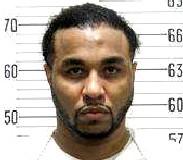
Tony Von Carruthers
Murderer Brian Kevin Rosenfeld
Murderer · USA · 1985
Brian Kevin Rosenfeld Brian Kevin Rosenfeld was sentenced to three concurrent l…
23 victims
Brian Kevin Rosenfeld
Murderer · USA · 1985
Brian Kevin Rosenfeld Brian Kevin Rosenfeld was sentenced to three concurrent l…
23 victims
 Russell Ellwood
Murderer · USA · 1991
Russell Ellwood was a former taxi driver. Authorities suspected him of killing…
20 victims
Russell Ellwood
Murderer · USA · 1991
Russell Ellwood was a former taxi driver. Authorities suspected him of killing…
20 victims
 Robert Martines Perez
Murderer · USA · 1994
Name: Robert Martines Perez · Other name used in proceedings: Robert Martinez P…
15 victims
Robert Martines Perez
Murderer · USA · 1994
Name: Robert Martines Perez · Other name used in proceedings: Robert Martinez P…
15 victims
 Billy Frank Vickers
Murderer · USA · 1993
Billy Frank Vickers Vickers was executed by lethal injection in Texas on Januar…
14 victims
Billy Frank Vickers
Murderer · USA · 1993
Billy Frank Vickers Vickers was executed by lethal injection in Texas on Januar…
14 victims
 Danny Ray Harris
Murderer · USA · 1978
Danny Ray Harris (offender #649) was executed by lethal injection in Texas on J…
1 victim
Danny Ray Harris
Murderer · USA · 1978
Danny Ray Harris (offender #649) was executed by lethal injection in Texas on J…
1 victim
 Patricia Allanson
Murderer? · USA · 1974
Patricia Taylor Allanson Patricia Allanson was born in 1937. She grew up as “Pa…
3 victims
Patricia Allanson
Murderer? · USA · 1974
Patricia Taylor Allanson Patricia Allanson was born in 1937. She grew up as “Pa…
3 victims
 Virgilio Maldonado
Murderer · USA · 1995
Defendant: Virgilio Maldonado TDCJ Number: 999249 Date of Birth: 11/12/65 Age a…
1 victim
Virgilio Maldonado
Murderer · USA · 1995
Defendant: Virgilio Maldonado TDCJ Number: 999249 Date of Birth: 11/12/65 Age a…
1 victim
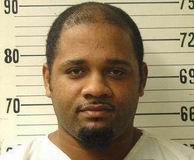 James Stout
Murderer · USA · 1995
James P. Stout and three accomplices were accused of carjacking, abducting and…
1 victim
James Stout
Murderer · USA · 1995
James P. Stout and three accomplices were accused of carjacking, abducting and…
1 victim
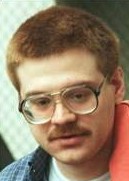 Brian Steckel
Murderer · USA · 1994
Brian Steckel was a convicted murderer who was executed in Delaware. · Septembe…
1 victim
Brian Steckel
Murderer · USA · 1994
Brian Steckel was a convicted murderer who was executed in Delaware. · Septembe…
1 victim
- Gender
- male
- Country
- USA
- Location
- Shelby County, Tennessee, USA
- Date of birth
- July 1, 1968
- Age at first offence
- 26
- Characteristics
- kidnapping, robbery, drugs
- Victim profile
- D rug dealer Marcellos Anderson, 21, his mother, Delois Anderson, and Frederick Tucker
- Method of murder
- Shooting - Buried alive in a grave at Rose Hill Cemetery
- Date(s) of murder
- February 24, 1994
- Years active
- 1994
- Date of arrest
- —
- Status
-
Sentenced to death
Sentenced to death on April 26, 1996
Timeline
- February 24, 1994 — Marcellos “Cello” Anderson borrowed a white Jeep Cherokee from his cousin, Michael Harris; witnesses saw Anderson and Frederick Tucker riding in the Jeep Cherokee along with James and Jonathan Montgomery at about 4:30 p.m.; at about 5 p.m., James and Jonathan Montgomery, Anderson and Tucker arrived at the house of Nakeita Shaw; around 8 p.m., Laventhia Briggs telephoned her aunt, victim Delois Anderson; around 8:45 p.m., Chris Hines testified that Jonathan Montgomery “beeped” him and said, “Man, an---r got them folks.”
- February 23, 1994 — Marcellos Anderson borrowed a white Jeep Cherokee from his cousin, Michael Harris.
- February 25, 1994 — The Jeep Cherokee was found in Mississippi destroyed by fire at about 2:40 a.m.; Delois Anderson’s absence was discovered after a co-worker who had driven her home around 7:15 p.m. was the last person to have seen her alive; Laventhia Briggs filed a missing person report later that day; the Montgomery brothers and Carruthers did not return Hines’ car until approximately 8:30 a.m.; Daniels was buried on February 25, 1994.
- February 25, 1994 (night) — According to testimony, bodies were found buried together in a pit that had been dug beneath a casket in a grave in a Memphis cemetery on March 3, 1994; the pit under the casket was prepared for a funeral the following day.
- March 3, 1994 — Their bodies were found buried together in a pit beneath a casket in a grave in a Memphis cemetery; Jonathan Montgomery directed Detective Jack Ruby to the grave of Dorothy Daniels at Rose Hill Cemetery.
- March 27, 1994 — The record reflects that Alfredo Shaw came forward and provided a statement to police.
- March 29, 1994 — The indictments were returned.
- October 6, 1993 — A health administrator testified that because of an injury to his arm, Carruthers was given a job change on October 6, 1993.
- November 4, 1994 — An official testified that Carruthers was not released on furlough after Montgomery arrived at the Reception Center on November 4, 1994.
- November 15, 1993 — Carruthers was released from the Department of Correction and left the Reception Center with Anderson.
- November 4, 1993 — Jimmy Lee Maze, Jr. received two letters from Carruthers in the summer of 1993; Carruthers was then in prison on an unrelated conviction (summer of 1993 described in record; no exact date).
- December 15, 1993 — Smith was released from the Department of Correction (described as “one month later” after November 15, 1993).
- December 31, 1993 — Maze saw Carruthers loading three antifreeze containers into a car.
- January 11, 1994 — James Montgomery was released from prison.
- January 2, 1996 — Massey renewed his motion to withdraw.
- January 3, 1996 — A hearing occurred and the trial court cautioned Carruthers; the record reflects Carruthers was “glaring” at Massey while “gritting his jaw.”
- January 8, 1996 — The Court of Criminal Appeals held Massey should be allowed to immediately withdraw.
- January 9, 1996 — The Court of Criminal Appeals entered an addendum allowing Massey to be completely relieved; Sayle continued as elbow or standby counsel.
- January 11, 1996 — The State requested a continuance of trial due to hospitalization of Nakeita Shaw; trial rescheduled for April 15, 1996.
- January 16, 1996 — The trial court approved Carruthers’ request for funds to obtain an investigator to assist him.
- February 20, 1996 — The trial court considered Carruthers’ pre-trial requests for funding for expert services.
- April 15, 1996 — Trial was rescheduled for April 15, 1996 (trial proceedings later described as beginning with jury selection in April 1996).
- April 26, 1996 — Sentences of death were imposed (as reflected in the case status).
- May 20, 1996 — The trial judge announced that the sentencing hearing for non-capital offenses would be held (later rescheduled).
- May 28, 1996 — The non-capital sentencing hearing was rescheduled.
- May 29, 1996 — The non-capital sentencing hearing was held at the Riverbend Maximum Security Institution in Nashville.
- December 11, 2000 — An appellate opinion date is listed in the record excerpt for the proceedings involving the appeal (printed as “December 11, 2000” with listed counsel).
Background
Tony Von Carruthers and accomplice James Montgomery were convicted in 1994 of kidnapping drug dealer Marcellos Anderson, his mother Delois Anderson, and one of Anderson’s teenage associates. The bodies of the three victims were buried alive in a grave that had been dug for a funeral in Memphis’ Rose Hill Cemetery, according to testimony during their trial in 1996.
A Supreme Court of Tennessee proceeding affirmed Carruthers’ convictions and death sentences and reversed Montgomery’s convictions and sentences, remanding Montgomery for a new trial.
The offence
Victims and disappearance
The defendants were convicted of first degree murder for killing Marcellos “Cello” Anderson, his mother Delois Anderson, and Frederick Tucker in Memphis in February of 1994. All of the victims disappeared on the night of February 24, 1994.
On March 3, 1994, their bodies were found buried together in a pit beneath a casket in a grave in a Memphis cemetery.
Relationship and alleged motive
The proof showed that Marcellos Anderson was heavily involved in the drug trade, along with two other men, Andre “Baby Brother” Johnson and Terrell Adair. Anderson wore expensive jewelry, including a large diamond ring, carried large sums of money on his person, and kept cash in the attic of the home of his mother, victim Delois Anderson.
Anderson was acquainted with both defendants, and he considered Carruthers to be a trustworthy friend. The proof presented at trial showed that Anderson’s trust was misplaced.
Planning and threats
In the summer of 1993, Jimmy Lee Maze, Jr., a convicted felon, received two letters from Carruthers, who was then in prison on an unrelated conviction. In the letters, Carruthers referred to “a master plan” that was “a winner.” Carruthers wrote of his intention to “make those streets pay me” and announced, “everything I do from now on will be well organized and extremely violent.”
In the fall of 1993, while incarcerated at the Mark Luttrell Reception Center in Memphis awaiting his release, Carruthers was assigned to a work detail at a local cemetery, the West Tennessee Veterans’ Cemetery. At one point, as he helped bury a body, Carruthers remarked to fellow inmate Charles Ray Smith:
“that would be a good way, you know, to bury somebody, if you're going to kill them․ [I]f you ain't got no body, you don't have a case.”
Charles Ray Smith also testified that he overheard Carruthers and Montgomery talking about Marcellos Anderson after Anderson drove Carruthers back to the Reception Center from a furlough. Smith testified that when Montgomery asked Carruthers about Anderson, Carruthers told him that both Anderson and “Baby Brother” Johnson dealt drugs and had a lot of money. Carruthers said he and Montgomery could “rob” and “get” Anderson and Johnson once they were released from prison.
When Carruthers was released from the Department of Correction on November 15, 1993, he left the Reception Center with Anderson. Carruthers accompanied Anderson to Andre Johnson’s house, and received a gift of $200 cash from Anderson, Johnson, and Terrell Adair, who was present at Johnson’s house.
One month later, on December 15, 1993, Smith was released from the Department of Correction. Upon his release, Smith warned Anderson and Johnson of Carruthers’ and Montgomery’s plans to “get them.”
According to Maze, they encountered Terrell Adair’s red Jeep in front of Delois Anderson’s home shortly after a drive-by shooting occurred injuring Adair and leaving him in the hospital. Jonathan “Lulu” Montgomery, James Montgomery’s brother, was at the scene and joined Carruthers in the back seat of Maze’s car. Maze testified that Carruthers remarked:
“it would be the best time to kidnap Marcellos,”
and Jonathan asked:
“which one Baby Brother or Marcellos?”
Carruthers nudged Montgomery and said:
“it” was going to take place after James Montgomery was released from prison.
Maze also testified that about two weeks later on December 31, Maze saw Carruthers loading three antifreeze containers into a car and Carruthers indicated the containers were filled with gasoline.
After James Montgomery was released on January 11, 1994, Montgomery told “Baby Brother” Johnson that he, not Johnson, was in charge of the neighborhood. Montgomery said:
“It was my neighborhood before I left, and now I'm back and its my neighborhood again.”
Montgomery asked Johnson if he wanted to “go to war about this neighborhood.” When Johnson said “no,” Montgomery replied:
“You feeling now like I'm about to blow your motherf---g brains out”
and:
“you all need to get in line around here or we're going to war about this.”
In late January or early February 1994, Johnson and Adair saw the defendants sitting together in an older model grey car down the street from Johnson’s mother’s home. At night between 11 p.m. and 1 a.m., when the defendants approached Johnson and Adair, Montgomery asked:
why they thought he was trying to harm them.
Montgomery told them:
“Look, I told you, we ain't got no problem with nobody in this neighborhood. We already got our man staked out. If we wanted some trouble or something, we got you right now. We'd kill your whole family.”
Carruthers confirmed:
“We already got our man staked out. You all right. If it's any problem, we'll deal with it later.”
Montgomery explained that he intended to take the “man's” money and drugs and said:
“if the police didn't have no body, they wouldn't have no case.”
Investigation and discovery of the bodies
Events at Nakeita Shaw’s home
On February 23, 1994, Marcellos Anderson borrowed a white Jeep Cherokee from his cousin, Michael Harris.
Around 4:30 p.m. on February 24, 1994, witnesses saw Marcellos Anderson and Frederick Tucker riding in the Jeep Cherokee along with James and Jonathan Montgomery. About 5 p.m. that day, the four men arrived at the house of Nakeita Shaw, the Montgomery brothers’ cousin. Nakeita Shaw, her four children, and Benton West were present at the house when they arrived.
The four men entered the house and went downstairs to the basement. Shortly thereafter, James Montgomery came back upstairs and asked Nakeita Shaw if she could leave for a while so he could “take care of some business.” Nakeita Shaw told West she thought “they” were being kidnapped, and she left the house with West and her children. West agreed to care for Nakeita Shaw’s children while she attended a meeting.
When Nakeita Shaw returned home after the meeting, she saw only Carruthers and James Montgomery. Montgomery asked her to pick up her children and to “stay gone a little longer.” Nakeita Shaw returned home with her children before 10 p.m. The Jeep Cherokee was gone, but James Montgomery and Carruthers remained. Montgomery told Nakeita Shaw to put her children to bed upstairs and remain there until he told her he was leaving.
Afterward, Montgomery called out that he was leaving. Nakeita Shaw then saw James Montgomery, Carruthers, and the two victims, Anderson and Tucker, leave in the Jeep Cherokee.
Prior to trial, Nakeita Shaw told police that Anderson’s and Tucker’s hands were tied behind their backs when they left her house. At trial, she testified that her prior statement was false and that she had not seen their hands tied when they left.
Attempted contact with Delois Anderson
Around 8 p.m. on February 24, 1994, Laventhia Briggs telephoned her aunt, victim Delois Anderson. When someone picked up the telephone but said nothing, Briggs hung up. Briggs called “a couple of more times” but received no answer. Briggs arrived at Delois Anderson’s aunt’s home around 9:00 p.m., where Delois Anderson’s purse, car, and keys were located. Food left in Anderson’s bedroom indicated that she had been interrupted while eating. Briggs went to bed assuming her aunt would return.
Chris Hines testified that around 8:45 p.m. on February 24, 1994, Jonathan Montgomery “beeped” him and said:
“Man, an---r got them folks.”
When asked “What folks?” Jonathan replied:
“Cello and them”
and said something about stealing $200,000. Jonathan arranged to meet Hines in person.
Jonathan arrived at Hines’ home at about 9:00 p.m. and told him:
“Man, we got them folks out at the cemetery on Elvis Presley, and we got $200,000. Man, a n---r had to kill them folks.”
James Montgomery later “beeped in” during that call. After the call ended, Jonathan asked Hines to drive him to the cemetery. Hines refused but allowed Jonathan to borrow his car, promising Jonathan would return it in an hour. When the car was not returned, Hines called James Montgomery’s cellular telephone around 11 p.m. James told Hines that he did not know where Jonathan was, that Jonathan did not have a driver’s license, and that the car should be returned by 4 a.m. because Jonathan was supposed to drive James to his girlfriend’s house.
The Jeep Cherokee Anderson had borrowed was found in Mississippi on February 25 at around 2:40 a.m. and it had been destroyed by fire.
About 3:30 a.m., after law enforcement informed Harris, Harris telephoned Delois Anderson’s home and Laventhia Briggs then discovered that neither her aunt Delois nor her cousin Marcellos had returned home. Briggs filed a missing person report later that day.
Carwash events and access to weapons
The Montgomery brothers and Carruthers did not return Hines’ car until about 8:30 a.m. on February 25. The car was very muddy. Hines drove James Montgomery and Carruthers to Montgomery’s mother’s home and then drove away with Jonathan Montgomery.
Jonathan appeared “paranoid” and “nervous” and repeatedly told Hines that “they had to kill some people.” Approximately two hours later, James Montgomery and Carruthers came to Hines’ home looking for Jonathan. Hines advised Carruthers and James Montgomery he was celebrating his birthday. Hines asked James Montgomery for a birthday present; James agreed to give Hines twenty dollars after he picked up his paycheck and agreed to have the car washed immediately as a birthday present.
Hines, the Montgomery brothers, and Carruthers drove to a carwash. James Montgomery paid an unidentified elderly man to clean the car interior and the trunk. Neither Carruthers nor James Montgomery supervised cleaning. After Jonathan Montgomery abruptly left, Carruthers and James Montgomery asked Hines what Jonathan had told him; Hines did not tell them.
Several days later, James Montgomery offered Hines an AK-47 assault rifle, stating he had “heard that Hines was into it with some people on the street” and that the rifle had “blood on it.” Hines testified he interpreted the statement to mean someone had been shot with the weapon.
Exhumation and physical evidence
On March 3, 1994, about one week after a missing person report was filed on Delois and Marcellos Anderson, Jonathan Montgomery directed Detective Jack Ruby of the Memphis Police Department to the grave of Dorothy Daniels at Rose Hill Cemetery on Elvis Presley Boulevard. Daniels’ grave was located six plots away from the grave site of the Montgomery brothers’ cousin. Daniels had been buried on February 25, 1994.
Pursuant to a court order, Daniels’ casket was disinterred, and authorities discovered the bodies of the three victims buried beneath the casket under several inches of dirt and a single piece of plywood. An employee testified that a pressed wood box or vault had been placed during working hours on February 24 and it would have taken at least two people to remove the box. Daniels’ casket was placed on February 25 inside the box. Dr. Hugh Edward Berryman testified that there was no evidence suggesting Daniels’ casket had been disturbed after she was buried.
Dr. O.C. Smith testified that Delois Anderson’s body lay at the bottom of the grave and the two male victims’ bodies lay on top. The hands of all three victims were bound behind their backs. Frederick Tucker’s feet were bound and his neck showed bruising caused by a ligature. A red sock was found around Delois Anderson’s neck. Marcellos Anderson was not wearing any jewelry.
Dr. Smith testified Delois Anderson died from asphyxia caused by several factors: the position of her head against her body, dirt in her mouth and nose, and trauma from weight on her body.
Frederick Tucker received a gunshot wound to his chest that would not have been fatal if medical care had been provided. He also had injuries from blunt trauma to his abdomen and head resulting in broken ribs, a fractured skull, and a ruptured liver. Dr. Smith opined Tucker was shot and placed in the grave and that the force of compression from being buried produced other injuries and, along with the gunshot wound, caused his death. Dr. Smith opined Tucker was alive when buried.
Marcellos Anderson had been shot three times: a contact wound to his forehead that was not severe and two shots to his neck, one of which was not serious. The gunshot causing the other neck wound entered Anderson’s windpipe and severed his spinal cord, paralyzing him from the neck down; the wound was not instantaneously fatal. Dr. Smith also opined Anderson had suffered blunt trauma to his abdomen from compression forces and that Anderson was alive when buried.
The record reflects Defendant James Montgomery presented no proof. Carruthers, acting pro se, called witnesses to rebut the state’s testimony, primarily by attacking credibility of state witnesses.
Trial
Guilt phase evidence
At trial, the jury found each defendant guilty beyond a reasonable doubt of three counts of first degree murder, three counts of especially aggravated kidnapping, and one count of especially aggravated robbery.
Defence and rebuttal evidence
Carruthers acted pro se and called witnesses to rebut state testimony.
A health administrator at Mark Luttrell Reception Center testified that due to an arm injury, Carruthers was given a job change on October 6, 1993 and had not worked at the cemetery after that date.
Another official testified Carruthers was not released on furlough after Montgomery arrived at the Reception Center on November 4, 1994, offered to impeach Smith’s testimony about Montgomery and Carruthers discussing robbing and getting Marcellos Anderson after Anderson drove Carruthers back from a furlough.
An investigator appointed to assist Carruthers interviewed Maze, who admitted he did not know anything about the “master plan” until Carruthers was released from prison. On cross-examination, the investigator admitted Maze said Carruthers explained the master plan involved kidnapping Marcellos Anderson.
Carruthers’ brother and another witness testified that Jonathan Montgomery was not at the scene of the drive-by shooting involving Terrell Adair, offered to impeach Maze’s testimony that Carruthers and Jonathan discussed kidnapping on the day of the shooting.
Another witness, Aldolpho Antonio James, testified that he and Carruthers had been visiting a friend between 1:00 a.m. and 2:00 a.m. the day before homicides were first reported on the news. On cross-examination, James admitted he did not know the exact date he and Carruthers had been together.
Alfredo Shaw testimony and threatened perjury
After seeing a television news report about the killings in March of 1994, Alfredo Shaw telephoned CrimeStoppers and gave a statement to police implicating Carruthers. Alfredo Shaw later testified before the grand jury returning indictments against Carruthers and Montgomery.
Prior to trial, press reports indicated Shaw had recanted grand jury testimony, claimed the statement was fabricated, and intended to recant when called for the defense. When Carruthers called Shaw, the prosecution announced that if Shaw recanted his grand jury testimony from the stand, he would be charged and prosecuted for two counts of aggravated perjury. The trial court summoned Shaw’s attorney and allowed Shaw to confer privately with him.
Following the conference, Shaw’s attorney advised the trial court, defense counsel, the prosecution, and Carruthers that Shaw intended to testify consistently with his prior statements and grand jury testimony, and that inconsistent statements made to the press were motivated by fear of Carruthers and threats received from him.
Despite the earlier announcement, Shaw provided testimony consistent with his initial statement and grand jury testimony. Shaw testified that he had been on a three-way call with Carruthers and either Terry or Jerry Durham, and during the call Carruthers asked Shaw to participate in the murders, stating they had a “sweet plan” and that each would earn $100,000 and a kilogram of cocaine.
Shaw also testified that after Shaw’s arrest and while incarcerated in the Shelby County Jail on unrelated charges, he and Carruthers were in the law library when Carruthers told him Carruthers and some other unidentified individuals had gone to Delois Anderson’s house looking for Marcellos Anderson and his money. Shaw testified that when Anderson arrived, the defendants forced Anderson, Tucker, and Delois Anderson into the Jeep Cherokee at gunpoint and drove them to Mississippi. There, the defendants shot Marcellos Anderson and Tucker and burned the Jeep.
Shaw further testified that after putting the two victims into the grave, Delois Anderson started screaming and one of the defendants told her to “shut up” or she would die like her son and pushed her into the grave. Shaw also testified Carruthers said the bodies would never have been discovered if “the boy wouldn't have went and told them folks.” Carruthers also told Shaw he would not hire an attorney or post bond because the prosecution would then learn the murders were a “hit.” Shaw testified Carruthers said Johnson was also supposed to have been “hit” and that Terry and Jerry Durham were the “main people behind having these individuals killed.” Shaw testified Carruthers said the Durhams wanted revenge because Anderson and Johnson had previously stolen from them.
In response to questions, Shaw acknowledged telling the press his statement and grand jury testimony had been fabricated but testified he said so because Carruthers threatened him and his family. Shaw testified that one of Carruthers’ investigators arranged for a news reporter to speak with him about recanting.
As impeachment, Carruthers called Jerry and Terry Durham, twin brothers. They denied knowing Shaw and denied being party to a three-way telephone call involving Shaw and Carruthers.
Carruthers also called attorney AC Wharton, who testified he was initially retained by Carruthers’ mother to represent Carruthers on these murder charges, but withdrew due to a conflict of interest. Carruthers called an administrative assistant from the Shelby County jail who testified that jail records indicated Shaw was not in the law library at the same time as Carruthers in February or March 1994. On cross-examination, the administrative assistant admitted jail records about the law library were not always complete or accurate and Shaw was housed outside protective custody from mid-March to early April 1994, which would have allowed opportunity for interaction.
Jury findings on counts
Based on the evidence, the jury found each defendant guilty beyond a reasonable doubt of three counts of first degree premeditated murder and sentenced each defendant to death on each conviction.
Sentencing
Prior convictions and evidence
The state relied on guilt-phase proof and introduced evidence of prior convictions: Carruthers had been previously convicted of aggravated assault, and James Montgomery had two prior convictions for robbery with a deadly weapon and one conviction for assault with intent to commit robbery with a deadly weapon. Montgomery was seventeen years old at the time of these prior offenses, and all prior convictions arose from a single criminal episode.
Dr. Smith testified none of the victims died instantaneously and that all suffered as a result of separate injuries and being buried alive. For Anderson, Dr. Smith testified he would have felt trauma effects including pain to the airway and windpipe and that Anderson’s bullet wound to the head would not have been fatal with proper medical attention. Dr. Smith testified Anderson would have been “drowning on his own blood.”
For Tucker, Dr. Smith testified gunshot wound to his chest fractured ribs and pierced his lung and would not have been fatal with medical treatment; Tucker was “breathing blood” and “starving for oxygen.” Tucker had multiple internal injuries from compression; Dr. Smith opined the weight of Anderson’s body alone, or combined with plywood and dirt, did not explain Tucker’s extensive injuries and that additional weight or force was applied.
Dr. Smith testified Delois Anderson had scalp tear injury inflicted two to six hours before death, a forehead injury consistent with her position in the grave, and injuries consistent with manual strangulation. Dr. Smith testified none of these injuries would have caused death with medical treatment. He testified Delois died from asphyxia caused by position of her head against her body, dirt in her mouth and nose, and trauma from weight on her body.
Mitigating evidence
For Montgomery, mitigating evidence included testimony from his cousin Nakeita Shaw describing their childhood relationship and that Montgomery had been her “brother” and “protector,” and her request that the jury spare his life. Shaw testified Montgomery had other siblings including a thirty-year-old sister, a twenty-six-year-old brother, and a fourteen-year-old brother.
Montgomery’s aunt, Mattie Calhoun, testified Montgomery was an average student, had a poor relationship with his father, and another man helped raise Montgomery when his father abandoned him at age five or six; Calhoun testified that man died in 1986.
Montgomery testified on his own behalf regarding his upbringing by his mother in Memphis, his father, and that his father was still alive when Montgomery was five. He testified he spent slightly over nine years in the penitentiary for prior convictions and that he had a job when released in January 1994. He testified that at the time of the crimes his ten-year-old son was living with him and proclaimed innocence, asking the jury to spare his life.
For Carruthers, mitigation evidence included testimony from Bishop Richard L. Fiddler, who was involved in prison ministry for twenty years and visited Carruthers while he was incarcerated awaiting trial. Fiddler believed Carruthers was honest and straightforward, was “a person of quality and worth,” was very upset about the victims’ deaths, and viewed the trial as an opportunity to be vindicated. Fiddler asked the jury to spare Carruthers’ life.
Carruthers’ sister, Tonya Yvette Miller, a counselor at Shelby County adult offender center, testified their mother raised four children on her own in one of the worst housing projects in Memphis and that Carruthers was the oldest son and “man of the household.” Miller testified Carruthers had fallen into bad company and had a hot temper but testified he never planned to do anything wrong and acted out of “anguish and anger.” She testified he was raised to tell the truth. Miller testified she would be the first person to say he deserved the death penalty if she believed he committed the crimes but said she believed he was innocent and therefore he “does not deserve the death sentence.” Carruthers also testified asserting innocence and that he would not have killed his friend because he “wasn't raised like that.”
Aggravating circumstances and death sentences
The jury found aggravating circumstances as to each defendant on each murder conviction:
- The defendant was previously convicted of one (1) or more felonies, other than the present charge, whose statutory elements involve the use of violence to the person.
- The murder was especially heinous, atrocious or cruel in that it involved torture or serious physical abuse beyond that necessary to produce death.
- The murder was committed while the defendant was engaged in committing, or was an accomplice in the commission of, or was attempting to commit, or was fleeing after committing or attempting to commit, any first degree murder, arson, rape, robbery, burglary, theft, kidnapping, aircraft piracy; or unlawful throwing, placing or discharging of a destructive device or bomb.
- The defendant committed mass murder, defined as the murder of three (3) or more persons within the state of Tennessee within a period of forty-eight (48) months, perpetrated in a similar fashion in a common scheme or plan.
The jury found the aggravating circumstances outweighed mitigating circumstances beyond a reasonable doubt and imposed death sentences as to each defendant for each of the three murder convictions.
Appeals
Direct appeal outcomes
On direct appeal, the Court of Criminal Appeals affirmed the convictions and sentences of both Carruthers and Montgomery.
Thereafter, the cases were docketed in the Tennessee Supreme Court.
The Tennessee Supreme Court concluded none of the errors raised by Carruthers required reversal, that the evidence supported aggravating and mitigating circumstances findings, and that the death sentences were not imposed arbitrarily and were not excessive or disproportionate. The Supreme Court affirmed Carruthers’ convictions and death sentences.
With respect to Montgomery, the Supreme Court concluded the trial court erred in denying a severance and that the error deprived Montgomery of a fair trial. The Supreme Court reversed Montgomery’s convictions and sentences and remanded for a new trial.
Dismissal of murder indictments
Carruthers contended the indictments should have been dismissed because they were based on what he termed “the admittedly questionable” testimony of Alfredo Shaw before the grand jury. He also argued he was entitled to a transcript of the grand jury proceedings. The Supreme Court disagreed and held that sufficiency and legality of grand jury evidence were not subject to judicial review where an indictment was valid on its face, and general law required secrecy.
Forfeiture of counsel and self-representation
Carruthers was required to represent himself at trial and sentencing. The record included extensive proceedings on counsel substitution and withdrawal, with the trial judge repeatedly describing threats and counsel-client conflict. The Supreme Court concluded Carruthers forfeited the right to counsel due to repeated misconduct involving threats and efforts to manipulate and delay the proceedings.
The Supreme Court addressed the issue of whether counsel withdrawal or denial of counsel violated due process, and held the record supported forfeiture and did not show ineffectiveness of counsel that would require a hearing to determine counsel competency.
Severance for Montgomery
The Supreme Court affirmed that the denial of severance required reversal for Montgomery. The court held that Carruthers’ self-representation severely prejudiced Montgomery’s fair trial rights, referencing offensive mannerisms, questioning that elicited incriminating evidence, and calling Alfredo Shaw to testify.
Admission of Jonathan Montgomery statements
Carruthers challenged hearsay testimony regarding statements by Jonathan Montgomery as relayed by Chris Hines. The Supreme Court held that Hines’ testimony about Jonathan’s first statement on the night of the murders was properly admitted under the co-conspirator hearsay exception. The Supreme Court held a later statement made at the car wash was inadmissible, but the error was harmless.
Gag order
Carruthers challenged a “gag order” preventing him from speaking to media. The Supreme Court held a gag order was justified, but found the scope was too broad and characterized failure to include exceptions as harmless error.
The court quoted the gag order terms. The order stated:
“The Constitutions of the United States and the State of Tennessee guarantee defendants in all criminal cases due process of law and the right to a fair and impartial jury. It is the duty of the trial court to see that every defendant is afforded all his constitutional rights. In order to safeguard those rights, this Court is of the opinion that the following rule is necessary to constitutionally guarantee an orderly and fair trial by an impartial jury. Therefore, this Court orders the following: All lawyers participating in this case, including any defendants proceeding pro se, the assistants, staff, investigators, and employees of investigators are forbidden to take part in interviews for publicity and from making extra-judicial statements about this case from this date until such time as a verdict is returned in this case in open court. Because of the gravity of this case, because of the long history of concerns for the personal safety of attorneys, litigants and witnesses in this case, because of the potential danger-believed by this Court to be very real and very present-of undermining the integrity of the judicial system by “trying the case in the media” and of sullying the jury pool, this Court feels compelled to adopt this extraordinary pretrial measure.”
Non-capital sentencing in absentia
Carruthers argued the trial judge conducted sentencing for especially aggravated robbery and especially aggravated kidnapping in his absence. The Supreme Court held that Carruthers waived the right to be present because he refused to attend after being available in a holding room and after the trial court sought to persuade him.
The Supreme Court affirmed that the trial judge did not abuse discretion in failing to appoint counsel for the voluntarily absent defendant who had forfeited counsel rights, noting the state’s proof was largely cumulative.
Comparative proportionality review
The Supreme Court conducted proportionality review and concluded the death sentences were not disproportionate, citing multiple Tennessee cases with similar circumstances. The Supreme Court held that death sentences were not imposed arbitrarily and were not excessive or disproportionate.
Outcome
Carruthers’ convictions and death sentences were affirmed, with direction that death sentences be carried out as provided by law on the 11th day of April, 2001, unless otherwise ordered by the court or proper authority.
Montgomery’s convictions and sentences were reversed and remanded for a new trial due to denial of severance.
Other details
Judge and counsel references
The record identified multiple counsel and judges:
- Jerry Harris prosecuted Carruthers; Joseph Daily was the judge in the 1996 trial proceeding described in interview narrative.
- In the appellate excerpt, the trial court judge for the Tennessee proceedings is referenced as Judge Thomas T. Woodall, with concurrence by Presiding Judge Gary R. Wade and Judge Joseph M. Tipton.
- In one earlier cited case, Carruthers v. State, counsel are listed for appellant and appellee in the appellate excerpt: Stephen R. Leffler and Lee A. Filderman for the appellant Tony V. Carruthers; Robert C. Brooks and Edward W. Chandler for the appellant James Montgomery; Michael E. Moore, Solicitor General; Amy Tarkington, Senior Counsel; Phillip Gerald Harris; Assistant District Attorney General; and J. Robert Carter, Jr., Assistant District Attorney General, for the appellee, State.
Non-capital sentencing terms and structure
At the Riverbend sentencing hearing, the trial judge imposed a forty-year sentence on each of the four convictions for each defendant and ordered that two of the kidnapping sentences ran concurrent to the other sentences and to the death penalty, with all other sentences running consecutive to each other and to the death penalty.
Carruthers’ death row claims and quotations
In the interview narrative portion included in the record:
- When asked about murders being gruesome, Carruthers said: “absolutely, but I wasn't there.”
- Carruthers told interviewer Janice Broach: “I feel like Jerry Harris and Judge Dailey should be arrested for me having execution dates. That's how I feel.”
- Carruthers said: “I'm not going to get executed, Ms. Broach. I'm happy.”
- Carruthers accused counsel: “Larry Copeland is a crook. Larry Copeland needs to be disbarred,” and also said: “Tony is by far the most intelligent defendant I have ever represented. He's on top of his game.” is included in the narrative but attributed to Larry Copeland; Carruthers said he did not like Copeland.
Aggravating circumstance language and statutory reference
The aggravating factors were listed verbatim by the jury with reference to Tenn. Code Ann. § 39-13-204(2), (5), (7), and (12) (Supp.1994).
Jury notes about courtroom demeanor (trial transcript excerpt)
The record included that jurors sent notes complaining about Carruthers’ behavior, including “scratching or pulling around his groin when standing facing the jury. We find this very offensive,” and a later note asking why he “was constantly asking the same question over and over.”
Additional footnote facts in the record
The record’s footnotes added that Jonathan Montgomery, who was also charged on all counts, was found hanged in his cell in the Shelby County jail; that neither Delois Anderson nor Frederick Tucker were involved in the drug trade; and additional details about Nakeita Shaw’s pretrial statements about fear and threats.
Spotted an error, or have more information about this case?