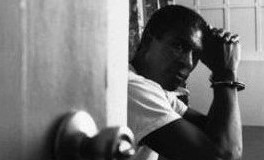
Edward Dean Kennedy
Murderer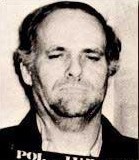 Ervil LeBaron
Murderer · USA · 1972
Ervil Morrell LeBaron (1925 to August 16, 1981) was the leader of a polygamous…
35 victims
Ervil LeBaron
Murderer · USA · 1972
Ervil Morrell LeBaron (1925 to August 16, 1981) was the leader of a polygamous…
35 victims
 Brian Kevin Rosenfeld
Murderer · USA · 1985
Brian Kevin Rosenfeld Brian Kevin Rosenfeld was sentenced to three concurrent l…
23 victims
Brian Kevin Rosenfeld
Murderer · USA · 1985
Brian Kevin Rosenfeld Brian Kevin Rosenfeld was sentenced to three concurrent l…
23 victims
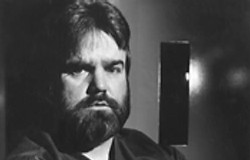 Marvin Gray
Murderer · USA · 1975
Marvin Gray was convicted killer who claimed responsibility for 23 slayings and…
23 victims
Marvin Gray
Murderer · USA · 1975
Marvin Gray was convicted killer who claimed responsibility for 23 slayings and…
23 victims
 Yahweh ben Yahweh
Murderer · USA · 1980
Yahweh ben Yahweh was born and legally named Hulon Mitchell Jr. (October 27, 19…
23 victims
Yahweh ben Yahweh
Murderer · USA · 1980
Yahweh ben Yahweh was born and legally named Hulon Mitchell Jr. (October 27, 19…
23 victims
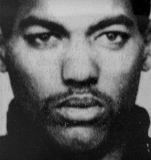 Guy Georges
Serial killer · France · 1991
Guy Georges was a French rapist and serial killer who preyed on attractive, you…
7 victims
Guy Georges
Serial killer · France · 1991
Guy Georges was a French rapist and serial killer who preyed on attractive, you…
7 victims
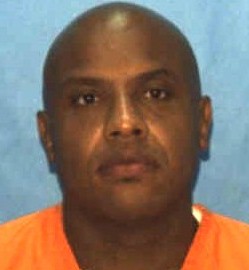 Toney Deron Davis
Murderer · USA · 1992
Toney Deron Davis (DOB: 03/12/70) was tried in the Fourth Judicial Circuit, Duv…
1 victim
Toney Deron Davis
Murderer · USA · 1992
Toney Deron Davis (DOB: 03/12/70) was tried in the Fourth Judicial Circuit, Duv…
1 victim
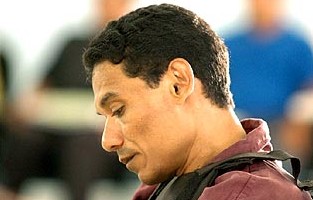 Francisco Das Chagas
Serial killer · Brasil · 1989
Francisco das Chagas was a bicycle mechanic in Brazil. He confessed to killing…
42 victims
Francisco Das Chagas
Serial killer · Brasil · 1989
Francisco das Chagas was a bicycle mechanic in Brazil. He confessed to killing…
42 victims
- Gender
- male
- Country
- USA
- Location
- Florida, USA
- Date of birth
- 1945
- Age at first offence
- 33
- Characteristics
- escape attempt, police officer, robbery, fugitive
- Victim profile
- A motel clerk / Floyd H. Cone, Jr. and Robert C. McDermon (Florida Highway Patrol Trooper)
- Method of murder
- Shooting
- Date(s) of murder
- 1978 / 1981
- Years active
- 1978–1981
- Date of arrest
- —
- Status
-
Executed
Executed by electrocution in Florida on July 21, 1992
Case identifiers
- Edward D. Kennedy was listed as Edward Dean Kennedy (also styled as Edward D. Kennedy).
- Florida Supreme Court Docket #71678.
- Federal case: 967 F.2d 1482 (Edward Dean Kennedy, Petitioner-Appellant, v. Harry K. Singletary, Secretary, Florida Department of Corrections, Respondent-Appellee), Docket number: 92-2706, Federal Circuits, 11th Cir.
- Appeal: July 20, 1992, from the United States District Court for the Middle District of Florida.
STATUS / current outcome
Edward Dean Kennedy was executed by electrocution in Florida on July 21, 1992.
Timeline
- 1978 — Kennedy was sentenced to life imprisonment for the murder of a motel clerk in Miami.
- April 11, 1981 — Kennedy escaped with two companions from Union Correctional Institution; his friends were quickly recaptured; after breaking into a trailer home for a change of clothes, a gunfight occurred in which Florida Highway Patrol Trooper Howard McDermon and Floyd Cone were killed; Kennedy fled, took a woman and her 6 month old baby as hostages for about an hour, and then surrendered.
- July 21, 1992 — Kennedy was executed by electrocution in Florida.
Background
Edward Dean Kennedy was 47 at the time of execution and died at the age of 48.
Kennedy was sentenced to life imprisonment in 1978 for the murder of a motel clerk in Miami. He was confined at Union Correctional Institution in Raiford, a quarter of a mile from Florida State Prison in Starke, where the state's electric chair was housed.
The offence
April 11, 1981 slayings following escape
On April 11, 1981, after escaping from Union Correctional Institution, Kennedy broke into a trailer home a few dozen miles from the prison to steal a change of clothes.
The trailer home owner was Floyd H. Cone, Jr. Floyd Cone returned home with his cousin, Florida Highway Patrol Trooper Robert C. McDermon (also referenced as Florida Highway Patrol Trooper Howard McDermon).
When McDermon saw Kennedy, McDermon fired his weapon. Kennedy returned the fire with a shotgun and a rifle he had found in the trailer. McDermon and Cone were killed in the gunfight.
After the gunfight, Kennedy fled to a neighboring trailer, taking a woman and her 6 month old baby as hostages for about an hour before he surrendered.
Investigation / confinement / escape context
Kennedy escaped with two companions on April 11, 1981; his friends were quickly recaptured.
Kennedy was described as having written to several colleges while on death row offering to tell his life story, but none had responded. He worried that his mistakes might be his only legacy and wanted to help others avoid errors he had made.
Kennedy was portrayed as having previously taught himself to play the saxophone between his many prison sentences, with his interest in music discussed in connection with letters and correspondence.
Trial
Federal habeas corpus proceedings (successive petition)
A federal court matter addressed Kennedy’s successive petition for writ of habeas corpus and his motions related to a stay of execution and a certificate of probable cause.
The claim asserted by Kennedy was that his sentencing jury was tainted by a constitutionally deficient instruction concerning the allegedly heinous aspect of the murders, and that the Florida Supreme Court failed to cure that constitutional error by conducting a proper harmless error review.
The district court denied the successive petition for writ of habeas corpus, denied a stay of execution, and denied the motion for a certificate of probable cause.
Kennedy appealed to the 11th Circuit seeking a stay of execution and a certificate of probable cause.
Sentencing
State sentencing referenced in the record
Kennedy was sentenced to life imprisonment in 1978 for the murder of a motel clerk in Miami, and he was condemned in 1981. He was executed on July 21, 1992.
A statement of “Life term, 1978 (escaped 1981); condemned, 1981; executed July 21, 1992” appeared in the case material.
Appeals
11th Circuit decision on successive petition
The 11th Circuit held that Kennedy had failed to persuade it that the Florida Supreme Court improperly interposed a procedural bar. The court also concluded that the presentation of the claim constituted an abuse of the writ.
The court stated that Kennedy did not raise the claim in his appeal from the denial of his first federal habeas petition.
The court stated that it could not conclude Kennedy demonstrated “cause” or “prejudice” or a fundamental miscarriage of justice, citing Sawyer v. Whitley and McCleskey v. Zant.
The court stated that the resolution was not debatable among jurists of reason, citing Barefoot v. Estelle.
The 11th Circuit denied Kennedy’s motion for a certificate of probable cause and for a stay of execution.
Verbatim quotations included:
1 Kennedy has failed to persuade us that the Florida Supreme Court improperly interposed a procedural bar. In any event, we conclude that the presentation of this claim constitutes an abuse of the writ. Kennedy did not raise this claim in his appeal to this court from the district court's denial of his first federal habeas petition.
2 As to both the procedural bar and the abuse of the writ, we cannot conclude that Kennedy has demonstrated "cause" or "prejudice" or a fundamental miscarriage of justice. Sawyer v. Whitley, --- U.S. ----, 112 S.Ct. 2514, 120 L.Ed.2d 269 (1992); McCleskey v. Zant, --- U.S. ----, 111 S.Ct. 1454, 113 L.Ed.2d 517 (1991). We do not believe that this resolution is debatable among jurists of reason. Barefoot v. Estelle, 463 U.S. 880, 103 S.Ct. 3383, 77 L.Ed.2d 1090 (1983).
Accordingly, Kennedy's motion for a certificate of probable cause and for a stay of execution is DENIED.
The material also included a reference to an unpublished order:
See Kennedy v. Singletary, Nos. 89-3845 & 92-2412 (11th Cir. April 30, 1992) (Unpublished Order) ("Kennedy's claim that his sentencing jury was tainted by a deficient instruction concerning the heinous aspect of the murders and the claim that the Florida Supreme Court failed to conduct a harmless error analysis with respect to same were not presented to this court on appeal from Kennedy's first federal habeas petition.")
Outcome
Kennedy was condemned in 1981 and was executed by electrocution in Florida on July 21, 1992.
Aftermath / final hours quotations
The case material included first-person quotations and descriptions tied to Kennedy’s death chamber stay.
Verbatim quotations included:
"It took me into another world...a world of freedom & beauty. I was free. This was back in the seventies and music at that time was like a refuge. It was a place where I could cast off all the pain & misery and get free from the oppression and all of the other shit...the racism and all that. So, it was a refuge... a place where I could go and find peace. And when I played, I got into my world."
"They don't care about people like me. People like me, black people, minorities, poor whites, they don't mean anything to people like that...We are just a nuisance."
"It will be all right," he said, sensing my discomfort.
"I'm downstairs right next door to the death chamber where the electic chair is. Tomorrow morning they'll take me out there, strap me to the chair & kill me ...tomorrow morning at 7 o'clock. I'm in the cell right next ...right in the back of the death chamber."
The material also stated that Kennedy was led into the death chamber after guards unlocked his handcuffs and pinned his hands behind his back, and that Edward Dean Kennedy died at the age of 48.
Other details
- A Federal circuit listing appeared as: Before TJOFLAT, Chief Judge, FAY and ANDERSON, Circuit Judges. PER CURIAM.
- Kennedy’s motives and crime descriptions were included in the material as: “Motive: CE MO: Killed motel clerk (1978); shot policeman and male civilian after prison break.”
- A “FOURTH warrant” was referenced in the Florida Supreme Court docket portion of the material.
- Union Correctional Institution was located in Raiford.
- Florida State Prison in Starke housed the state's electric chair.
- Kennedy escaped from Union Correctional Institution and later took a woman and her 6 month old baby as hostages for about an hour before surrendering.

Spotted an error, or have more information about this case?