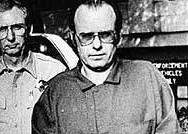
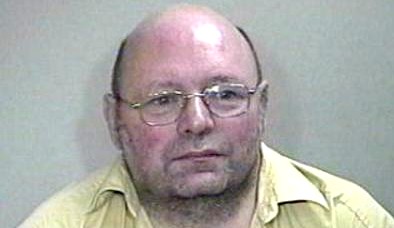
Steven David Catlin
Murderer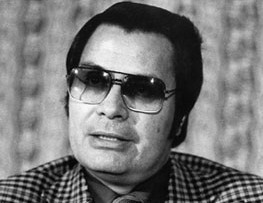 Jim Jones
Murderer · Guyana · 1978
James Warren "Jim" Jones (May 13, 1931 – November 18, 1978) was the American fo…
900 victims
Jim Jones
Murderer · Guyana · 1978
James Warren "Jim" Jones (May 13, 1931 – November 18, 1978) was the American fo…
900 victims
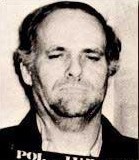 Ervil LeBaron
Murderer · USA · 1972
Ervil Morrell LeBaron (1925 to August 16, 1981) was the leader of a polygamous…
35 victims
Ervil LeBaron
Murderer · USA · 1972
Ervil Morrell LeBaron (1925 to August 16, 1981) was the leader of a polygamous…
35 victims
 Brian Kevin Rosenfeld
Murderer · USA · 1985
Brian Kevin Rosenfeld Brian Kevin Rosenfeld was sentenced to three concurrent l…
23 victims
Brian Kevin Rosenfeld
Murderer · USA · 1985
Brian Kevin Rosenfeld Brian Kevin Rosenfeld was sentenced to three concurrent l…
23 victims
 Marvin Gray
Murderer · USA · 1975
Marvin Gray was convicted killer who claimed responsibility for 23 slayings and…
23 victims
Marvin Gray
Murderer · USA · 1975
Marvin Gray was convicted killer who claimed responsibility for 23 slayings and…
23 victims
 Yahweh ben Yahweh
Murderer · USA · 1980
Yahweh ben Yahweh was born and legally named Hulon Mitchell Jr. (October 27, 19…
23 victims
Yahweh ben Yahweh
Murderer · USA · 1980
Yahweh ben Yahweh was born and legally named Hulon Mitchell Jr. (October 27, 19…
23 victims
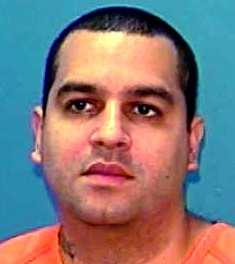 Alex Pagan
Murderer · USA · 1993
Alex Pagan (DOB: 03/25/69) was sentenced to death on October 15, 1998. Pagan wa…
2 victims
Alex Pagan
Murderer · USA · 1993
Alex Pagan (DOB: 03/25/69) was sentenced to death on October 15, 1998. Pagan wa…
2 victims
 Bobby Jack Fowler
Murderer · Canada · 1973
Bobby Jack Fowler (June 12, 1939 – May 15, 2006) was an American who was a nati…
20 victims
Bobby Jack Fowler
Murderer · Canada · 1973
Bobby Jack Fowler (June 12, 1939 – May 15, 2006) was an American who was a nati…
20 victims
 Howard Goodin
Murderer · USA · 1998
Howard Goodin Howard Dean Goodin was sentenced to death in Lamar County on May…
1 victim
Howard Goodin
Murderer · USA · 1998
Howard Goodin Howard Dean Goodin was sentenced to death in Lamar County on May…
1 victim
 Richard Djerf
Mass murderer · USA · 1993
Richard Djerf — defendant · Albert Luna, Sr. — victim · Albert Luna, Jr. — vict…
4 victims
Richard Djerf
Mass murderer · USA · 1993
Richard Djerf — defendant · Albert Luna, Sr. — victim · Albert Luna, Jr. — vict…
4 victims
 Tiequon Cox
Mass murderer · USA · 1984
Tiequon “Lil Fee” Cox was born Tiequon Aundray Cox on December 1, 1965. Cox was…
4 victims
Tiequon Cox
Mass murderer · USA · 1984
Tiequon “Lil Fee” Cox was born Tiequon Aundray Cox on December 1, 1965. Cox was…
4 victims
 Patrick David Mackay
Serial killer · United Kingdom · 1973
Patrick David Mackay was born on September 25, 1952, in England. He was the son…
11 victims
Patrick David Mackay
Serial killer · United Kingdom · 1973
Patrick David Mackay was born on September 25, 1952, in England. He was the son…
11 victims
- Gender
- male
- Country
- —
- Location
- —
- Date of birth
- 1944
- Age at first offence
- 32
- Characteristics
- poisoner, to collect insurance money
- Victim profile
- His fourth wife, Joyce Catlin / His adoptive mother, Martha Catlin / His fifth wife, Glenna Kaye Catlin
- Method of murder
- Poisoning (herbicide Paraquat) Loca tion : California/Nevada, USA
- Date(s) of murder
- 1976 / 1984
- Years active
- 1976–1984
- Date of arrest
- —
- Status
-
Sentenced to death
Sentenced to death in California in 1990; high court upheld the death sentence in 2001
Overview
Steven David Catlin was convicted of poisoning his mother and two of his wives with paraquat and was sentenced to death in California in 1990. The death sentence was upheld by the high court in 2001. The case was later the subject of the 1993 television movie “Poisoned by Love: The Kern County Murders.”
Timeline
- May 1976 — Joyce Catlin was admitted to Bakersfield’s Mercy Hospital with “flu” symptoms, later died, and her body was cremated on Catlin’s orders.
- May 6, 1976 — Joyce Catlin died of “pneumonia.”
- May 1977 — Catlin married his fifth wife, Kaye Catlin, and moved to Fresno.
- October 28, 1980 — Catlin’s adoptive father died suddenly; the fluid in his lungs was attributed to pre-existing cancer, and his body was swiftly cremated on Catlin’s orders.
- February 17, 1984 — Kaye Catlin fell ill while visiting Las Vegas with her mother.
- March 14, 1984 — Kaye Catlin died after being hospitalized on returning to Fresno.
- November 1984 — Mercy Hospital retained tissue samples connected to Joyce Catlin’s death and submitted them for analysis.
- December 8, 1984 — Catlin’s mother collapsed and died from “a stroke” shortly after a visit by Steve and his latest girlfriend.
- 1990 — Catlin was sentenced to death by Kern Superior Court Judge Lewis E. King.
- 2001 — The high court unanimously upheld the death sentence in the “Poisoned by Love” murders case.
Background
Steven David Catlin was adopted as an infant during 1944 by Glenn and Martha Catlin of Kern County, California. He moved to Bakersfield with his new parents in the early 1950s. Catlin dropped out of high school and showed no interest in honest work. He was arrested on forgery charges at age nineteen and served nine months in a California Youth Authority camp.
Catlin’s first marriage was described as stormy and violent, with domestic problems exacerbated by his abuse of drugs. In 1966, he acquired a second wife without divorcing the first, using a pseudonym on the marriage license. A few months after the second bogus wedding, he was picked up for stealing a credit card at the gas station where he worked. The judge called Catlin an addict and sent him to the state prison at Chino, where he spent the next three years.
After his release, Catlin divorced his first wife and legally remarried his second using his real name, but the relationship was described as already doomed. They separated after ten months. Catlin then married a third time, divorcing that wife eight months later.
A fourth wife, Joyce, was acquired in short order. Catlin’s fascination with cars led to a job with the pit crew of racer Glendon Emery in Fresno, California. While still married to Joyce, he began to court Emery’s step-daughter.
A year later, in May 1977, Catlin married his fifth wife, Kaye, and moved to Fresno, finding employment at a local garage. He was placed in charge of forty employees. Catlin had expensive tastes and cash was always short.
On October 28, 1980, Catlin’s adoptive father died suddenly, with the fluid in his lungs attributed to pre-existing cancer. Once again, his body was swiftly cremated on Catlin’s orders.
In 1981, employers at the Fresno garage noticed missing auto parts. A routine background check turned up Steven’s unreported record, and he was forced to resign, though no charges were filed. Financial strain mounted.
Catlin was portrayed as in the television movie “Poisoned by Love: The Kern County Murders,” where he was portrayed by Harry Hamlin.
The offence
Poisoning of Joyce Catlin (fourth wife)
In April 1976, Joyce Catlin was admitted to Bakersfield’s Mercy Hospital with a severe case of “flu.” She seemed to improve and then took a sudden turn for the worse and died of “pneumonia” on May 6. After her death, Husband Steve ordered her body cremated without delay.
Joyce Catlin died in a Bakersfield hospital three weeks after being admitted with flu-like symptoms. Her death certificate listed the cause of death as acute respiratory failure due to unknown microorganisms, although paraquat poisoning was suspected.
Poisoning of Kaye Catlin (fifth wife)
On February 17, 1984, Kaye Catlin fell ill while visiting Las Vegas with her mother. Returning to Fresno, she was hospitalized with fluid in her lungs. Physicians were still trying to diagnose her illness when she died on March 14. Catlin received $57,000 from life insurance payments connected to his wife.
Poisoning of Martha Catlin (adoptive mother)
After Joyce Catlin’s cremation, Mercy Hospital retained certain tissue samples. These were submitted for analysis in November 1984. A few days later, on December 8, Catlin’s mother collapsed and died from “a stroke” shortly after a visit by Steve and his latest girlfriend. Catlin ordered the body cremated, but disposal was postponed until an autopsy could be performed.
After analysis of tissue samples from his mother and his two late wives, poisoning from paraquat was revealed for all. The analysis showed that all had suffered poisoning from Paraquat, an herbicide so lethal that its use was banned in the United States.
Parquet poisoning and evidence discussed in court
Paraquat was described as a herbicide used to control weeds. Experts testified that tests capable of disclosing the presence of the substance more than 72 hours after administration didn’t exist in 1976.
After Martha Catlin died in 1984, doctors concluded she died of paraquat poisoning. After police interviewed doctors who treated and autopsied Joyce Catlin, Steven Catlin was charged with both murders.
Police obtained a bottle of paraquat with a 1977 date marked on it from a garage that Catlin shared with Glenna Kaye’s father.
Investigation
Joyce Catlin’s death was investigated after certain tissue samples were submitted for analysis. Mercy Hospital retained tissue samples after Joyce’s death and submitted them for analysis in November 1984. The deaths of the women were later linked through poisoning findings.
A jailhouse informant testified that Catlin asked for assistance in intimidating his third wife, who had persistently told authorities that Catlin murdered the three women, and that Catlin admitted the killings.
Arrest
Catlin was charged after police interviewed doctors who treated and autopsied Joyce Catlin. His trial history that followed included a Monterey Superior Court conviction and a Kern County trial for additional murders.
Trial
Monterey Superior Court trial (Glenna Kaye Catlin)
Catlin was tried separately in the 1984 death of his fifth wife, Glenna Kaye Catlin, and was convicted in 1988. He was sentenced to life imprisonment without parole in the Monterey Superior Court case.
He was also convicted in Monterey Superior Court of the murder of Glenna Kaye Catlin, and that wife also died of paraquat poisoning.
Kern Superior Court trial (Martha Catlin and Joyce Catlin)
The two crimes were tried together under an information filed in 1985, although the death penalty did not apply to the murder of Joyce Catlin because it occurred before California reinstated the death penalty. Catlin was sentenced to death by Kern Superior Court Judge Lewis E. King in 1990 for the 1984 murder of his mother, Martha Catlin.
Catlin had been convicted in the Monterey case. At the Kern County trial, prosecutors presented evidence of all three murders, but jurors were not told until the penalty phase that Catlin had been convicted in the Monterey case. In the penalty phase, jurors were told to consider the prior-murder-conviction special circumstance along with the financial-gain, murder-by-poison, and multiple-murder special circumstances.
Catlin testified that he never killed anyone, didn’t have access to paraquat, and never told anyone about the substance’s deadly properties.
In the penalty phase, there was evidence that Catlin had assaulted his first wife in the 1960s.
Sentencing
King in 1990 for the 1984 murder of his mother, Martha Catlin, after being convicted of her murder and that of his fourth wife, Joyce Catlin.
In addition, he had previously been convicted in Monterey Superior Court of the murder of Glenna Kaye Catlin and sentenced to life imprisonment without parole.
Appeals
A court-appointed appellate attorney, Horace Freedman of Culver City, argued that it was unfair to prosecute Catlin for Joyce Catlin’s death because two possible witnesses had died in the interim. Freedman further argued that if Catlin had not been tried simultaneously for Joyce Catlin’s murder, he might not have received the death penalty for killing Martha Catlin. Freedman also contended that the two murders shouldn’t have been tried together.
Chief Justice Ronald M. George, writing for the high court, said there was no error in trying Catlin for the murder of his fourth wife or in joining that charge with that of murdering his mother. The chief justice also said Catlin didn’t show that the deceased potential witnesses—employees of the Kern County Coroner’s Office at the time of Joyce Catlin’s death—would have given favorable testimony. The chief justice said Catlin was not prejudiced by his own loss of memory over the intervening nine years, since there were no significant details that he might have forgotten.
The chief justice wrote:
“Moreover, the delay in prosecution was justified,”
and explained:
“Because of limitations in forensic science and because of the manner in which Joyce’s tissue had been preserved, it would have been extremely difficult or impossible to make out a case against defendant at or near the time of the murder.”
The chief justice said a joint trial was appropriate because of similarity between the two murders. The chief justice also said other-crimes evidence concerning Glenna Kaye Catlin’s murder was admissible for similar reasons. The chief justice wrote:
“Paraquat poisoning is rare, and its occurrence with respect to two close relatives of one person is unlikely to be a matter of chance or to be the result of a spontaneous impulse,”
and added:
“When evidence of a third instance of the same type of poisoning is introduced, as it properly was in the present case, the inference regarding a common design or plan becomes very strong.”
The high court upheld the death sentence unanimously.
Outcome
The high court upheld Catlin’s death sentence. The case was identified as People v. Catlin, 01 S.O.S. 3394.
Aftermath
The case was the subject of the 1993 television movie “Poisoned by Love: The Kern County Murders.” The story included a portrayal of Catlin by Harry Hamlin, known as one of the stars of the television series “L.A. Law.”
Other details
Marriages and relationships described
Catlin’s first marriage was stormy and violent, and domestic problems were exacerbated by drug abuse. He acquired a second wife in 1966 without divorcing the first and used a pseudonym on the marriage license. He was picked up for stealing a credit card at the gas station where he worked. After his release, he divorced his first wife and legally remarried his second using his real name. He married a third time and divorced that wife eight months later.
Joyce, his fourth wife, was acquired in short order. Catlin courted Emery’s step-daughter while still married to Joyce.
He married Kaye in May 1977, after which he moved to Fresno and worked at a local garage. He experienced missing auto parts issues at the garage in 1981 that led to his resignation.
In 1984, he acquired another fiancee encountered on a hospital visit, and his grief was described as tempered by the $57,000 he received from life insurance payments.
Catlin’s mother was Martha Catlin, and he also had a fifth wife named Glenna Kaye Catlin.
Financial motives presented at trial
Prosecutors presented evidence that Catlin had financial motives. He was the beneficiary of life insurance policies on his wives and the sole beneficiary of his mother’s estate. Testimony included that Catlin expressed fear his mother might disinherit him and leave her estate to charity instead and that she disapproved of his multiple marriages and divorces.
Trial joinder and limitations in forensic science
Experts testified that tests capable of disclosing the presence of paraquat more than 72 hours after administration did not exist in 1976. The high court described limitations in forensic science and the manner in which Joyce’s tissue had been preserved as justifying the delay in prosecution.
Alleged “other-crimes” evidence
Jurors in the penalty phase were presented evidence that Catlin had assaulted his first wife in the 1960s.
Cases and timing referenced in the narrative
The two crimes were tried together under an information filed in 1985. Catlin was tried separately in the 1984 death of his fifth wife and convicted in 1988, receiving life imprisonment without parole before the Kern County trial. Catlin’s sentence in Kern County occurred in 1990.
Encyclopedia entry details
An entry described Catlin as “Steven David Catlin (1944- ).” It listed SEX: M and MOTIVE: CE-inheritance and described “MO: Poisoned parents and two wives with herbicida.” It also used DISPOSITION: Condemned.
Spotted an error, or have more information about this case?