
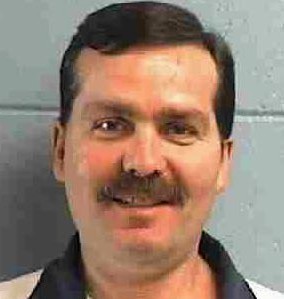
Howard Goodin
Murderer Russell Ellwood
Murderer · USA · 1991
Russell Ellwood was a former taxi driver. Authorities suspected him of killing…
20 victims
Russell Ellwood
Murderer · USA · 1991
Russell Ellwood was a former taxi driver. Authorities suspected him of killing…
20 victims
 Robert Martines Perez
Murderer · USA · 1994
Name: Robert Martines Perez · Other name used in proceedings: Robert Martinez P…
15 victims
Robert Martines Perez
Murderer · USA · 1994
Name: Robert Martines Perez · Other name used in proceedings: Robert Martinez P…
15 victims
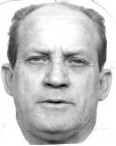 Billy Frank Vickers
Murderer · USA · 1993
Billy Frank Vickers Vickers was executed by lethal injection in Texas on Januar…
14 victims
Billy Frank Vickers
Murderer · USA · 1993
Billy Frank Vickers Vickers was executed by lethal injection in Texas on Januar…
14 victims
 Charles Franklin Smith
Murderer · USA · 1986
Charles Franklin Smith was the husband of 10 years of the murder victim, 27-yea…
1 victim
Charles Franklin Smith
Murderer · USA · 1986
Charles Franklin Smith was the husband of 10 years of the murder victim, 27-yea…
1 victim
 Christina Marcum
Murderer · USA · 2011
Christina Marcum was sentenced to 30 years in prison for her role in the murder…
1 victim
Christina Marcum
Murderer · USA · 2011
Christina Marcum was sentenced to 30 years in prison for her role in the murder…
1 victim
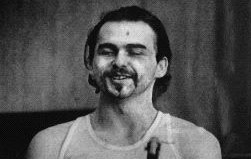 Daniel Remeta
Spree killer · USA · 1985
Daniel Remeta Remeta was executed by electrocution in Florida on March 31, 1998…
5 victims
Daniel Remeta
Spree killer · USA · 1985
Daniel Remeta Remeta was executed by electrocution in Florida on March 31, 1998…
5 victims
- Gender
- male
- Country
- USA
- Location
- Union, Newton County, Mississippi, USA
- Date of birth
- February 22, 1954
- Age at first offence
- 44
- Characteristics
- armed robbery, kidnapping, mentally ill
- Victim profile
- Willis Rigdon, 64 (store owner)
- Method of murder
- Shooting
- Date(s) of murder
- November 5, 1998
- Years active
- 1998
- Date of arrest
- Next day
- Status
-
Sentenced to death
Sentenced to death on May 19, 1999; death sentence thrown out by Mississippi Supreme Court on grounds that Howard Goodin was mentally disabled, and the case was returned to Newton County Circuit Court for resentencing
Name
Howard Goodin
Legal status
Howard Dean Goodin was sentenced to death in Lamar County on May 19, 1999. The Mississippi Supreme Court later threw out his death sentence on grounds that he was mentally disabled and returned the case to Newton County Circuit Court for resentencing.
Timeline
- November 5, 1998 — Willis Rigdon was shot and robbed in his store and restaurant in Union, Mississippi; the events inside Willis Rigdon's store and restaurant were recorded by surveillance cameras.
- May 19, 1999 — Howard Goodin was convicted of armed robbery and capital murder in the Circuit Court of Lamar County and sentenced to death by lethal injection for the capital murder; he was also sentenced to life imprisonment without parole on the armed robbery count after a habitual offender sentencing hearing.
- May 17, 2001 — The Mississippi Supreme Court issued an en banc decision in Goodin v. State.
- December 13, 2012 — The Mississippi Supreme Court threw out Howard Goodin's death sentence on grounds that he was mentally disabled and returned the case to Newton County Circuit Court for resentencing.
Background
Howard Goodin was indicted in the Circuit Court of Newton County for armed robbery and capital murder. A change of venue placed the trial in the Circuit Court of Lamar County.
Howard Goodin was tried as a habitual offender in the Circuit Court of Lamar County for the capital murder of Willis Rigdon during the commission of a kidnapping in Count I and armed robbery in Count II.
The offence
Victim
Willis Rigdon, 64
Capital murder and armed robbery
The events inside Willis Rigdon's store and restaurant in the early morning hours of November 5, 1998 were recorded by surveillance cameras. The surveillance tapes showed a black man, identified as Howard Goodin, entering Rigdon's store in Union, Mississippi, around 1:44 a.m.
Goodin browsed around the video rental section for a few minutes before pulling a gun on the owner of the store, Willis Rigdon. Goodin then disconnected a surveillance camera and the TV and VCR to which it was attached. The tape showed Goodin and Rigdon exiting the store carrying the surveillance camera, TV, and VCR. The two men reentered the store and exited once again with Goodin waving a gun and Rigdon holding his hands in the air.
At 1:57 a.m., a witness drove by Rigdon's store and saw Rigdon sitting in his truck on the driver's side and a black man hunched over in the passenger side.
Shortly after 2:00 a.m., Mitchell Graham and his wife were awakened by someone knocking on their front door and ringing their door bell. Graham went to the door and, without opening the door, asked who was there. There was no response. Graham's wife called her father to drive down to their house to scare the person away.
When Graham saw his father-in-law's car, he turned on the outside light and opened the door to find Willis Rigdon lying face down in a pool of blood on the front porch. Rigdon was bleeding profusely from two gunshot wounds to the head and neck. Graham's wife called 911 to request an ambulance.
Graham asked Rigdon what happened, and Rigdon stated that he had been shot and robbed. Graham asked if Rigdon knew who did it. Rigdon replied, “No, I don't. It was a black man.” Rigdon was transported to the hospital where he subsequently died as a result of the gunshot wounds.
Investigation
The events were recorded by surveillance cameras. At 1:57 a.m., a witness drove by Rigdon's store and saw Rigdon in his truck with a black man in the passenger side.
Between 3:00 and 3:30 a.m., Goodin was seen in Philadelphia, Mississippi, driving Rigdon's truck and carrying a large sum of money. Philadelphia was approximately thirteen miles from the city of Union.
At 4:30 a.m., Goodin, still driving Rigdon's truck, went to the home of his nephew, Kelly Junior Peden, who resided in Philadelphia. Peden noticed that the steering column of the truck was broken. Goodin later attempted to start the truck with a screwdriver, but was unable to do so. Peden became suspicious and told Goodin that he could not leave the truck in his driveway. Goodin removed the license plate from the truck and threw it away.
Goodin left Peden's house and walked to the home of his cousin, Iris Owens, and asked her to drive him to Union. She told him that she did not drive at night and instead called a tow truck.
The tow truck driver, John Raymond Roberts, picked Goodin up at Owens' home and drove him to Peden's home. Roberts asked Goodin who owned the truck, and Goodin responded, “This white fellow in Union.” Roberts noticed that the truck had no license plate and that the steering column was broken. Roberts told Goodin that he would have to call the police department and have the VIN number run before he could tow the truck. Goodin told Roberts to do whatever he wanted with the truck but to take him back to Owens' house.
Before the men left the Peden house, Goodin got a TV and VCR out of the back of Rigdon's truck and put it in the tow truck. Goodin gave Roberts $50.00 from a long sock of money he had in his pocket. Roberts then drove him to Iris Owens' house. As Goodin exited the tow truck, he told Roberts, “You don't know me, and I don't know you.” Goodin took the TV and VCR into Owens' house.
Iris Owens testified that Goodin returned to her house with a VCR and TV. Owens said Goodin left saying he would be back to get the VCR and TV. Goodin never returned. Later that morning, the police came to Owens' house, and Owens turned the VCR and TV over to the police. The police asked Owens whether Goodin was armed when he was at her house. Owens told the police that she had not seen a gun. Owens later found a gun hidden among her crochet items and called the police, who returned and retrieved the gun.
When Goodin's nephew, Peden, heard about the robbery and description of the truck, he called the police and told them that a truck fitting that description was at his house. Tow truck operator Roberts saw the surveillance tapes showing Goodin and Rigdon on a news broadcast. Roberts notified the police as well. Based on the information from the video surveillance tapes and the statements of Peden, Roberts and Owens, the police began searching for Goodin.
Arrest
The police arrested Goodin later that day at the home of Jetty Mae Kelly in Philadelphia, Mississippi. At the time of the arrest, Goodin had a stocking filled with $590.00 in his pocket.
After Goodin was booked, an officer took him to get a shower and change into jail clothes. At this time, Goodin took $200.00 out of his socks. After his shower, Goodin took another $700.00 out of his mouth.
Trial
Goodin was tried as a habitual offender in the Circuit Court of Lamar County for the capital murder of Willis Rigdon during the commission of a kidnapping in Count I and armed robbery in Count II.
Goodin's previous convictions included that he had been out of prison only five months before the murder.
The jury convicted Goodin on both counts.
At trial, Will Rigdon, grandson of the victim, identified two videotapes of the occurrence in the victim's store and identified Goodin as the person on the tapes who was robbing his grandfather. Will Rigdon testified and identified the person shown on the tapes as “Mr. Goodin.”
Will Rigdon testified that it appeared to him that Goodin had a gun in his right hand, and he described his interpretation of the video:
- “Right here. What camera is showing this particular picture?”
- “It's the one, I have labeled two here.”
- “All right. This would be this individual here coming in through this second set of doors here?”
- “Yes, sir.”
- “You have had an opportunity to view this film; is that correct?”
- “Yes, sir.”
- “Can you identify the person shown there?”
- “Mr. Goodin.”
Rigdon also testified about the appearance of the gun and the still photographs marked State’s Exhibit 17 and Exhibit 15:
- “And, in fact, when we watched the tape, when he came around the corner and all the way through the tape, he's holding his hands up; is he not?”
- “Yes, sir. It looks like he is.”
- “But, he is not holding them up above his head or shoulders, he is just holding them around his chest area; is that correct?”
- “Yes, sir. It appears to be so.”
- “Q. Now, the item that's there in the other man's hand is a dark item; is it not?”
- “Yes, sir, a dark item that appears to be a gun.”
- “Appears to be a gun?”
- “Yes, sir.”
- “But, that gun, it if is a gun, the dark item, is not raised there until about half way down the aisle; is that correct?”
- “Yes. sir. It's held by his side.”
- “Held by his side?”
- “Yes, sir.”
- “And does that show up in this series of still photographs which is marked States Exhibit 17?”
- “Does the object allegedly a gun, show up, or does his raising it up show up?”
- “Which part were you asking showed up?”
- “Q. You said he was holding it by his side, the dark object, up until, you know, about halfway down the aisle? ”
- “A. Yes, sir.”
- “Q. Does it show up in that?”
- “A. Yes, sir. If you watch it on the tape, you can see it clearly. It's a bit smaller here. With magnification, I think it could be easily noticed.”
- “Okay. This exhibit 17 has five rows of pictures; does it not?”
- “Yes, sir, it does.”
- “Going across, and there's six pictures per row?”
- “Right.”
- “Now, on the second row here is where the pictures are when they are walking down the aisle; is that correct?”
- “Yes, sir, with one starting on-with the sixth one on the first and continuing through the second on the third.”
- “Okay. Now, the particular photograph, enlargement, that you hold in your hand, which is Exhibit 15, shows up about the- ”
- “Fourth one on the second row?”
- “Fourth one?”
- “Yes, sir.”
- “But, on the first, second and third one, the Defendant's hands are both down, are they not, the Defendant's hands?”
- “A. The Defendant's hands, yes, sir, are down?”
- “Now, do you see any object in the Defendant's right hand in those pictures?”
- “A. Yes, sir, I do. Right here and right there, the dark object (indicating).”
- “The dark object?”
- “Yes, sir.”
- “And, you take from that to be a firearm, a gun?”
- “A. I would assume it would have to be a firearm for my grandfather to be walking with his hands raised up here.”
Jurors saw a surveillance tape showing Goodin entering Rigdon Enterprises and stealing money and a VCR, with Rigdon led by gunpoint from the store and forced into his pickup truck. Rigdon was shot with a pistol after a short trip down a nearby dirt road. He was dumped in a ditch and died later at a hospital.
Sentencing
Habitual offender sentencing hearing
The trial court conducted a habitual offender sentencing hearing at which time Goodin was sentenced to life imprisonment without parole on the armed robbery count.
Capital sentencing
Upon hearing additional testimony in aggravation and mitigation of sentence, additional arguments, and further instructions, the jury returned a sentence of death by lethal injection for the capital murder.
The only sentencing options for a capital murder conviction were death or life without parole. Inmates found to be mentally disabled were not eligible for the death penalty.
At sentencing, the jury returned:
- A sentence of death by lethal injection for the capital murder.
- A sentence of life imprisonment without parole on the armed robbery count.
The final judgment later affirmed:
- Count I: conviction of capital murder and sentence of death by lethal injection, affirmed.
- Count II: conviction of armed robbery and sentence of life imprisonment without parole, suspension or reduction of sentence, as a habitual offender, affirmed.
Appeals
Goodin appealed to the Mississippi Supreme Court.
The Mississippi Supreme Court considered and rejected Goodin’s appellate arguments concerning:
- Sentencing instructions S-2 and S-3.
- Alleged prosecutorial misconduct during voir dire regarding circumstantial evidence and burden concepts.
- Alleged ineffective assistance of counsel related to Rigdon's identification.
- Alleged prosecutorial misconduct during the punishment phase.
- Instruction S-5 regarding whether the capital offense was committed while engaged in kidnapping and while engaged in robbery as separate aggravating circumstances.
- Refusal of Instruction D-19 on manslaughter.
- Refusal of sentencing instruction D-10A proposed by Goodin regarding mercy.
- Proportionality review under Mississippi law.
Specific instruction issues and quotes
Sentencing instruction S-2 read: The Court instructs the Jury that it must be emphasized that the procedure that you must follow is not a mere counting process of a certain number of aggravating circumstances versus the number of mitigating circumstances. Rather, you must apply your reasoned judgment as to whether this situation calls for life imprisonment without parole, life imprisonment or whether it requires the imposition of death, in light of the totality of the circumstances present.
Sentencing instruction S-3 read: The Court instructs the Jury that at this hearing, the State may elect to stand on the case made at the guilt hearing and you may consider the evidence presented during the guilt phase of this trial together with the evidence presented at the sentencing phase in deciding whether the Defendant shall be sentenced to death, life imprisonment without parole, or life imprisonment.
Instruction D-13 read: The Court instructs the Jury that if the State has resorted, in any way or in the least, to circumstantial evidence to maintain its theory of guilt of the Defendant, then the evidence for the State and every part and parcel of it must be so strong as to establish the guilt of the Defendant not only beyond every reasonable doubt, but the evidence must be so strong as to exclude every other reasonable hypothesis, or supposition, except that of guilt.
Instruction D-15 read: The Court instructs the jury that if there be any facts or circumstances in this case acceptable to two reasonable interpretations, one favorable and the other unfavorable to the Defendant, and when the jurors have considered such facts and circumstances with all the other evidence, there is a reasonable doubt as to the correct interpretation, the jury must resolve such doubt in favor of the Defendant and place upon such facts or circumstances the interpretation favorable to the Defendant.
Prosecutor closing argument during sentencing phase (verbatim)
The prosecutor stated in his closing argument during the sentencing phase: “[Y]ou know what's really aggravating about this? Willis Rigdon was just a simple storekeeper, operated a business that in large part his entire family supported, and you can tell from the pictures that you saw in the case, that he was willing to give the Defendant anything that he wanted in that store, cooperated with him every way he could, if he would just leave and just leave him alone. But, the Defendant didn't do that. He executed Willis Rigdon. What is even more aggravating about it is Willis Rigdon that night, he didn't have the protection of the law that Howard Goodin has got.”
BY MR. BROOKS: “I am going to object to that argument, Your Honor. That is not an aggravating factor in this case.”
BY THE COURT: “Overruled.”
BY MR. DUNCAN [Assistant District Attorney]: “He didn't have the Constitution out there to protect him that night, didn't have a judge to hear his case.”
BY MR. BROOKS: “Object to that argument, Your Honor. That doesn't have any bearing on this case.”
BY THE COURT: “Overruled.”
“A lawyer has the right to argue the facts of a case the inferences flowing from those facts and make conclusions. Now, this Court is very reluctant to restrict any lawyer from making his argument, provided he stays within the rules. Overruled.”
BY MR. DUNCAN: “Didn't have a lawyer out on that dirt road to plead his case that night, and he didn't ask twelve people like you if it was okay to execute Willis Rigdon.”
Instructions refused
Instruction D-19 was denied by the trial judge, which read: The Court instructs the jury that the killing of a human being without malice, by the act, procurement, or culpable negligence of another, shall be manslaughter. In the event that you do not find the Defendant guilty of Capital Murder as charged, nor murder, but do believe from the evidence beyond a reasonable doubt and to the exclusion of every reasonable hypothesis consistent with innocence that the Defendant is guilty of manslaughter, then it is your sworn duty to find the Defendant guilty of manslaughter.
Goodin also proposed sentencing instruction D-10A, which read: The Court instructs the jury that you need not find any mitigating circumstances in order to return a sentence of life imprisonment without eligibility for parole. A life sentence without eligibility for parole may be returned regardless of the evidence.
The Mississippi Supreme Court found that capital defendants were not entitled to a mercy instruction and held the trial court’s refusal was within discretion.
Outcome
The Mississippi Supreme Court affirmed:
- Count II conviction of armed robbery and sentence of life imprisonment without parole, suspension or reduction of sentence, as a habitual offender with one prior conviction being a crime of violence, affirmed.
Later, on December 13, 2012, the Mississippi Supreme Court threw out Howard Goodin's death sentence on grounds that he was mentally disabled. The court returned the case to Newton County Circuit Court for resentencing. The Mississippi Supreme Court stated that a preponderance of the evidence showed Goodin was mentally disabled.
Presiding Justice George C. Carlson Jr. wrote: “We find the trial court's conclusion that Goodin is not mentally retarded to be clearly erroneous.”
Justice David Chandler wrote a dissenting opinion and stated: “Goodin's crime, in which he calculated and executed a robbery of a store and restaurant, provides facts that belie his claim of mental retardation.”
Justice David Chandler further wrote: “Goodin pretended to browse the store's video rental section before pulling a gun on the store owner and stealing cash. Goodin disconnected a video surveillance camera and the attached television set and VCR and left the store with those items while holding the owner at gunpoint.”
Other details
At Goodin’s 1999 trial, jurors saw a surveillance tape showing Goodin entering Rigdon Enterprises and stealing money and a VCR, and it showed Rigdon being led by gunpoint from the store and forced into his pickup truck.
John Raymond Roberts testified that he identified Goodin from a television news broadcast:
- “All right; and, now, where did you go after you let Howard Goodin out?”
- “I went back to the house.”
- “What did you do when you got back to the house?”
- “I called my cousin in Kemper County, and he said they had some trouble last night, and I said, “What kind of trouble?” And he says, “Somebody shot somebody in Union.””
- “Did you turn on the television?”
- “So, I turned the TV on.”
- “What did you see when you turned on the television?”
- “I saw Mr. Goodin coming down the aisle with the gun.”
- “You say Mr.
- “Looked like the aisle or something.”
- “On the news-”
- “A. Yes, sir. ”
- “broadcast?”
- “A. Yes, sir, and I called Neshoba 1.”
- “Called who?”
- “A. Glen, Mr. Glen Waddell.”
- “Mr. Glen Waddell?”
- “A. Yes, sir. ”
- “Is that the Sheriff of Neshoba County?”
- “A. Yes, sir.”
Goodin’s lawyer, Teresa L. Norris, argued before the Supreme Court in October that testing over 40 years showed Goodin to be mentally disabled. Norris stated that Goodin had taken five IQ tests and never had a high score.
Spotted an error, or have more information about this case?