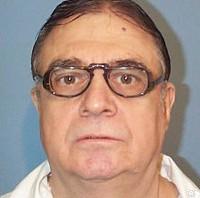
Tommy Arthur
Murderer Ervil LeBaron
Murderer · USA · 1972
Ervil Morrell LeBaron (1925 to August 16, 1981) was the leader of a polygamous…
35 victims
Ervil LeBaron
Murderer · USA · 1972
Ervil Morrell LeBaron (1925 to August 16, 1981) was the leader of a polygamous…
35 victims
 Brian Kevin Rosenfeld
Murderer · USA · 1985
Brian Kevin Rosenfeld Brian Kevin Rosenfeld was sentenced to three concurrent l…
23 victims
Brian Kevin Rosenfeld
Murderer · USA · 1985
Brian Kevin Rosenfeld Brian Kevin Rosenfeld was sentenced to three concurrent l…
23 victims
 Marvin Gray
Murderer · USA · 1975
Marvin Gray was convicted killer who claimed responsibility for 23 slayings and…
23 victims
Marvin Gray
Murderer · USA · 1975
Marvin Gray was convicted killer who claimed responsibility for 23 slayings and…
23 victims
 Yahweh ben Yahweh
Murderer · USA · 1980
Yahweh ben Yahweh was born and legally named Hulon Mitchell Jr. (October 27, 19…
23 victims
Yahweh ben Yahweh
Murderer · USA · 1980
Yahweh ben Yahweh was born and legally named Hulon Mitchell Jr. (October 27, 19…
23 victims
 Russell Ellwood
Murderer · USA · 1991
Russell Ellwood was a former taxi driver. Authorities suspected him of killing…
20 victims
Russell Ellwood
Murderer · USA · 1991
Russell Ellwood was a former taxi driver. Authorities suspected him of killing…
20 victims
 Tomohiro Kato
Mass murderer · Japan · 2008
Tomohiro Katō was held in custody and was in prison awaiting trial. Tomohiro Ka…
7 victims
Tomohiro Kato
Mass murderer · Japan · 2008
Tomohiro Katō was held in custody and was in prison awaiting trial. Tomohiro Ka…
7 victims
 Renee Bowman
Murderer · USA · 2006
Renee Bowman was a foster parent to three adopted daughters. The children were…
2 victims
Renee Bowman
Murderer · USA · 2006
Renee Bowman was a foster parent to three adopted daughters. The children were…
2 victims
 Louis Van Schoor
Serial killer · South Africa · 1986
Louis van Schoor was a security guard and an ex-policeman who was convicted and…
39 victims
Louis Van Schoor
Serial killer · South Africa · 1986
Louis van Schoor was a security guard and an ex-policeman who was convicted and…
39 victims
 Christine Paolilla
Homicide · USA · 2003
Christine Marie Paolilla was an American woman born on Long Island, New York on…
4 victims
Christine Paolilla
Homicide · USA · 2003
Christine Marie Paolilla was an American woman born on Long Island, New York on…
4 victims
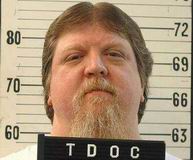 Jonathan Wesley Stephenson
Murderer · USA · 1989
Jonathan Wesley Stephenson was convicted of hiring a hit man to kill his wife,…
1 victim
Jonathan Wesley Stephenson
Murderer · USA · 1989
Jonathan Wesley Stephenson was convicted of hiring a hit man to kill his wife,…
1 victim
- Gender
- male
- Country
- USA
- Location
- Muscle Shoals, Alabama, USA
- Date of birth
- 1942
- Age at first offence
- 40
- Characteristics
- murder for hire, to collect insurance money
- Victim profile
- Troy Wicker, 35 ( his girlfriend's husband)
- Method of murder
- Shooting
- Date(s) of murder
- February 1, 1982
- Years active
- 1982
- Date of arrest
- April 1982
- Status
-
Sentenced to death
Sentenced to death on December 5, 1991
Case record: Tommy Arthur
Status and legal position
Tommy Arthur was sentenced to death on December 5, 1991.
Timeline
- February 1, 1982 (9:12 A.M.) — Police officers were called to the residence of Mary Jewel “Judy” Wicker and Troy Wicker in Muscle Shoals, Alabama.
- November 1981 — Judy Wicker received a telephone call from Arthur in which he told her that he had been “hired to do the job . . . to kill her husband.”
- January 31, 1981 — The day before the killing, Arthur asked a waitress to send a friend to purchase .22-caliber Mini-Mag long rifle bullets for him and gave her $10.
- December 5, 1991 — Arthur was found guilty and sentenced to death for Troy Wicker’s murder.
- February 19, 1983 — Arthur was convicted and sentenced to death the first time for shooting Troy Wicker; that decision was later overturned.
- June 23, 2007 — An execution date was set for Tommy Arthur by the Alabama Supreme Court for Sept. 27.
- April 2001 — Arthur came within seven hours of execution when a stay was granted on his claim that he did not have an attorney to handle his appeals.
- May 31, 1978 — The longest time a person had been on Alabama death row longer than Arthur was stated as this date.
- May/late July 2007 (end of last month, specific day not given) — Arthur missed his last appointment with a lethal-injection syringe by only a few hours.
The offence
On February 1, 1982, Troy Wicker was found murdered in his bed in Muscle Shoals, Alabama. His wife, Mary Jewel “Judy” Wicker, was lying on the floor with traces of blood on her face. Her sister, Teresa Rowland, was kneeling beside her.
Investigators found four .22-caliber expended cartridge cases on the bed. An autopsy revealed that Troy’s death was caused by a close-range wound through his right eye from a .22-caliber long rifle bullet which severed his brain stem.
Judy Wicker told investigators that after she dropped her children off at school and returned, she found an African American man in her home. She said the man raped her, knocked her unconscious, and shot Troy.
At trial in 1991, Judy Wicker testified about the plan to kill Troy and stated that the murder was to take place on February 1, 1982. She testified she had agreed to tell the police that her home was burglarized and that her husband was murdered by an African American man.
People
- Tommy Arthur — defendant; in custody at a prison work-release center in Decatur when the killing occurred; later sentenced to death.
- Troy Wicker — victim; murdered in his bed.
- Mary Jewel “Judy” Wicker — victim’s wife; testified as the prosecution’s main witness in Arthur’s 1991 trial; was charged, convicted, and sentenced to life imprisonment as an accomplice.
- Teresa Rowland — Judy Wicker’s sister; kneeling beside Judy Wicker at the scene; discussed killing Troy beginning in early 1981.
- Theron McKinney — Rowland’s boyfriend; assisted in the murder according to Judy Wicker; received jewelry and a car.
- Gary Alverson — attorney retained by Judy Wicker’s daughter, Tina Jenkins, to appear at a parole board meeting; later hired as a state prosecutor.
- Eddie Lang — Muscle Shoals Police Sergeant; observed Judy Wicker driving to and from the airport on February 1, 1982.
- Joel Reagin — owner of Reagin Mobile Homes; testified he was unable to say whether Arthur was at work that day but remembered Arthur working there and seeing Wicker and Arthur together while Arthur worked there.
- Patricia Yarborough Green — waitress at Cher’s Lounge; testified Arthur asked her to send a friend to purchase .22-caliber Mini-Mag long rifle bullets and gave her $10.
- Debra Lynn Phillips Tynes — manager of Cher’s; testified she went to lunch with Arthur on the day of the murder and described Arthur dropping a black garbage bag into the Tennessee River.
- Clay Crenshaw — Assistant Attorney General; director of the attorney general’s capital litigation section; discussed Arthur’s appeals and requests for DNA testing and an argument about lethal injection.
- Tom Smith — named as author associated with the report setting an execution date for Arthur.
- James A. “Jap” Patton — former Colbert County District Attorney; prosecuted Arthur in the case described and was quoted about execution dates and chances.
- Miriam Shenane — founder of Alabama victims’ rights group VOCAL; quoted about justice and execution.
- Sherrie Arthur Stone — Arthur’s daughter; quoted about her father, investigators, and DNA testing support arguments.
- Bryan Stevenson — executive director of the Equal Justice Initiative; quoted about incompetence, racism, and death penalty.
- Matt Wells — named as associated with BBC News coverage; quoted via context in the narrative.
- Troy King — Alabama Attorney General; requested the state Supreme Court set a new execution date.
- Alabama Supreme Court — set an execution date for Sept. 27 in 2007.
- U.S. Supreme Court — declined to review an appeal for Arthur.
- Gov. Bob Riley — governor who stayed the execution by 45 days before it was to have been carried out and ordered new lethal-injection procedures.
Investigation
Police located evidence and described the scene. Four .22-caliber expended cartridge cases were found on the bed. An autopsy established the cause of death as a close-range wound through Troy’s right eye from a .22-caliber long rifle bullet severing his brain stem.
Judy Wicker’s account to investigators included a supposed African American intruder who raped her, knocked her unconscious, and shot Troy.
On February 1, 1982, Muscle Shoals Police Sergeant Eddie Lang testified that he observed Judy Wicker driving east toward the airport and, about 10 minutes later, returning toward her house. He testified he did not see anyone in the car with her during either trip.
Work release records were used in the case. The work release facility’s records for the day of the murder showed that Arthur had signed out of work release at 6:00 A.M. and had not returned until 7:50 P.M. Joel Reagin testified he could not say whether Arthur was at work on the day of the murder but remembered having seen Wicker and Arthur together at Reagin Mobile Homes while Arthur was working there.
Patricia Yarborough Green testified that on January 31, 1981, Arthur asked her to send a friend to purchase .22-caliber Mini-Mag long rifle bullets for him and gave her $10 for the purchase. She testified that while they waited for the friend to return with the bullets, Arthur told her that they would be used to kill someone. She testified she gave the bullets to Arthur when she received them.
Debra Lynn Phillips Tynes testified that she went to lunch with Arthur on the day of the murder. She testified that while they were out, Arthur drove to a bridge over the Tennessee River, stopped the car, and dropped a black garbage bag into the river, and that he explained to her that he wanted to get rid of some old memories.
On the day of the murder, Wicker’s automobile was found in the parking lot at Northwest Junior College in Tuscumbia, Alabama. Inside the car, officers found Wicker’s purse and an Afro wig; the inside of the wig contained no human hairs.
In March 1982, officials at the work release center discovered a discrepancy between the amount of time that Arthur had logged as being at work and the amount of money that he had been paid for that work, and transferred him to the county jail pending investigation. After Arthur left the work release center, his personal belongings were inventoried and a Reagin Mobile Homes envelope containing $2000 was discovered.
In April 1982, Arthur was interviewed by a Muscle Shoals Police Department detective. Arthur denied knowing anything about Troy’s homicide or knowing Wicker or Rowland. When confronted with contrary information, Arthur asked to see an attorney and refused to make any further comments.
Arrest
The case narrative described Arthur being transferred to the county jail pending investigation in March 1982 after officials discovered a discrepancy at the work release center. The narrative also described an April 1982 interview by a Muscle Shoals Police Department detective.
Trial
Arthur was indicted and charged with intentionally murdering Troy by shooting him with a pistol after having been convicted of second degree murder. He was convicted and sentenced to death in 1982, but later outcomes reflected that the decision was overturned; the narrative further described that two of his convictions were overturned.
In 1991, during Arthur’s trial for Troy’s murder, Gary Alverson represented the state and Judy Wicker testified as the prosecution’s main witness.
Judy Wicker testified she had known Arthur since they were both young and worked at Tidwell Homes. She testified that she, Rowland, and Rowland’s boyfriend, Theron McKinney, discussed killing Troy beginning in early 1981. She testified that Troy was physically violent with her, and that Rowland and Troy often argued when Troy threatened to turn Rowland in to the police for the arson on her home that he had committed for her.
Wicker testified that she received a telephone call from Arthur in November 1981, during which he told her that he had been “hired to do the job . . . to kill her husband.” She testified she saw him the next week and began a sexual relationship with him.
Wicker testified that at the time, Arthur was residing at the Decatur Work Release Center and was assigned to work at Reagin Mobile Homes.
Wicker testified that she knew the murder was to take place on February 1, 1982, and that she agreed to tell the police that her home was burglarized and her husband murdered by an African American man.
Wicker testified that on the day of the murder, she met Rowland and Arthur at the airport. She testified that Arthur, who had been drinking and was carrying a gun and a garbage bag, had painted his face black and put on an Afro wig and black gloves. She testified that Arthur got into her car and, while driving him to her house, she urged him not to kill Troy.
She testified that after they arrived at her house, she heard a shot and that Arthur then struck her, knocked out several of her teeth, and lacerated her lip.
The narrative recorded that Wicker admitted that after she collected $90,000 in insurance proceeds from Troy’s death, she paid Arthur $10,000, paid Rowland $6,000, and gave McKinney jewelry and a car for their assistance in the murder. She also admitted that she continued her relationship with Arthur after the murder.
The narrative stated that Wicker’s testimony was corroborated by other witnesses and evidence.
Sentencing
Judy Wicker was charged, convicted, and sentenced to life imprisonment for murdering Troy to collect insurance proceeds. The narrative stated she served 10 years of that life sentence and was released after serving those 10 years.
Arthur was convicted and sentenced to death in 1982, with later descriptions indicating that the first death sentence and other convictions were overturned. On December 5, 1991, Arthur was found guilty and sentenced to death.
Appeals and post-sentencing developments
The narrative described a sequence of later appellate and executive actions involving Arthur’s execution:
Gov. Bob Riley stayed the execution of Arthur “Thursday, hours before it was to have been carried out,” so the inmate could be put to death using a new lethal injection formula the governor ordered “just a day earlier.” The narrative stated Riley issued a “45-day stay” only to allow time for the new lethal-injection procedures to be put in place, and that the changes were designed to make sure the inmate was unconscious when given drugs to stop the heart and lungs.
The narrative stated Riley said evidence was “overwhelming” that Arthur was guilty and “he will be executed for his crime.” It stated Riley encouraged the attorney general’s office to ask the Alabama Supreme Court to set another execution date “as soon as possible.”
The narrative included a statement attributed to Assistant Attorney General Clay Crenshaw: the request would be filed with the court Friday.
For the second time in 25 years, an execution date was set for Arthur, with the Alabama Supreme Court setting Sept. 27 as the execution date. The narrative stated the U.S. Supreme Court declined to review an appeal in April and that this set the stage for his execution.
The narrative described Arthur’s second execution date and stated he was originally scheduled to die in April 2001 but received a delay from a federal judge so he could pursue another appeal. After that appeal was denied, Alabama Attorney General Troy King requested the state Supreme Court set a new execution date.
The narrative quoted James A. “Jap” Patton saying:
- “A lot of people will not believe it until it happens,''
- “We'll see what happens,''
- “We've been there before (with a date set).''
- “He's had several chances, a lot of chances, and he's still around, but thankfully still locked up.''
The narrative stated Arthur came within seven hours of execution in April 2001 when a stay was granted on his claim that he did not have an attorney to handle his appeals, and that the courts later refused his bid for a new hearing.
The narrative stated Arthur continued to maintain his innocence and filed two actions in federal court seeking a stay of his execution and reversal of his case. Clay Crenshaw was quoted discussing that Arthur sought DNA testing and also sought relief arguing that lethal injection was unconstitutional because it was cruel and unusual punishment. The narrative included Crenshaw’s quote:
- “Every inmate comes with filing a lethal injection lawsuit,''
- “They try to delay their executions.''
The narrative stated Arthur could continue to appeal his execution in federal courts up until the last minute.
The narrative also described that Judy Wicker was found guilty as an accomplice and was released after serving 10 years of a life sentence.
The narrative stated the Alabama Department of Corrections had 199 inmates on death row and that nine had been on death row longer than Arthur, with the longest being moved there on May 31, 1978.
Other details
The narrative described prior incarceration for Arthur at the time of the killing: at the time of Troy Wicker’s murder, Arthur was in a prison work-release center in Decatur, serving a sentence for second-degree murder for killing his sister-in-law in Marion County.
The narrative included material about Arthur’s daughter and other quoted individuals.
Miriam Shenane, founder of VOCAL, was quoted:
- “What do we have to do? Put a mask over them and just take away their oxygen? I want justice,''
- “Putting them to death, even with the electric chair, is not nearly as horrible as what they did to my daughter.''
Arthur’s daughter, Sherrie Arthur Stone, was quoted:
- “I was basically told by investigators, if I didn't leave the state, I'd be found dead on a back road,''
- “They clearly want to murder my father, which is what this is going to be. It's not going to be an execution, it's going to be a murder.''
Clay Crenshaw was quoted about DNA testing:
- “There have been three federal judges now... they have all agreed that the results of DNA testing would not show that Arthur is innocent,'' Clay Crenshaw was also quoted about the purpose of the death penalty:
- “The reason to have the death penalty is to keep those people who commit these violent acts off of the street, and hopefully prevent other people from committing those type of crimes,''
- “To me it appears the opposite is happening,''
Bryan Stevenson, executive director of the Equal Justice Initiative, was quoted:
- “It's impossible to disconnect that history from this punishment,''
- “We've had, in Alabama, 25 cases reversed after proving intentional racial discrimination in jury selection... We have 19 appellate court judges in Alabama, all of whom are white.''
Bryan Stevenson was also quoted on Alabama:
- “Alabama wants to be the place where every European business comes to invest, and build their companies and factories, but we have an horrific human rights record.''

Spotted an error, or have more information about this case?