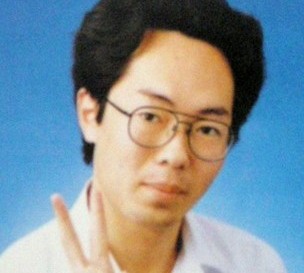
Tomohiro Kato
Mass murderer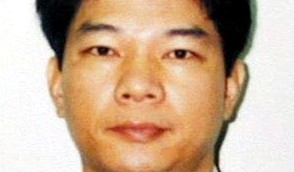 Mamoru Takuma
Mass murderer · Japan · 2001
Mamoru Takuma (宅間 守; November 23, 1963 – September 14, 2004) was a Japanese jan…
8 victims
Mamoru Takuma
Mass murderer · Japan · 2001
Mamoru Takuma (宅間 守; November 23, 1963 – September 14, 2004) was a Japanese jan…
8 victims
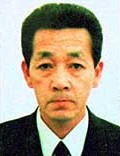 Mitsuhiro Kobayashi
Mass murderer · Japan · 2001
Mitsuhiro Kobayashi was a former taxi driver. During the trial, he admitted set…
5 victims
Mitsuhiro Kobayashi
Mass murderer · Japan · 2001
Mitsuhiro Kobayashi was a former taxi driver. During the trial, he admitted set…
5 victims
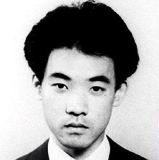 Yasuaki Uwabe
Mass murderer · Japan · 1999
Yasuaki Uwabe (Japanese: 上部康明) was born in Shimonoseki, Yamaguchi. After gradua…
5 victims
Yasuaki Uwabe
Mass murderer · Japan · 1999
Yasuaki Uwabe (Japanese: 上部康明) was born in Shimonoseki, Yamaguchi. After gradua…
5 victims
 Yang Ning
Mass murderer · Japan · 2003
Yang Ning was a Chinese man sentenced to death over the killing of a family of…
4 victims
Yang Ning
Mass murderer · Japan · 2003
Yang Ning was a Chinese man sentenced to death over the killing of a family of…
4 victims
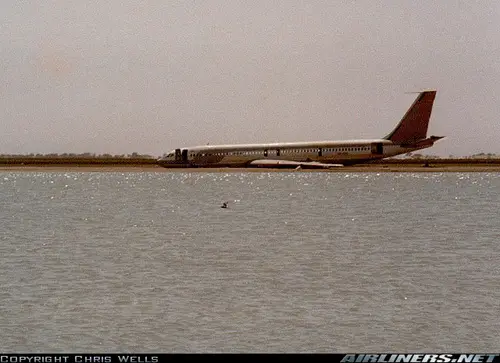 Seiji Katagiri
Mass murderer · Japan · 1982
Seiji Katagiri (片桐 清二 Katagiri Seiji) served as Captain of Japan Airlines Fligh…
24 victims
Seiji Katagiri
Mass murderer · Japan · 1982
Seiji Katagiri (片桐 清二 Katagiri Seiji) served as Captain of Japan Airlines Fligh…
24 victims
 Mitchell Rupe
Murderer · USA · 1981
Mitchell Rupe (1955–February 8, 2006) was convicted of aggravated first degree…
2 victims
Mitchell Rupe
Murderer · USA · 1981
Mitchell Rupe (1955–February 8, 2006) was convicted of aggravated first degree…
2 victims
 Donnie Andrews
Murderer · USA · 1986
Larry Donnell Andrews (April 29, 1954 – December 13, 2012) was an American crim…
2 victims
Donnie Andrews
Murderer · USA · 1986
Larry Donnell Andrews (April 29, 1954 – December 13, 2012) was an American crim…
2 victims
 Neah Verma
Murderer · India · 2011
Name: Neah Verma Age: 23 Occupation: beautician / salesgirl for beauty products…
3 victims
Neah Verma
Murderer · India · 2011
Name: Neah Verma Age: 23 Occupation: beautician / salesgirl for beauty products…
3 victims
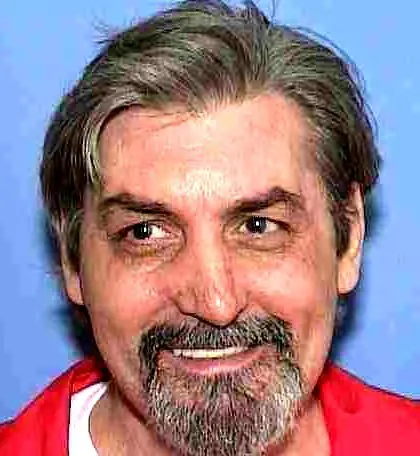 Jessie Derrell Williams
Murderer · USA · 1983
Jessie Derrell Williams was executed by lethal injection in Mississippi on Dece…
1 victim
Jessie Derrell Williams
Murderer · USA · 1983
Jessie Derrell Williams was executed by lethal injection in Mississippi on Dece…
1 victim
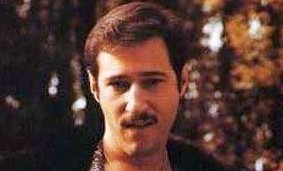 Paul Leslie Snider
Murderer · USA · 1980
Paul Leslie Snider committed suicide by shooting himself the same day. Paul Les…
1 victim
Paul Leslie Snider
Murderer · USA · 1980
Paul Leslie Snider committed suicide by shooting himself the same day. Paul Les…
1 victim
- Gender
- male
- Country
- Japan
- Location
- Tokyo, Japan
- Date of birth
- September 28, 1982
- Age at first offence
- 26
- Characteristics
- revenge, torture, drug addict
- Victim profile
- Six men and one woman
- Method of murder
- Hitting a crowd with a truck - St abbing with a dagger
- Date(s) of murder
- June 8, 2008
- Years active
- 2008
- Date of arrest
- Same day
- Status
-
In prison awaiting trial
Case record: Tomohiro Kato
STATUS and procedural posture
Tomohiro Katō was held in custody and was in prison awaiting trial.
Background
Tomohiro Katō (加藤 智大; Katō Tomohiro) was born September 28, 1982. He grew up in a suburban home in Aomori, Honshu. His father was a top manager in a financial institution.
Katō was described as having exceptional grades in elementary school and being a top track athlete. He entered Tsukuda Junior High School and became president of the tennis club in middle school.
After enrolling at Aomori Prefectural Aomori High School, Katō was described as acting violently at home. He was unpopular with classmates, and his class academic ranking fell to 300 (of 360 students). He failed entrance examinations for the prestigious Hokkaido University and trained as an auto mechanic at Nakanihon Automotive College. He was hired as a temporary worker at an auto parts factory in central Shizuoka Prefecture, though he was recently told that his job was going to be cut at the end of June.
An interview with Katō's brother revealed that his parents had put immense pressure on them to perform and to excel in their studies, including ordering homework be redone to standards to impress teachers in school, and recalling an incident where Katō was made to eat scraps of food from the floor. Another neighbour described Katō being punished by his parents by being made to stand outside for hours in deep cold during winter. Previous online postings before the announcement of the attack contained sharp criticisms toward his upbringing.
Katō was reported to be deeply in debt and to believe that his family had given up on him. He unsuccessfully attempted suicide in 2006 by ramming his car into a wall.
A police official later stated that Katō told police that he was tired of life and sick of everything. Katō also told police that he came to Akihabara to kill people. Jiro Akaogi, a spokesman for the Tokyo Metropolitan Police Department, said: “The suspect told police that he came to Akihabara to kill people.” Akaogi added: “He said he was tired of life. He said he was sick of everything.”
In a separate account, Kato told police that he documented his anger and that prosecutors planned mental examinations to decide if he can be held accountable for the crime. A police spokesman declined comment on the report about mental illness but said Katō was responding calmly: “Occasionally, he's in tears,” he said.
The offence
On Sunday, June 8, 2008, in the Akihabara shopping quarter in Sotokanda, Chiyoda, Tokyo, Japan, a man hit a crowd with a truck and then stabbed people.
At 12:33 p.m. JST, Katō hit a crowd with a truck, eventually killing three people and injuring two. He then left the truck and stabbed at least 12 people using a dagger (initially reported as a survival knife), killing four people and injuring eight. Tokyo Metropolitan Police Department arrested Tomohiro Katō on suspicion of attempted murder.
The incident involved a rented two-ton truck driven into a crowd at the crossing of Kanda Myōjin-dōri and Chūō-dōri streets in Akihabara. Kanda Myōjin-dōri was open to traffic, while Chūō-dōri was closed to vehicular traffic for the convenience of shopping pedestrians, a practice observed every Sunday and during holidays.
Police concluded that at 12:33 P.M. he hit five people with the truck after ignoring a red light earlier that morning. As some people gathered to care for the victims, he left the truck and stabbed at least 12 people. A witness told police he was screaming. Police chased him, cornered him into a narrow alley, and a police officer pointed a gun at him; he dropped his knife and was held down by the police at 12:35 P.M., about 170 meters (600 ft) away from the truck.
Victims and outcome of the attack
At least 17 ambulances rushed to the scene as passersby tried to revive victims. Five of the victims reportedly went into cardiac arrest at the scene.
It was initially reported that two people died, and during the day the death toll increased to seven. Later it was determined through autopsies that three victims died as a result of being hit by the truck while the other four were fatally stabbed.
According to police and hospital officials, six of the seven who were killed were men. The men named were Kazunori Fujino and his friend Takahiro Kamaguchi (both 19), Katsuhiko Nakamura (74), Naoki Miyamoto (31), Mitsuru Matsui (33), and Kasuhiro Koiwa (47). A woman, Mai Mutō (21), was also killed.
Katō's attack injured other people. AFP reports stated that four died from stab wounds and three others were killed by the truck, with the remaining toll including that 17 people were wounded. Another report stated that another 10 were injured.
Communication records showed that Mutō probably made an emergency call for police from her mobile phone, though she left no message. Later that day, a makeshift memorial was created by passersby.
Investigation
Katō was arrested red-handed on suspicion of attempted murder after a police officer spotted him stabbing a woman.
On June 10, the police sent him to Tokyo District Prosecutor's Office. On June 20, police re-arrested him on suspicion of murder of the seven victims.
On June 20, the Prosecutor's Office withheld action on him for the first suspicion. While being positive about his capacity to hold criminal liability, the Prosecutor's Office decided by June 20 to demand that his detention for a psychiatric test be authorized by the Tokyo District Court.
Police seized from Katō's apartment empty packages of knives, their receipts, and one club. Katō erased all contacts and communication records from his mobile phone just prior to the attack. Katō later confessed that he erased communications to avoid annoying those around him. Katō later said he posted the online messages hoping that police would take notice and stop him.
Police concluded that the knives were purchased two days before the attack from a military supply shop in Fukui at about 12:40 p.m. Katō spent about 20 minutes in the store, purchasing a telescopic baton and a pair of leather gloves; the store’s closed-circuit television captured him talking to and laughing with the salesman and demonstrating stabbing motions.
Katō came to Akihabara a day before the attack to sell his personal computer and some software to raise money to rent the truck.
Arrest and custody
Tokyo Metropolitan Police Department arrested Katō on suspicion of attempted murder. He was held at the Manseibashi Police Station.
On June 10, he was sent to the Tokyo District Public Prosecutor's Office. On June 20, he was arrested again on suspicion of murder. AFP stated that he was handed to prosecutors as camera crews swarmed around and that he stared glumly at the floor inside a police van as he was taken to prosecutors. Another report stated that he was transferred from police custody to a holding cell at the Tokyo prosecutors office.
AFP reported that police issued a public health alert on Tuesday about hepatitis B, stating that one of the wounded had hepatitis B and urging anyone who had contact with the pools of blood on the street to come in for a health check.
Police described Katō as cooperative during the inquiry and unapologetic, and stated he cried at times. In AFP’s account, a police spokesman said Kato was “responding calmly” and that “Occasionally, he's in tears.”
Trial
No trial proceedings were described in the provided material.
Sentencing
No sentencing was described in the provided material.
Appeals
No appeal information was described in the provided material.
Outcome
As no charges were filed against Katō at the time described, under Japanese law a suspect could be held by police for two days and then must be transferred to the custody of prosecutors, who have 20 days to either file charges or release the suspect.
Katō was in prison awaiting trial.
Motivations and related communications
Three days before the attack, on June 5, Katō accused people at his workplace of hiding his work clothes, and left work immediately afterwards. It was apparently believed that he thought he was going to lose his job though this was not actually the case. Investigators suspected that the missing work clothes at the factory may have sparked the attack. In one report from June 9, 2008, a colleague said: “My work clothes are missing!” The report placed this at around 6 a.m. on Thursday shortly before his shift began at the Higashi-Fuji factory of Kanto Auto Works, Ltd.
Investigators suspected that Katō thought he had been dismissed from the factory. In the same account, it stated that Katō, registered with a temporary employment agency, was dispatched to the factory on Nov. 14, according to the agency and Naoyuki Hashimoto, 54, the general affairs and public relations manager at Kanto Auto Works. It stated that during a job interview Katō said he had previously been engaged in assembling automobiles while working at another automobile company as a temporary employee. Colleagues said he worked hard and never took time off except his regular days off and that he earned about 200,000 yen a month. The contract with the automobile firm was to expire on March 31 but was extended by one year. Kanto Auto Works planned to reduce temporary workers from 200 to 50 by the end of the month, though the employment agency told him he could continue working. It added that Katō lived in a one-room apartment that the employment agency rents, was spotted several times by neighbors coming home at around 11 p.m., had almost no contact with them, and had no trouble with other residents.
The provided material included a set of messages reportedly posted from Katō’s mobile phone before the attack. The messages were presented as:
- “05.21 Sleepy. Will drive into [the crowd] and, if the car becomes useless, I will use a knife. Goodbye everyone”
- “05.34 I can’t get over this headache”
- “05.35 Rain is forecast. Bad”
- “06.02 I’m used to playing the role of good man. Everybody is so easily deceived”
- “06.03 Am I incapable of having friends?”
- “06.10 It seems the road I planned to take is blocked. After all, everything is against me”
- “06.31 The time has come. Let’s go”
- “06.39 It seems I’ll be battling against my headache”
- “06.49 . . . against rain”
- “06.50 . . . against time”
- “07.30 What a dreadful rain . . . even though I prepared everything perfectly”
- “07.47 Even though the scale is small, I’ll do what I decided to in the rain”
- “09.48 Into Kanagawa and having a rest. Things are going well at the moment”
- “10.53 Awful jam. Will I be in time?”
- “11.07 Shibuya. It’s awful”
- “11.45 Reached Akihabara. It’s the day of “pedestrians’ paradise”, isn’t it? Just minutes left now”
In a separate quoted chronology, the reported first comment appeared at 5.21am on the day of the violence and read: “I will kill people in Akihabara, have a vehicle crash and, if the vehicle becomes useless, I will use a knife.” The final comment was: “It’s time; I’m going.”
The provided material also stated that Katō posted messages from his mobile phone to a Web site “Extreme Exchange, Revised,” revealing his intentions through his final message via his mobile phone 20 minutes before the attack. It included an additional police official statement that the first message read, “I will kill people in Akihabara.” It listed other messages he was alleged to have posted:
- “If only I had a girlfriend, I wouldn't have quit work,”
- “I would never have become addicted to my mobile phone. Anybody with hope couldn't possibly understand how I feel,”
- “I don't have a single friend and I won't in the future. I'll be ignored because I'm ugly. I'm lower than trash because at least the trash gets recycled.”
It also referred to “a stabbing spree in Tsuchiura.” Commentators referred to the incident as another case with the phenomenon of Hikikomori or Internet suicide.
Later messages revealed his plan to use a vehicle until it became inoperable, and then to use a knife to continue the attack on foot. He waited for Chūō-dōri to close at noon to vehicular traffic before commencing the attack.
The material also included allegations that Katō sent postings from his cell phone to an Internet bulletin board and that officials refused to comment further while Japanese media said the postings depicted a disturbed man raging against society and vowing to get revenge by unleashing his fury on the streets of Akihabara.
In an additional AFP narrative, Katō documented his anger in hundreds of online postings, some made by mobile telephone as he drove to Tokyo. It included messages:
- “If I had a girlfriend, I wouldn't have just left my job or be addicted to my cell phone. A man with hope could never understand this,”
A chronicle of messages carried by The Asahi included verbatim statements:
- “Oh, I am hopeless,”
- “What I want to do: commit murder. My dream: to monopolize the tabloid TV shows. ... I saw a loving couple at a river bank. I wish they were killed by (being) swept away by the river.”
- “Since I was young, I was forced to play a 'good boy,'”
- “I'm used to deceiving people.”
- “It's time.”
Reactions and consequences
The attack was described as making global headlines and shaking public confidence in a society considered safe from violent crime. The Government of Japan reviewed laws regulating knives. The Tokyo Metropolitan Public Safety Commission announced that the practice of closing Chūō-dōri on Sundays and holidays was to be suspended until safety measures were reviewed.
Konami canceled three launch events of Metal Gear Solid 4: Guns of the Patriots in Tokyo, with “the safety of participants in mind” as a result of the attack.
Katō's parents gave an apology to the victims in a television interview.
The massacre sparked conversations in Japanese blogs when it was discovered that two Ustream users had broadcast live video streams of the tragedy, attracting a viewership estimated at between 1000 and 3000 people. No recording was saved of the videos, though the event had been written about in many Japanese blogs and online IT magazines.
A part of the current Super Sentai series at the time of the attack, “Engine Sentai Go-onger” (2008), featured transforming daggers as part of the heroes’ standard personal sidearms, called Switch Funshaken Rocket Dagger(s). After the attack, which occurred the day immediately after the Rocket Daggers made their debut in the series, both Bandai and Toei changed their names to “Switch Funshaken Rocket Booster(s)” and re-designed them as “swords” rather than “daggers” out of respect for the victims of the attack, and to lessen any trauma toward the 6-8yrs audience.
On 17 June 2008, convicted child serial murderer Tsutomu Miyazaki was executed by hanging, which was suspected to be a reaction to Katō's massacre.
The media labeled the attacks as a growing epidemic of “kireru” (キレる?), acts of rage committed by Tokyo's alienated youth; others labeled otaku culture as the answer for its negative stereotype of compulsive, antisocial behavior.
Related or similar events were described: the stabbings occurred exactly seven years after the Osaka school massacre, where eight elementary school students were killed. In 2008, another random knife killing by Masahiro Kanagawa was described on a smaller scale. Prime Minister Yasuo Fukuda visited the site a week after the massacre to offer prayer to the victims and said: “is worried that similar cases occur about 10 times a year in Japan.” The National Police Agency was said to have stated that 67 similar random attacks took place between 1998 and 2007. It was also reported that Katō's massacre was “the worst case of its kind” since World War II “in terms of the number of deaths.”
A few days after the attack, police arrested several people who stated their intention to make copycat killings elsewhere in Japan, including one case who made his intentions known to popular message board 2channel. On June 22 three women were injured by a female attacker at Ōsaka Station; a 38-year-old woman later confessed to attacking two of the victims with a razor. A 19-year-old man who made an Internet threat to go on a June 15 stabbing spree at Tokyo Disney Resort was arrested by police. Between June 8 and June 23, 12 people were arrested, and five people warned, for making threatening messages. The 17 people involved ranged from 13 to 30 years old.
Other details
In a report from June 10, 2008, company executive Osamu Namai said that three days before the attack Katō lost his temper at the auto parts factory where he worked in Shizuoka. Namai said: “He was screaming that his uniform was missing. When his colleague got a new uniform for him, he had already left and never returned,” Namai told reporters. Namai also said Katō was “very serious” and not known as a troublemaker.
NHK reported that Katō bought a knife at a camping and outdoor supply shop two days before the rampage, and that surveillance video showed him laughing with the shopkeeper and making stabbing motions with his hands.
Education Minister Kisaburo Tokai said Tuesday he planned to consult with experts about the state of children in Japan and said: “It made me think about whether the background of this incident may have been linked to education.”
In one report, a woman whose daughter was his classmate in elementary and middle schools told the Tokyo Shimbun that he “was an excellent student who was making efforts in studying and sports” and that his “mother was eager about education and he seemed to be trying to live up to her expectations,” adding that he was a leader in the classroom and of a tennis club in middle school.
Aomori Municipal Assembly member said Katō had a great education and said: “He graduated from prestigious Tsukuda Junior High School, then joined Aomori High School. He was real elite,” and added that his daughter of an acquaintance was a classmate of Katō at junior high and high schools.
The material included statements about Katō failing entrance examinations and entering an automobile vocational school in Shizuoka Prefecture. In an elementary school yearbook, Katō described himself as “hot-tempered and stubborn.”
A high school teacher told the Fuji network that Katō “wasn't outstanding at all in his studies or extracurricular activities. He was really a mediocre student,” while a classmate told Asahi television network that his class rank slipped to around 300 among 360 students.
A neighbour said she heard Katō and his younger brother would beat up their own mother, and that another acquaintance quoted the mother as saying: “It's so painful having dinner with him.” and “I'm scared.”

Spotted an error, or have more information about this case?