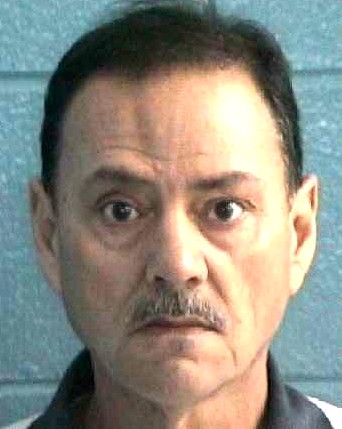
Roddy Childress
Murderer Brian Kevin Rosenfeld
Murderer · USA · 1985
Brian Kevin Rosenfeld Brian Kevin Rosenfeld was sentenced to three concurrent l…
23 victims
Brian Kevin Rosenfeld
Murderer · USA · 1985
Brian Kevin Rosenfeld Brian Kevin Rosenfeld was sentenced to three concurrent l…
23 victims
 Yahweh ben Yahweh
Murderer · USA · 1980
Yahweh ben Yahweh was born and legally named Hulon Mitchell Jr. (October 27, 19…
23 victims
Yahweh ben Yahweh
Murderer · USA · 1980
Yahweh ben Yahweh was born and legally named Hulon Mitchell Jr. (October 27, 19…
23 victims
 Russell Ellwood
Murderer · USA · 1991
Russell Ellwood was a former taxi driver. Authorities suspected him of killing…
20 victims
Russell Ellwood
Murderer · USA · 1991
Russell Ellwood was a former taxi driver. Authorities suspected him of killing…
20 victims
 Robert Martines Perez
Murderer · USA · 1994
Name: Robert Martines Perez · Other name used in proceedings: Robert Martinez P…
15 victims
Robert Martines Perez
Murderer · USA · 1994
Name: Robert Martines Perez · Other name used in proceedings: Robert Martinez P…
15 victims
 Nixzaliz Santiago
Murderer · USA · 2006
Nixzmary Brown was a seven-year-old child who died after being abused and murde…
1 victim
Nixzaliz Santiago
Murderer · USA · 2006
Nixzmary Brown was a seven-year-old child who died after being abused and murde…
1 victim
 Joshua Rosa
Murderer · USA · 2005
Joshua Rosa (born January 24, 1986) was a convicted murderer in the State of Fl…
1 victim
Joshua Rosa
Murderer · USA · 2005
Joshua Rosa (born January 24, 1986) was a convicted murderer in the State of Fl…
1 victim
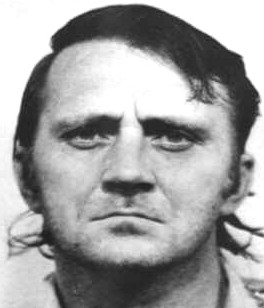 William Vandiver
Murderer · USA · 1983
William E. Vandiver was a White male. His date of birth was 08-26-1948. His exe…
1 victim
William Vandiver
Murderer · USA · 1983
William E. Vandiver was a White male. His date of birth was 08-26-1948. His exe…
1 victim
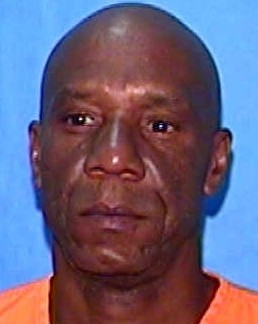 Etheria Jackson
Murderer · USA · 1985
Defendant: Etheria Jackson · Live-in girlfriend: Linda Riley · Trial judge: The…
1 victim
Etheria Jackson
Murderer · USA · 1985
Defendant: Etheria Jackson · Live-in girlfriend: Linda Riley · Trial judge: The…
1 victim
 Robert Karl Hicks
Murderer · USA · 1985
Robert Karl Hicks was a white male. His inmate number was 82092. His date of bi…
1 victim
Robert Karl Hicks
Murderer · USA · 1985
Robert Karl Hicks was a white male. His inmate number was 82092. His date of bi…
1 victim
- Gender
- male
- Country
- USA
- Location
- Glynn County, Georgia, USA
- Date of birth
- 1948
- Age at first offence
- 41
- Characteristics
- convicted rapist, child molester, rape, sexual abuse
- Victim profile
- His niece, Emma Kappus, 15, and her father, Patrick Kappus, 40
- Method of murder
- Shooting
- Date(s) of murder
- May 1, 1989
- Years active
- 1989
- Date of arrest
- —
- Status
-
Sentenced to death on June 10, 1994; conviction overturned in March 1996
Case record: Roddy Childress
Background
Roddy Elroy Childress was the half-brother of Jolene Kappus. In February 1989, Childress and his young son Jason moved from Texas to Brunswick, Georgia to live with Jolene, Jolene’s husband Patrick Kappus, and their 15-year-old daughter, Emma Kappus. In April 1989, the Kappuses decided to move with Childress to Jacksonville, Florida.
Jolene Kappus was deaf and mute. She testified at trial through an interpreter.
The offence
On May 1, 1989, Patrick Kappus and Emma Kappus were shot to death. The trial court records described the incident as the shooting deaths of Patrick Kappus and his daughter Emma Kappus.
Childress was convicted of two counts of murder in the shooting deaths of his niece, Emma Kappus, and her father, Patrick Kappus.
The jury found a statutory aggravating circumstance that the murder of Emma Kappus was committed while Childress was engaged in the murder of Patrick Kappus. The jury sentenced Childress to death for the murder of Emma and imposed a consecutive life sentence for the murder of Patrick.
In addition, Childress was convicted of theft by taking, for which he received a sentence of 12 months in prison.
Investigation
Neighbors of the Kappuses in Brunswick testified at trial that shortly before 7:00 a.m. on May 1, 1989, they heard a gunshot, followed by the sound of Patrick yelling, followed closely by three more gunshots. Minutes thereafter, a neighbor observed Childress standing alone near the shed.
Within a day after the bodies were discovered, a warrant issued for Childress’ arrest. Officers began to search for the victims after Jolene was able to locate and communicate with a deaf person at Patrick’s workplace.
A friend informed Jolene that Patrick and Emma were dead; officers had discovered their bodies hidden beneath a mattress in the shed in Brunswick.
No forensic tests were conducted on Emma’s body that might have substantiated or refuted the state’s theory that Childress shot the victims in the shed after being caught by Patrick in the act of sexually molesting Emma.
The state introduced evidence that a $200 check made out to Patrick had been cashed after his death, and that Childress’ finger and palm prints were identified on the check.
Arrest and pretrial events
A warrant issued for Childress’ arrest shortly after the bodies were discovered. Childress was ultimately located and arrested in Colorado in August 1990.
Childress was on probation for receiving stolen property in Texas and would be placed in jail if it became known that he had violated the terms of his probation by leaving the state. He would immediately lose custody of Jason, probably to his former wife, whom Childress felt would not be an appropriate custodial parent because of her recent suicide attempts.
Trial
Prosecution theory and witness testimony
The state theorized at trial that Childress shot the victims in the shed after being caught by Patrick in the act of sexually molesting Emma.
Jolene testified extensively for the state. The day after Jolene completed her testimony, her half-sister Morris testified.
At trial, after Childress took the stand and denied having any sexual contact with Emma, the state introduced rebuttal testimony from a school friend of Emma’s that she had seen Childress touch Emma in a sexual manner. The school friend further testified that, days before Emma’s death, she saw Emma lying naked on her bed crying with her ear bleeding and that Childress walked into the room naked, from the adjacent bathroom.
At trial, an inmate who had been arrested for child molestation and incarcerated with Childress testified for the state. The inmate testified that Childress told him that Childress had been having anal sex with his niece over a period of time. The inmate further testified that on another occasion Childress said he had gotten caught at something and that people wound up dead.
Childress’ testimony
Childress testified to a different version of events.
According to Childress, sometime during the early morning hours of May 1, Patrick woke him and asked where Emma was. Patrick was agitated and expressed concern that Emma might be with her boyfriend down the street. Childress told Patrick he did not know where Emma was; Patrick left the house and Childress went back to sleep.
Childress awoke to the sound of voices in the yard and saw Patrick and Jolene struggling angrily in a tug-of-war with Emma. Patrick’s hearing was impaired, and he attempted to communicate with Jolene in sign language. During the struggle, Emma fell to the ground, and as Patrick tried to help her up, a gun which Patrick held in one hand fired, shooting Emma in the head. Childress testified that both Jolene and Patrick reacted with shock. Jolene then grabbed the gun and aimed it at Patrick, who walked backward away from her toward the shed. As Jolene continued to inch toward Patrick with the gun, Childress ran to Emma to check her vital signs.
After a few moments, Jolene fired at Patrick three times and threw down the gun. Childress went to where Patrick lay next to the shed and determined that he, like Emma, was dead from a gunshot to the head. Childress testified that he and Jolene were both very shaken and could not communicate well about what to do.
Childress testified that he considered calling the police or an ambulance, feared the consequences for his sister and himself, and was worried that eight-year-old Jason would wake and see the bodies and what the neighbors might have seen or heard. Childress further testified that he attempted to move Emma’s body into the house, but abandoned the effort because he knew both victims were beyond resuscitation. Childress testified that he cooperated with Jolene in moving the bodies to the shed as an interim measure so Jason and the neighbors would not see them before he had time to think.
Childress testified that after a short interval Jolene went to the shed and retrieved several items from Patrick’s pockets, including a check for $200 made out to Patrick as a return for the Kappuses’ deposit on the house in Brunswick. Jolene handed Childress a lock from the U-Haul truck and asked him to lock the shed. When Childress went to the shed to lock it, he saw that Jolene had dropped or placed a mattress over the bodies.
Childress testified that they decided Jolene would leave for Jacksonville with Jason and that Childress would follow later in the truck after he finished loading it.
Childress testified that eventually he, Jason, and Jolene were reunited in Jacksonville. Jolene claimed she was unable to locate the house which she and Patrick had rented. The three spent the night in a motel. The next day they cashed the check which Jolene had taken from Patrick’s pocket.
As the hours wore on, Childress became increasingly suspicious of Jolene’s behavior and worried she was plotting to report to the police that he had killed the victims. Childress testified that he fabricated a story that the truck needed repair and left in it with Jason. Childress’ own money was missing from his luggage; he sold a few items from the truck, placed the remainder in storage, bought bus tickets back home to Texas for himself and Jason, and left.
Upon arriving in Texas, Childress testified that he realized he and Jason might not be safe there, and he immediately bought tickets to Colorado. He and Jason stayed in a homeless shelter until Childress could find work. They continued to live in Colorado until Childress was apprehended more than a year later.
Jolene’s testimony about the disappearance and days that followed
Jolene testified to the following sequence of events through the interpreter.
On the night of April 30, Patrick and Childress stayed up late talking after Jolene and the children had gone to bed. At 10:00 or 11:00 the next morning, Jolene awoke alone and was unable to locate either Patrick or Emma. She asked Childress where they were. Childress told her that they had gone to the store to buy soft drinks. Jolene was skeptical because the car was still at the house and her husband and daughter never went to the store on foot. Jolene also knew that Patrick had wanted to leave early that day for Jacksonville.
After waiting for Patrick and Emma to return, Jolene asked Childress again where they had gone. Childress speculated they were getting some exercise; Jolene was again skeptical. She stepped outside and looked around the house and noticed a lock on the door of the shed behind the house. She asked Childress about it. Childress told her Patrick had placed it there.
Jolene continued to wait until Childress finally insisted she leave for Jacksonville with Jason. She was confused and reluctant but did as Childress said, expecting he would soon follow in the truck with Patrick and Emma.
Once in Jacksonville, Jolene was unable to gain access to the house which she thought Childress had rented for her family. She and Jason waited many hours for Childress, who arrived alone. Jolene testified that he first explained that Patrick and Emma were still in Brunswick and later said that they had flown to see Patrick’s father, who was ill.
Childress, Jason, and Jolene spent the night in Jacksonville in a motel. Jolene testified that thereafter Childress repeatedly abandoned her for extended periods of time, until ultimately Childress and Jason vanished permanently with the U-Haul, leaving Jolene in a strange city, unable to communicate well, without money or possessions other than her car.
Jolene testified that on the night of May 2 she slept in the car, and the following night she spent in a homeless shelter. She borrowed a small amount of money for gasoline to drive to Brunswick and back, trying unsuccessfully to find her husband and child. Finally, on May 4, Jolene located and communicated with a deaf person at Patrick’s workplace. Officers were called and began to search for the victims.
Sentencing
The jury returned its sentencing phase verdict on May 21, 1994. The trial court sentenced Childress that same day.
Childress received a death sentence for the murder of Emma Kappus and a consecutive life sentence for the murder of Patrick Kappus. He also received a 12-month prison sentence for theft by taking.
Appeals
Sequestration violation and reversal of convictions
Childress appealed from the judgments entered by the trial court. The appellate court reversed Childress’ convictions on two independent grounds.
First, the trial court erred in excluding testimony that Jolene Kappus, widow of Patrick and mother of Emma, violated the rule of sequestration.
It was undisputed that Jolene violated the rule of sequestration by discussing her trial testimony with Morris on two occasions before Morris was called to the stand. Jolene and her boyfriend visited with Morris on an evening between two days of Jolene’s testimony and again the night before Morris was scheduled to testify.
After learning these facts, the defense sought to recall Morris to elicit testimony regarding the violations. The court allowed the defense to make a proffer of Morris’ testimony. In the proffer, Morris testified that Jolene, speaking through her boyfriend as a sign language interpreter, told Morris in each conversation what her own testimony had been regarding subject matter that involved Morris. Morris testified in the proffer that one example was that Jolene told her that in 1989, after Jolene and Morris discussed Patrick and Emma’s deaths for the first time, Jolene had not torn up written notes through which the two had communicated, but instead had left the notes with Morris. Morris testified that this and other alleged facts conflicted with Morris’ recollection.
Morris also testified in the proffer that although Morris was unable to state with certainty that Jolene attempted to influence her testimony, Morris “felt” that Jolene attempted to do so. Morris testified that Jolene’s boyfriend said not to tell anyone that the three had spoken because the witnesses were not supposed to discuss their testimony. Morris testified that she did not alter any of her testimony as a result of her conversations with Jolene.
Following the proffer, the court excluded all evidence that Jolene had violated the rule of sequestration. The court reasoned that because Morris’ testimony was not altered as a result of the communications, the fact of the violations was irrelevant.
The appellate court held that the jury may consider an out-of-court violation in assessing the credit to be given the testimony of the violator, and therefore the trial court erred in excluding evidence that Jolene violated the rule of sequestration. The appellate court also held that Childress had not waived the issue.
The appellate court stated that because the evidence was impeaching of Jolene’s credibility, and because the jurors believed Jolene’s account, discounted evidence admitted to impeach her, and rejected the defense theory that Jolene was herself the killer, it could not assume that the excluded evidence would have had no bearing on the outcome. The appellate court therefore reversed Childress’ conviction.
Expert-report discovery rule and reversal of convictions
Second, the trial court erred in requiring Childress to provide to the state written reports of all experts whom he consulted, whether or not he intended to offer the reports in evidence.
The appellate court described that the state moved for an order requiring the defense to produce any written reports of experts that it intended to introduce at trial, but that the trial court granted a broader order controlled by Sabel v. State. The order required that Childress have all expert reports reduced to writing and made available to the state whether or not he intended to call the experts at trial and whether or not their opinions were favorable to the defense, and permitted the state to use at trial reports of uncalled defense experts.
Shortly after trial, Sabel was overruled in pertinent part by Rower v. State. Under Rower, the state may discover only written reports of experts that the defendant intends to introduce at trial. Although Rower was decided after trial, because Childress’ appeal was “in the pipeline,” the Rower rule applied. The appellate court agreed the error required reversal because it was harmful.
Childress argued that the order chilled his use of expert witnesses. He had sought funds to hire a ballistics expert before the trial court issued its Sabel-based order. Childress’ concern that any unfavorable opinions would have to be reduced to writing and produced to the state, which could use those findings at trial, caused him to forego working with the expert.
The appellate court disagreed that potential harm could be dismissed, describing that the state theorized Childress shot both victims in the shed and then moved and concealed their bodies, and introduced testimony about the location of bullets and casings. Childress alleged the shootings occurred just outside the shed and he would have used a ballistics expert to obtain information concerning the ejection patterns of the murder weapon and to obtain an opinion on whether the location of bullets and casings corroborated his account. The appellate court held that the ballistics expert might have made a significant contribution to Childress’ defense, and that if the ballistics expert’s opinions supported the state’s theory, the report could have been devastating to the defense. The appellate court therefore held the error was harmful and reversed.
The appellate court ordered that before retrial, Childress must be given an opportunity to renew requests for funding for expert assistance and to consult with his experts in confidence.
Other alleged errors discussed by the appellate court
The appellate court discussed Childress’ contentions that a series of erroneous rulings compelled him to testify.
The appellate court included verbatim dialogue. The verbatim statements were:
PROSECUTOR: There is no -- there is no evidence in the trial of this case which makes that relevant. The defense can say, "That's my defense." But it ain't a defense yet.
THE COURT: That's true.
PROSECUTOR: Not until the defendant gets up --
THE COURT: That's true.
PROSECUTOR: -- and testifies to that.
THE COURT: That's true.
PROSECUTOR: Mr. Crowe may want to call her after that, but not at this point.
THE COURT: Let me tell you what. It's not relevant yet. He's right. . . . The defense then acquiesced.
After these rulings, Childress took the stand and testified at length about the victims’ deaths and surrounding events.
On cross-examination, the state questioned Childress extensively about whether he had had a sexual relationship with Emma, and he denied the allegations. The state elicited admissions about acts of dishonesty, about probation for receiving stolen property, about his older son’s incarceration for armed robbery, and about keeping his younger son out of school while he was in hiding.
After Childress testified, the defense recalled Giese to the stand. Giese testified that he visited with Jolene and her then husband Johnnie Serak in Nebraska in 1990 or 1991. Giese testified that one morning, when he and Jolene were alone, she began retelling the story of the murders. Giese testified as follows:
And then Jolene started telling a story. "When Emma was laying there, Pat saw it and kind of froze," that someone had shot her, and that was it. And I said, "Who?" But she said nothing . . . . That Emma was laying there. Pat saw it and he just kind of -- his mind froze. He was like he was in shock, you know, just shock. Someone had shot her in the head.
The appellate court discussed two related evidentiary rulings that it found to be serious. First, the trial court erred in refusing to allow admission of Giese’s testimony at the outset. The appellate court explained the evidentiary reasoning involving OCGA 24-9-83 and OCGA 24-9-82.
Second, the trial court erred in refusing to permit the defense to recall Jolene to lay a foundation for admission of the statements, under OCGA 24-9-83.
The appellate court stated that although Childress properly preserved the issues and he ultimately introduced Giese’s testimony, he paid a “very high price.” The appellate court described that by forcing Childress to choose between foregoing admission of highly relevant evidence and testifying before he could assess whether his testimony was needed, the trial court committed a “grave error.”
The appellate court stated that the issue resembled Brooks v. Tennessee, and it discussed that the United States Supreme Court found unconstitutional a Tennessee statute requiring a defendant to testify first or forego the opportunity to testify. The appellate court included discussion of the risks of impeachment and cross-examination and the deprivation of the guiding hand of counsel.
The appellate court stated that it did not resolve whether the trial court’s errors ultimately harmed Childress by forcing him to testify when he would not otherwise have done so, and it did not resolve whether the issue was properly preserved, because it reversed on other grounds. It cautioned that the erroneous rulings should be avoided on retrial.
Remaining enumerations
The appellate court reviewed Childress’ remaining enumerations of error and found that each of them either lacked merit or was unlikely to recur on retrial.
Outcome
The appellate court reversed Childress’ convictions on two independent grounds: (1) the erroneous exclusion of evidence that Jolene violated the rule of sequestration, and (2) the erroneous discovery order regarding written expert reports.
As the evidence supported the jury’s finding of the statutory aggravating circumstance, on retrial the state was permitted to again seek the death penalty.
Aftermath
Before retrial, Childress had to be given an opportunity to renew his requests for funding for expert assistance and to consult with his experts in confidence.
Timeline
- February 1989 — Childress moved from Texas to Brunswick, Georgia to live with Jolene, Patrick Kappus, and Emma Kappus.
- April 1989 — The Kappuses decided to move with Childress to Jacksonville, Florida.
- April 29 (Saturday) — The family rented a U-Haul truck and began loading it with their possessions.
- April 30 — Patrick and Childress stayed up late talking after Jolene and the children had gone to bed.
- May 1, 1989 — Patrick Kappus and Emma Kappus were shot to death; the jury later convicted Childress of two counts of murder in their deaths.
- May 4 (after May 1) — Jolene located and communicated with a deaf person at Patrick’s workplace; officers began to search for the victims.
- August 1990 — Childress was located and arrested in Colorado.
- June 10, 1994 — Childress was sentenced to death (as reflected in the status field).
- May 9, 1994 — Trial began.
- May 20, 1994 — The jury returned its verdict finding Childress guilty of the murders and theft.
- May 21, 1994 — The jury returned its sentencing phase verdict; the trial court sentenced Childress.
- June 17, 1994 — Childress filed a motion for new trial.
- March 15, 1995 — Childress amended his motion for new trial.
- June 7, 1995 — The trial court denied the motion.
- July 5, 1995 — Childress filed notice of appeal.
- August 31, 1995 — The case was docketed.
- January 17, 1996 — The case was orally argued.
- March 15, 1996 — The appellate court decided the case and reversed the convictions.
- March 1996 — Conviction and sentence were overturned (as reflected in the status field).
Other details
Childress confessed to Morris after he was incarcerated, telling her arrangements for the custody of Jason, and he said he killed the victims but shot Emma by accident and Patrick in self-defense. At trial, Childress admitted confessing to Morris but denied the truth of the confession.
Childress’ older son was incarcerated for armed robbery.
A series of notes in the appellate opinion included procedural dates and case references:
- The crimes occurred on May 1, 1989.
- Childress was indicted on October 3, 1990.
- On March 12, 1991, the state filed its notice of intent to seek the death penalty.
- Voir dire commenced on May 2, 1994.
- The jury returned its verdict on May 20, 1994.
- The trial court sentenced Childress on May 21, 1994.
- The trial court denied the motion for new trial on June 7, 1995.
- Greene filed his notice of appeal on July 5, 1995.
- The case was docketed on August 31, 1995.
- Oral argument occurred on January 17, 1996.
- The case was decided on March 15, 1996.
Names associated with the appeal included Glenn Thomas, Jr., District Attorney; John B. Johnson III, Assistant District Attorney; Michael J. Bowers, Attorney General; Susan V. Boleyn, Senior Assistant Attorney General; and Wesley S. Horney, Assistant Attorney General, for appellee; and Lane & Crowe, Robert L. Crowe, and M. Seth Rosenthal, for appellant.

Spotted an error, or have more information about this case?