
Robert Karl Hicks
Murderer Brian Kevin Rosenfeld
Murderer · USA · 1985
Brian Kevin Rosenfeld Brian Kevin Rosenfeld was sentenced to three concurrent l…
23 victims
Brian Kevin Rosenfeld
Murderer · USA · 1985
Brian Kevin Rosenfeld Brian Kevin Rosenfeld was sentenced to three concurrent l…
23 victims
 Marvin Gray
Murderer · USA · 1975
Marvin Gray was convicted killer who claimed responsibility for 23 slayings and…
23 victims
Marvin Gray
Murderer · USA · 1975
Marvin Gray was convicted killer who claimed responsibility for 23 slayings and…
23 victims
 Yahweh ben Yahweh
Murderer · USA · 1980
Yahweh ben Yahweh was born and legally named Hulon Mitchell Jr. (October 27, 19…
23 victims
Yahweh ben Yahweh
Murderer · USA · 1980
Yahweh ben Yahweh was born and legally named Hulon Mitchell Jr. (October 27, 19…
23 victims
 Russell Ellwood
Murderer · USA · 1991
Russell Ellwood was a former taxi driver. Authorities suspected him of killing…
20 victims
Russell Ellwood
Murderer · USA · 1991
Russell Ellwood was a former taxi driver. Authorities suspected him of killing…
20 victims
 Chelsea Huggett
Murderer · USA · 2013
Chelsea Huggett was the mother of 2-year-old Aliyah Marie Branum. She was arres…
1 victim
Chelsea Huggett
Murderer · USA · 2013
Chelsea Huggett was the mother of 2-year-old Aliyah Marie Branum. She was arres…
1 victim
 Harry Mitts
Murderer · USA · 1994
Harry Mitts was sentenced to death in November 1994 for murders and attempted m…
2 victims
Harry Mitts
Murderer · USA · 1994
Harry Mitts was sentenced to death in November 1994 for murders and attempted m…
2 victims
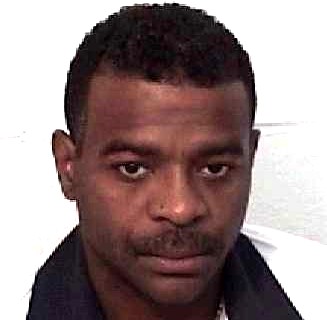 Frederick Whatley
Murderer · USA · 1995
Frederick Whatley (Frederick Ramone Whatley) was sentenced to death on January…
1 victim
Frederick Whatley
Murderer · USA · 1995
Frederick Whatley (Frederick Ramone Whatley) was sentenced to death on January…
1 victim
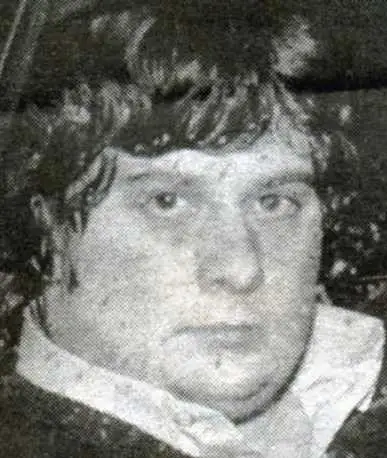 Kevin Weaver
Spree killer · United Kingdom · 1987
Kevin Weaver was sentenced to closed psychiatric confinement on March 28, 1988.…
4 victims
Kevin Weaver
Spree killer · United Kingdom · 1987
Kevin Weaver was sentenced to closed psychiatric confinement on March 28, 1988.…
4 victims
 Peter Odighizuwa
Murderer · USA · 2002
Peter Odighizuwa was a 43-year-old Nigerian former student at the Appalachian S…
3 victims
Peter Odighizuwa
Murderer · USA · 2002
Peter Odighizuwa was a 43-year-old Nigerian former student at the Appalachian S…
3 victims
 Donald Gene Franklin
Murderer · USA · 1975
Donald Gene Franklin was convicted of capital murder under Tex.Penal Code Ann.…
1 victim
Donald Gene Franklin
Murderer · USA · 1975
Donald Gene Franklin was convicted of capital murder under Tex.Penal Code Ann.…
1 victim
- Gender
- male
- Country
- USA
- Location
- Spalding County, Georgia, USA
- Date of birth
- March 23, 1957
- Age at first offence
- 28
- Characteristics
- convicted rapist, rape, kidnapping, torture
- Victim profile
- Toni Strickland Rivers (female, 28)
- Method of murder
- St abbing with knife
- Date(s) of murder
- July 13, 1985
- Years active
- 1985
- Date of arrest
- Same day
- Status
-
Executed
Executed by lethal injection in Georgia on July 1, 2004
Case record: Robert Karl Hicks
Background
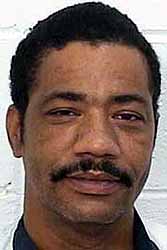
Robert Karl Hicks was a white male. His inmate number was 82092. His date of birth was 03/23/1957, and he was 47 years old at the time of sentencing and at the time of execution-related reporting. His height was 5'07" and his weight was 135. His eye color was brown and his hair color was brown. His county was Spalding County.
Hicks had previously been convicted of raping a 16-year-old girl and had been released just nine months before killing Toni Strickland Rivers. He had been granted parole after serving less than half of a 15-year sentence for raping the 16-year-old girl.
The offence
The victim was Toni Strickland Rivers, who was 28 years old.
Early in the evening of July 13, 1985, Rivers drove to an area on Rawls Road to meet a friend with whom she planned to visit Callaway Gardens. When the friend arrived, Rivers's automobile was there, but Rivers was not.
At about 8:00 p.m. that evening, a resident of Blanton Mill Road heard a loud scream from a nearby pasture area and then heard a woman's voice saying, "Don't do that." The resident saw a car parked near the end of his driveway and walked to it. From there, he looked over a fence, through a gap in the woods, and into the pasture, where he saw someone lying on the ground and saw someone else "jump from the other side [and then] hunker down." The resident flagged down two men driving by in a pickup and told them to call the police, that something was going on in the pasture.
Robbie McCune and Charles Garner heard screams themselves. Looking toward the pasture, they saw a shirtless man with blond hair and a black beard bending over and making stabbing motions. Garner testified that as the man straightened up, he wiped something off and put it into his pocket. Garner and McCune got the license number of the car parked by the side of the road and drove away to find a telephone. As they did, they saw the blond male exit the woods, get into his car, drive a few yards up the road, and stop. (The car had run out of gas.) Garner and McCune found a telephone at the first house down the road, called the sheriff, and returned just in time to see the blond male climb into the back of a black pickup that had stopped to give him a ride.
Rivers was found nude from the waist down and covered with blood. Deputy sheriff Chuck Hudson arrived and Rivers was described as begging for help, saying she could not breathe. She clawed at the ground making choking noises until just before the EMTs arrived, when she stopped moving. Rivers soon died.
The victim had "five large, gaping lacerations of the throat . . ., an open gash on the abdomen . . . and eight stab wounds." She died from a near-total loss of blood.
Inside Hicks's automobile, Deputy Hudson discovered a pair of women's shorts, a bloody pair of men's socks, a pair of sandals, and a key ring with the initials "T. R." Blood on the seat of the car and on Hicks's pants, socks, and knife was identified as being consistent with that of the victim.
Rivers was not raped, but she was stripped naked from the waist down.
Hicks stabbed Rivers eight times with a pocket knife, slit her throat, and left her half-nude body in a field near Griffin, about 35 miles south of Atlanta. Hicks did not know Rivers and followed her after seeing her talking to her boyfriend on a pay phone at a rural grocery store.
Hicks initially told authorities he killed Rivers. At trial he claimed he was insane. His doctor said he suffered from a disorder that prevented him from controlling his impulses. Recently, Hicks said he was innocent and that a drug dealer and another man committed the murder.
Investigation
As Garner and McCune flagged down officers, Sheriff’s deputy Chuck Hudson testified that Garner and McCune "flagged me down and told me that the guy sitting in the back of the [pickup] I had just passed was the one they had seen . . . in the wooded area where . . . all the screaming and all had taken place . . . [W]hen they told me that, I turned around and went back and stopped the black pickup truck."
Hudson was informed by the driver, whom he knew, that the man in the back had asked for a ride to a gas station. Hudson asked the man, whom he later identified as the defendant, if he knew anything about a girl or if he had heard anything in the area. The defendant answered negatively. Hudson offered to help the defendant with his car problems and told him that if "everything was all right, I'd help him get some gas and get his car going."
Hudson testified that Hicks "came down off the truck and started to get in the back of my patrol car, and I made him stop, and I searched him." Hudson found a "folding pocket knife" in Hicks's right front pocket, covered in a "dark red substance that appeared to be blood -- fresh blood."
Arrest
Hicks was picked up by a sheriff's deputy near the murder scene after his car ran out of gas.
Trial
The Spalding County Grand Jury indicted Hicks for the murder of Toni Rivers during the October Term, 1985.
Hicks was tried on January 13-16, 1986, and found guilty as charged in the indictment by a jury in the Superior Court of Spalding County, Georgia on January 16, 1986.
During the trial, Hicks unsuccessfully pleaded insanity.
In the direct appeal decision, the Supreme Court of Georgia described the verdict as follows: Hicks was convicted by a Spalding County jury of malice murder and sentenced to death.
The jury recommended a death sentence. The jury found three statutory aggravating circumstances:
- the offense of murder was committed by a person with a prior record of conviction for a capital felony, rape;
- the offense was committed while the offender was engaged in the commission of the offense of aggravated battery;
- the offense of murder was outrageously or wantonly vile, horrible, or inhuman in that it involved an aggravated battery to the victim.
The Supreme Court of Georgia's decision stated that shackling of the defendant was justified and did not deny him fair trial; that regardless of whether Hicks was advised of his Miranda rights by state's psychologist, admission of testimony of psychologist did not violate the Fifth Amendment; and that insanity laws that did not provide for impulse-control disorder insanity defense were not constitutionally inadequate. The Supreme Court affirmed.
Motion issues
Hicks argued that the evidence did not support the conviction and that his motion for directed verdict and his motion for new trial on this ground should have been granted. The court disagreed and found the evidence sufficient under Jackson v. Virginia and Brown v. State.
Hicks argued his motion to suppress should have been granted because the arrest and the searches and seizures were unsupported by probable cause. The court found no error. It held that Deputy Hudson was fully authorized by the circumstances to conduct a pat-down search of the defendant for weapons under Terry v. Ohio. It further held that subsequent entry into the automobile was supported by probable cause.
Sentencing
On January 17, 1986, Hicks was sentenced to death for the murder of Toni Rivers.
In the direct appeal decision, the Supreme Court of Georgia stated that "The sentence of death is not excessive or disproportionate punishment for a vicious and brutal murder committed by a defendant with a prior conviction of a capital felony."
Appeals
Direct appeal
The Supreme Court of Georgia affirmed Hicks's conviction and sentence on February 13, 1987. Hicks's motion for reconsideration was denied on March 3, 1987.
Hicks's petition for writ of certiorari was denied by the United States Supreme Court on June 15, 1987.
First state habeas corpus petition
Hicks filed his first petition for a writ of habeas corpus in the Superior Court of Butts County, Georgia on September 4, 1987. After an evidentiary hearing on December 12-13, 1988, the state habeas corpus court denied Hicks state habeas corpus relief on December 28, 1988.
Hicks's application for a certificate of probable cause to appeal filed in the Supreme Court of Georgia was denied on October 5, 1989. Hicks's petition for writ of certiorari was denied by the United States Supreme Court on April 2, 1990 in Hicks v. Kemp.
First federal habeas corpus petition
Hicks filed a petition for a writ of habeas corpus in the United States District Court for the Northern District of Georgia, Newnan Division, on December 11, 1990. The district court dismissed the petition without prejudice on February 22, 1991.
Second state habeas corpus petition
Hicks filed his second petition for a writ of habeas corpus in the Superior Court of Butts County, Georgia, on May 31, 1991. Following a hearing on November 23, 1992, the state habeas corpus court dismissed this petition as successive on March 3, 1994.
Hicks then filed an application for a certificate of probable cause to appeal in the Supreme Court of Georgia, denied on September 30, 1994. Hicks's petition for a writ of certiorari was denied by the Supreme Court of the United States on March 20, 1995.
Second federal habeas corpus petition
Hicks filed his second petition for a writ of habeas corpus in the United States District Court for the Northern District of Georgia, Newnan Division, on April 24, 1997. The district court denied relief on September 5, 2000. The federal district court denied a motion to alter and amend judgment on February 23, 2001.
On March 28, 2001, Hicks filed an application for certificate of appealability. On May 1, 2001, the United States District Court denied Hicks's application for certificate of appealability.
Appeal to the Eleventh Circuit
On May 24, 2001, Hicks filed an application for certificate of appealability in the United States Court of Appeals for the Eleventh Circuit. On November 21, 2001, the Eleventh Circuit granted Hicks's motion for a Certificate of Appealability on the sole issue of whether Ake violations are subject to harmless error analysis.
Oral argument was held on November 7, 2002. On June 16, 2003, the Eleventh Circuit issued an opinion affirming the denial of federal habeas corpus relief in Hicks v. Head.
Hicks filed a petition for panel rehearing on August 11, 2003, which was denied on September 12, 2003.
Hicks originally filed a petition for writ of certiorari in the United States Supreme Court on February 9, 2004 and was directed to file a corrected petition, ultimately filed on April 14, 2004. Respondent filed a response on May 14, 2004. The United States Supreme Court denied certiorari on June 14, 2004.
Outcome
Hicks's execution was ordered by the Spalding County Superior Court.
On June 17, 2004, the Superior Court of Spalding County filed an order setting a seven-day window in which the execution may occur to begin at noon on June 29, 2004 and end seven days later at noon on July 6, 2004. The execution was scheduled to take place at the Georgia Diagnostic and Classification Prison in Jackson at 7:00 p.m. on Wednesday, June 30, 2004.
Hicks had concluded his direct appeal, as well as state and federal habeas corpus proceedings.
Aftermath
Moments before his execution, Hicks apologized and begged for God’s mercy. He said: "I would like to apologize for everything I did. I'm sorry. God forgive me. Come get me, Warden."
His final words were, "Come get me," after a clergyman said a short prayer.
Hicks was pronounced dead at 5 p.m. on Thursday, 22 hours after he was originally scheduled to die.
The execution-related reporting stated that the Georgia Supreme Court had put his death sentence on hold for a day but then allowed it to proceed Thursday afternoon.
Final meal
Hicks ate a few bites of fish, shrimp, french fries, coleslaw, crescent rolls, chocolate cake, a vanilla milkshake and a soda. He did not finish eating any of the items.
Other details
Prosecution and defense figures mentioned
David Fowler was identified as the prosecutor of Hicks's case at trial and as the person who commented on Hicks's remorse and on his claims.
John Relman and George H. Kendall represented Hicks when he filed his first petition for a writ of habeas corpus.
Georgia parole board spokeswoman Heather Hedrick commented on clemency.
Defense lawyers August Siemon and Robert McGlasson were mentioned in connection with the parole board clemency request.
Parole and clemency
Georgia's parole board denied clemency for Hicks, described as a death row inmate whose lawyers argued that the prosecutor improperly suggested at trial that the Ten Commandments do not recognize insanity as a defense for murder.
Hicks's lawyers stated jurors followed the prosecutor's instructions to apply divine law and spent part of their deliberations "in group prayer." The parole board spokeswoman said the defense arguments were not compelling enough to stop the execution.
In a clemency petition, Hicks's lawyers said the prosecutor told jurors that "The Ten Commandments make no provision for mental illness." They quoted Fowler: "Does it say, `Thou shalt not kill, and be held accountable only if you know what you're doing?' No, it doesn't say that."
In another quoted passage from the clemency petition, the lawyers quoted the prosecutor as saying: "Thou shalt not kill, He said in the Ten Commandments," the lawyers quoted the prosecutor as saying. "Does it say, thou shalt not kill, and be held accountable only if you know what you're doing? No, it doesn't say that."
Fowler stated he did not recall making those specific comments, but he did not dispute them.
The lawyers also cited Hicks's statement to the parole board that a drug dealer and another man were responsible for the murder. Hicks said he did not mention the claims before because a fellow inmate approached him in jail and told him that if he wanted to prevent his family from being harmed he would "keep his mouth shut" and "take the fall."
Fowler noted that the murder weapon was found in Hicks's possession and his clothes were covered in the victim's blood when he was arrested. Fowler said, "The man was caught red-handed and now he's trying to pass it off on somebody else," and said, "Obviously, when people are in desperate straits, they take desperate measures and that's what he's apparently doing,".
Rivers's brother-in-law, Cary Grubbs, was quoted saying: "We don't have any misgivings at all that the trial was fair and just, that the sentence was fair and just and that when the sentence is carried out on Wednesday that justice will be served."
In execution-related reporting, Cary Grubbs was also quoted: "The emotion that's overwhelming at this moment is relief," and "Forgiveness is a word that still sticks in the throat for us. However, we'll have to let go of the anger we have."
Additional trial and medical-related disputes mentioned
Hicks's doctor was described as saying he suffered from a disorder that prevented him from controlling his impulses.
A defense psychiatrist diagnosed Hicks with "intermittent explosive disorder," which the doctor said rendered Hicks unable to control his impulses.
A long-form clemency discussion described a disagreement about psychiatric and neurologist assistance, including statements that a neurologist was needed and that funds were granted so late that trial began.
A state expert was named as Dr. Donald Grigsby, and an individual was described as Dr. Parekh, who was referenced as a "board-certified neurologist." The discussion stated that testimony later proved to be false and described later post-trial testimony by Dr. Jonathan Pinkus, chair of the Department of Neurology at Georgetown University Hospital, that Hicks suffered from organic brain damage, caused by fetal alcohol exposure and several head traumas including prolonged beatings by his stepfather.
The discussion also stated that the jury sentenced Hicks to death based on false evidence and that Hicks was deprived of the ability to produce a defense based upon his mental condition.
Scheduling and execution location details mentioned
The execution was ordered for the Georgia Diagnostic and Classification Prison in Jackson at 7:00 p.m. on Wednesday, June 30, 2004, within the seven-day window from noon on June 29, 2004 to noon on July 6, 2004.
Citations and case references included in the record
Hicks v. State, 352 S.E.2d 762 (Ga.,1987) (Direct Appeal). Hicks v. Head, 333 F.3d 1280 (11th Cir. 2003) (Habeas). Hicks v. Kemp, 494 U.S. 1074 (1990). Hicks v. Georgia, 482 U.S. 931 (1987). Ake v. Oklahoma, 470 U.S. 68 (1985). Jackson v. Virginia, 443 U.S. 307 (1979). Terry v. Ohio, 392 U.S. 1 (1968). Brecht v. Abrahamson, 507 U.S. 619 (1993).

Spotted an error, or have more information about this case?