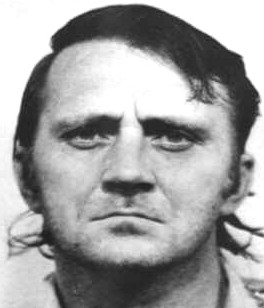
William Vandiver
Murderer Brian Kevin Rosenfeld
Murderer · USA · 1985
Brian Kevin Rosenfeld Brian Kevin Rosenfeld was sentenced to three concurrent l…
23 victims
Brian Kevin Rosenfeld
Murderer · USA · 1985
Brian Kevin Rosenfeld Brian Kevin Rosenfeld was sentenced to three concurrent l…
23 victims
 Marvin Gray
Murderer · USA · 1975
Marvin Gray was convicted killer who claimed responsibility for 23 slayings and…
23 victims
Marvin Gray
Murderer · USA · 1975
Marvin Gray was convicted killer who claimed responsibility for 23 slayings and…
23 victims
 Yahweh ben Yahweh
Murderer · USA · 1980
Yahweh ben Yahweh was born and legally named Hulon Mitchell Jr. (October 27, 19…
23 victims
Yahweh ben Yahweh
Murderer · USA · 1980
Yahweh ben Yahweh was born and legally named Hulon Mitchell Jr. (October 27, 19…
23 victims
 Russell Ellwood
Murderer · USA · 1991
Russell Ellwood was a former taxi driver. Authorities suspected him of killing…
20 victims
Russell Ellwood
Murderer · USA · 1991
Russell Ellwood was a former taxi driver. Authorities suspected him of killing…
20 victims
 Andre Bland
Murderer · USA · 1992
Andre S. Bland was convicted in the shooting death of Ontrain Sanders in the pa…
1 victim
Andre Bland
Murderer · USA · 1992
Andre S. Bland was convicted in the shooting death of Ontrain Sanders in the pa…
1 victim
 Robin Reid
Murderer · Australia · 1982
Robin Reid was sentenced to life imprisonment on November 26, 1982. In prison,…
1 victim
Robin Reid
Murderer · Australia · 1982
Robin Reid was sentenced to life imprisonment on November 26, 1982. In prison,…
1 victim
 Anthony Mungin
Murderer · USA · 1990
Name: Anthony Mungin · Date of birth: 07/22/66 · Case citation: Florida Supreme…
1 victim
Anthony Mungin
Murderer · USA · 1990
Name: Anthony Mungin · Date of birth: 07/22/66 · Case citation: Florida Supreme…
1 victim
 Mark Martin
Murderer · United Kingdom · 2004
Mark Martin (born 1981 in Nottingham, England) was a British murderer. He kille…
3 victims
Mark Martin
Murderer · United Kingdom · 2004
Mark Martin (born 1981 in Nottingham, England) was a British murderer. He kille…
3 victims
 John Hicks
Murderer · USA · 1985
John Hicks was executed by the state of Ohio on November 29, 2005, by lethal in…
2 victims
John Hicks
Murderer · USA · 1985
John Hicks was executed by the state of Ohio on November 29, 2005, by lethal in…
2 victims
- Gender
- male
- Country
- USA
- Location
- Lake County, Indiana, USA
- Date of birth
- August 26, 1948
- Age at first offence
- 35
- Characteristics
- dismemberment
- Victim profile
- Paul Komyatti, Sr., 62 (his father-in-law)
- Method of murder
- St abbing with fish filet knife over 100 times
- Date(s) of murder
- March 20, 1983
- Years active
- 1983
- Date of arrest
- —
- Status
-
Executed
Executed by electrocution in Indiana on October 16, 1985
Background
William E. Vandiver was a White male. His date of birth was 08-26-1948. His execution occurred in Indiana.
Vandiver was disliked by members of his immediate family, including his wife Rosemary, his son Paul Jr., and his daughter Mariann. Paul Sr. demanded that Mariann divorce Vandiver because of his criminal past and threatened to inform the police on Paul Sr.
Vandiver joined with the family in a conspiracy to kill Paul Sr. Several attempts to poison Paul Sr. were made without success. The plan was adjusted when ether was not available. Vandiver and Mariann waited outside the home for a signal from Paul Jr. that Paul Sr. was asleep.
The offence
Paul Sr. was an elderly man, retired because of physical disability with heart trouble. The family members entered into an agreement with the criminal objective of killing Paul Komyatti, Sr.
After the family members’ attempts to poison Paul Sr. failed, the final decision on the method of his death came on the 19th of March, 1983, to put him under with ether and inject air into his veins.
During the late night hours of the 19th and the early morning darkness of the 20th, Vandiver, in the company of Mariann and unknown to Paul Sr., waited in concealment outside the house for the signal from Paul Jr. that Paul Sr. was asleep. Upon seeing the signal flashed, they entered the house, altered the plan at the last moment because of the lack of ether, and decided to smother him.
Vandiver and Paul Jr. entered the bedroom and sprang upon Paul Sr. as he lay sleeping, bungling yet another execution attempt. Paul Sr. fought hard for his life, making it impossible to follow through with asphyxiation. Vandiver had difficulty holding Paul Sr. down even with Paul Jr. holding his legs.
Paul Sr. pleaded for his life, saying: "Son, Son, can't we work something out?" Calls went out to his wife to summon the police and to his grandson for aid, so loud that Mariann closed the bedroom door lest the grandchild be awakened.
Vandiver terminated the resistance by stabbing Paul Sr. in the back, in the words of Vandiver, "at least one hundred times" with a fish filet knife he always carried in his pocket. Vandiver hit Paul Sr. over the head five or six times with his gun, which he also always carried. At this point Paul Sr. was still breathing.
By Vandiver’s own admission, decapitation was the immediate cause of death. The actual count of knife wounds was 34 of the deep penetrating variety. Vandiver began preparations to dispose of the body while Paul Sr. was still breathing. Vandiver and the other family members then sectioned up the body while making jokes.
The trial court’s findings described actions and commentary during the sectioning, including:
- offering Paul Sr.’s penis to Rosemary as a joke;
- taking a smoke break because of the smell and length of the task;
- commenting on the toughness of his skin;
- lecturing Paul Jr. on the use of the knife instead of the saw (because saw teeth plug up with fat and flesh);
- commenting casually on the amount of fat around his heart as like 'a chicken heart'.
Investigation
Evidence at trial showed that Vandiver had gotten a "loan" of $5000 from Paul Jr., as well as $1700 and Paul Sr.'s truck from Rosemary. The trial court’s findings described the conspirators’ plan as involving expected money that would have been available had their plan been successful.
Trial
Vandiver was charged and convicted of murder by a jury in the Lake Superior Court.
The jury recommended that the death sentence be imposed. The trial court agreed and sentenced Vandiver to death.
At trial, Vandiver recanted his prior confessions and placed the entire blame for the killing and dissection on Paul Jr.
The Supreme Court proceeding described multiple attempts at waiver. Vandiver stated that he received a "fair" trial and was guilty of the murder for which he was convicted. Vandiver also stated: "Well, I turned myself in. I admitted to the crime. I see no sense in wasting everybody's time. At the best that could happen, I would end up doing forty-five years, and I'm going to die there anyway, so why--why prolong it. You know--you know, there is no need. I'm going to die there regardless, so I don't see no sense in setting there when it's going to happen anyway.... Well, to me it [being executed] would be less than getting a tooth pulled. It would be over with. My family wouldn't have to suffer no more, my friends or the people that are concerned. It would be over with. I see no sense in dragging them around for another ten or fifteen years and have to depend on them. I see no sense in that either ... I am a gambler; I was *912 taking a gamble. The gamble didn't pay off. I see no sense to proceed any further with anything."
Sentencing
Vandiver was sentenced to death.
The trial court made detailed findings pursuant to I.C. 35-50-2-9, including discussion of the agreement to kill Paul Sr., the attempts to poison him, the waiting for a signal, the smothering plan and its alteration due to lack of ether, the stabbing and gunshots, the number of knife wounds, the decapitation and its role as the immediate cause of death, and commentary during the sectioning of the body.
The findings also described aggravating and mitigating considerations. Aggravating circumstances included:
- b(3) Lying in wait;
- b(4) Hired to kill.
Mitigating circumstances were stated as None.
Appeals
Vandiver waived appeals and expressed a desire not to appeal sentence or conviction.
A question arose regarding whether briefing was necessary for automatic review of Vandiver’s death sentence. The Indiana Supreme Court issued an "Order Setting Briefing" on January 22, 1985, directing the Public Defender of Indiana to assist with consideration of Vandiver’s sentencing in light of statutory requirements of IC 35-50-2-9, with argument confined to the death sentence. The State’s "Motion To Strike In Part Appellant's 'Death Sentence Review Brief' " was granted.
The Indiana Supreme Court’s decision described that Vandiver’s appeal of the murder conviction had been waived, and it considered whether death was appropriate under Indiana appellate review rules.
The Supreme Court decision affirmed the death sentence and remanded for the sole purpose of setting a date for execution.
Vandiver v. State , 480 N.E.2d 910 (Ind. July 29, 1985) (Direct Appeal). The Supreme Court held that:
- examination of defendant indicated he intelligently waived appeal of conviction, although appeal of sentence could not be waived;
- record was sufficient to find that trial court did not err in the way it imposed death sentence; and
- record was sufficient to support sentence of death. The decision stated: "Affirmed."
Outcome
Vandiver waived all appeals and was executed by electrocution.
His execution time was 12:20 AM EST. The Department of Corrections admitted the execution "did not go according to plan." The record described that Vandiver was still breathing after the first administration of 2,300 volts, and the current had to be applied three more times before he died.
The record included statements and observations during the execution:
- Vandiver’s attorney, Herbert Shaps, witnessed the killing and said it was outrageous.
- Dr. Rodger Saylors of Michigan City who examined the body said, "This is very rare."
Vandiver was the 72nd convicted murderer executed in Indiana since 1900, and the second since the death penalty was reinstated in 1977.
Timeline
- December 19, 1983 — Vandiver was convicted of murder by a jury in the Lake Superior Court.
- January 20, 1984 — Vandiver was sentenced to death.
- November 5, 1984 — Vandiver notified the court by letter that he desired to waive his appeal.
- November 8, 1984 — Vandiver sent a verified "Motion to Waive Appeal" apparently filed pro se, and also sent a letter to Attorney Kinney directing Kinney to cease representing him.
- January 17, 1985 — Vandiver appeared in person before the Supreme Court accompanied by Attorney Kinney for examination about his waiver request.
- January 22, 1985 — The Indiana Supreme Court issued an "Order Setting Briefing."
- July 29, 1985 — The Supreme Court affirmed Vandiver’s death sentence in Vandiver v. State, 480 N.E.2d 910 (Ind.).
- October 16, 1985 — Vandiver was executed by electrocution in Indiana at 12:20 AM EST.
Other details
Trial court judge and court
The death sentence proceedings were described as occurring in the Lake County Superior Court, Criminal Division, with James E. Letsinger, J. referenced in the decision text.
Execution and administration
Vandiver’s execution was described as electrocution. The record stated that the execution "did not go according to plan."
Additional people mentioned
- Paul Komyatti, Sr. — the victim; elderly man, retired because of physical disability with heart trouble.
- Rosemary Komyatti — Vandiver’s wife; mentioned in relation to abuse and to receiving the victim’s truck and money.
- Paul Komyatti, Jr. — Vandiver’s son; mentioned as providing a signal and in relation to the "loan" of $5000.
- Mariann Vandiver — Vandiver’s daughter; mentioned as waiting outside for a signal and closing the bedroom door to avoid waking a grandchild.
- Attorney Martin H. Kinney — appointed to represent Vandiver through the appellate process, and effectively terminated as attorney by Vandiver’s November 8, 1984 letter.
- Herbert Shaps — Vandiver’s attorney who witnessed the execution.
- Dr. Rodger Saylors — examined the body and said: "This is very rare."
- Pivarnik, J. — named in the Supreme Court decision.
- Stephen Judy — referenced in discussion of the legal rule about waiver of sentencing review in death penalty cases.
- Judy v. State — referenced for the holding about waiver of review of conviction versus sentencing.

Spotted an error, or have more information about this case?