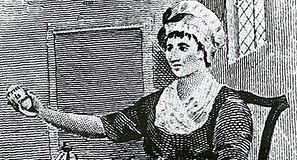
Mary Bateman
Murderer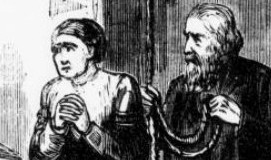 Margaret Waters
Murderer · United Kingdom · 1866
Margaret Waters was an English murderess who was hanged by executioner William…
19 victims
Margaret Waters
Murderer · United Kingdom · 1866
Margaret Waters was an English murderess who was hanged by executioner William…
19 victims
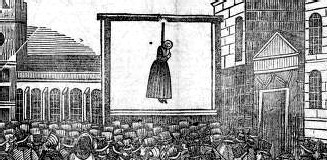 Catherine Wilson
Murderer · United Kingdom · 1854
Catherine Wilson was a British nurse who poisoned victims after befriending the…
7 victims
Catherine Wilson
Murderer · United Kingdom · 1854
Catherine Wilson was a British nurse who poisoned victims after befriending the…
7 victims
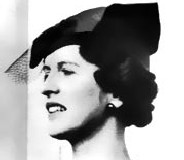 Florence Ransom
Murderer · United Kingdom · 1940
Florence Ransom was a middle-aged woman who was described as physically beautif…
3 victims
Florence Ransom
Murderer · United Kingdom · 1940
Florence Ransom was a middle-aged woman who was described as physically beautif…
3 victims
 Joanna Dennehy
Murderer · United Kingdom · 2013
Name: Joanna Dennehy · March 2013 — Three murders were carried out in the Unite…
3 victims
Joanna Dennehy
Murderer · United Kingdom · 2013
Name: Joanna Dennehy · March 2013 — Three murders were carried out in the Unite…
3 victims
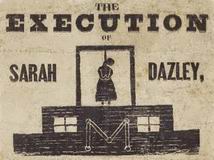 Sarah Dazley
Murderer · United Kingdom · 1842
Sarah Dazley was born in 1819 as Sarah Reynolds. Her date of execution was 5 Au…
3 victims
Sarah Dazley
Murderer · United Kingdom · 1842
Sarah Dazley was born in 1819 as Sarah Reynolds. Her date of execution was 5 Au…
3 victims
 Donetta Hill
Murderer · USA · 1990
Donetta Hill, also referred to as Doneta Hill, was born in 1966. She was a Sout…
2 victims
Donetta Hill
Murderer · USA · 1990
Donetta Hill, also referred to as Doneta Hill, was born in 1966. She was a Sout…
2 victims
 Virginia Christian
Homicide · USA · 1912
Virginia Christian was the first woman to die in the electric chair in Virginia…
1 victim
Virginia Christian
Homicide · USA · 1912
Virginia Christian was the first woman to die in the electric chair in Virginia…
1 victim
 Sulejman Talovic
Mass murderer · USA · 2007
Sulejman Talović Sulejman Talović (October 6, 1988 – February 12, 2007) was a B…
5 victims
Sulejman Talovic
Mass murderer · USA · 2007
Sulejman Talović Sulejman Talović (October 6, 1988 – February 12, 2007) was a B…
5 victims
- Gender
- female
- Country
- United Kingdom
- Location
- Bramley, West Yorkshire, England, United Kingdom
- Date of birth
- 1768
- Age at first offence
- 39
- Characteristics
- poisoner
- Victim profile
- Rebecca Perigo
- Method of murder
- Poisoning (arsenic)
- Date(s) of murder
- May 16, 1807
- Years active
- 1807
- Date of arrest
- Two years after
- Status
-
Executed
Executed by hanging at York on March 20, 1809
Case record: Mary Bateman
Mary Bateman (1768–1809) was known as the Yorkshire Witch. She was associated with fraud, theft, and poisoning, and she was convicted of murder.
Background
Mary Bateman was born at Aisenby in Yorkshire in 1768. Her father was Harker and was described as carrying on business as a small farmer. Both her parents were described as well respected.
Mary exhibited an aptitude for theft at an early age. She was sent to work as a servant in Thirsk, and later proceeded to York in 1787. She was detected in pilfering trifling articles of property belonging to her mistress and was compelled to run off to Leeds without waiting for her wages or her clothes.
She obtained work in the shop of a mantua maker and remained there for more than three years. She later became acquainted with John Bateman and married him after three weeks’ courtship in the year 1792. After her marriage she was found guilty of many frauds, and she escaped prosecution by inducing her husband to move frequently from place to place to escape apprehension. Her husband entered the supplementary militia, and she took up residence in Marsh Lane near Timble Bridge, Leeds, in 1799.
In Leeds, Mary dealt in fortune-telling and the sale of charms. She became known for working “cures of ‘evil wishes’” and other imaginary illnesses believed to affect the credulous. She provided young women with “nostrums with which to bring about abortions.”
She also made extra money as a soothsayer, preying on simple folk who believed she had supernatural powers of divination and fortune-telling. She was described as a thief and a liar from an early age and was sacked from numerous posts by 1778, after which she moved to Leeds and took up dressmaking. She was described as supplementing her income through soothsaying.
Other details
Mary Bateman had an association with an imaginary oracle, “Mrs Blythe.” She used this figure in communications to victims.
Mary Bateman was described as being indicted at York on the 18th of March 1809.
Mary Bateman was described as being 41 years old in one account and as being twenty-two weeks gone with child at the time of her sentencing.
The offence
Mary Bateman was indicted for the wilful murder of Rebecca Perigo of Bramley in the same county, in the month of May in the previous year.
A married couple named Perigo approached Mary for help. William Perigo and Rebecca Perigo were described as living at Bramley, a village at a short distance from Leeds. They sought help after Rebecca Perigo experienced a “flacking” or fluttering in her breast whenever she lay down, and a local quack doctor assured her it was beyond his cure and that sorcery should be resorted to.
Mary advised the Perigos through the “oracle” Mrs Blythe. Instructions were delivered to the Perigos via Mary. Mary used various schemes involving letters and exchanges of items that caused the Perigos to give money and goods to her.
Mary also poisoned the Perigos. One ingredient used in the mixture was mercuric chloride. The method described involved providing pudding and other mixtures after instructions received from the supposed oracle. When the Perigos followed the instructions and began eating pudding on the specified day, both became violently ill.
An antidote was administered, but it was described as being arsenic. William Perigo ate very little of the mixture or antidote and was ill for days, with his lips turning black. Rebecca Perigo forced herself to eat everything and became gravely ill, eventually dying. Rebecca Perigo’s death was described as occurring on 24 May 1806 in one account.
Investigation
After William Perigo became suspicious, he checked the supposed notes that Mary had sewn into the bed and found they were only pieces of ordinary paper. He informed the authorities, and Mary Bateman was arrested and charged with murder.
A search of Mary Bateman’s house turned up the Perigo’s property and a collection of poisons. The case included testimony about fraud and extortion, as well as the poisoning.
Mr Chorley, a surgeon, was called in to see Rebecca Perigo. He expressed the belief that death had been caused by poison, and another circumstance described was that “a cat” died immediately after it had eaten some of the pudding. The case later included analysis by Mr Chorley, who analyzed what remained of the pudding and the contents of the honey pot and found them contained “a deadly poison, called corrosive sublimate of mercury,” and that the symptoms were consistent with administration of that drug.
The evidence also included that there was no such person as Mrs Blythe living at Scarborough, and that letters received by Perigo were in Mary Bateman’s own handwriting and had been sent to Scarborough to be transmitted back again.
Arrest
Mary Bateman was arrested following William Perigo’s discovery that the supposed notes were only pieces of ordinary paper and his communication with the authorities.
Trial
Mary Bateman was tried at York. Many people gathered outside the courtroom due to fears about her alleged powers.
Mary Bateman attempted to blame Mrs Blythe, but the blame was refuted.
A judge addressed the jury and outlined three points as necessary to conclude guilt: that the deceased died of poison; that the poison was administered by the contrivance and knowledge of the prisoner; and that it was done for the purpose of occasioning death.
The jury returned a guilty verdict. Mary Bateman was convicted of murder.
Mary Bateman’s defense was described as a denial of the charge.
Sentencing
Mary Bateman was sentenced to hang by the neck until dead.
Before execution, Mary Bateman “pleaded her belly,” claiming she was pregnant. A jury of matrons was empanelled to determine whether she was with quick child. The matrons returned a verdict that Mary Bateman is not with quick child, and the execution was not respited.
The judge’s instructions to the jury included:
“It is impossible not to be struck with wonder at the extraordinary credulity of Wm. Perigo, which neither the loss of his property, the death of his wife nor his own severe sufferings, could dispel. It was not until the month of October in the following year, that he ventured to open his his treasure, and found there what everyone in court must have anticipated, that he would find not a single vestige of his property. His evidence is laid before the jury with the observation which arises from this uncommon want of judgement, but his memory appears to be very retentive and his evidence is confirmed, and that in different parts of the narrative, by other witnesses, while many parts of the case do not rest upon his evidence at all. The illness and peculiar symptoms, which preceded the death of his wife, his own severe sickness, and a variety of other circumstances attending the experiments made upon the pudding, were proved by separate and independent testimony. It is most strange that, in a case of so much suspicion as it appeared to have excited at the time, the interment of the body should have taken place without any inquiry as to the cause of death, an inquiry which then would have been much less difficult, though the fact of the deceased having died of poison is now well established. The main question is, did the prisoner contrive the means to induce the deceased to take it? If she did so contrive the means, the intent could only be to destroy. Poison so deadly could not be administered with any other view. The jury will lay all the facts and circumstances together; and if they feel them press so strongly against the prisoner, as to induce a conviction of the prisoner's having procured the deceased to take poison with an intent to occasion her death, they will find her guilty. If they do not think the evidence conclusive, they will, in that case, find the prisoner not guilty.”
The judge’s sentencing remarks included:
“Mary Bateman, you have been convicted of wilful murder by a jury who, after having examined your case with caution, have, constrained by the force of evidence, pronounced you guilty. It only remains for me to fulfil my painful duty by passing upon you the awfùl sentence of the law. After you have been so long in the situation in which you now stand, and harassed as your mind must be by the long detail of your crimes and by listening to the sufferings you have occasioned, I do not wish to add to your distress by saying more than my duty renders necessary. Of your guilt, there cannot remain a particle of doubt in the breast of anyone who has heard your case. You entered into a long and premeditated system of fraud, which you carried on for a length of time which is most astonishing, and by means which one would have supposed could not, in this age and nation, have been practised with success. To prevent a discovery of your complicated fraud, and the punishment which must have resulted therefrom, you deliberately contrived the death of the persons you had so grossly injured, and that by means of poison, a mode of destruction against which there is no sure protection. But your guilty design was not fully accomplished, and, after so extraordinary a lapse of time, you are reserved as a signal example of the justice of that mysterious Providence, which, sooner or later, overtakes guilt like yours. At the very time when you were apprehended, there is the greatest reason to suppose, that if your surviving victim had met you alone, as you wished him to do, you would have administered to him a more deadly dose, which would have completed the diabolical project you had long before formed, but which at that time only partially succeeded; for upon your person, at that moment, was found a phial containing a most deadly poison. For crimes like yours, in this world, the gates of mercy are closed. You afforded your victim no time for preparation, but the law, while it dooms you to death, has, in its mercy, afforded you time for repentance, and the assistance of pious and devout men, whose admonitions, and prayers, and counsels may assist to prepare you for another world, where even your crimes, if sincerely repented of, may find mercy.
“The sentence of the law is, and the court doth award it, That you be taken to the place from whence you came, and from thence, on Monday next, to the place of execution, there to be hanged by the neck until you are dead, and that your body be given to the surgeons to be dissected and anatomized. And may Almighty God have mercy upon your soul.”
Outcome
Mary Bateman was hanged at York at 5am on 20 March 1809 by John Curry. After she was executed, her body was displayed in public, with thousands paying to view it, and the proceeds were said to go to charity.
Her body was sent to the General Infirmary at Leeds for dissection. After dissection her corpse was skinned and pieces were sold as souvenirs.
Mary Bateman was associated with a post-execution display of her skeleton in the Thackery Medical Museum in Leeds.
Aftermath
During the interval between sentence and execution, Mary Bateman denied intending to cause the death of Mr or Mrs Perigo while admitting she had been guilty of many frauds. She wrote a letter to her husband and included her wedding-ring, requesting that it be given to her daughter.
The execution took place amid a large gathering of spectators, and crowds assembled to meet the hearse in which her body was carried.
The ordinary, Rev George Brown, tried to prevail upon her to acknowledge and confess her crimes during the final hours before execution. Mary Bateman maintained her declaration of innocence at the execution platform, and “her only reply was a repetition of the declaration of her innocence.”
Timeline
- 18 March 1809 — Mary Bateman was indicted at York for the wilful murder of Rebecca Perigo of Bramley in the same county, in the month of May in the previous year.
- 20 March 1809 — Mary Bateman was hanged at York at 5am by John Curry.

Spotted an error, or have more information about this case?