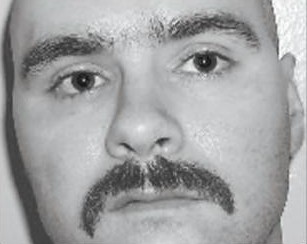
Thomas Wayne Akers
Murderer Russell Ellwood
Murderer · USA · 1991
Russell Ellwood was a former taxi driver. Authorities suspected him of killing…
20 victims
Russell Ellwood
Murderer · USA · 1991
Russell Ellwood was a former taxi driver. Authorities suspected him of killing…
20 victims
 Robert Martines Perez
Murderer · USA · 1994
Name: Robert Martines Perez · Other name used in proceedings: Robert Martinez P…
15 victims
Robert Martines Perez
Murderer · USA · 1994
Name: Robert Martines Perez · Other name used in proceedings: Robert Martinez P…
15 victims
 Billy Frank Vickers
Murderer · USA · 1993
Billy Frank Vickers Vickers was executed by lethal injection in Texas on Januar…
14 victims
Billy Frank Vickers
Murderer · USA · 1993
Billy Frank Vickers Vickers was executed by lethal injection in Texas on Januar…
14 victims
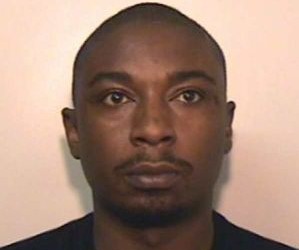 Pierre Williams
Murderer · United Kingdom · 2007
Pierre Williams was described by neighbours as the mother’s boyfriend and as a…
3 victims
Pierre Williams
Murderer · United Kingdom · 2007
Pierre Williams was described by neighbours as the mother’s boyfriend and as a…
3 victims
 Brett Cowan
Murderer · Australia · 2003
Brett Peter Cowan (born 18 August 1969) was sentenced in the Supreme Court of Q…
1 victim
Brett Cowan
Murderer · Australia · 2003
Brett Peter Cowan (born 18 August 1969) was sentenced in the Supreme Court of Q…
1 victim
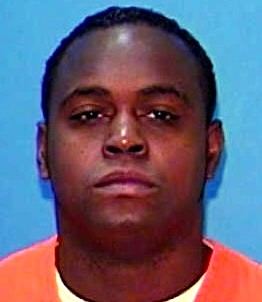 Wydell Evans
Murderer · USA · 1998
Wydell Evans was born on 05/19/70. He was indicted in the Eighteenth Judicial C…
1 victim
Wydell Evans
Murderer · USA · 1998
Wydell Evans was born on 05/19/70. He was indicted in the Eighteenth Judicial C…
1 victim
 Marcel Petiot
Serial killer · France · 1942
Marcel André Henri Félix Petiot was a French doctor. He was convicted of multip…
27 victims
Marcel Petiot
Serial killer · France · 1942
Marcel André Henri Félix Petiot was a French doctor. He was convicted of multip…
27 victims
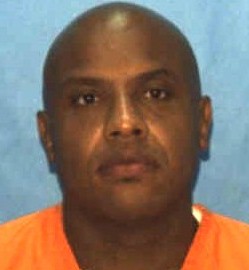 Toney Deron Davis
Murderer · USA · 1992
Toney Deron Davis (DOB: 03/12/70) was tried in the Fourth Judicial Circuit, Duv…
1 victim
Toney Deron Davis
Murderer · USA · 1992
Toney Deron Davis (DOB: 03/12/70) was tried in the Fourth Judicial Circuit, Duv…
1 victim
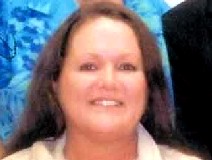 Anne Louise Gordon
Murderer · USA · 2002
Anne Louise Gordon was sentenced to life in prison without parole on July 17, 2…
2 victims
Anne Louise Gordon
Murderer · USA · 2002
Anne Louise Gordon was sentenced to life in prison without parole on July 17, 2…
2 victims
- Gender
- male
- Country
- USA
- Location
- Franklin County, Virginia, USA
- Date of birth
- J uly 31, 1969
- Age at first offence
- 29
- Characteristics
- robbery, rape, murder for hire, torture
- Victim profile
- Wesley Brant Smith, 24
- Method of murder
- Beating with aluminium ball bat
- Date(s) of murder
- December 18, 1998
- Years active
- 1998
- Date of arrest
- 4 days after
- Status
-
Executed
Executed by lethal injection in Virginia on March 1, 2001
Timeline
- December 18, 1998 — Thomas Wayne Akers and his cousin, Timothy Martin, robbed and brutally murdered 24-year-old Wesley Brant Smith in a Franklin County field after taking him out in Smith’s car.
- December 19, 1998 — Smith was found beaten beyond recognition in a Franklin County field.
- August 25, 1999 — Akers pleaded guilty to capital murder and robbery.
- September 15, 2000 — Opinion in Thomas Wayne Akers vs. Commonwealth of Virginia.
- March 1, 2001 — Akers was executed by lethal injection in Virginia on International Death Penalty Abolition Day.
Background
Thomas Wayne Akers was executed by lethal injection in Virginia on March 1, 2001.
Akers and his accomplice, Timothy Dwayne Martin, beat Wesley Smith to death with an aluminum baseball bat during a robbery in December 1998. Akers drove Smith’s car and had Smith’s wallet when the two men were captured in New York near the Canadian border.
Akers sought the death penalty from the beginning. He asked for the death penalty and waived all appeals. He instructed his attorneys not to introduce mitigation and refused to speak to his attorneys for two months. While in pre-trial detention, he gave detailed descriptions of the murder to fellow jail inmates and wrote threatening letters to the judge and Commonwealth’s Attorney.
Akers had previously been convicted in 1988 for statutory burglary and remained behind bars until August 1998. The Department of Corrections said he was placed in isolated confinement many times. He was released on parole on Aug. 13, 1998, and was free just 4 months. He was back in jail on Dec. 31 on capital murder and robbery charges connected to the beating death of Wesley Brant Smith, 24, of Roanoke.
The beating and resulting injuries included fractures to Smith’s skull causing a subdural hematoma, and the blows were not instantly fatal; it would have taken “minutes to hours, at least,” before Smith died. Smith also suffered defensive wounds to his hands and arms. He had neck bruising consistent with an attempted strangulation by ligature, and the ligature marks were consistent with the size and shape of a belt subsequently discovered in Smith’s car.
The offence
On the evening of December 18, 1998, Wesley Smith was robbed and murdered after Akers and Martin drove him in Smith’s car.
Wesley Smith had been living with his sister, Zshawn Morris, until a week before his death when he moved into his own apartment. Smith was a machinist for a steel company in Salem. Smith had been acquainted with Martin for some time and Martin had recently introduced Smith to Akers. Akers and Martin told Smith that they had set him up for a “blind date.”
The four men left Smith’s apartment and drove in Smith’s car a short distance away to drop Slusser off at the home of his girlfriend. Later that evening, Akers, Martin, and Smith were seen together at a Roanoke nightclub.
After Smith was discovered murdered, Smith’s apartment was ransacked, and several items of value were missing from the apartment, arrest warrants were issued for Akers and Martin for the murder and robbery of Smith. A bulletin was issued for law enforcement officers to be on the lookout for Smith’s car, which had vanity plates reading “WESMODE.”
Akers and Martin stopped at the field to urinate. Akers took the belt, placed it around Smith’s neck, and used it to drag Smith away from the car. Akers held Smith down on the ground and choked him with the belt. Akers and Martin then took turns beating Smith with the aluminum baseball bat found in Smith’s car. Smith resisted and begged the two men to stop. Akers and Martin dragged Smith to the creek, beat him again, and abandoned him, throwing the baseball bat into the creek.
The beating fractured Smith’s skull in several places. The beating fractured Smith’s skull in several places, and he had several defensive wounds on his hands and arms. He also had been struck on his back, and his neck was bruised in a manner consistent with an attempted strangulation by ligature.
Investigation
Investigators followed blood and discovered Smith’s body in the Franklin County field.
Three pools of blood saturated the ground on the shoulder of the road where the beating began, and “a clear drag mark which was saturated with blood that went down the hill toward a creek.” Following the trail of blood, police discovered Smith’s body covered with blood, bearing signs of a savage beating, including “several wounds to the back of his head, deep cuts, hair knocked off his head, a lot of blood on his shirt and his coat, and a large pool of blood under his face”.
An aluminum baseball bat was found “lying in the creek partially submerged” twelve to fifteen feet from Smith’s body. Subsequent laboratory testing established that Smith’s blood was on the bat.
Forensic examination revealed Smith had been struck a minimum of three times in the head “and probably a great deal more than three” times. Smith suffered fractures to his skull causing a subdural hematoma. The blows were not instantly fatal and it would have taken “minutes to hours, at least,” before Smith died.
In addition to lethal head wounds, Smith suffered numerous defensive wounds to his hands and arms. He had also been struck several times on his back, and his neck was bruised consistent with an attempted strangulation by ligature. The ligature marks were consistent with the size and shape of a belt subsequently discovered in Smith’s car.
Franklin County Sheriff’s Department interviewed Smith’s mother, his sister, and George Slusser, a family friend. Investigators determined that Slusser had visited Smith at his apartment in Roanoke. At approximately 8:00 p.m., Akers and Timothy Martin arrived at Smith’s apartment.
Arrest
An officer with the St. Regis Mohawk Tribal Police in northern New York observed Smith’s car in an area of the Mohawk reservation near the Canadian border known for smuggling activity and illegal alien entry on December 22, 1998. The officer stopped the car and took Akers and Martin into custody.
Akers attempted to flee from a room at the police station and was subdued. Akers told the tribal police officers, “It’s a good day to die.”
When Akers was arrested, he had Smith’s wallet. A search of Smith’s car revealed numerous items from Smith’s apartment, the belt used as a ligature, and a pair of black boots covered with Smith’s blood. The boots were identified as belonging to Akers.
Akers talked openly with other prisoners about Smith’s murder.
Trial
Akers pleaded guilty to capital murder and robbery and was sentenced to death for his role in the beating death of Wesley Brant Smith, 24.
Akers instructed his attorneys not to introduce mitigation and refused to speak to his attorneys for two months.
In a letter to the judge, Akers stated he had no remorse or sympathy for killing Wesley Smith and that he would kill again. Akers stated in a letter that it “was my full intent to kill and rob Wesley Smith after I got acquainted with him,” and that he had taken approximately two hundred dollars from Smith’s wallet.
In another letter, Akers admitted beating Smith to death before returning to Smith’s apartment to have “a decent meal and change into [Smith’s] clothes and [take] a pleasurable trip to New York.”
Akers wrote on April 27 that he left his boots “all blood covered for the Commonwealth” and “I have no sympathy or remorse for beating Mr. Smith to death,” and in the same letter wrote: “Death is just a game to me,” and “I will escape someday and execute justice again.”
Akers vowed to kill Hapgood and Franklin County Circuit Judge William Alexander if he were not sentenced to death. “I don't believe the judges have the heart to sentence me to death,” Akers wrote.
Akers also told a probation officer preparing his pre-sentence report that he planned to kill Smith because Martin had told him that Smith “was going to get 20 other people to assault Martin.”
The judge sentenced Akers to death based on the record.
Martin pleaded guilty to second-degree murder and was sentenced to life in prison.
In the appeal, defense lawyers stated that Akers had tried to kill himself several times and suffered from major depression and a dysfunction of his central nervous system.
Sentencing
The judge sentenced Akers to death for capital murder and robbery.
Akers asked Circuit Judge William Alexander that he be sentenced to death and told the judge that if he didn’t get the death penalty, he would kill again and it would be Alexander’s fault.
Virginia Governor Gilmore declined to intervene after reviewing the petition for clemency: “Upon a thorough review of the Petition for Clemency, the court decisions regarding this case, and the circumstances of this matter, I decline to intervene.”
Appeals
The Virginia Supreme Court upheld Akers’ death sentence.
A petition to stop the execution was rejected by the Virginia Supreme Court, which ruled that the arguments were an insufficient basis for a competency hearing.
Outcome
Akers was executed by lethal injection in Virginia on March 1, 2001.
Akers was pronounced dead at 9:18 p.m. (Eastern time) at the Greensville Correctional Center in Jarratt, Virginia, about 55 miles (88 km) south of the state capital, Richmond.
A spokesman for the state Department of Corrections paraphrased Akers’ final statement that was almost inaudible to the witnesses. Larry Traylor said Akers thanked Jesus Christ for coming into his life. Traylor said Akers expressed sorrow and “a lot of remorse” and said he hoped the victims could forgive him, “but if they couldn't, he knew the Lord had.”
A corrections spokesman said some members of Smith's family witnessed the execution but declined to identify them.
Aftermath
While Akers was awaiting execution, prison officials were investigating the death of a fellow inmate, David Overton, 21, on Virginia’s death row. Overton collapsed in his cell at about 2 a.m. (0700 GMT) and was later pronounced dead. Relatives said Overton had become despondent and suicidal in recent days. Prison officials said the cause of death was under investigation. Overton had been sentenced to die for a 1999 robbery and murder of a paraplegic stabbed to death in his bed.
There were about 60 protesters outside the prison during the execution. Death penalty opponents protested the execution and another scheduled to be carried out in Oklahoma on March 1, International Death Penalty Abolition Day. Ajamu Baraka, acting director of Amnesty International USA’s program to end executions, said: “ The fact that these 2 executions are scheduled to take place on International Death Penalty Abolition Day is symbolic of the contempt that the U.S. has for international opinion when it comes to justice and moral decency on the question of the death penalty, ”
Pastor Larry Lykens accompanied Akers for his last meal. Lykens said Akers was calm. Lykens said: “ He's wanted this day for a long time, ” and Lykens stated: “ He said he didn't want to eat it alone,” and: and: “ I love you and I'll meet you there, ” when describing a statement Akers made in the presence of the pastor.
U.S. District Judge Samuel Wilson denied a stay of execution and rejected defense attorney Robert Lee’s claim that Akers was mentally ill. Wilson ruled Akers’ crime was “extraordinarily vile and cruel,” and cited Akers’ future dangerousness. The Virginia Supreme Court also rejected a petition to stop the execution, ruling the arguments were an insufficient basis for a competency hearing.
Gilmore’s statement denying clemency noted that Akers demonstrated no remorse or sympathy for the crime and promised in a letter to the trial judge that he would kill again. The condemned man's spiritual advisor, Pastor Larry Lykens of Roanoke, said Akers was remorseful and that Akers asked him on Monday to contact the victim's father to ask forgiveness, and that the forgiveness was granted.
Other details
Smith’s mother, Marilyn Meador, said: “I think the lawyers should butt out, ” and: “I know him dying is not going to bring my son back but if that's what he wants, let him have it,” and she said: “ I feel sorry for his mom because she'll lose her son just like I lost my son but in a different way. I know it's hard on a mom, losing a son. ”
Smith’s sister, Zshawn Morris, said: “He was a good boy, ” and: “I didn't believe in the death penalty until all this happened,” and: “But 'he killed my brother and it was a brutal murder,' ” and:
Zshawn Morris described her last time seeing her brother and said he told her daughter Katie: “ Katie, just because Uncle Wes is leaving and moving out on my own doesn't mean I don't love you. I'm not going away forever. . . . ” She said: “I'll never get over this. ” and: “We were very close. . . . The only family I have left is my mother. ”
A statement denying the clemency request included that Akers demonstrated no remorse or sympathy for the crime, and referenced Akers’ confession and promise in a letter to the trial judge.
Kathleen Kenney, of the Office of Justice and Peace of the Catholic Diocese of Richmond, said the execution was “essentially, we're allowing state-assisted suicide.”
A Baptist prison chaplain, the Rev. Stephen Ford, was scheduled to speak at a vigil outside the Greensville Correctional Center.
A Citizens United for Alternatives to the Death Penalty statement described March 1 as International Death Penalty Abolition Day, marking the anniversary of the date in 1847 in which the state of Michigan officially became the first English-speaking territory in the world to abolish capital punishment.
Spotted an error, or have more information about this case?