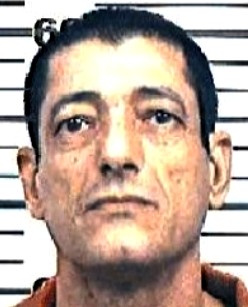
Sahib Lateef Al-Mosawi
Murderer Brian Kevin Rosenfeld
Murderer · USA · 1985
Brian Kevin Rosenfeld Brian Kevin Rosenfeld was sentenced to three concurrent l…
23 victims
Brian Kevin Rosenfeld
Murderer · USA · 1985
Brian Kevin Rosenfeld Brian Kevin Rosenfeld was sentenced to three concurrent l…
23 victims
 Russell Ellwood
Murderer · USA · 1991
Russell Ellwood was a former taxi driver. Authorities suspected him of killing…
20 victims
Russell Ellwood
Murderer · USA · 1991
Russell Ellwood was a former taxi driver. Authorities suspected him of killing…
20 victims
 Robert Martines Perez
Murderer · USA · 1994
Name: Robert Martines Perez · Other name used in proceedings: Robert Martinez P…
15 victims
Robert Martines Perez
Murderer · USA · 1994
Name: Robert Martines Perez · Other name used in proceedings: Robert Martinez P…
15 victims
 Billy Frank Vickers
Murderer · USA · 1993
Billy Frank Vickers Vickers was executed by lethal injection in Texas on Januar…
14 victims
Billy Frank Vickers
Murderer · USA · 1993
Billy Frank Vickers Vickers was executed by lethal injection in Texas on Januar…
14 victims
 Benjamin Ng
Mass murderer · USA · 1983
Benjamin Ng participated in the killings at the Wah Mee gambling club in Seattl…
3 victims
Benjamin Ng
Mass murderer · USA · 1983
Benjamin Ng participated in the killings at the Wah Mee gambling club in Seattl…
3 victims
 James Dean Clark
Mass murderer · USA · 1977
James Dean Clark was a ranch hand and later a death-row prisoner in Arizona. He…
4 victims
James Dean Clark
Mass murderer · USA · 1977
James Dean Clark was a ranch hand and later a death-row prisoner in Arizona. He…
4 victims
 James Lewis Jackson
Murderer · USA · 1997
James Lewis Jackson was convicted of capital murder involving the strangling de…
3 victims
James Lewis Jackson
Murderer · USA · 1997
James Lewis Jackson was convicted of capital murder involving the strangling de…
3 victims
 Maoupa Maake
Serial killer · S outh Africa · 1996
Maoupa Maake (Maoupa Cedric Maake; also known as the Wemmer Pan Killer) was a s…
27 victims
Maoupa Maake
Serial killer · S outh Africa · 1996
Maoupa Maake (Maoupa Cedric Maake; also known as the Wemmer Pan Killer) was a s…
27 victims
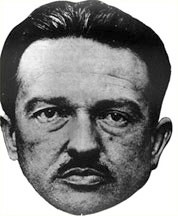 Dr. Pierre Marie Bougrat
Murderer? · France · 1925
Dr. Pierre Marie Bougrat was a doctor in France. He had been awarded the Milita…
1 victim
Dr. Pierre Marie Bougrat
Murderer? · France · 1925
Dr. Pierre Marie Bougrat was a doctor in France. He had been awarded the Milita…
1 victim
- Gender
- male
- Country
- USA
- Location
- Oklahoma City, Oklahoma, USA
- Date of birth
- J une 1, 1948
- Age at first offence
- 44
- Characteristics
- parricide
- Victim profile
- His pregnant wife, 26, and her uncle
- Method of murder
- St abbing with knife
- Date(s) of murder
- November 28, 1992
- Years active
- 1992
- Date of arrest
- Same day
- Status
-
Executed
Executed by lethal injection in Oklahoma on December 6, 2001
Case record
Sahib Lateef Al-Mosawi was convicted of the First Degree Murder of his wife and her uncle in Oklahoma City in 1992 and was sentenced to death.
Timeline
- 1991 — Sahib Al-Mosawi came to the United States from a refugee camp in Saudi Arabia after fleeing Iraq during the Persian Gulf War.
- 1991 — Al-Mosawi met his wife and her family at a refugee camp in Saudi Arabia after they left Iraq in 1991 during the Persian Gulf War.
- July 1992 — Both families received permission to come to the United States and settled in Oklahoma City.
- October 11, 1992 — Inaam Al-Nashi delivered a boy.
- November 12, 1992 — Inaam, with the assistance of Ms. Warden and interpreter Faruk Necati, obtained a temporary Victim Protection Order (VPO) on November 12, 1992.
- November 20, 1992 — The permanent Victim Protection Order was granted on November 20, 1992.
- November 21, 1992 — Ms. Warden was called by Fatima and asked to come to Mohammed’s apartment; Appellant was present despite the VPO.
- November 28, 1992 — On Nov. 28, 1992, Al-Mosawi came to Al-Nashi’s home and stabbed the uncle attempting to make him leave, then stabbed his wife and her sister, Fatima.
- May 1991 — State’s witness Fatima Al-Nashi testified that in May of 1991, she, her uncle Mohammed, and her sister Inaam met Appellant, his daughters Saher and Lamia, and his son Wala.
- May 1991 — Both families spent nearly a year living in a refugee camp in Saudi Arabia.
- In July, 1992 — Both families received permission to come to the United States where they settled in Oklahoma City.
- October 11, 1992 — Inaam delivered a boy.
- November 12, 1992 — Inaam obtained a temporary Victim Protection Order (VPO).
- November 20, 1992 — The permanent Victim Protection Order was granted.
- November 21, 1992 — Ms. Warden was called to Mohammed’s apartment and saw Appellant there despite the VPO.
- November 28, 1992 — The stabbing occurred at about 5:30 that evening at Mohammed’s apartment complex.
Background
Sahib Al-Mosawi came to the United States in 1991 from a refugee camp in Saudi Arabia, fleeing from the Persian Gulf War. His marriage to Inaam Al-Nashi was arranged. Marital problems developed after the marriage.
Inaam Al-Nashi, who was pregnant, moved into the apartment of Mohammad Al-Nashi, her uncle. Inaam sought a protective order soon after their son was born because Al-Mosawi threatened her and her family in an argument over the boy’s name.
State’s witness Fatima Al-Nashi testified that in May of 1991, she, her uncle Mohammed, and her sister Inaam met Appellant, his daughters Saher and Lamia, and his son Wala, who had fled their homeland of Iraq. Both families spent nearly a year living in a refugee camp in Saudi Arabia. Soon thereafter, Mohammed married Saher and Appellant married Inaam. In July 1992, both families received permission to come to the United States, where they settled in Oklahoma City. Dr. Fakrildeen Albahadily and his wife Zayneb Attia of Edmond, Oklahoma were the sponsor family.
Marital problems between Appellant and Inaam led Inaam, who was pregnant at the time, to move to her Uncle Mohammed’s apartment located in the same complex as hers.
The offence
Protective order and hospital dispute
According to testimony, on October 11, 1992, Inaam delivered a boy. During Appellant’s visit to the hospital, a dispute arose over the baby’s name. Allegedly, Appellant and Inaam had agreed to name the baby after Appellant’s father, but Inaam did otherwise.
The next day, Ms. Warden was called to the hospital at the insistence of a nurse. Upon her arrival, she saw Dr. Albahadily, Appellant and Oklahoma City Police Officer Karen Maule. Fatima testified that Appellant had threatened to kill Inaam and her family.
Ms. Warden visited with Appellant to explain that in the State of Oklahoma, it is the mother’s right to name her baby. Officer Maule testified that she responded to a disturbance call at Deaconess Hospital in Oklahoma City. When she arrived, she was taken to Inaam’s room where Mohammed and Fatima, along with others, were present. Officer Maule testified that Inaam was in fear. Officer Maule talked to security to determine a way to have Appellant leave the hospital. She suggested that they have the hospital secretary type up one of the little gift forms of a birth certificate with the name that Appellant demanded. Officer Maule was directed to a bench outside of the Emergency Room where Appellant was sitting. She inquired as to the name he wanted and escorted Appellant upstairs, where he wrote out the baby’s name for the purpose of having it put on the "birth certificate." After receiving the "birth certificate," Appellant agreed to let Officer Maule drive him home.
As a result of the threats against her, Inaam, with the assistance of Ms. The permanent Victim Protection Order was granted on November 20, 1992. Inaam was present with Ms. Warden and interpreter Father Adli Abraham. Appellant was also present.
On November 21, 1992, Ms. Warden was called by Fatima and asked to come to Mohammed’s apartment. When she arrived, Appellant, Inaam, Dr. Albahadily and his wife’s cousin were present in the living room. Ms. Warden testified that she was very surprised and shocked to see Appellant there because of the VPO. She said she looked at Inaam and told her she (Inaam) should not be there because of the VPO. Inaam left the room. Thereupon, Dr. Albahadily became very angry with Ms. Warden, telling her that he had come to get the family back together and that she had ruined everything. When Ms. Warden tried to show Dr. Albahadily the VPO, he said angrily that it didn’t mean anything and left with both Appellant and Inaam.
Stabbing on Nov. 28, 1992
On November 28, 1992, Ms. Warden visited Mohammed’s apartment for the purpose of having her daughter, who was home on Thanksgiving break, meet Inaam, her baby and Mohammed. Also present at that time were Saher and Lamia. Ms. Warden and her daughter stayed for approximately one-half hour. At about 5:30 that evening, Ms. Warden retrieved her telephone messages. One was from a newly settled family of three brothers, the Necatis, who, a week earlier, had extended a dinner invitation to her for that evening. She returned the call and was asked to invite Mohammed and his family to dinner. Ms. Warden went to Mohammed’s apartment to extend the invitation to Mohammed and Fatima.
While there, Inaam asked her to come to the bedroom. Saher was on the bed and indicated that she was sick, but didn’t know what was wrong. While Ms. Warden was in the bedroom, she saw Appellant come in carrying the baby. He came into the bedroom to show her the baby. As she was leaving, Ms. Warden advised Mohammed that maybe he should not go to the dinner because Saher was ill. She tried to persuade Fatima to come, but she declined. Ms. Warden left.
Approximately fifteen minutes later, Fatima arrived at Ms. Warden’s apartment to say she had changed her mind about going to the dinner party. Fatima said she needed to change clothes, so Ms. Warden, showing her on the clock what it meant, told her to be back by 6:45 p.m. Later, when Ms. Warden’s daughter became anxious about the time getting late, Ms. Warden told her that she told Fatima to be there at 6:45. Ms. Warden’s daughter said, "[b]ut it's 6:38." At that exact moment, there was a knock on the door. When Ms. Warden opened the door, Fatima was standing there shocked and bleeding and saying to her, "Inaam, Mohammed, Al-Mosawi (Appellant)", and pointed to her stomach.
Ms. Warden interpreted Fatima to mean that Appellant had stabbed her, Mohammed and Inaam.
According to Fatima, Inaam asked Appellant if she could go to the dinner party. Appellant said she could not go and became angry. He left and went to his apartment to get Inaam’s and the baby’s clothes, with the intent of ending the relationship. When Appellant returned, he appeared upset and called Inaam and Fatima "street girls" and "bitches." Mohammed asked Appellant to leave. Appellant pulled a knife from his jacket and stabbed Mohammed in the chest. When Inaam attempted to help Mohammed, Appellant grabbed her and stabbed her in the stomach. Mohammed yelled for Fatima to help Inaam. Fatima, in the process of trying to get the knife from Appellant's hand, was stabbed in the stomach, hand and left side by Appellant.
Fatima made her way from the apartment to Ms. Warden’s apartment. She was stabbed three times but survived the attack, describing it as an apparent "domestic dispute" over the child being named against Al-Mosawi’s wishes.
Witness observations and pursuit
Witness Mike Walker was in Pat McClemore’s garage next to the apartment complex; they heard a lady screaming for help. They left the garage, went to the fence and looked over. He saw three people running up the alley, a woman and two men—one on each side of her. Mr. Walker went around the fence and observed the man on the woman's left hitting her about the head and shoulder. After the last blow, the woman fell. The two men continued running around the building out of his sight.
While standing by Inaam’s body waiting for help, Mr. Walker saw Appellant walking back towards them. Appellant had a jacket wrapped around his hand. When Appellant walked off, Mr. Walker followed him until he saw the police. Mr. Walker told the police the direction where Appellant was going. Mr. Walker could not tell if Appellant was the man on the left or right of Inaam.
Celena Walker testified that she was looking out her bedroom window when she saw a man, approximately five-six or five-seven in height, wearing a white button-downed shirt and dark pants. He was behind a woman with his left arm around her neck. The woman was struggling and screaming. Ms. Walker saw something "shiny" in his right hand. She saw him make a slicing motion around her neck area. The witness turned away from the window and when she looked back out, the woman was on the ground with the man standing over her. She saw a great deal of blood coming from the woman. Then the man walked off in a southerly direction.
Cheryl Walker, Celena Walker’s mother, testified similarly to her daughter. She described the man as wearing dark brown slacks, dark brown jacket and white shirt. She went to Inaam and attempted to help her. She observed Appellant on two occasions after he walked away from Inaam. She described him as just wandering around, twice walking over to the victim, looking at her and walking back away. She noticed that he had something that looked like a knife in his hand which he had covered with his jacket.
Appellant’s testimony
Appellant testified that after he delivered Inaam’s and the baby’s clothes, Mohammed and Fatima confronted him with knives. When Mohammed tried to stab him, Inaam came between them and was stabbed in the stomach by Mohammed. Appellant said he never saw Fatima being stabbed because she was behind him. When Inaam ran outside of the apartment, he caught up with her and picked her up to carry her. When Inaam saw Mohammed behind them in pursuit, she told Appellant to put her down and run to save himself. Appellant put her down in an upright position. As he was running, he looked back and saw Mohammed holding Inaam from behind. Then he saw Inaam fall to the ground. Mohammed ran toward him, went back, looked at Inaam and then went to his car. Appellant was later arrested when he returned to his apartment. Appellant admitted he was wearing a white shirt and jacket that evening. He denied having wrapped the jacket around his hand. He also testified that he was wearing jeans that evening.
Investigation and arrest
Trial
Sahib Al-Mosawi was tried and convicted by jury for the crimes of Murder in the First Degree, malice aforethought (Counts I and II) (21 O.S.1991, § 701.7) and Assault and Battery with a Deadly Weapon with Intent to Kill (Count III) (21 O.S.1991, § 652) in Case No. CF-92-7217 in the District Court of Oklahoma County before the Honorable Richard Freeman, District Judge.
The jury found three aggravating circumstances as to each victim:
- Appellant had knowingly created a great risk of death to more than one person;
- Appellant was a continuing threat to society;
- the murders of Inaam Al-Nashi Al-Mosawi and Mohammed Al-Nashi were especially heinous, atrocious or cruel.
The trial judge sentenced Appellant in accordance with the jury’s recommendation of death on Counts I and II and twenty (20) years imprisonment on Count III.
Sentencing
He was sentenced to death in 1994 for the stabbing death of his wife and her uncle.
Appeals
From these judgments and sentences, Appellant perfected his appeal to this Court. The appeals court affirmed the judgments and sentences.
The appeals courts rejected the claim that mitigating factors, including evidence of the defendant’s depression and Post-Traumatic Stress Disorder (PTSD), would have led the jury to a different decision if such evidence had been fully presented at trial. The case citation was Al-Mosawi v. State, 929 P.2d 270 (Okl.Cr. 1996) (Direct Appeal).
Outcome
Sahib Al-Mosawi was executed in Oklahoma by injection at the Oklahoma State Penitentiary.
He did not request a clemency hearing and had no appeals pending. He was executed Thursday, December 6, 2001.
Aftermath
Amnesty International reported that Sahib Al-Mosawi was scheduled for execution that Thursday.
An Associated Press report noted that Sahib Al-Mosawi, 53, was sentenced to death in 1994, and he was the 18th prisoner executed in Oklahoma that year. Three more condemned inmates had exhausted all appeals, and the attorney general’s office was seeking to have their execution dates set.
Spotted an error, or have more information about this case?