
Marcel Petiot
Serial killer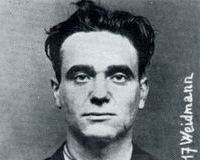 Eugen Weidmann
Serial killer · France · 1937
Eugen Weidmann was executed by guillotine in Versailles, outside the prison Sai…
6 victims
Eugen Weidmann
Serial killer · France · 1937
Eugen Weidmann was executed by guillotine in Versailles, outside the prison Sai…
6 victims
 Thierry Paulin
Serial killer · France · 1984
Thierry Paulin was born in Fort-de-France, Martinique on November 28, 1963. His…
21 victims
Thierry Paulin
Serial killer · France · 1984
Thierry Paulin was born in Fort-de-France, Martinique on November 28, 1963. His…
21 victims
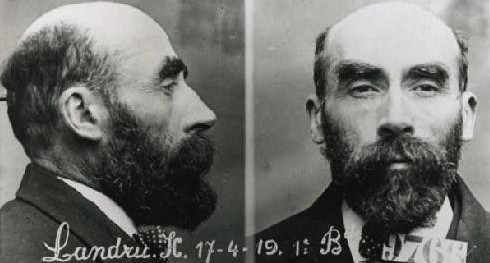 Henri Landru
Serial killer · France · 1915
Henri Désiré Landru (born April 12, 1869; died February 25, 1922) was a French…
11 victims
Henri Landru
Serial killer · France · 1915
Henri Désiré Landru (born April 12, 1869; died February 25, 1922) was a French…
11 victims
 Joseph Vacher
Serial killer · France · 1894
Joseph Vacher (November 16, 1869 – December 31, 1898) was a French serial kille…
11 victims
Joseph Vacher
Serial killer · France · 1894
Joseph Vacher (November 16, 1869 – December 31, 1898) was a French serial kille…
11 victims
 Francis Heaulme
Serial killer · France · 1984
Francis Heaulme was sentenced to several life sentences in different trials, 19…
9 victims
Francis Heaulme
Serial killer · France · 1984
Francis Heaulme was sentenced to several life sentences in different trials, 19…
9 victims
 Sataro Fukiage
Serial killer · Japan · 1906
Sataro Fukiage (吹上 佐太郎, Fukiage Satarō) was born in February 1889. He was born…
7 victims
Sataro Fukiage
Serial killer · Japan · 1906
Sataro Fukiage (吹上 佐太郎, Fukiage Satarō) was born in February 1889. He was born…
7 victims
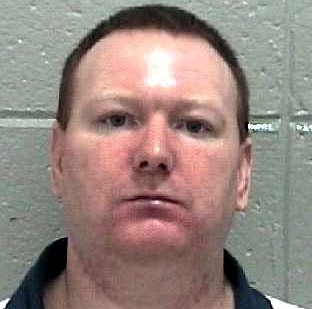 Billy Daniel Raulerson
Murderer · USA · 1993
Defendant: Billy Daniel Raulerson Jr. Age: 27 Court/case references: Raulerson…
3 victims
Billy Daniel Raulerson
Murderer · USA · 1993
Defendant: Billy Daniel Raulerson Jr. Age: 27 Court/case references: Raulerson…
3 victims
 Otty Sanchez
Homicide · USA · 2009
Otty Sanchez Otty Sanchez dismembered her newborn baby and mutilated the infant…
1 victim
Otty Sanchez
Homicide · USA · 2009
Otty Sanchez Otty Sanchez dismembered her newborn baby and mutilated the infant…
1 victim
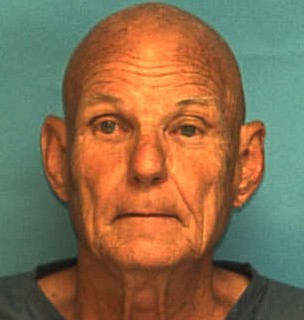 William Darrell Lindsey
Serial killer · USA · 1983
William Darrell Lindsey Lindsey died in prison on April 17, 2001. In July 1999,…
8 victims
William Darrell Lindsey
Serial killer · USA · 1983
William Darrell Lindsey Lindsey died in prison on April 17, 2001. In July 1999,…
8 victims
 Ottis Toole
Serial killer · USA · 1961
Ottis Elwood Toole (sometimes misspelled as “Otis”) was an American serial kill…
65 victims
Ottis Toole
Serial killer · USA · 1961
Ottis Elwood Toole (sometimes misspelled as “Otis”) was an American serial kill…
65 victims
- Gender
- male
- Country
- France
- Location
- Paris, France
- Date of birth
- January 17, 1897
- Age at first offence
- 45
- Characteristics
- poisoner, cannibalism, torture, escape attempt, attempt to collect insurance money
- Victim profile
- Men and women
- Method of murder
- Poisoning ( injected his victims with cyanide)
- Date(s) of murder
- 1942 - 1944
- Years active
- 1942–1944
- Date of arrest
- October 31, 1944
- Status
-
Executed
Executed by guillotine on May 25, 1946
Overview
Marcel André Henri Félix Petiot was a French doctor. He was convicted of multiple murders after the discovery of the remains of twenty six people in his home in Paris after World War II. He was executed by guillotine on May 25, 1946.
Timeline
- January 17, 1897 — Marcel André Henri Félix Petiot was born at Auxerre, France.
- March 26, 1914 — A psychiatrist diagnosed Petiot as mentally ill.
- July 1915 — Petiot completed his education in a special academy in Paris.
- January 1916 — Petiot was drafted into the French infantry.
- January 1941 — Petiot bought a house at 21 rue le Sueur.
- May 6, 1944 — Neighbors noticed smoke from the chimney of 21 Rue le Sueur, Paris.
- March 11, 1944 — Neighbors complained to police; a note was found on the door.
- March 13, 1944 — The search for Petiot began in earnest.
- April 1944 — Most suspects were released, though Nézondet remained in custody for 14 months.
- June 6, 1944 — Petiot was still a fugitive when Allied troops invaded France and the investigation ground to a halt.
- October 31, 1944 — Petiot was recognized at a Paris metro station and arrested.
- March 19, 1946 — Petiot went on trial facing 135 criminal charges.
- May 25, 1946 — Petiot was beheaded and executed by guillotine.
Background
Marcel André Henri Félix Petiot was born at Auxerre, France on January 17, 1897. Later accounts claimed delinquency and criminal acts during childhood and adolescence, but it was unclear whether some were invented afterwards for public consumption.
A psychiatrist diagnosed Petiot as mentally ill on March 26, 1914. He was expelled from school many times and finished his education in a special academy in Paris in July 1915.
During World War I, Petiot was drafted into the French infantry in January 1916. In Aisne he was wounded and gassed and exhibited symptoms of mental breakdown. He was sent to various rest homes and arrested for stealing army blankets, then jailed in Orleans. In a psychiatric hospital at Fleury-les-Aubrais he was again diagnosed with mental ailments and was returned to the front in June 1918. He was transferred three weeks later after he shot himself in the foot, and then was attached to a new regiment in September 1918. A new diagnosis was enough to get him discharged with a disability pension.
After the war, Petiot entered an accelerated education program intended for war veterans, completed medical school in eight months, and went to become an intern in Evreux mental hospital. He received his medical degree in December 1921 and moved to Villeneuve-sur-Yonne, receiving payment for his services from patients and from government medical assistance funds. At this point, he was already using addictive narcotics.
While working at Villeneuve-sur-Yonne, Petiot gained a reputation for dubious medical practices, including the supply of narcotics and the performance of then-illegal abortions. Petiot’s first victim might have been Louise Delaveau, the daughter of an elderly patient, with whom he had an affair in 1926. Delaveau disappeared in May; neighbors later said they had seen Petiot load a trunk into his car. Police investigated but eventually dismissed her as a runaway.
That same year, Petiot ran for mayor of the town, hired an accomplice to disrupt a political debate with his opponent, and won. Once in office, he embezzled from town funds. In 1927 Petiot married Georgette Lablais. Their son Gerhardt was born the next year. The local prefect received numerous complaints about Petiot’s theft and shady financial deals. Petiot was suspended as mayor in August 1931 and resigned. The village council also resigned in sympathy. Five weeks later, on October 18, he was elected as a councilor for the Yonne district.
In 1932 he was accused of stealing electric power from the village of Villeneuve-sur-Yonne and he lost his seat in the council. He moved to Paris, where he attracted patients with imaginary credentials and built an impressive reputation for his practice at 66 Rue Caumartin. There were rumors of illegal abortions and prescriptions of addictive remedies.
In 1936 he was appointed médecin d'état-civil with authority to write death certificates. He was briefly institutionalized for kleptomania but was released the following year. He persisted in tax evasion.
In March 1930, a dairy unionist Armand Debauve’s home was razed by fire; his wife Henriette was found beaten to death with a blunt instrument, and F20,000 was reported missing. Footprints led toward Villeneuve-sur-Yonne, and rumors said Henriette Debauve was Petiot’s mistress and that he was seen near her home on the night of the crime. A witness named Monsieur Fiscot sought treatment for rheumatism, received an injection, and died three hours later. Petiot signed a death certificate blaming the death on an aneurysm. Armand Debauve later spoke to police and said a resident claimed Dr. Petiot could identify Henriette’s killer; local gendarmes sought help in Paris, but the file was misplaced and disappeared until April 1946.
During 1930 and 1932, Petiot faced further troubles: he was sentenced to three months in prison and fined F200 for a case involving oil from the railroad depot. He was suspended as mayor for four months, and his conviction was reversed on appeal. In August 1931 he was suspended as mayor again and resigned the next day. The mayoral office was revoked the following month, and he won election on October 18. At trial on the charge of stealing electric power, the judge described his defense as “pure fantasy” and sentenced him to 15 days in jail and a F300 fine; the appeal affirmed conviction but suspended the jail time and reduced the fine to F100. He moved his family to Paris in January 1933.
In Paris, Petiot promoted himself with zeal, advertised varied treatments, and claimed credentials. A medical association complaint led him to remove a brass plaque packed with endorsements. He remained under suspicion for rumors about illegal abortions and supplying addicts with drugs under the guise of “cures.”
The offence
Petiot created a false escape network known as Fly-Tox. He used the code-name “Dr. Eugène” and accepted anyone who could afford his price of 25,000 francs per person. He promised safe passage to Argentina or elsewhere in South America through Portugal. He claimed Argentinean officials demanded inoculations and injected his victims with cyanide. After taking his victims’ valuables, he disposed of bodies.
People who trusted Petiot to deliver them to safety were not seen alive again. At first he dumped bodies in the Seine, and later destroyed them by submerging them in quicklime or by incinerating them.
In 1941 Petiot bought a house at 21 rue le Sueur, described as a way station for his “Underground Railroad.” His aides Raoul Fourrier, Edmond Pintard, and René-Gustave Nézondet directed victims to his hands. Petiot lured people including Jews, resistance fighters, and ordinary criminals, and victims vanished after consultations. Police and later investigators described the discovery as involving bodies and body parts.
Some of the victims discussed in the case included:
- Louise Delaveau, who disappeared in May 1926.
- Jean-Marc Van Bever, identified as a Paris drug addict who procured narcotics from Petiot until February 1942; Van Bever vanished days before his March 1942 trial.
- Marthe Khaït, identified as the mother of Raymonde Baudet, who vanished after consultation involving testimony planning in March 1942.
- Nelly-Denise Hotin, who was pregnant and disappeared after looking for an abortion in July 1941.
- Dr. Paul-Léon Braunberger, an elderly Jew who planned to flee with his wife and disappeared alone from a Paris subway station in June 1942.
- The Knellers, three German Jews who vanished after consultations; their dismembered remains were fished out of the Seine in August.
- The Wolff family, who disappeared into 21 Rue le Sueur along with six friends.
- Joseph Réocreux and Adriene Estébétéguy, described as pimps who paid Petiot’s fee and vanished.
- François Albertini and Annette Basset, described in connection with the vanishing of Réocreux.
- Gisèle Rossny and Estébétéguy, described as vanishing in March 1943.
- Joachim Guschinov, described as a Jewish furrier who vanished with cash and valuables.
- Kurt Kneller and his family, referenced during trial.
- Yvan Dreyfus, referenced during the escape network operation.
- Maurice Petiot, Petiot’s brother, who confessed delivery of quicklime to Petiot’s house on Petiot’s orders.
The trial material included that prosecutors charged Petiot with at least 27 murders for profit. Petiot admitted killing nineteen of the twenty-seven victims found in his house and claimed the killed victims were Germans and collaborators, part of a total of 63 “enemies” killed.
Investigation
Smoke and discovery at 21 Rue le Sueur
On Monday morning, March 6, 1944, foul smoke poured from the chimney of a home at 21 Rue le Sueur, Paris. Neighbors noticed the smoke again on March 11 and found a note on the door stating: “Away for one month. Forward mail to 18 Rue des Lombards in Auxerre.”
Neighbors notified police and told them that Petiot owned the house. Police called Petiot, and he told them to wait for him. However, thirty minutes later police called the fire department due to spreading fire.
Firefighters entered through a second-story window and found a display of bodies and body parts. When Petiot arrived he claimed he was a member of the French Resistance and claimed the bodies were those of Germans, traitors, and collaborators. Police released him, as people approved of resistance activities.
Police found additional evidence after a search. In the garage, they found a pit filled with quicklime mixed with human remains. On the staircase they found a canvas sack containing human remains, with enough body parts for at least ten complete bodies. There were claims that the number 10 was “vastly inferior to the real one.”
Commissaire Georges-Victor Massu took charge of the investigation. The investigation sought to establish whether Petiot was killing for the Resistance or for the Gestapo. The Gestapo possibility was described as eliminated when Petiot received a telegram ordering him to be arrested as a “dangerous lunatic.”
Police found Petiot’s apartment on Rue Caumartin abandoned. They also found large amounts of chloroform, digitalis, and various other poisons and various medical remedies.
Police also found a man who had intended to escape but changed his mind, who said Petiot had offered him passage to South America for 25,000 francs. Police identified two victims who would have testified against Petiot in the 1942 narcotics trial; it was described as the first time police had proof that witnesses had been murdered.
Arrests and charges related to the network
Petiot’s brother Maurice confessed that he had delivered quicklime to Petiot’s house on Marcel’s orders. Maurice was charged with conspiracy to commit murder and jailed.
Georgette Petiot was arrested on suspicion of having aided her husband. Petiot’s accomplices included Nézondet and Porchon, and Albert and Simone Neuhausen, who confessed they helped remove suitcases from Petiot’s charnel house.
Under torture, Fourrier, Pintard, and Nézondet confessed that “Dr Eugène” was Marcel Petiot. Nézondet was later released, while three others spent eight months in prison suspected of helping Jews escape. The three men were released in January 1944.
Investigation was described as being put on hold on June 6, 1944 when the Normandy Invasion began.
Arrest and evasion
Petiot hid with friends during the intervening seven months, claiming that the Gestapo wanted him because he had killed Germans and informers. He moved in with a patient, Georges Redouté, let his beard grow, and adopted aliases.
When the Resistance and Paris police rose against German troops in Paris, Petiot adopted the name “Henri Valeri” and joined the French Forces of the Interior (FFI). He became a captain in charge of counterespionage and prisoner interrogations.
A newspaper called ‘Resistance’ published an article about Petiot. His defense attorney from the 1942 narcotics case received a letter in which Petiot claimed the allegations were lies, which gave police a hint that Petiot was still in Paris. Search began anew with “Henri Valeri” among those drafted to find him.
On October 31, Petiot was recognized at a Paris metro station and arrested. Among his possessions were a pistol, 31,700 francs, and 50 sets of identity documents.
Trial
Petiot was placed on death row at La Santé prison. He continued to claim innocence and that he had only killed enemies of France.
His defense included that he discovered the pile of bodies in 21 Rue le Sueur in February 1944 and assumed they were collaborators killed by members of his “network.” Police noticed he had no friends in major resistance groups. Prosecutors charged Petiot with at least 27 murders for profit; their estimate of his loot ran to 200 million francs.
The trial began on March 19, 1946 at the Palais de Justice. It was described as facing 135 criminal charges. René Floriot acted for the defense, against a team consisting of state prosecutors and twelve civil lawyers hired by relatives of victims. It was stated that Petiot taunted prosecuting lawyers and claimed various victims had been collaborators or double agents, or that vanished people were alive and well in South America under new names. He admitted killing nineteen of the twenty-seven victims found in his house and claimed they were Germans and collaborators. Floriot attempted to portray Petiot as a resistance hero.
During trial, Petiot was described as admitting killing 19 of the 27 victims found on Rue le Sueur. It was stated he made remarks including:
- “Peculiar homecoming, don’t you think?”
- “I don’t have to justify myself for murders I’m not accused of committing!”
He was convicted of 26 counts of murder and sentenced to death.
On the trial’s second day, reporters overheard two jurors and Judge Leser discussing Petiot in private, referring to him as “a demon” and “an appalling murderer.” Attorney Floriot sought a mistrial; the appellate court rejected the motion. Trial resumed after the two jurors were replaced. On the trial’s fifth day, judges and jurors visited 21 Rue le Sueur.
Petiot’s remarks also included references to specific victims, including:
- Petiot denounced the Khaït family’s lawyer as a “double-agent” and a “defender of Jews.”
- Petiot described victim Joseph Réocreux as: “He had a head like a pimp--you know, like a police inspector.”
- Petiot insisted that victim Joachim Guschinov was alive and well, and said: “South America is a big place.”
- Petiot refused to describe secret weapons because “the information could only be used against France.”
- Petiot dismissed the Wolff family as “Germans,” and described victim Yvan Dreyfus as “a traitor four times over.”
- Petiot described victim Kurt Kneller as suffering from “an embarrassing affliction,” and insisted they had returned to Germany and were “getting ready for the next war.”
The judges and jurors deliberated for three hours, with Petiot convicted on all but nine counts. It was stated that he was acquitted of killing Nelly-Denise Hotin but found guilty of 26 other premeditated murders.
Sentencing
Petiot was sentenced to death. On May 25, he was beheaded after a stay of a few days due to a problem in the release mechanism of the guillotine.
Appeals
René Floriot appealed the conviction and sentence citing two complaints. First, he maintained that a mistrial should have been granted after Judge Leser and two jurors publicly declared their belief in Petiot’s guilt. Furthermore, Floriot charged that witness Marguerite Braunberger and her maid were perjurers. All points were rejected and Petiot’s death sentence was affirmed.
Outcome
Petiot was executed by guillotine on May 25, 1946.
Before the execution, he was said to have accepted a cigarette instead of rum. He refused to see a priest, preferring to “take his baggage with him.” He told the minister: “I am not a religious man and my conscience is clean.”
He signed the register before his hands were bound, his neck shaved, and the collar cut from his shirt. He was described as moving with ease, and Dr. Albert Paul noted that he “moved with ease, as though he were walking into his office for a routine appointment.” Petiot warned: “Gentlemen, I ask you not to look. This will not be very pretty.” The blade dropped at 5:05 a.m., and it was stated that Petiot was smiling as his head tumbled into the basket.
Other details
Poison and medical materials
Police found quantities of chloroform, digitalis, and various other poisons, and it was stated they found additional poisons including strychnine. Police also found large amounts of more usual medical remedies.
At Petiot’s apartment, police found chloroform, digitalis, and other poisons, plus quantities described as “50 times a typical physician’s stock of heroin and morphine.”
Telegram and German order
A telegram from Paris police headquarters was described as: “Order from German authorities. Arrest Petiot. Dangerous lunatic.”
A German commissaire Robert Jodkum told them that the Gestapo had arrested Petiot on suspicion of smuggling Jews.
Execution schedule change
It was stated Petiot had been scheduled to die on the day his appeal was rejected, but his execution was postponed due to a guillotine malfunction. A portable guillotine was then delivered to the prison, assembled and ready, and the execution was completed within less than an hour after he was summoned.
Popular culture portrayal
Petiot’s life and career were dramatised in the 1990 film Docteur Petiot, directed by Christian de Chalonge and starring Michel Serrault as Petiot. The 2006 film Zwartboek, directed by Paul Verhoeven, was described as featuring a fictional character whose personality and activities were clearly inspired by Petiot.
Spotted an error, or have more information about this case?