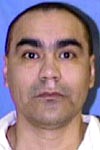
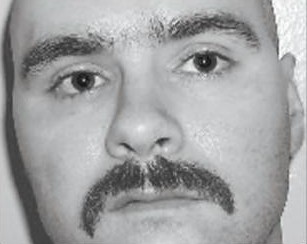
Jesus Ledesma Aguilar
Murderer Brian Kevin Rosenfeld
Murderer · USA · 1985
Brian Kevin Rosenfeld Brian Kevin Rosenfeld was sentenced to three concurrent l…
23 victims
Brian Kevin Rosenfeld
Murderer · USA · 1985
Brian Kevin Rosenfeld Brian Kevin Rosenfeld was sentenced to three concurrent l…
23 victims
 Russell Ellwood
Murderer · USA · 1991
Russell Ellwood was a former taxi driver. Authorities suspected him of killing…
20 victims
Russell Ellwood
Murderer · USA · 1991
Russell Ellwood was a former taxi driver. Authorities suspected him of killing…
20 victims
 Robert Martines Perez
Murderer · USA · 1994
Name: Robert Martines Perez · Other name used in proceedings: Robert Martinez P…
15 victims
Robert Martines Perez
Murderer · USA · 1994
Name: Robert Martines Perez · Other name used in proceedings: Robert Martinez P…
15 victims
 Billy Frank Vickers
Murderer · USA · 1993
Billy Frank Vickers Vickers was executed by lethal injection in Texas on Januar…
14 victims
Billy Frank Vickers
Murderer · USA · 1993
Billy Frank Vickers Vickers was executed by lethal injection in Texas on Januar…
14 victims
 Jesse Wise
Mass murderer · USA · 2006
Jesse Dee Wise, also known as “Jay,” lived with his grandparents at the home wh…
6 victims
Jesse Wise
Mass murderer · USA · 2006
Jesse Dee Wise, also known as “Jay,” lived with his grandparents at the home wh…
6 victims
 Taylor Marks
Murderer · USA · 2009
Taylor Marks was an Akron woman who was accused of plotting to kill her mother,…
1 victim
Taylor Marks
Murderer · USA · 2009
Taylor Marks was an Akron woman who was accused of plotting to kill her mother,…
1 victim
 Ricky Rodriguez
Murderer · USA · 2005
Ricky Rodriguez committed suicide by shooting himself the same day. Ricky Rodri…
1 victim
Ricky Rodriguez
Murderer · USA · 2005
Ricky Rodriguez committed suicide by shooting himself the same day. Ricky Rodri…
1 victim
- Gender
- male
- Country
- USA
- Location
- Cameron County, Texas, USA
- Date of birth
- November 28, 1963
- Age at first offence
- 32
- Characteristics
- drugs, drug dealer
- Victim profile
- Leonardo Chavez, 33, and his wife Anette Esparza Chavez, 31
- Method of murder
- Shooting ( .22 revolver)
- Date(s) of murder
- June 10, 1995
- Years active
- 1995
- Date of arrest
- —
- Status
-
Executed
Executed by lethal injection in Texas on May 24, 2006
Case record
Background
Jesus Ledesma Aguilar was convicted in Texas state court of capital murder and sentenced to death for the murders of Annette and Leonardo Chavez, Sr.
Aguilar and Rick Esparza were longtime friends who worked together in the sale of marijuana. Rick initially worked for Aguilar beginning in November 1994 in transporting marijuana from their homes in Texas to Mississippi in Rick's vehicle. Shortly thereafter, another supplier asked Rick to transport marijuana to Mississippi, and he began dealing without Aguilar.
Aguilar apparently felt Rick was stealing his business, which caused friction between the two men. Aguilar began stopping by Rick's trailer and accusing Rick of running drugs without him. Rick testified that Aguilar threatened Rick's life on a number of occasions. Rick stated that he was afraid of Aguilar because he had seen “the way [Aguilar] hurts people.” In spite of Aguilar's threats, Rick maintained his own drug courier business. Rick often asked his sister, Annette Chavez, and her family to stay at his home during out-of-town trips.
On June 9, 1995, Aguilar spent much of the afternoon and evening drinking with friends.
The offence
On June 8, 1995, Rick and his wife took a load of drugs to Mississippi. Annette, her husband Leo, and their two children, Leo, Jr. (nine years old) and Lincoln (about two years old), stayed at Rick's home.
At approximately 9:00 p.m., Aguilar was at a friend's house with, among others, David and Chris Quiroz (Aguilar's nephew). Their host eventually went to bed. As David Quiroz was leaving, he saw Aguilar and Chris Quiroz walk toward a red Buick owned by Chris' mother.
At approximately 5:00 a.m., Leo, Jr. was awakened from his bed in Rick's trailer by the sound of a gunshot. Leo, Jr. entered the kitchen. Because there was no wall between the rooms, Leo, Jr. could see into the living room, which was illuminated by a small lamp.
Leo, Jr. saw his parents on the floor with two men standing over them. Leo, Jr. testified that the “American” man told his father to “[g]et your fat ass up,” and then saw the man shoot his father. The “Mexican” man then took the gun and shot his mother.
Leo, Jr. ran to the neighbors for help.
A pathologist testified it was obvious from markings on Leo, Sr.'s and Annette's bodies that they were severely beaten before they were shot.
The pathologist testified as an expert witness for the state and stated that the couple had been shot “execution style.”
Investigation
That afternoon, Daniel Pena was driving around with Aguilar and Chris Quiroz when Aguilar asked Daniel to go to Rafael Flores, Jr.'s residence. Aguilar offered to sell a .22 caliber revolver to Rafael. Rafael bought the revolver and gave it to his brother, who in turn gave it to their father.
The police later received a tip that they could recover the murder weapon from the Flores' residence, which they did. After recovering the weapon, the police lab compared bullets from .22 caliber revolver with the .22 caliber bullets recovered from the Chavezes' bodies. The ballistics expert could not rule this revolver in or out as the murder weapon.
Approximately two weeks after the murders, Leo, Jr.'s grandmother was reading the newspaper when Leo, Jr. saw a picture and told her that two of the men in the picture were the men who “hurt” his parents. His grandfather took Leo, Jr. to the police station where Leo, Jr. identified Chris Quiroz as the “American” who shot his father, and Aguilar as the “Mexican” who shot his mother.
Leo was unable to identify Aguilar in a police lineup, but an investigator for the Cameron County Sheriff's office testified that Leo, Jr. became visibly upset when Aguilar entered the lineup room.
Arrest
No arrest details were provided.
Trial
Following the guilty verdict and affirmative findings on the Texas special issue, the trial court sentenced Aguilar to death in accordance with Texas law.
Aguilar challenged his capital murder conviction on federal habeas review, including an issue about the jury being instructed on a lesser included offense of non-capital murder.
The facts for the capital murder conviction were that Aguilar intentionally and knowingly caused the death of Leonardo Chavez, III and his wife, Annette Chavez, during the same criminal transaction.
The United States District Court for the Southern District of Texas denied Aguilar's federal habeas petition initially, and the United States Court of Appeals for the Fifth Circuit later addressed his appeal.
Sentencing
Aguilar was sentenced to death in Texas state court for the murders of Annette and Leonardo Chavez, Sr., after affirmative findings on the Texas special issue.
Appeals
Aguilar v. State: The Texas Court of Criminal Appeals affirmed Aguilar's conviction and sentence. The United States Supreme Court denied certiorari in 1998.
Aguilar then filed a state application for post conviction relief, which the Texas Court of Criminal Appeals denied.
Aguilar later filed his federal habeas corpus petition.
At an evidentiary hearing before a magistrate judge, Aguilar asked the court to dismiss his petition without prejudice so that he could return to state court and raise unexhausted claims. The request was granted.
Aguilar's successive state habeas petition was dismissed by the Texas Court of Criminal Appeals as an abuse of the writ in November 2001. Five days later, he filed another federal habeas corpus petition.
The state moved for summary judgment on the writ, and the motion was referred to a magistrate judge for Report and Recommendation. The magistrate judge recommended that all of Petitioner's claims be denied, except one. The magistrate judge recommended that Aguilar be granted relief on his claim that he was deprived of due process by the trial court's failure to charge the jury on a lesser included offense of non-capital murder.
The district court judge accepted all the magistrate judge's recommendations, except on the lesser included offense claim. The district court concluded that Petitioner was not entitled to relief on this claim and dismissed his petition. The district court later granted a COA on Aguilar's lesser included offense claim.
On federal appeal, the Court of Appeals, W. Eugene Davis, Circuit Judge, held:
- Aguilar was not entitled to instruction on lesser-included non-capital offense.
- Aguilar's ineffective assistance of counsel claims and his claim that the state appellate court was biased were procedurally barred from review.
- Aguilar was not entitled to certificate of appealability (COA) on his claim that the state trial court's failure to appoint a ballistics expert to testify on his behalf violated his due process rights.
- The sufficiency of evidence to support finding that defendant participated in murder of two victims during same transaction was not debatable, precluding grant of COA.
- Aguilar's claim that his right to due process was violated because he appeared before the jury in shackles was procedurally defaulted.
The Court affirmed the district court's judgment denying habeas relief on the lesser included offense jury charge claim and denied COA on the remaining claims.
Outcome
The Court of Appeals affirmed the district court’s denial of habeas relief on the lesser included offense jury charge claim and denied a certificate of appealability on the remaining claims.
The Texas Court of Criminal Appeals affirmed Aguilar's conviction and sentence, and the United States Supreme Court denied certiorari.
Aftermath
Aguilar was executed by lethal injection in Texas on May 24, 2006.

Spotted an error, or have more information about this case?