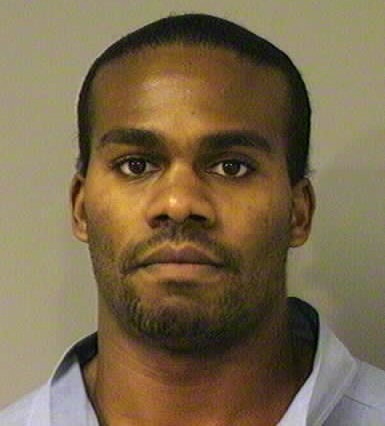
Tyrone Lamont Baker
Murderer Dr. Wouter Basson
Murderer · 1992
Wouter Basson (born July 6, 1950) was a South African cardiologist and the form…
230 victims
Dr. Wouter Basson
Murderer · 1992
Wouter Basson (born July 6, 1950) was a South African cardiologist and the form…
230 victims
 Ershad Sikder
Murderer · Bangladesh · 1990
Ershad Sikder was an influential political figure in the south-western city of…
30 victims
Ershad Sikder
Murderer · Bangladesh · 1990
Ershad Sikder was an influential political figure in the south-western city of…
30 victims
 Brian Kevin Rosenfeld
Murderer · USA · 1985
Brian Kevin Rosenfeld Brian Kevin Rosenfeld was sentenced to three concurrent l…
23 victims
Brian Kevin Rosenfeld
Murderer · USA · 1985
Brian Kevin Rosenfeld Brian Kevin Rosenfeld was sentenced to three concurrent l…
23 victims
 Yahweh ben Yahweh
Murderer · USA · 1980
Yahweh ben Yahweh was born and legally named Hulon Mitchell Jr. (October 27, 19…
23 victims
Yahweh ben Yahweh
Murderer · USA · 1980
Yahweh ben Yahweh was born and legally named Hulon Mitchell Jr. (October 27, 19…
23 victims
 Russell Ellwood
Murderer · USA · 1991
Russell Ellwood was a former taxi driver. Authorities suspected him of killing…
20 victims
Russell Ellwood
Murderer · USA · 1991
Russell Ellwood was a former taxi driver. Authorities suspected him of killing…
20 victims
 Kevin Malone
Murderer · USA · 1981
Kelvin Shelby Malone was a White man with the sex listed as male. His alias was…
3 victims
Kevin Malone
Murderer · USA · 1981
Kelvin Shelby Malone was a White man with the sex listed as male. His alias was…
3 victims
 Steven Oken
Spree killer · USA · 1987
Steven Oken (defendant) Steven Oken was adopted at birth and was raised in a st…
3 victims
Steven Oken
Spree killer · USA · 1987
Steven Oken (defendant) Steven Oken was adopted at birth and was raised in a st…
3 victims
 Zane Jack Fields
Murderer · USA · 1988
Zane Jack Fields Sentenced to death in August 1991 Zane Jack Fields was 46 year…
1 victim
Zane Jack Fields
Murderer · USA · 1988
Zane Jack Fields Sentenced to death in August 1991 Zane Jack Fields was 46 year…
1 victim
 Reyes Miranda
Murderer · USA · 1987
Reyes Miranda was born on 12/20/59. He was convicted in state court of murder a…
1 victim
Reyes Miranda
Murderer · USA · 1987
Reyes Miranda was born on 12/20/59. He was convicted in state court of murder a…
1 victim
 Cheryl Gasper
Murderer · USA · 1994
Cheryl Gasper was accused in the murder of her husband, Andie Gasper. She consp…
1 victim
Cheryl Gasper
Murderer · USA · 1994
Cheryl Gasper was accused in the murder of her husband, Andie Gasper. She consp…
1 victim
- Gender
- male
- Country
- —
- Location
- —
- Date of birth
- March 4, 1970
- Age at first offence
- 19
- Characteristics
- crime spree, kidnapping
- Victim profile
- Ida Mae Dougherty, 72 / Lester Haley, 87, and his wife, Nancy Haley, 69
- Method of murder
- Suffocation with a pillow - Shooting Loca tion : Shawnee/Douglas Counties, Kansas, USA
- Date(s) of murder
- December 3-5, 1989
- Years active
- 1989
- Date of arrest
- December 5, 1989
- Status
-
Life imprisonment
Denied a certificate of appealability; appeal dismissed. He was convicted and sentenced to life in prison in 1991 and 1992, and he was not eligible for parole until December 2091
Overview
Tyrone Lamont Baker was convicted of first-degree murder, aggravated kidnapping, and related offences arising from events in 1989 that involved kidnapping and killing elderly Topeka residents Lester Haley, Nancy Haley, and Ida Mae Dougherty. Baker was also convicted in separate proceedings in Shawnee County and Douglas County.
Baker was convicted again of Douglas County counts after earlier Shawnee County convictions. He served as a state inmate and later sought relief in federal court.
Timeline
- Dec. 3, 1989 — Baker borrowed a gun from an acquaintance and went with his girlfriend, 18-year-old Lisa Pfannenstiel, to Topeka; they tried doors at homes and broke into the home of 3410 S.W. Avalon Lane where Ida Mae Dougherty lived alone.
- Dec. 4, 1989 — Baker held Verne B. Horne and the Haleys at gunpoint, forced them to lie face down, and later ordered them into the trunk-related movement of Dougherty’s car; Dougherty’s neighbors came to check on her; Nancy Haley contacted Horne; Horne and Lester Haley entered with a key, and Baker accosted them at gunpoint; Baker forced Nancy Haley to lie face down; Baker ordered the kidnapping and drove east; Horne later refused to obey and ran for help.
- Dec. 4, 1989 — After about three hours Horne hailed a passing car and contacted help; authorities searched the area where the Haleys were last seen; police in a helicopter used a loudspeaker to try to find the Haleys.
- Dec. 4, 1989 — Dougherty’s missing car was found later that evening at the southwest corner of S.W. 29th and Gage Boulevard; police watched the empty car for about 30 minutes and then searched it thoroughly; police announced Dougherty and the Haleys were missing and asked for the public’s help in finding them.
- Dec. 5, 1989 — Police released a composite sketch of the gunman.
- Dec. 5, 1989 — Around 1:10 p.m., bodies of Lester Haley and Nancy Haley were found in a field in western Douglas County, about two miles east of where Horne and the couple had been dropped off; both were shot to death.
- Dec. 5, 1989 — Baker went to Topeka High School and gave a handgun to an acquaintance; the youth turned it over to Topeka police that night.
- Dec. 5, 1989 — Police arrested Baker and Pfannenstiel unarmed and without resistance at about 11 p.m. at the south Topeka hotel where they were staying.
- Dec. 6, 1989 — Dougherty’s body was found under leaves in western Douglas County, about two miles from where the Haleys had been dropped off.
- Aug. 1990 — Baker was convicted in Shawnee County of first-degree murder, conspiracy to commit aggravated burglary, and three counts of kidnapping.
- July 1990 — Lisa Pfannenstiel entered the Kansas prison system.
- Aug. 1991 — Baker was convicted in Douglas County District Court of the murders of Lester Haley and Nancy Haley.
- Sept. 3, 1991 — Verdicts were read in Douglas County finding Baker guilty of all charges relating to the December 1989 kidnappings and murders of Lester and Nancy Haley.
- Oct. 17, 1997 — Baker filed a motion for a stay of his federal habeas proceeding.
- April 27, 1995 — Baker filed his federal habeas petition raising whether his Douglas County kidnapping trial and convictions violated the Double Jeopardy Clause.
- Sept. 20, 2001 — The district court revisited its decision and lifted the stay.
- Mar. 29, 2002 — The district court issued an order filed March 29, 2002 rejecting the Double Jeopardy issue.
- 2002 — The appellate decision denied Baker a certificate of appealability and dismissed the appeal.
- Dec. 10, 1989 — A column critical of KBI Director Dave Johnson’s racist joke was published.
- Dec. 5, 1989 — A crew from CNN was in Topeka as the case attracted significant media attention.
- June 1990 — Shawnee County trial resulted in Baker’s convictions for killing Dougherty and the initial kidnappings of Horne and the Haleys.
- Dec. 18, 1993 — The Kansas Department of Corrections release described Pfannenstiel being freed in December 1993 after sentencing guidelines required her release.
- 2091 — Baker was not eligible for parole until December 2091.
- 1994 — Baker’s conviction for aggravated assault was overturned by the Kansas Supreme Court in 1994 (State v. Baker, 877 P.2d 946, 951 (Kan. 1994)).
Background
Baker was 19 years old on Dec. 4, 1989 when he held people at gunpoint during the kidnapping and killing events described in the case narrative.
Baker and his girlfriend, 18-year-old Lisa Pfannenstiel, lived on the streets at the time the events began. They had known each other for a year or two and dated since September 1989. They attended high school briefly that fall: Baker at Topeka High School and Pfannenstiel at Washburn Rural and Topeka West, but both stopped going.
School officials described both as “low-profile” students who posed no discipline problem. Baker had spent about a year on probation after being convicted in Shawnee County juvenile court of stealing a car in August 1987 from a Topeka dealership.
Pfannenstiel had a history of running away from home and had gone through substance abuse treatment. She left her father’s home in Auburn in the fall of 1989 and moved in with Baker. Baker was evicted soon afterward, and by early December they were staying in homes of friends.
Pfannenstiel later testified that at the time she and Baker thought she was pregnant. Their baby was born in prison and given up for adoption.
Baker used an insanity defense during separate trials held in Shawnee and Douglas counties. Both trials included testimony from Baker, Pfannenstiel, and Horne.
The offence
Killing and kidnapping of Ida Mae Dougherty
On the evening of Dec. 3, 1989, Baker borrowed a gun from an acquaintance. Baker and Pfannenstiel went to Topeka’s Westboro community. They tried a door of one house and peered into another, then went to the house at 3410 S.W. Avalon Lane where Ida Mae Dougherty, a widow, lived alone.
Baker cut a hole in a screen door and entered the porch, encountering a glass door. They walked a few blocks to the home of a friend, who lent them duct tape. They returned and used the tape to break the door glass quietly.
The couple went upstairs unnoticed, likely because a television was on very loudly. Pfannenstiel testified she waited as Baker went downstairs and she heard Dougherty scream, “Oh my God!”
Baker confronted Dougherty in her kitchen, robbed her of $70, and made her lie down and bind her own feet with tape. Baker told Pfannenstiel he would have to “do” Dougherty because she had gotten a good look at him.
Pfannenstiel testified to hearing “some struggling and some kicking.” She later described Dougherty as “kicking the cabinets.” When the noise stopped, Pfannenstiel walked partway down the stairs, looked into a wall mirror, and saw Dougherty’s lifeless body and bound feet. She said the sight made her throw up.
Baker and Pfannenstiel put Dougherty’s body in the trunk of Dougherty’s car, a red, two-door 1984 Ford. They drove east to Douglas County, and Baker dumped the body under leaves while Pfannenstiel held a flashlight. Pfannenstiel noticed Dougherty’s head had been completely wrapped in duct tape.
Baker and Pfannenstiel returned to Dougherty’s home, opened Dougherty’s Christmas presents, found other items to steal, and went to bed in a spare bedroom. Baker slept well, Pfannenstiel later recalled.
Assault and kidnapping of Verne B. Horne and the Haleys
On Dec. 4, 1989, Baker held Verne B. Horne and the Haleys at gunpoint as they walked along a rural path east of Topeka. Baker told his captives to stop walking and lie face down. He cocked a handgun and pointed it at Horne’s head.
Horne refused. She described “three ‘rules’ for dealing with kidnappers,” and stated: “Whatever you do to me, you have to do with me facing you.”
Horne told Baker that if he killed them he would be a murderer, and she warned him about being a young man facing a lifetime in prison. She offered Baker $1,000 to let her go, and the Haleys agreed to “sweeten the pot.”
Baker replied that he didn’t know whether he was a murderer yet. Horne suggested perhaps Baker hadn’t really killed their neighbor, 72-year-old Ida Mae Dougherty. Horne said: “If you didn’t really kill Ida Mae, you’re not a murderer yet,” and suggested Baker leave them and check where he had left Dougherty the previous night.
Baker protested and said Horne would call the police. Horne answered that she would swear on a Bible—if she had one—that she and the Haleys would wait there for him for an hour.
Baker decided to go check. He climbed into Dougherty’s car and drove off. Horne and the Haleys ran.
Later, Nancy Haley called Horne on Dec. 4, 1989 because Dougherty wasn’t answering her telephone and because Nancy Haley’s newspaper remained on the driveway longer than usual. Horne agreed to meet Lester Haley at Dougherty’s house. Horne and Lester Haley used a key Dougherty had given them to enter.
They called out “Ida Mae” while searching rooms. When they entered a guest bedroom after seeing the door partially open, Baker accosted them at gunpoint and told them not to move. He made Horne and Lester Haley lie face-down on beds in another bedroom. Nancy Haley showed up moments later and Baker forced her to lie face-down on the floor between the beds.
Baker asked why their neighbors had come to Dougherty’s house. Horne replied: “We take care of our neighbors here.”
Baker told Pfannenstiel that he would have to kill the three. He also told Pfannenstiel to load Dougherty’s car with Christmas presents and other items from Dougherty’s house that they were stealing.
Pfannenstiel made three trips to the car, then refused and said she was leaving. Baker agreed, promising to pick her up later at a friend’s house. Pfannenstiel left wearing a diamond ring Baker had taken off Dougherty’s finger.
Baker forced the captives to face a wall, remove their eyeglasses, walk downstairs, and go out the back door to the garage. They walked to Dougherty’s mid-size Ford car and saw the trunk was open. Baker told them to get into it, but Horne convinced him they were too old and the trunk was too small.
Horne’s husband drove up to their house across the street. Horne fought the temptation to scream for help and reasoned: “Why should we both be killed?” Baker asked if the captives knew the man across the street. Horne said it was her husband, and she said he wouldn’t miss her.
Baker ordered Horne and the Haleys into the back seat of Dougherty’s car. He started the car, turned it around in the driveway, and drove off, obeying traffic laws as he drove east.
During the drive, Horne asked Baker about himself after reading that conversing was one of the three rules in dealing with kidnappers. Baker talked to her for a time, mostly telling lies. Horne made it a point to show sympathy for Baker, particularly when he said his wife had been killed and he was left alone raising a two-month-old daughter. Horne testified that this was a lie.
Escape attempt and authorities’ search
East of Topeka, in western Douglas County, Baker stopped and told his captives to get out. He held a gun on them as they walked about 200 yards, then told them to lie face down on the side of the road.
After Horne refused to obey and convinced him to leave, she helped the Haleys get up. Horne told them to hide while she went east to get help. Horne ran alone through hills, worrying about Baker following her. She saw the red car pass by slowly as she hid in the woods.
Horne stopped at a house but found no one home, leaving because she feared barking dogs there would give her away. She saw other houses but stayed in the woods to avoid being spotted.
After about three hours, Horne hailed a passing car, driven by an area resident. They went to a nearby house. Horne called her husband and learned police detectives were at her home.
Authorities searched the area where the Haleys were last seen. A police helicopter used a loudspeaker to try to find them without success.
That evening, police found Dougherty’s missing car in a lot at the southwest corner of S.W. 29th and Gage Boulevard. Plainclothes officers watched the empty car for about 30 minutes, then searched it thoroughly. Police announced that Dougherty and the Haleys were missing and asked for the public’s help in finding them.
On Dec. 5, police released a composite sketch of the gunman: it showed a black man with shoulder-length hair slightly wavy with some curl at the ends.
Deaths and discovery of bodies
At about 1:10 p.m. on Dec. 5, 1989, bodies of the Haleys were found in a field in western Douglas County about two miles east of where Horne and the couple had been dropped off. Both were shot to death. Authorities concluded that the gunman recaptured them, drove them there, and killed them.
On Dec. 6, 1989, Dougherty’s body was found under leaves in western Douglas County about two miles from where the Haleys had been dropped off.
Investigation and arrest
The case attracted significant media attention, including coverage by CNN in Topeka.
The day after the murders, Baker went to Topeka High School and gave a handgun to an acquaintance. The youth turned it over to Topeka police that night.
Other acquaintances who heard that Baker and Pfannenstiel were involved contacted police.
Police watched the couple for several hours before arresting them unarmed and without resistance at about 11 p.m. on Dec. 5, 1989 at the south Topeka hotel where they were staying.
Trials and verdicts
Shawnee County trial
Baker used an insanity defense during separate trials in Shawnee and Douglas counties.
Kris W. Miller, who had loaned Baker the gun, testified in Shawnee County wearing a T-shirt that pictured a bright yellow happy face with blood gushing from a bullet hole in the forehead.
Baker told jurors he had a history of mental problems, including hearing voices and losing control of his body to a “friend” who took care of him. He testified that no one could see his friend unless the friend wanted them to. He said he was powerless to keep his friend from taking control and often couldn’t remember what happened when his friend was in control. Baker said he hadn’t sought help because he didn’t want people calling him a “freak,” and he “already had problems enough getting friends and fitting into the crowd.”
Baker also told jurors he had no knowledge of how the Haleys died and that he couldn’t remember holding Horne and the Haleys captive.
At both trials, psychiatrists gave conflicting testimony on whether Baker knew right from wrong.
Pfannenstiel testified before both juries that Baker was coherent during the time she was with him and never mentioned being possessed or hearing voices. She stated that she thought Baker knew his actions were illegal. The juries agreed.
Baker was convicted in August 1990 in Shawnee County of:
- first-degree murder,
- conspiracy to commit aggravated burglary, and
- three counts of kidnapping.
The record also described that Baker was serving life plus 51 years to life in prison for the Shawnee County convictions.
Additionally, Baker’s conviction for aggravated assault was later overturned by the Kansas Supreme Court in 1994 (State v. Baker, 877 P.2d 946, 951 (Kan. 1994)). In his petition for COA, Baker complained Kansas still had not removed that conviction from his records and that the state court had refused to rule on that issue in his post-conviction motions; the appellate court did not address that issue because it was not raised in his habeas petition being reviewed.
Douglas County trial
On Sept. 3, 1991, the Douglas County courtroom was described as silent as verdicts were read finding Tyrone L. Baker guilty of all charges relating to the December 1989 kidnappings and murders of Lester and Nancy Haley. The jury deliberated slightly more than two hours before finding Baker guilty of:
- first-degree murder in the Haleys’ deaths,
- aggravated kidnappings of the Haleys, and
- aggravated assault on the Haleys’ neighbor, Verne B. Horne.
In finding Baker guilty of the aggravated kidnapping charges, the jury decided the kidnappings were committed with the intent to inflict bodily injury or to terrorize the Haleys and with the intent to facilitate flight or the commission of a crime.
The jury heard testimony from 26 witnesses and viewed about 75 exhibits. They were guided by 23 jury instructions and had 33 separate verdict forms.
The evidence included testimony from the defendant. Baker denied having any knowledge of how the Haleys died and explained that he was sometimes taken over by an evil force whose purpose was to destroy all that is good.
The jury heard testimony from two Topeka psychiatrists. They agreed Baker was a paranoid schizophrenic but disagreed on whether he suffered psychotic episodes in which he lost contact with reality.
Defense psychiatrist Dr. Gilbert Parks found Baker insane and not responsible for his acts. The state psychiatrist, Dr. Herbert Modlin, said Baker was sane and fully capable of understanding the nature of his acts and that they were prohibited by law.
Presiding juror Joseph Alonzo stated that psychiatric testimony helped the jury decide. Alonzo said: “I don’t know if I would say they (the jury) believed the insanity defense,” and: “We were sort of on the borderline there, on the edge. Everybody had an issue, saying, ‘Where am I really on this?’ You had to sit and discuss several issues and become comfortable.”
Alonzo also said none of the jurors believed Baker was innocent.
In closing arguments, Douglas County District Attorney Jerry Wells said Baker’s actions deprived the Haleys of a death with grace, dignity and peace. Wells said: “They were slaughtered like animals in a field,” and: “Executed. Why, why, why were these people slaughtered like that? Executed in that field. For one very simple reason. That man wanted to cover his tracks and conceal his crime.”
Topeka attorney Pedro Irigonegaray, described as the special prosecutor hired by the victims’ families, told the jury that while Baker was mentally ill, there was no evidence that he was insane and unaccountable. Irigonegaray said: “He is a criminal,” and: “He does have responsibility. He knew what he was doing. He was afraid of the law. The law you now represent. He was afraid of the law because he knew what he was doing was wrong.”
Baker’s attorney Ron Wurtz, a Shawnee County public defender, urged the jury to consider evidence of eight or 10 irrational acts and find him not guilty by reason of insanity. Wurtz asked: “Is that proof beyond a reasonable doubt?” and: “Are those grains of sugar that you’ve scraped together, is that reasonable doubt? If it is, you must pick the verdict that says not guilty by reason of insanity. That’s the law.”
Baker was scheduled to appear back in court on Oct. 18 for a hearing on post-trial motions and sentencing.
Sentencing and parole eligibility
The record stated that Baker was sentenced to life in prison in 1991 and 1992 and that he would not be eligible for parole until December 2091.
It also described that Baker was serving life plus 51 years to life in prison for the Shawnee County convictions.
Appeals and post-conviction proceedings
Direct appeal
The appellate record described that Baker’s above-described convictions were affirmed on direct appeal.
Federal habeas corpus and certificate of appealability
Baker filed a federal habeas petition on April 27, 1995, raising a single issue: whether his trial and convictions for kidnapping in Douglas County violated the Double Jeopardy Clause of the United States Constitution.
On Oct. 17, 1997, Baker filed a motion for a stay of his federal habeas proceeding, arguing he was seeking state habeas relief for the first time on additional grounds and that he may wish to amend his federal petition to include the issues.
The district court granted the stay, noting AEDPA could potentially bar refiling of the federal habeas action if it was dismissed for failure to exhaust potential claims.
The district court revisited and lifted the stay on Sept. 20, 2001, concluding that Baker’s potential additional federal habeas claims would be barred under AEDPA because he had failed to timely raise them after AEDPA’s passage and because they asserted new theories of relief. The district court concluded the habeas petition was ripe for decision because a stay could not salvage untimely claims.
In its appellate order, the United States Court of Appeals for the Tenth Circuit stated it concluded the district court properly lifted the stay and denied Baker’s application for a certificate of appealability. The court described the standard as requiring a “substantial showing of the denial of a constitutional right” under 28 U.S.C. § 2253(c)(2) and stated Baker failed to meet that standard.
The court denied Baker’s “Motion to Proffer” transcripts from separate state-court actions. It stated: “We DENY a COA and DISMISS the appeal.”
Aftermath
Soon after Baker and Pfannenstiel were arrested, Kansas Bureau of Investigation Director Dave Johnson told a racist joke while chatting with two reporters about the interracial nature of their relationship. A reporter, Ted Frederickson (a University of Kansas journalism faculty member working for the Kansas City Times), wrote a column critical of Johnson’s use of the joke. The column was published Dec. 10, 1989. Johnson resigned under pressure later that day.
Shawnee County prosecutors charged Baker and Pfannenstiel with numerous felonies. They offered Pfannenstiel a deal to drop all other charges if she would testify against Baker and plead guilty to aggravated burglary and conspiracy to commit aggravated burglary.
Pfannenstiel agreed. She was convicted and sentenced to six to 15 years in prison.
Horne and relatives of Dougherty and the Haleys became concerned after hearing prosecutors were making a deal with Baker. They hired local attorney Pedro Irigonegaray to serve as a special prosecutor and represent their interests.
Corrections officials listed Baker as an inmate at El Dorado Correctional Facility. They also stated that he would not be eligible for parole until December 2091. The record stated that Pfannenstiel was set free in December 1993 after sentencing guidelines adopted that year required her release, and corrections officials did not know her whereabouts today.

Spotted an error, or have more information about this case?