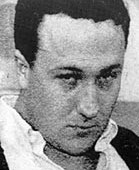
Steven Oken
Spree killer Bobby Joe Maxwell
Spree killer · USA · 1978
Name: Bobby Joe Maxwell Sex: M Race: B Type: T Motive: PC-nonspecific Method of…
11 victims
Bobby Joe Maxwell
Spree killer · USA · 1978
Name: Bobby Joe Maxwell Sex: M Race: B Type: T Motive: PC-nonspecific Method of…
11 victims
 Manuel Pardo
Spree killer · USA · 1986
Manuel Pardo, Jr. was a former police officer who was convicted of nine counts…
9 victims
Manuel Pardo
Spree killer · USA · 1986
Manuel Pardo, Jr. was a former police officer who was convicted of nine counts…
9 victims
 Michael Alan Silka
Spree killer · USA · 1984
Michael Alan Silka was killed during a shoot-out with the police on May 19, 198…
9 victims
Michael Alan Silka
Spree killer · USA · 1984
Michael Alan Silka was killed during a shoot-out with the police on May 19, 198…
9 victims
 David Wyatt Jones
Murderer · USA · 1987
David Wyatt Jones was tried in the Fourth Judicial Circuit, Duval County, under…
2 victims
David Wyatt Jones
Murderer · USA · 1987
David Wyatt Jones was tried in the Fourth Judicial Circuit, Duval County, under…
2 victims
 Burley Gilliam
Murderer · USA · 1982
Burley Gilliam, Jr. was born on 08/13/48. Joyce Marlowe was last seen alive on…
1 victim
Burley Gilliam
Murderer · USA · 1982
Burley Gilliam, Jr. was born on 08/13/48. Joyce Marlowe was last seen alive on…
1 victim
 William Henry Kennedy
Murderer · United Kingdom · 1927
William Henry Kennedy was executed by hanging at Wandsworth prison on May 31, 1…
1 victim
William Henry Kennedy
Murderer · United Kingdom · 1927
William Henry Kennedy was executed by hanging at Wandsworth prison on May 31, 1…
1 victim
 Markham Duff-Smith
Murderer · USA · 1971
Name: Markham Duff-Smith Age: 46 Education level: Some college · October 15, 19…
4 victims
Markham Duff-Smith
Murderer · USA · 1971
Name: Markham Duff-Smith Age: 46 Education level: Some college · October 15, 19…
4 victims
 Ali Asghar Borujerdi
Serial killer · Iran · 1908
Ali Asghar Borujerdi (Persian: عَلی اَصغَر بروجردی) was known in Iran as اصغر ق…
33 victims
Ali Asghar Borujerdi
Serial killer · Iran · 1908
Ali Asghar Borujerdi (Persian: عَلی اَصغَر بروجردی) was known in Iran as اصغر ق…
33 victims
- Gender
- male
- Country
- USA
- Location
- Maryland/Maine, USA
- Date of birth
- January 22, 1962
- Age at first offence
- 25
- Characteristics
- rape
- Victim profile
- Dawn Marie Garvin, 20; Patricia Antoinette Hirt, 43 (his sister-in-law), and Lori Elizabeth Ward, 25 (motel clerk)
- Method of murder
- Shooting
- Date(s) of murder
- November 1-16, 1987
- Years active
- 1987
- Date of arrest
- November 17, 1987
- Status
-
Executed
Executed by lethal injection in Maryland on June 17, 2004
Case record: Steven Oken
People
- Steven Oken (defendant)
Background
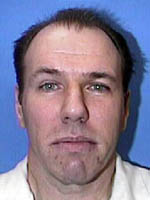
Steven Oken was adopted at birth and was raised in a stable, upper-middle-class family in Randallstown. He had a younger brother and a sister. His mother, Davida Oken, said the family was never strictly observant, and that the children spent High Holy Days at the synagogue where their parents were members for 27 years before withdrawing their membership.
Davida Oken said Oken played many sports and was on the lacrosse team at Randallstown High School. She said he studied health science for three years at the University of Maryland, Baltimore County, but withdrew a few credits shy of a degree.
Davida Oken said signs of trouble emerged in 1986, when her son started “running away from a lot of things.” She said he used drugs (cocaine, marijuana, prescription medications) and abused alcohol. She said he saw a psychiatrist off and on for about a year.
Oken’s mother described an incident when Oken was told he was adopted at age 10 or 11: she said that at his sentencing hearing in 1991 she testified that he “screamed in disbelief for two hours.”
Oken married a young woman named Phyllis Hirt. Davida Oken said he had met her through the pharmacy, and she said they divorced after his arrest. Oken’s wife was away on a business trip in California during the time of the murders.
Oken had a bar mitzvah at Baltimore Hebrew Congregation on Jan. 25, 1975. He later practiced Orthodox Judaism while incarcerated.
The offence
On November 1, 1987, Dawn Marie Garvin, a 20-year-old newlywed, was found in her apartment in the Baltimore County community of White Marsh in a nude state with blood streaming from her forehead and with a bottle protruding from her vagina. Her husband, Keith Douglas Garvin, had just returned to his naval base in Oceana, Virginia, after spending the weekend with her at their apartment. Keith attempted to call his wife after arriving at the base; there was no answer. He then contacted his father-in-law, Frederick Joseph Romano, who drove to the apartment and found Dawn Garvin dead.
Circumstances and forensic findings for Dawn Garvin
- A paramedic began administering CPR, but efforts were in vain.
- Police arrived at 2:30 a.m. on November 2, 1987 to inspect the scene.
- The detective who entered the apartment testified there were no signs of forced entry.
- The detective observed:
- a brassiere, a pair of pants, tennis shoes, a shirt, and a sweater on the floor near the sofa in the living room;
- the brassiere was ripped on the side but not unhooked;
- the pants were turned inside out;
- a small piece of rubber near the television set.
- In the bedroom, the detective found:
- two spent .25 caliber shell casings on the bed (one lying on top of a shirt);
- a blood-stained shirt with what he believed was a bullet hole.
- An autopsy revealed Dawn Garvin died as a result of two contact gunshot wounds: one bullet entered at her left eyebrow and the other at her right ear.
The last person to see Dawn Garvin before she was fatally attacked was her brother, Frederick Anthony Romano, who had stopped by her apartment at 8:30 p.m. on November 1 to pick up a set of keys to Keith Garvin’s car. When Frederick Anthony Romano left, Dawn Garvin was preparing to walk her dog.
The murder weapon, a handgun, was found in Oken’s home shortly after the murder, and a rubber portion of Oken’s tennis shoe was found in Dawn Garvin’s living room on the night of the murder.
The trial evidence also included witnesses who identified Oken as a person in the neighborhood who had attempted to gain entry to residences in the vicinity of the Garvin home a few days prior to the murder. Evidence addressed that Oken attempted to gain entry to apartments using false pretenses.
Oken sexually assaulted and murdered Dawn Garvin at her home in Baltimore County.
Sexual assault and murder of Patricia Hirt
Less than two weeks after the Dawn Garvin murder, Oken sexually assaulted and murdered his sister-in-law, Patricia Hirt, at his Maryland home. Oken later fled Maryland for Maine.
Murder of Lori Ward in Maine
In Maine, Oken sexually assaulted and murdered Lori E. Ward, a 25-year-old desk clerk at his Maine hotel. Oken’s arrest in Maine occurred on November 17, 1987.
Police and trial evidence described Oken’s 15-day spree of killings across Maryland and Maine in November 1987.
Investigation and arrest
After the Dawn Garvin murder, Detective James Roeder arrived at the apartment at **2:30 a.m. He testified about what he observed at the apartment and the shell casings, and that there were no signs of forced entry.
Oken was arrested in Maine on November 17, 1987.
Trial
Maryland trial for Dawn Garvin
A jury in the Circuit Court for Baltimore County convicted Oken of:
- first-degree murder (as recited in the appellate descriptions, including theories of felony murder and premeditated murder);
- first-degree sexual offense;
- burglary;
- use of a handgun in a crime of violence.
On January 18, 1991, the jury convicted Oken of first-degree murder, first-degree sexual offense, burglary, and use of a handgun in a crime of violence. Oken elected to have the court decide whether he was criminally responsible after the bifurcated hearing. On January 22, 1991, the court found Oken criminally responsible.
The sentencing for first-degree murder was held before the same jury on January 24 and January 25, 1991. The jury sentenced Oken to death.
On the remaining counts, the trial judge imposed:
- life imprisonment for the first-degree sexual offense;
- consecutive terms of 20 years for the burglary;
- consecutive term of 20 years for the use of a handgun in the commission of a crime of violence.
The trial judge subsequently imposed those sentences as described above.
Mitigating circumstances found by the jury
At sentencing, the death penalty aggravating factor included that Oken committed the murder while committing or attempting to commit a first degree sexual offense upon the victim.
The appellate decision states that the jury was not able to unanimously agree that any statutory mitigating circumstances existed. It further states that one or more jurors, but fewer than all 12, found these mitigating circumstances:
- “Fact of an existing life sentence”
- “sexual sadism”
- “substance abuse”
Evidence described in appellate decisions
The appellate decisions recited:
- the murder weapon, a handgun, found in Oken’s home shortly after the murder;
- a rubber portion of Oken’s tennis shoe found in Dawn Garvin’s living room on the night of the murder;
- witnesses identifying Oken in the neighborhood who had attempted to gain entry to residences in the vicinity of the Garvin home in the days prior to the murder.
The Maryland Court of Appeals decision recounted that:
- Oken was indicted in the Circuit Court for Baltimore County for first degree murder, sexual offenses, burglary, daytime housebreaking, robbery with a dangerous or deadly weapon, theft, and a handgun violation;
- the State notified Oken of intent to seek death penalty and advised the aggravating circumstances it intended to establish.
The appellate decision also stated that the jury acquitted Oken of the robbery charge.
Jury verdict and sentence review
The Court of Appeals:
- reversed Oken’s burglary conviction and sentence;
- affirmed the other judgments, including first-degree murder conviction and the death sentence.
The appellate decision concluded the death sentence was neither excessive nor disproportionate and was not imposed under the influence of passion, prejudice, or any arbitrary factors.
Quotation: trial judge statement
Baltimore County Circuit Judge James T. Smith Jr. declared at the conclusion of Oken’s trial in 1991:
“You are a very evil and dangerous man,”
Sentencing
Maine sentencing
Oken was convicted in Maine for first degree murder, robbery with a firearm, and theft arising out of the Ward homicide. He was sentenced to life without parole on the murder charge, 20 years on the robbery charge, and five years on the theft charge. Those sentences ran concurrently.
Maryland sentencing
Oken received the death sentence in Maryland for the 1987 murder of Dawn Garvin. He also received:
- life imprisonment for first degree sexual offense;
- consecutive 20-year terms for burglary and for use of a handgun in crime of violence.
Appeals
Oken’s legal history included:
- Oken v. State, 612 A.2d 258 (Md., 1992) (direct appeal);
- Oken v. State, 681 A.2d 30 (Md., 1996) (post-conviction relief);
- Oken v. State, 835 A.2d 1105 (Md., 2003) (motion to correct erroneous sentence);
- Oken v. Corcoran, 220 F.3d 259 (4th Cir. 2000) (habeas).
The Court of Appeals in Maryland held that:
- Oken’s burglary conviction was reversed;
- all other judgments were affirmed.
The post-conviction appellate decision affirmed the denial of post-conviction relief.
The motion to correct illegal sentence resulted in an affirmance of the rulings described, including determinations about the death penalty statute and constitutional issues raised.
Execution and final period
Oken was executed by lethal injection in Maryland on June 17, 2004.
A prison spokeswoman, Rosa Cruz, said:
“Steven Howard Oken was executed tonight at 9:18 p.m.,”
A media witness, John Patti, said:
“There was never any resistance from Mr. Oken. There were two or three moderate breaths that I saw come from his chest, and there was never any indication that anything was dripping from the IV, which was one of the points of contention in this,”
“It was quite obvious that things were very peaceful for Mr. Oken through the entire process, which lasted about seven or eight minutes,”
A prison spokesman, Mark A. Vernarelli, said about Oken’s last meal:
“It was the standard meal that happened to come up in the meal rotation for today,”
Final meal
- a chicken patty,
- potatoes and gravy,
- green beans,
- marble cake,
- milk,
- fruit punch.
Final words
The case record states that Oken left no final words.
Clemency and legal delays described in the case material
The case material describes that the execution came after a weeklong legal fight involving the defense and last-minute appeals for delays. It also describes that a federal appeals court denied Oken’s last pending motion, and that Gov. Robert L. Ehrlich Jr. issued a statement declining clemency.
In the clemency statement attributed to Gov. Ehrlich:
“After a thorough review of the request for clemency, the facts pertinent to the petition, and the judicial opinions regarding this case, I decline to intervene,”
“My sympathies tonight lie with the families of all

Spotted an error, or have more information about this case?