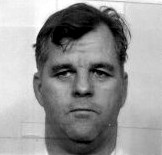
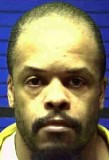
Billie Wayne Coble
Murderer Brian Kevin Rosenfeld
Murderer · USA · 1985
Brian Kevin Rosenfeld Brian Kevin Rosenfeld was sentenced to three concurrent l…
23 victims
Brian Kevin Rosenfeld
Murderer · USA · 1985
Brian Kevin Rosenfeld Brian Kevin Rosenfeld was sentenced to three concurrent l…
23 victims
 Yahweh ben Yahweh
Murderer · USA · 1980
Yahweh ben Yahweh was born and legally named Hulon Mitchell Jr. (October 27, 19…
23 victims
Yahweh ben Yahweh
Murderer · USA · 1980
Yahweh ben Yahweh was born and legally named Hulon Mitchell Jr. (October 27, 19…
23 victims
 Russell Ellwood
Murderer · USA · 1991
Russell Ellwood was a former taxi driver. Authorities suspected him of killing…
20 victims
Russell Ellwood
Murderer · USA · 1991
Russell Ellwood was a former taxi driver. Authorities suspected him of killing…
20 victims
 Robert Martines Perez
Murderer · USA · 1994
Name: Robert Martines Perez · Other name used in proceedings: Robert Martinez P…
15 victims
Robert Martines Perez
Murderer · USA · 1994
Name: Robert Martines Perez · Other name used in proceedings: Robert Martinez P…
15 victims
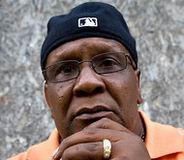 Donnie Andrews
Murderer · USA · 1986
Larry Donnell Andrews (April 29, 1954 – December 13, 2012) was an American crim…
2 victims
Donnie Andrews
Murderer · USA · 1986
Larry Donnell Andrews (April 29, 1954 – December 13, 2012) was an American crim…
2 victims
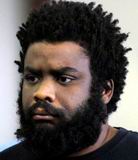 Tyree Smith
Homicide · USA · 2011
Tyree Lincoln Smith, born January 11, 1977, was found not guilty by reason of i…
1 victim
Tyree Smith
Homicide · USA · 2011
Tyree Lincoln Smith, born January 11, 1977, was found not guilty by reason of i…
1 victim
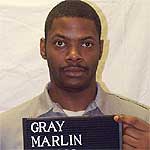 Marlin Gray
Murderer · USA · 1991
Marlin Gray was convicted of murder and sentenced to death in connection with t…
2 victims
Marlin Gray
Murderer · USA · 1991
Marlin Gray was convicted of murder and sentenced to death in connection with t…
2 victims
 Mark Hobson
Spree killer · United Kingdom · 2004
Mark Hobson was a British spree killer who killed his girlfriend and her twin s…
4 victims
Mark Hobson
Spree killer · United Kingdom · 2004
Mark Hobson was a British spree killer who killed his girlfriend and her twin s…
4 victims
- Gender
- male
- Country
- USA
- Location
- McLennan County, Texas, USA
- Date of birth
- September 9, 1948
- Age at first offence
- 41
- Characteristics
- murder for hire, abduction, domestic dispute, revenge
- Victim profile
- His estranged wife's parents, Robert and Zelda Vicha, and her brother, Waco police Sgt. Bobby Vicha
- Method of murder
- Shooting
- Date(s) of murder
- August 29, 1989
- Years active
- 1989
- Date of arrest
- Same day
- Status
-
Sentenced to death on June 14, 1990; death sentence overturned in 2007
Case identification
Billie Wayne Coble
Timeline
- August 1989 — Coble committed the August 1989 shooting deaths of his estranged wife's parents, Robert and Zelda Vicha, and her brother, Waco police Sgt. Bobby Vicha.
- June 14, 1990 — Coble was sentenced to death.
- 2007 — The death sentence was overturned by the United States Court of Appeals for the Fifth Circuit and the case was remanded for a new trial.
Background
Billie Wayne Coble had marital problems and separated from his wife, Karen Vicha, not long before the murders. Coble was described as being despondent over the breakup of his third marriage. Coble’s appellate attorneys offered testimony at trial about Coble’s troubled childhood and his traumatic experiences in combat while in Vietnam.
During the 2007 appeal discussion, the court noted evidence introduced at Coble’s trial regarding his mental illness, including post-traumatic stress and bipolar disorders, and that those disorders were amenable to treatment.
The offence
Coble kidnapped Karen Vicha at knife-point. He attempted to convince her not to divorce him, but eventually released her unharmed. Several weeks later, Coble was seen driving around the area where Karen Vicha and her parents lived.
That afternoon, he was waiting at Karen’s wife’s house when her daughters returned from school. Coble handcuffed and tied up Karen’s three children and one of their cousins. Coble cut the phone lines to the house and went down the street to the house of his brother-in-law, Bobby Vicha.
Coble and Bobby Vicha struggled, and Coble ultimately shot Bobby Vicha in the neck. Coble returned to Karen Vicha’s house for a period of time and then went across the street to the Vicha family home.
Coble fatally shot Karen Vicha’s parents, Zelda Vicha and Robert Vicha. He cut the phone lines to the Vicha family home as well.
When Karen Vicha arrived home from work, Coble was waiting for her. He admitted to killing her parents and brother and told her that Bobby Vicha had shot him. Coble then handcuffed her and drove her out to a rural area in her car.
Karen Vicha later testified that Coble assaulted her during the drive.
Coble was eventually apprehended after a brief high-speed pursuit, which ended when Coble crashed into a parked car.
Victims
- Karen Vicha (estranged wife)
- Robert Vicha (estranged wife’s parent)
- Zelda Vicha (estranged wife’s parent)
- Bobby Vicha (estranged wife’s brother; Waco police Sgt.)
- Karen Vicha’s three children (handcuffed and tied up)
- One of Karen Vicha’s cousins (handcuffed and tied up)
- J.R. Vicha (handcuffed with toy handcuffs; Bobby Vicha’s son)
Investigation and arrest
Coble was apprehended after a brief high-speed pursuit that ended with his crash into a parked car.
At the hospital where Coble and Karen Vicha were taken for treatment, Coble spontaneously told various hospital personnel and police officers that he had killed three people.
Trial
Coble was convicted of capital murder.
Coble’s appellate decision discussed two special issues that his McLennan County jury had to answer for the death penalty to be assessed: whether he committed murder deliberately and whether he would be a future danger to society. The appellate court later held that these special issues were unconstitutional as they were applied to him.
Defence
Coble was represented at trial by Ken Ables, who later died, and Hoagie Karels.
Karels said:
"It has been a very long time, but finally the courts have agreed that the instructions given, which Ken Ables and I objected to at trial, were in error," Karels said. "And now, with a new trial and a new jury, the jury can render a verdict proper under the facts and the correct instructions."
Prosecution
The case was prosecuted by Ralph Strother, a State District judge at the time of the 2007 reporting, with former McLennan County District Attorney Paul Gartner, who later died.
Strother said:
"I am just appalled and shocked and stunned and sickened at the busting of a death penalty case on these types of technicalities," Strother said. "I defy anyone to fully understand what they are saying. It makes no legal sense, no moral sense. 'Might-have-beens'"
And:
"It is just clear that they didn't want to impose the death penalty in this case. They are substituting their judgment for that of the jury and engaging in fanciful might-have-beens or what the jury might have done when the jury clearly had the facts before them and made the decision based on those facts," he said.
Strother also said:
"Here you have this vermin who snuffed out three innocent lives like they were nothing more than a candle, and now he may get to live the rest of his natural life," Strother said.
Hospital testimony and reported statements
A nurse treating Coble’s wounds after Coble and Karen Vicha Coble were injured in a car crash in Bosque County while running from police was mentioned in the account of relatives’ reactions.
Coble reportedly asked the nurse:
"Have you ever seen somebody who just killed three people?"
Sentencing
Coble was sentenced to death on June 14, 1990.
Coble had been on death row since his 1990 conviction.
Appeals
The United States Court of Appeals for the Fifth Circuit granted a stay of execution for Coble in 1989, and in 2007 overturned the death sentence and awarded a new trial.
The 2007 appellate ruling stated that the two special issues were unconstitutional as they were applied to him. The ruling reflected changes made since the time of the instructions that limited the scope of the death penalty and allowed a life sentence if Texas juries believed there was sufficient mitigating evidence to preclude the imposition of the death penalty.
The court rejected Coble’s claims that he was the victim of ineffective assistance of counsel at trial.
The opinion was written by 5th Circuit Judge Emilio M. Garza, who stated:
"With respect to his mental illness, there was at least some evidence introduced at Coble's trial that his post-traumatic stress and bipolar disorders were amenable to treatment," Garza wrote. "Based on this evidence, the jury might have concluded that Coble, if properly treated, would be less likely to commit criminal acts constituting a continuing threat to society. "Similarly, the jury might have reasoned that as Coble aged and became more chronologically removed from his difficult childhood and traumatic experiences in Vietnam, his troubled background would exercise a lesser degree of influence over his actions, thereby rendering him less of a future danger."
Coble’s appellate attorney, Richard Ellis of Mill Valley, Calif., did not return phone messages Tuesday.
Coble’s state appeal expected to seek reconsideration was noted, with State District judge John Segrest expecting the attorney general’s office to ask the Fifth Circuit to reconsider its ruling.
Ted Vicha and his wife, Carolyn, took news of the court’s action badly. They recalled testimony from the nurse who treated Coble’s wounds and statements from relatives. Ted Vicha said:
"When someone brags about killing three people, how in the world can anybody take pity on him?" Ted Vicha said.
And:
"This don't make sense one cotton-pickin' bit. I don't understand. We have been waiting 18 years, and it's costing taxpayers all this for nothing when he should have been buzzard bait a long time ago."
Outcome
The Fifth Circuit overturned Coble’s death sentence and awarded him a new trial.
Aftermath
The reporting noted that Coble was awaiting further appellate steps, with Ralph Strother’s comments referencing juror instructions in Clydell Coleman’s case and that Coleman was executed in May 1999.
The reporting also stated that J.R. Vicha was now a prosecutor on McLennan County District Attorney John Segrest's staff.
Other details
The account of the events included additional details from trial testimony: Coble, despondent over the breakup of his third marriage, drove to Axtell intending to convince his wife to give him another chance and to ask her to drop kidnapping charges against him for a separate incident after their separation.
Coble encountered Robert Vicha while looking for Karen and shot the 64-year-old in the kitchen, according to trial testimony.
Coble ambushed Bobby Vicha in the garage as the police sergeant parked his car. The account said Bobby Vicha put up a fight, apparently diving back into his car for his gun and wounding Coble in the right hand before Coble fatally shot him several times, according to the testimony.
Officials said Zelda Vicha was shot to death after she arrived home later that evening.
After Coble went to Karen’s home nearby, he put toy handcuffs on Bobby Vicha’s son, J.R. Vicha, and his three cousins and told Karen’s three daughters to tell their mother goodbye.
The account stated that Coble kidnapped Karen before getting into the high-speed chase and wrecking in Bosque County, according to testimony.
Coble was described as having admitted killing her parents and brother and telling Karen that Bobby Vicha had shot him.
Coble was described as spontaneously telling various hospital personnel and police officers that he had killed three people.
Spotted an error, or have more information about this case?