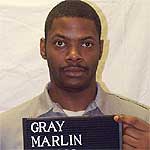
Marlin Gray
Murderer Brian Kevin Rosenfeld
Murderer · USA · 1985
Brian Kevin Rosenfeld Brian Kevin Rosenfeld was sentenced to three concurrent l…
23 victims
Brian Kevin Rosenfeld
Murderer · USA · 1985
Brian Kevin Rosenfeld Brian Kevin Rosenfeld was sentenced to three concurrent l…
23 victims
 Russell Ellwood
Murderer · USA · 1991
Russell Ellwood was a former taxi driver. Authorities suspected him of killing…
20 victims
Russell Ellwood
Murderer · USA · 1991
Russell Ellwood was a former taxi driver. Authorities suspected him of killing…
20 victims
 Robert Martines Perez
Murderer · USA · 1994
Name: Robert Martines Perez · Other name used in proceedings: Robert Martinez P…
15 victims
Robert Martines Perez
Murderer · USA · 1994
Name: Robert Martines Perez · Other name used in proceedings: Robert Martinez P…
15 victims
 Billy Frank Vickers
Murderer · USA · 1993
Billy Frank Vickers Vickers was executed by lethal injection in Texas on Januar…
14 victims
Billy Frank Vickers
Murderer · USA · 1993
Billy Frank Vickers Vickers was executed by lethal injection in Texas on Januar…
14 victims
 Peter Contos
Murderer · USA · 1997
Peter Contos was convicted on three indictments charging murder in the first de…
3 victims
Peter Contos
Murderer · USA · 1997
Peter Contos was convicted on three indictments charging murder in the first de…
3 victims
 Phillip Lee Ingle
Murderer · USA · 1991
Defendant: Phillip Lee Ingle (34) · Victims (Rutherford County murders): Willia…
4 victims
Phillip Lee Ingle
Murderer · USA · 1991
Defendant: Phillip Lee Ingle (34) · Victims (Rutherford County murders): Willia…
4 victims
 Frederick West
Serial killer · United Kingdom · 1967
Frederick West (29 September 1941 – 1 January 1995) was an English serial kille…
13 victims
Frederick West
Serial killer · United Kingdom · 1967
Frederick West (29 September 1941 – 1 January 1995) was an English serial kille…
13 victims
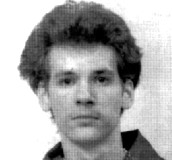 Christopher Stevens
Murderer · USA · 1993
Christopher Stevens was on probation, and his probation was transferred to Clov…
1 victim
Christopher Stevens
Murderer · USA · 1993
Christopher Stevens was on probation, and his probation was transferred to Clov…
1 victim
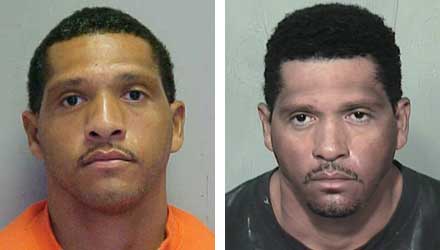 Mark Goudeau
Serial killer · USA · 2005
Mark Goudeau was a suspected serial killer from Phoenix, Arizona, who was charg…
9 victims
Mark Goudeau
Serial killer · USA · 2005
Mark Goudeau was a suspected serial killer from Phoenix, Arizona, who was charg…
9 victims
 Engelica Castillo
Murderer · USA · 2009
Engelica Castillo was sentenced to life in prison without the possibility of pa…
1 victim
Engelica Castillo
Murderer · USA · 2009
Engelica Castillo was sentenced to life in prison without the possibility of pa…
1 victim
- Gender
- male
- Country
- USA
- Location
- St. Louis, Missouri, USA
- Date of birth
- September 26, 1967
- Age at first offence
- 24
- Characteristics
- rape
- Victim profile
- Julie Kerry, 20, and her sister, Robin Kerry, 19
- Method of murder
- Pushing them off a bridge
- Date(s) of murder
- April 4, 1991
- Years active
- 1991
- Date of arrest
- —
- Status
-
Executed
Executed by lethal injection in Missouri on October 26, 2005
Case record: Marlin Gray
Background
Marlin Gray was convicted of murder and sentenced to death in connection with the April 4, 1991 murders of Julie Kerry and Robin Kerry on the Chain of Rocks Bridge over the Mississippi River at St. Louis, Missouri. The crimes involved sexual assaults, robbery, and forcing Julie and Robin Kerry from the bridge to the water below. Gray was convicted as an accomplice to the deaths and related offenses.
The Kerry sisters, Julie Kerry and her sister, Robin Kerry, made arrangements with their nineteen-year-old cousin, Thomas Cummins, to meet them shortly before midnight on April 4, 1991. The Kerry sisters intended to show Cummins a graffiti poem they had painted on the Chain of Rocks bridge. The Chain of Rocks bridge spanned the Mississippi River at St. Louis and had been abandoned and used by trespassers for drinking and partying.
Earlier that same evening, Gray, along with Reginald (Reggie) Clemons, Antonio (Tony) Richardson, and Daniel Winfrey, met at the home of a mutual friend. Gray was the oldest and largest of the group. At Gray’s suggestion, the four left for the Chain of Rocks bridge to “smoke a joint.”
The offence
On April 4, 1991, Julie and Robin Kerry and Thomas Cummins went to the Chain of Rocks bridge shortly before midnight. Gray’s group was already at the bridge when the Kerry sisters and Cummins arrived. The two groups briefly chatted. Winfrey asked for cigarettes, which were supplied by one of the Kerry sisters. Gray demonstrated how to climb down a manhole on the deck of the bridge to a metal platform leading to a concrete pier.
Clemons suggested to his companions that they rob Cummins and the Kerrys. Gray replied, “Yeah, I feel like hurting somebody.” As the group encountered Cummins and the Kerry sisters again, Gray put his arm around Cummins and walked him ten to fifteen feet away, telling Cummins: “This is a robbery. Get down on the ground.” Gray told Cummins that if he looked up, Gray would kill or shoot Cummins.
At the same time, Clemons, Winfrey, and Richardson grabbed Julie and Robin Kerry. The victims screamed. One of the assailants said, “[D]o you want to die?” and ordered the girls to stop screaming or the speaker would “throw you off this bridge.” This statement, if not made by Gray, was made within earshot of Gray. Winfrey held Robin Kerry on the ground, covering her face with her coat.
Clemons ripped off Julie Kerry’s clothing and raped her as Julie was held by Richardson. While Julie and Robin Kerry were being assaulted, Gray went to Cummins, who was still lying face down, and stated: “I've never had the privilege of popping somebody ... if you put your head up or try to look, I'm going to pop you.” Gray then went to where Winfrey was holding Robin Kerry and, with the assistance of Clemons, tore off Robin Kerry’s clothing and raped her.
Clemons forced Cummins to surrender his wallet, wristwatch, some cash, and keys. Clemons became agitated upon finding Cummins’s firefighter’s badge, thinking he might be a police officer. Cummins was forced to get up; while holding Cummins’s head down so he could not see who it was, the assailants walked him a short distance on the bridge and made him lie down again. The assailants warned Cummins not to talk to police, showed him his driver’s license, and told him, “We know who you are and if you tell anybody, we're going to come and get you.” Cummins heard two voices discussing whether he would live or die.
Richardson forced Julie Kerry into the manhole. When Clemons finished raping Robin Kerry, Clemons forced Robin Kerry and Cummins into the manhole where Richardson and Julie were located. Clemons then followed, and Winfrey followed after being told by Clemons to go find Gray. Clemons ordered Cummins and the Kerry sisters to step out onto the concrete pier below the metal platform, and they were told not to touch each other. Julie Kerry was pushed from the pier first, followed by Robin Kerry, falling a distance of fifty to seventy feet to the water. Cummins was then told to jump and believed his chances were better if he jumped instead of being pushed.
Cummins jumped and survived the fall. After surfacing, Cummins called for Julie Kerry, but Julie did not reappear. Cummins eventually reached shore by a wooded area near the Chain of Rocks waterworks. Authorities later recovered Julie Kerry’s body from the Mississippi River near Caruthersville, Missouri, about three weeks later. Robin’s body was never recovered.
Winfrey later testified that Clemons and Richardson were the ones who pushed the two girls. Clemons remarked, “We threw them off. Let's go.” The group left the bridge. Clemons said, “They'll never make it to shore.” Gray praised Richardson for being “brave” to push the Kerry sisters off the bridge. Afterward, the group drove to Alton, Illinois, and bought food and cigarettes with the money taken from the victims, and then drove to an observation point over the Mississippi River called the Chair, where they sat and watched the river. While there, Clemons remarked, “They'll never make it to shore.”
In custody, Gray admitted to participating in raping both of the girls but denied involvement in the murders. His tape recorded statement was admitted in evidence and was consistent in most essentials with the factual account summarized in the Missouri Supreme Court’s opinion.
Investigation
The legal proceedings included consideration of Gray’s admitted statements and the circumstances of his interrogation. Gray and Cummins, who was initially a suspect, alleged that they were physically abused during interrogations. Cummins eventually received a $150,000 settlement from the City of St. Louis. Gray said that he confessed during interrogations to raping the two girls so that police would stop beating him.
When apprehended by police, Gray had Cummins’s engraved watch in his possession. Clemons had Cummins’s firefighter’s badge, and Richardson had left his fingerprints on Cummins’s driver’s license.
Arrest
The record included that Cummins was initially a suspect. Gray’s capture and possession of the engraved watch were treated as relevant to the case facts.
Trial
At Gray’s trial, he was convicted of two counts of first-degree murder. The jury returned a verdict of guilty on two counts of Murder 1st Degree and imposed a death sentence as punishment on each count of First Degree Murder. The Missouri Supreme Court later affirmed the conviction and sentence.
Gray’s version of events at trial differed from the prosecution’s account. Gray told jurors that he left the bridge to smoke pot and that Reginald Clemons told him, “Man, I just robbed that guy and threw the girls into the river,” when he returned. Gray also presented a different account in later interviews, including that he returned after about thirty minutes and learned that the incident had been described as an accident.
Winfrey was 15 years old at the time of the murders. Winfrey pleaded guilty to nine charges, including two counts each of second-degree murder and forcible rape, and agreed to testify against the other men. Winfrey was serving a 30-year sentence.
Sentencing
The St. Louis City Circuit Court sentenced Gray to death for both murder convictions. Gray received two death sentences, one for each first-degree murder count.
Gray’s sentencing also involved issues raised on appeal, including proportionality and alleged trial errors. In his direct appeal, the Missouri Supreme Court held that death sentences were not disproportionate to murders committed in furtherance of brutal rape and robbery of the victims, and it affirmed the judgments.
Appeals
Direct appeal (Missouri Supreme Court)
State v. Gray, 887 S.W.2d 369 (Mo. 1994) affirmed Gray’s conviction and sentence and affirmed denial of post-conviction relief.
United States Supreme Court
The United States Supreme Court denied certiorari review in Gray v. Missouri, 514 U.S. 1042 (1995).
Federal habeas corpus (Eighth Circuit)
Gray v. Bowersox, 281 F.3d 749 (8th Cir. 2002) affirmed denial of habeas relief.
The Eighth Circuit described the appeal as raising issues including alleged improprieties in the prosecution’s penalty-phase closing argument and ineffective assistance of counsel related to objections during voir dire. The Eighth Circuit held that the judgment dismissing with prejudice the petition for writ of habeas corpus was affirmed.
Supreme Court discretionary review
Gray v. Luebbers, 537 U.S. 115 S.Ct (2002) reflected a denial of discretionary review.
Outcome
Marlin Gray was executed by lethal injection in Missouri on October 26, 2005.
Robin Kerry’s body was never recovered. Julie Kerry’s body was found three weeks later in the Mississippi River near Caruthersville, Missouri.
Aftermath
Clemons was on death row. Richardson’s death sentence was reduced to life in prison because he was sentenced to death by a judge, not a jury. Winfrey was serving a 30-year sentence after pleading guilty and agreeing to testify against the other men.
At the time of the execution, Gray did not want family members or friends to witness the execution, but witnesses were present: a female cousin and her minister. The only victims’ witness present at the execution was Kevin Cummins, identified as the girls’ uncle.
Gray declined a last meal and a sedative.
Final statement: “I go forward now on wings built by the love and support of my family and friends. I go with a peace of mind that comes from never having taken a human life. I forgive those who have hardened their hearts to the truth and I pray they ask forgiveness for they know not what they do. This is not a death, it is a lynching.”
In the execution, Gray died by injection at 12:07 a.m. at the Eastern Reception, Diagnostic and Correctional Center in Bonne Terre, Missouri, after Missouri state employees injected him with lethal drugs.
Other details
The legal chronology described the case as follows:
- 1991 04/05 — Marlin Gray, with co-defendents Antonio Richardson, Reginald Clemons and Daniel Winfrey rape and kill Julie and Robin Kerry by pushing them off the Chain of Rocks Bridge in St. Louis, Missouri.
- 1991 06/21 — Gray is charged by indictment with two counts of First Degree Murder, as well as other felonies.
- 1992 10/21 — The jury returns a verdict of guilty on two counts of Murder 1st Degree.
- 1992 10/23 — The jury returns a death sentence as punishment on each count of First Degree Murder.
- 1992 12/03 — The St. Louis City Circuit Court sentences Gary to death for both murder convictions.
- 1993 05/06 — Gray files a motion for post-conviction relief in the Circuit Court of St. Louis City.
- 1993 11/29 — The Circuit Court denies post-conviction relief.
- 1994 10/25 — The Missouri Supreme Court affirms Gray's conviction and sentence and the denial of post-conviction relief. State v. Gray, 887 S.W. 2d 369 (Mo. banc 1994).
- 1995 03/27 — The United States Supreme Court denies certiorari review. Gray v. Missouri, 514 U.S. 1042 (1995).
- 1995 04/25 — Gray files a petition for writ of habeas corpus in the United States District Court for the Eastern District of Missouri.
- 2000 07/14 — The District Court denies the petition of writ of habeas corpus in an unpublished order.
- 2002 02/26 — The Court of Appeals affirms the denial of habeas relief. Gray v. Bowersox, 281 F.3d 749 (8th Cir. 2002).
- 2003 01/13 — The Supreme Court declines discretionary review. Gray v. Luebbers, 537 U.S.115 (2002).
- 2005 09/26 — The State requests the Missouri Supreme Court to set an execution date, and the Missouri Supreme Court sets Gray's execution date of October 26, 2005.
- 2005 10/25 — Governor Matt Blunt denied clemency.
- 2005 10/26 — Gray was executed.
Execution-related procedural details included: the Missouri Supreme Court set the execution date of October 26, 2005; the U.S. Supreme Court denied final motions to stay the execution; and Governor Matt Blunt denied clemency after a recommendation by the Missouri Board of Probation and Parole not to grant clemency.
During the penalty-phase arguments, the Missouri and federal appeals included discussion of references to the Charles Manson case and the handling of objections by the trial court, including the jury being instructed to disregard improper references. The Eighth Circuit reproduced passages from the prosecutor’s statements during penalty-phase closing argument and the court’s rulings on objections.
Prosecutor’s quoted statements included the following:
The prosecutor’s statement included: “Do you remember California? Do you remember the man that never went into the house?”
The later prosecutor statement included: “Well, the names, you know, Charles "Tex" Watson, came to me, Patricia Krenwinkle, Squeaky Fromme. You know, those names came to me and I said, what the heck, you know, why did that jump into my mind and I couldn't understand it. And then basically it came that people who are weaker, younger, problematic, can be manipulated and dealt with by somebody who is apparently stronger, who, like their leader, you know, was a poet, played the guitar, fancied himself a songwriter, but really had a problem. The point is here, what you've got to understand is that you don't need to be there as you told me when you push them off, not if you've done all the handiwork beforehand. You don't need, you don't need to be the last one that shoves them off and hears them screaming as they go down.”
Spotted an error, or have more information about this case?