
Sedrick Cobb
Murderer Brian Kevin Rosenfeld
Murderer · USA · 1985
Brian Kevin Rosenfeld Brian Kevin Rosenfeld was sentenced to three concurrent l…
23 victims
Brian Kevin Rosenfeld
Murderer · USA · 1985
Brian Kevin Rosenfeld Brian Kevin Rosenfeld was sentenced to three concurrent l…
23 victims
 Yahweh ben Yahweh
Murderer · USA · 1980
Yahweh ben Yahweh was born and legally named Hulon Mitchell Jr. (October 27, 19…
23 victims
Yahweh ben Yahweh
Murderer · USA · 1980
Yahweh ben Yahweh was born and legally named Hulon Mitchell Jr. (October 27, 19…
23 victims
 Russell Ellwood
Murderer · USA · 1991
Russell Ellwood was a former taxi driver. Authorities suspected him of killing…
20 victims
Russell Ellwood
Murderer · USA · 1991
Russell Ellwood was a former taxi driver. Authorities suspected him of killing…
20 victims
 Robert Martines Perez
Murderer · USA · 1994
Name: Robert Martines Perez · Other name used in proceedings: Robert Martinez P…
15 victims
Robert Martines Perez
Murderer · USA · 1994
Name: Robert Martines Perez · Other name used in proceedings: Robert Martinez P…
15 victims
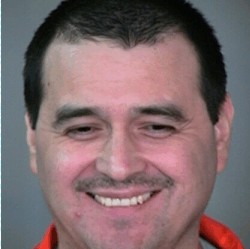 Toribio Rodriguez
Murderer · USA · 1988
Toribio Rodriguez attacked Dawn Dearing in her Tucson apartment. On August 25,…
1 victim
Toribio Rodriguez
Murderer · USA · 1988
Toribio Rodriguez attacked Dawn Dearing in her Tucson apartment. On August 25,…
1 victim
 Cindy Lou Beck
Murderer · USA · 2010
Cindy Lou Beck was 47 at the time of additional charges in Marion County. She w…
2 victims
Cindy Lou Beck
Murderer · USA · 2010
Cindy Lou Beck was 47 at the time of additional charges in Marion County. She w…
2 victims
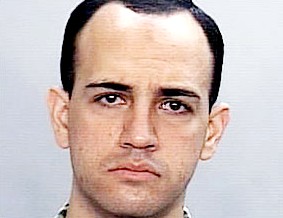 Steven Arthur Rios
Murderer · USA · 2004
Steven Arthur Rios was a police officer with the Columbia Police Department. A…
1 victim
Steven Arthur Rios
Murderer · USA · 2004
Steven Arthur Rios was a police officer with the Columbia Police Department. A…
1 victim
 Abdelaâli Hadi
Serial killer · M orocco · 2001
Abdelaâli Hadi was a homeless man living near the place where the bodies of the…
9 victims
Abdelaâli Hadi
Serial killer · M orocco · 2001
Abdelaâli Hadi was a homeless man living near the place where the bodies of the…
9 victims
- Gender
- male
- Country
- USA
- Location
- Waterbury County, Connecticut, USA
- Date of birth
- February 3, 1962
- Age at first offence
- 27
- Characteristics
- kidnapping, rape
- Victim profile
- Julia Ashe, 23
- Method of murder
- Drowning
- Date(s) of murder
- December 16, 1989
- Years active
- 1989
- Date of arrest
- 5 days after
- Status
-
Sentenced to death
Sentenced to death on August 13, 1991
Case overview
Sedrick Cobb was sentenced to death on August 13, 1991.
The offence
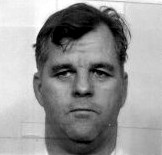
Sedrick Cobb was convicted of kidnapping, rape and murder of 23-year-old Julia Ashe in 1989.
Julia Ashe was Christmas shopping at a Waterbury department store when Cobb flattened one tire of her car using a valve stem remover. When she returned from the store, he offered to help her change the tire. After changing the tire, Cobb asked her for a ride to his car, and she obliged.
Once in her vehicle, Cobb overpowered her and forced her at knifepoint to drive to a secluded road. He then bound and gagged her with fiberglass tape. Cobb carried her to a concrete dam and pushed her, causing her to fall 23 feet into shallow, icy water below. Ashe managed to free her hands by rubbing the tape across wire mesh protruding from the concrete and gouged her face trying in vain to remove the tape across her mouth. When she tried to crawl up the bank to freedom, Cobb forced her face down, back into the water.
Ashe’s ice-encrusted body was found Christmas Day.
Investigation
Cobb previously challenged the searches of his car and apartment and the circumstances surrounding his confession.
Trial
Cobb’s case involved a claim of ineffective assistance of counsel and allegations of racial disparities in the administration of the death penalty.
During proceedings referenced in later court reporting, Cobb gave statements to Judge Stanley T. Fuger Jr. and maintained that the police violated his rights.
Sentencing
Cobb was sentenced to death in 1991 for the December 1989 kidnapping, rape and murder of Ashe.
Appeals
The state Supreme Court upheld Cobb’s death sentence in 1999, completing the only review mandated by state law. Death row inmates could not opt out of this mandated appeal; other appeals were described as optional.
The U.S. Supreme Court declined to hear Cobb’s appeal in October 2000.
Cobb’s habeas petition included claims of ineffective assistance of counsel and racial disparities in the administration of the death penalty. The petition was filed in late 2000, and it was delayed while defense lawyers awaited completion of comprehensive statistical analyses of race and other demographics in capital punishment.
Cobb sought to withdraw his habeas petition and forgo further appeals, which led to further court action involving Judge Stanley T. Fuger Jr.
Aftermath
A second death row inmate on Connecticut’s death row announced a desire to forgo further appeals and face execution, which was discussed alongside Cobb’s situation in 2005.
Cobb’s request to drop appeals (2003 hearing and later court handling)
In the summer of 2003, Cobb wrote a note to Judge Stanley T. Fuger Jr. saying he wanted to withdraw his habeas petition and have an execution date set.
At a hearing referenced as July 9 of that year, Fuger urged Cobb to reconsider, and Cobb later reneged.
On July 20, 2003, Cobb told Rockville Superior Court Judge Stanley T. Fuger Jr. that he no longer wished to appeal “this sentence of death on this level, the federal level or any other level,” and he said: “And let me assure you, Judge, it's not a delaying tactic or any kind of a game.” Cobb also said: “I made my peace with God. Let's go.”
Fuger postponed acting on Cobb’s request until July 23 to hear further arguments from David Golub on why an earlier petition filed by Cobb seeking to block the sentence should proceed.
Golub argued that Cobb did not receive adequate legal assistance at trial and that the administration of the death penalty in Connecticut was racially biased. Golub described Cobb as black and Ashe as white. Cobb told the court he would not change his position and made references to his strained relationship with Golub and co-counsel Jonathan Levine, including the statement: “There's a continuing hatred that's being portrayed - 'obb is raising the race issue,”' and the statement: “Cobb never raised nothing. That was attorneys doing that to incense the public, you know. 'Kill him, kill him, kill him' and all this stuff. I'm tired of it, Your Honor. I'm tired of it. Let it be enough. I'm ready.”
Fuger told Cobb he could take “drastic” steps but urged him not to, including the statement: “I want you to understand this and believe it's the truth,” and: “The only thing that is standing between you and the death chamber right now is this habeas corpus petition.”
Fuger also discussed Gary Gilmore being the first person executed after U.S. Supreme Court rulings in 1976 that permitted states to resume using the death penalty, stating: “Since Gilmore, Fuger told Cobb, "close to 900 individuals have been executed in this country. "Now I don't know whether that effect would be the same here in Connecticut,” and: “But right now there are seven men sitting on death row and you have the unfortunate position of being the leading person. If you withdraw your petition, you not only hasten your own death, you may well hasten the deaths of other people. And I don't say that to talk you out of this. I say that because I want you to understand the import, the weight, of what you're doing.”
Cobb replied: “Well, Your Honor, I hear you. I hear you clear. And I have thought about those things and heard those things on the row over the years, and read those things in journals and on the news and the media from around the state, even around the world in some cases. So I'm fully aware of that.”
Cobb then said it was the attorneys, not he, preparing the appeals, stating: “Let the officers of the court and false witnesses, as such, come develop a conscience before the court, whatever procedure that is, and admit their wrongdoing and how they have made this carry on and carry on over the years, and me sitting in that pit up there, being told this and that and lies by various attorneys. ... All I'm saying, Your Honor, is I've had enough. No more lies, no more games. I've had enough.”
Waterbury State’s Attorney John Connelly declined to comment after a later Wednesday hearing. In court, when asked by Fuger for his reaction, Connelly said: “I guess Mr. Cobb and I have been in this case from the beginning, and the only ones who have been in it from the beginning, and I've always found Mr. Cobb, in the courtroom anyway, to be highly intelligent and aware of the proceedings that have been going on these many years. Your Honor, I think he understands what's at stake here, clearly better than any of us. I mean, it's his case, it's not Mr. Golub's case.”
Golub emphasized that Cobb’s family was not there and suggested Fuger should allow time for Cobb to seek family support. Cobb cut off Golub and said: “Your Honor, I don't want a tit for a tat here, but I had a two-hour visit with my family yesterday, and they're aware. I mean, am I not speaking English here?”
Golub persisted, arguing that allowing Cobb to withdraw his habeas petition would lead to irrevocable consequences. Fuger told Golub: “As you well know,” “the right of the inmate will trump the arguments of the lawyer.”
Golub later said he understood Cobb’s exasperation, stating: “No one can understand how hard it is to live in the situation he's under,” and: “But he didn't get a fair trial. We have two experts who have done substantial criminal work, including death penalty work in Connecticut, who are prepared to come to court and testify he did not receive effective assistance of counsel. This is a man who deserves a hearing.”
Letter to Judge Fuger and hearing referenced in 2005
A second death row inmate’s desire to forgo further appeals was discussed alongside Cobb’s announcement in April 2005. Cobb said he wanted to drop his appeals in a letter to Superior Court Judge Stanley T. Fuger Jr. and requested “a date in your court to make this official, so that you can ask of me any questions or concerns that you have.” Cobb also wrote: “I do this without stress, mental duress, it's just the right time,” and “I request a date in your court to make this official, so that you can ask of me any questions or concerns that you have.”
The court received the letter on April 4.
Fuger had presided over a lengthy hearing last year on Cobb’s claim that he was not adequately represented by his lawyers during his trial.
In the letter, Cobb said he was no longer represented by Stamford attorney David Golub, who had handled Cobb’s complex habeas corpus petition and argued unsuccessfully that Public Defender Gerard Smyth provided substandard legal representation during trial. Golub said in response: “Sedrick Cobb is not Michael Ross,” and: “He has a very strong appeal and the appeal raises very important issues not only for Mr. Cobb, but for the administration of the death penalty in general.” Golub said he planned to meet with Cobb as soon as he could.
Fuger was described as having no longer having jurisdiction over Cobb’s case. Fuger’s November ruling against Cobb’s habeas petition was described as on appeal to the state Supreme Court.
Cobb was described as refusing to sign a document waiving confidentiality of communications with his trial lawyers, which stymied current lawyers’ efforts to question them about their trial work. Cobb was described as giving Fuger a lengthy written statement, which was not made part of the public file. Cobb called it “a detailed account of my thoughts, because I might miss something.”
Cobb maintained in his statements to Fuger that he believed the police violated his rights and said: “They violated my rights, I can't win, and I'm ready to go.”
Cobb bristled at Golub’s statements about the habeas petition containing substantial claims and about expert witnesses prepared to testify about shortcomings in Cobb’s legal representation at trial. Cobb said: “Please. I don't have anything personal against these 2 men sitting here with me, but they're not - they're down-talking to me, or downplaying the situation here,” and asked: “Do I have to say I don't want them - I fire you - they don't speak for me?”
Fuger told Cobb he could take “drastic” steps but urged him not to, saying: “I want you to understand this and believe it's the truth,” and again stating: “The only thing that is standing between you and the death chamber right now is this habeas corpus petition.”
Execution discussion referenced alongside Cobb’s situation
Ross was described as facing lethal injection on May 11 for killing four young women in eastern Connecticut in the early 1980s and being tied up in a New London Superior Court hearing to determine if he was competent to decide to forgo remaining appeals. Ross was described as having earlier execution set for Jan. 26 but competency issues delayed the date.
The discussion also referenced that the last person executed in Connecticut was Joseph “Mad Dog” Taborsky in May 1960.

Spotted an error, or have more information about this case?