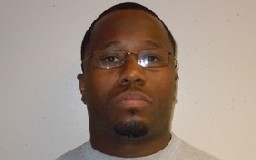
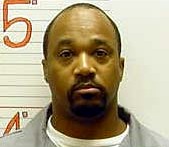
Detrick Cole
Murderer Russell Ellwood
Murderer · USA · 1991
Russell Ellwood was a former taxi driver. Authorities suspected him of killing…
20 victims
Russell Ellwood
Murderer · USA · 1991
Russell Ellwood was a former taxi driver. Authorities suspected him of killing…
20 victims
 Robert Martines Perez
Murderer · USA · 1994
Name: Robert Martines Perez · Other name used in proceedings: Robert Martinez P…
15 victims
Robert Martines Perez
Murderer · USA · 1994
Name: Robert Martines Perez · Other name used in proceedings: Robert Martinez P…
15 victims
 Billy Frank Vickers
Murderer · USA · 1993
Billy Frank Vickers Vickers was executed by lethal injection in Texas on Januar…
14 victims
Billy Frank Vickers
Murderer · USA · 1993
Billy Frank Vickers Vickers was executed by lethal injection in Texas on Januar…
14 victims
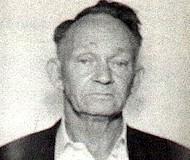 Robert Chambliss
Mass murderer · USA · 1963
Robert Edward Chambliss (also known as “Dynamite Bob”) (January 14, 1904–Octobe…
4 victims
Robert Chambliss
Mass murderer · USA · 1963
Robert Edward Chambliss (also known as “Dynamite Bob”) (January 14, 1904–Octobe…
4 victims
 Mario Centobie
Murderer · USA · 1998
Mario Centobie was executed by lethal injection in Alabama on April 28, 2005. C…
1 victim
Mario Centobie
Murderer · USA · 1998
Mario Centobie was executed by lethal injection in Alabama on April 28, 2005. C…
1 victim
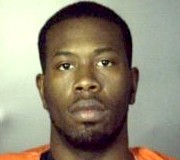 Rickey Cummings
Murderer · USA · 2011
Rickey Cummings was recorded with the name Rickey Donnell Cummings, and with TD…
2 victims
Rickey Cummings
Murderer · USA · 2011
Rickey Cummings was recorded with the name Rickey Donnell Cummings, and with TD…
2 victims
 Thomas Wayne Mason
Murderer · USA · 1991
Thomas Wayne Mason Thomas Wayne Mason was executed by lethal injection in Texas…
2 victims
Thomas Wayne Mason
Murderer · USA · 1991
Thomas Wayne Mason Thomas Wayne Mason was executed by lethal injection in Texas…
2 victims
 Albert Milsom
Murderer · United Kingdom · 1896
Albert Milsom (33) was executed by hanging at Newgate Prison on June 9, 1896. ·…
1 victim
Albert Milsom
Murderer · United Kingdom · 1896
Albert Milsom (33) was executed by hanging at Newgate Prison on June 9, 1896. ·…
1 victim
 Ma Jiajue
Mass murderer · China · 2004
Ma Jiajue was executed by firing squad on June 16, 2004. Ma Jiajue had a Guangx…
4 victims
Ma Jiajue
Mass murderer · China · 2004
Ma Jiajue was executed by firing squad on June 16, 2004. Ma Jiajue had a Guangx…
4 victims
- Gender
- male
- Country
- USA
- Location
- Shelby County, Tennessee, USA
- Date of birth
- November 29, 1979
- Age at first offence
- 21
- Characteristics
- —
- Victim profile
- Santeife Thomas, 27
- Method of murder
- Shooting
- Date(s) of murder
- October 17, 2000
- Years active
- 2000
- Date of arrest
- 8 days after
- Status
-
Sentenced to death
Sentenced to death on May 17, 2002; death sentence affirmed and required to be carried out as provided by law on June 9, 2005, unless otherwise ordered by the court or other proper authority
Case details
Name: Detrick Cole Victim: Santeife Thomas Status: Sentenced to death; conviction and sentence were affirmed
Timeline
- October 17, 2000 — Detrick Cole shot and killed Santeife Thomas.
- October 18, 2000 — Robert Eric Adams saw Cole sitting on the steps and Cole told him he had killed Thomas.
- October 19, 2000 — Police conducted a raid at Ridgemont Apartments and arrested Carlos Williams for unlawful possession of a weapon; Williams told police what Adams had told him about Cole killing Thomas.
- October 20, 2000 — Police questioned Adams; Adams told police what Cole had said about the murder, except the location of Thomas’s body.
- October 20, 2000 — Police arrested Detrick Cole as he was leaving a convenience store.
- October 21, 2000 — Police discovered Thomas’s body in a grassy, overgrown area in the Garden Walk Apartment complex.
- October 22, 2000 — Thomas’s automobile was towed to police headquarters.
- October 23, 2000 — Cole called police and set up a time to surrender, but he failed to show up at the agreed time.
- October 25, 2000 — Patrol officers arrested Detrick Cole and he gave a statement.
- February 1997 — Cole pleaded guilty to robbery, kidnapping, reckless endangerment, and attempted rape; the effective sentence was three years confinement in the Shelby County workhouse.
- May 17, 2002 — Cole was sentenced to death.
- September 9, 2003 — Session of the Court of Criminal Appeals at Jackson.
- November 24, 2003 — Court of Criminal Appeals filed its opinion in State of Tennessee v. Detrick Cole, No. W2002-01254-CCA-R3-DD.
- January 20, 2005 — Supreme Court of Tennessee opinion delivered by FRANK F. DROWOTA III, C.J.
- June 9, 2005 — Death sentence was to be carried out as provided by law unless otherwise ordered by the court or other proper authority.
The offence
Detrick Cole shot and killed Santeife Thomas, a 27-year-old acquaintance, in October 2000. Cole was convicted of first degree premeditated murder.
The Supreme Court of Tennessee said the killing occurred “because the victim had not repaid a $15 debt”. The court said the unarmed victim was shot in the head at close range, even though he promised to repay the money plus $100 because of the delay in repayment.
At around 2 a.m. on October 17, 2000, the court described the killing as follows:
- Cole shot Thomas twice in the head.
- The first shot was above Thomas’s left eye.
- The second shot was behind Thomas’s left ear.
Cole directed Thomas to drive him to an overgrown area behind an apartment complex to obtain drugs. The court described that Cole became upset because Thomas had not repaid a $15 debt.
Background
People associated with the events
- Andropolis Wells was a fourteen-year-old who accompanied Thomas and testified for the prosecution.
- A person identified as “Little E” was a person Thomas agreed to drive.
- “Jerry” was the source Wells said Cole wanted to get crack cocaine from.
- A person known to Wells as “Jewel” was where Cole left the gun.
- Marcus Puryear lived near the crime scene and provided vehicle and tag observations.
- Robert Eric Adams lived at Ridgemont Apartments and testified about Cole telling him he had killed Thomas.
- Carlos Williams was arrested after police raid for unlawful possession of a weapon and told police what Adams had told him.
Entry about Cole’s prior convictions
At sentencing, the clerk testified that Cole pleaded guilty in February 1997 to:
- robbery,
- kidnapping,
- reckless endangerment,
- attempted rape.
The clerk testified the effective sentence was three years confinement in the Shelby County workhouse. The clerk testified the offenses were committed when Cole was fifteen. The prior convictions stemmed from a single criminal episode that occurred in 1995.
Investigation and arrest
Killing and aftermath at the scene
The court described that Thomas returned home from work around 12:30 a.m. on October 17 and left shortly afterward in his late-model Mitsubishi Galant to visit a friend. Thomas was next seen at Ridgemont Apartments in North Memphis, where he agreed to drive “Little E” to the Raleigh Woods Apartments. Cole and fourteen-year-old Andropolis Wells accompanied Thomas and “Little E.”
After Thomas dropped off “Little E,” Cole asked Thomas to drive him to the Garden Walk Apartments and directed Thomas to the back of the apartments to an area overgrown with grass and weeds. After Thomas parked:
- Thomas and Wells waited near the car.
- Cole left to get crack cocaine from “Jerry.”
- Cole returned and said “Jerry” would bring them some drugs.
- Cole and Thomas walked into the overgrown area.
Wells testified that:
- Wells heard Cole repeatedly telling Thomas to open his mouth.
- Wells saw Cole pointing a gun at Thomas’s face.
- Wells heard Thomas repeatedly tell Cole to “stop playing.”
- Wells heard two gunshots.
The court described that Cole ran from the bushes with a set of keys, apparently realized he had the wrong keys, then returned with another set of keys. The court said Cole had blood on his hand and told Wells to get into the car. Wells accompanied Cole in Thomas’s car back to Ridgemont Apartments, and Cole removed two shells from the murder weapon, rubbed them with his shirt, and threw them into a garbage can.
Cole and Wells went to an upstairs apartment and left the gun with “Jewel.” Cole later feared that losing his electronic organizer would lead to his apprehension, and he and Wells drove Thomas’s car back to search for the organizer. Cole rolled Thomas’s body over but did not find the organizer.
When they returned to the car to leave, they noticed a man outside across the street looking at them, and Wells spoke briefly to the man at Cole’s instruction. Wells remained with Cole for two days after the murder.
Statements about the motive
Before Cole dropped off Wells at Wells’s home, the court described Cole told Wells that he had shot Thomas with a .44 caliber handgun because Thomas owed him fifteen dollars.
Wells testified and the court reproduced the exchange:
- Wells remarked: “Fifteen dollars? Man I could have gave you fifteen dollars.”
- Cole replied: “N----r gonna start respecting me.”
Witness corroboration
Marcus Puryear testified that around 2 to 2:30 a.m., he heard “two loud gunshots-blasts.” Puryear saw a car speeding away from the direction of the gunshots and identified it by sound as having a small four-cylinder engine. Later, Puryear saw a car pull into a driveway immediately across from his residence. Two African-American males left the car, walked around into the overgrown weeds near where the gunshots had sounded, and after three or four minutes returned to the car. One man walked over and asked if Puryear knew a person named Carlos or Michael who lived across the street. Puryear said he had never heard of anyone by that name living there, and the two men left. Puryear had not seen these men before and wrote down the tag number, color, make, and model. The description and tag number Puryear provided matched Thomas’s vehicle.
Cole’s statements to Robert Eric Adams and others
On October 18, 2000, Robert Eric Adams saw Cole sitting on steps to Adams’s apartment and Cole said that he and his girlfriend had fought. During their conversation, Adams asked what was wrong and the court described that Cole told Adams that he had killed Thomas.
Cole said Thomas had been taking him somewhere to get marijuana when Cole asked about money Thomas owed him. Thomas promised to pay Cole on Friday. After arriving at their destination and leaving the car, Cole continued to ask Thomas about the debt. Thomas again said he would pay on Friday and offered to include an additional one hundred dollars for the delay. The court described that believing Thomas was lying, Cole took out a pistol and shot Thomas in the head and a second time in the face to assure that Thomas was dead. Cole also told Adams that he had hidden Thomas’s car. At Cole’s request, Adams drove him to the Garden Walk Apartments where Cole pointed to Thomas’s body and said he had dropped his “Rolodex” and was trying to find it. Cole searched the grass near the body and found his organizer. Adams and Cole then returned to Ridgemont Apartments.
Adams testified that later that afternoon, Thomas’s mother came to the apartments and asked if anyone had seen her son. Cole told her Thomas might be “hanging out” or “partying.” Adams later told Carlos Williams that Cole had killed Thomas, but Adams did not tell Williams the location of Thomas’s body.
Raid, questioning, and arrests
On the evening of October 19, 2000, police conducted an action unconnected with the case and arrested Carlos Williams for unlawful possession of a weapon. The court described that Williams apparently knew that Thomas’s mother had filed a missing persons report and told police what Adams had told him about Cole killing Thomas.
On October 20, 2000, the court described that police questioned Adams and Adams told what Cole had said about the murder, except the location of Thomas’s body.
After that, police arrested Cole as he was leaving a convenience store. At arrest, Cole had a Mitsubishi ignition key on his person. Officers allowed Cole to retain it because they were unaware of its significance. By the time investigators first spoke with Cole at police headquarters, the key had disappeared and officers later found it hidden under the cushion of the chair where Cole had been sitting. Cole explained that he collected keys and had found the key at Ridgemont Apartments. He denied knowing anything about Thomas’s disappearance and claimed he hid the key after having “second thoughts” about it.
The court described that police released Cole because they had not yet found Thomas’s body and were not certain a homicide had occurred.
On October 21, 2000, police discovered Thomas’s body in a grassy, overgrown area in the Garden Walk Apartment complex. The court said Thomas had no wallet, identification, keys, money, or contraband on his body.
On October 22, 2000, Thomas’s automobile was towed to police headquarters. The patrol officer had previously noticed it abandoned on a dead end street in North Memphis. The vehicle’s license plates had been removed and the VIN numbered covered. Blood was discovered on the handle of the driver’s door. The court stated the ignition key officers had seized from Cole fit the victim’s car. Cole’s fingerprint was found on a piece of paper inside the car.
After obtaining additional information from Wells, police resumed searching for Cole. On October 23, 2000, Cole called police and set up a time to surrender, but he failed to show up. Finally, on October 25, 2000, patrol officers arrested Cole and he gave a statement.
Forensic evidence on the victim’s wounds
Dr. Craig Thomas Mallak, the forensic pathologist, and Dr. Steven A. Symes, the forensic anthropologist, testified for the prosecution.
Dr. Mallak explained that:
- the victim had been shot twice in the head,
- the first wound was above Thomas’s left eye and the second was behind Thomas’s left ear,
- both wounds could have been contact wounds inflicted from extremely close range,
- the wound behind the victim’s ear definitely had been a contact wound inflicted when the gun was less than one inch from Thomas’s head,
- Dr. Mallak was unable to determine conclusively whether the first wound had also been a contact wound,
- either wound would have been sufficient to cause death and incapacitate Thomas immediately,
- the gunshots caused “complete destruction of the skull.”
Dr. Mallak and Dr. Symes opined the wounds were consistent with injuries typical of a large caliber weapon such as a .44 caliber handgun.
The court stated the murder weapon was never found, and tests revealed the gun Cole claimed he used was not the murder weapon. The gun Cole told police they had taken from Carlos Williams was not the gun used to shoot Thomas.
Trial
Guilt phase
The jury found Cole guilty of premediated first degree murder.
Cole presented no proof at the guilt phase of the trial.
Statements by Cole to police
Although Cole admitted he had killed Thomas, he claimed that he had shot Thomas because Thomas had charged him and threatened to hurt him, and Cole claimed Thomas had been four or five feet away when shot.
Cole also claimed he needed money Thomas owed him to support himself and his pregnant girlfriend. The court also described that Cole acknowledged killing Thomas but asserted portions of witnesses’ accounts were lies.
The court included a statement Cole gave to police after signing a waiver of his rights:
“On the night that Teifus [Thomas] was murdered, it was me, Drop [Wells], and Teifus. We left the Ridgemont Terrace Apartments going to Garden Walk where Teifus told me that he had some money-some of the money that he owed me. And when we got there, he stalled-he stalled like telling me that he was waiting on the money but never did get it.He told me that he gave me his key to his car as partial payment until he'd give me the money, but when I turned down the key, we got into an argument, and he went on about he wasn't going to pay me, and I asked him why, but he never did say. So he came in my face with threats that he wasn't going to pay me, and I could take it how I wanted to take it, and I asked him why he wasn't going to pay me, so that's when he went to putting his hands in my face and pushing me. And then we started into a small argument of words back and forth. And that's when he tried to attack me. I went into my pocket and pulled out a .38, and Teifus rushed at me, and I shot him.After I shot him, I looked at his body and threw up. I still had his key in my left hand, and I got in his car, and I left the crime scene with Drop, and we went and parked the car, and we got out of the Ridgemont Terrace Apartments.I went back to the body because I dropped my organizer, and I went to get it. And when I got it, I left and took his car and parked it again on Voltaire Street.The reason why I murdered Teifus really wasn't about the money. He charged at me as if he was trying to attack me and hurt me. Instead of me defending myself with my fist, I pulled the gun out, and I used it on him. I didn't have any place to stay. My girlfriend is pregnant, and we don't have any help, and I needed my money that he owed me. I just wanted to take care of my family and try to find a place for us to stay when the baby was born.”
Evidence sufficiency for premeditation
The Supreme Court of Tennessee held the evidence supported premeditation beyond a reasonable doubt, stating that evidence showed:
- Cole directed Thomas to a secluded, overgrown area,
- Cole became upset because Thomas had not repaid the $15 debt,
- Cole pointed the gun at Thomas, told Thomas to open his mouth, and shot him first above his left eye and then again behind his left ear,
- Cole admitted he shot the victim a second time with the gun within one inch to ensure death,
- Cole’s statements supported premeditation,
- actions before and after the murder included wiping clean and discarding shells, disposing of the murder weapon, and returning to the scene twice to recover an electronic organizer.
Fingerprinting issue during the jury presence
Cole challenged the trial court requiring him to submit to fingerprinting in the presence of the jury. The Supreme Court of Tennessee rejected the claim and found the issue without merit.
The appendix section of the Court of Criminal Appeals notes that portions related to “fingerprinting of defendant in presence of jury during penalty phase” were deleted, but the Supreme Court decision addressed fingerprinting in the jury presence during the sentencing proceeding.
Victim-impact evidence instruction
In the penalty phase, the trial court instructed the jury on victim impact evidence. The instruction was:
“The prosecution has introduced what is known as victim impact evidence. This evidence has been introduced to show the financial, emotional, psychological, or physical effects of the victim's death on the members of the victim's immediate family. You may consider this evidence in determining an appropriate punishment. However, your consideration must be limited to a rational inquiry into the culpability of the defendant, not an emotional response to the evidence. Victim impact evidence is not the same as an aggravating circumstance. Proof of an adverse impact on the victim's family is not proof of an aggravating circumstance. Introduction of this victim impact evidence in no way relieves the State of its burden to prove beyond a reasonable doubt at least one aggravating circumstance which has been alleged. You may consider this victim impact evidence in determining the appropriateness of the death penalty only if you first find that the existence of one or more aggravating circumstances has been proven beyond a reasonable doubt by evidence independent from the victim impact evidence, and find that the aggravating circumstance(s) found outweigh the finding of one or more mitigating circumstances beyond a reasonable doubt.”
The Court of Criminal Appeals concluded the issue lacked merit.
Post-mortem and lifetime photographs
The Court of Criminal Appeals addressed admission of:
- a portrait-style photograph of the victim taken during his lifetime, concluding the trial court did not err and any error would have been harmless,
- two autopsy photographs depicting close-ups of the victim’s scalp during testimony of Dr. Mallak; the court concluded the trial court did not abuse its discretion and the probative value was not outweighed by prejudicial effect.
Hearsay exclusion at penalty phase
Defense counsel asked Cole’s father during the penalty phase whether Cole had expressed remorse about the victim’s death. The trial court sustained the state’s objection based on hearsay.
The Court of Criminal Appeals held the issue would have been waived due to failure to make an offer of proof and failure to raise the issue in a motion for new trial. The court nonetheless addressed it and found any error harmless because Cole expressed remorse during his own testimony and told the jury:
“Ladies and gentlemen, I know that what I did was wrong, and I know me saying that I'm sorry to them and I'm sorry to my family won't bring [the victim] back. He wasn't a bad person. I was the bad person. But I ask you just please have mercy on me. I didn't mean for that to happen. I wasn't at home. Me and my family, we wasn't together. I was out in the streets. I didn't know what to do. I didn't know what was going on in my life. I just needed help from somebody-just please, please don't kill me-please.”
Sentencing
Aggravating circumstance (i)(2)
Cole’s death sentence was based upon the aggravating circumstance (i)(2):
- “The defendant was previously convicted of one (1) or more felonies, other than the present charge, whose statutory elements involve the use of violence to the person.”
The prosecution presented evidence Cole had been convicted in 1997 of:
- robbery,
- kidnapping,
- attempted rape,
- felony reckless endangerment.
The trial court instructed the jury that the crimes of robbery, kidnapping, reckless endangerment, and attempted rape were felonies whose statutory elements involved use of violence to the person.
Prior violent felony facts (Darrell Webster)
At sentencing, Darrell Webster, the victim of Cole’s prior criminal activity, testified for the prosecution. Webster recalled that during early morning hours of November 18, 1995, as he was leaving an adult bookstore:
- Cole and another man accosted him at gunpoint,
- ordered him to get into Webster’s car,
- held a gun on Webster as the men drove around Memphis,
- told Webster: “Do you want to go out like a punk? Go out like a man.”
- then spun the barrel of the gun,
- placed the weapon against the back of Webster’s head and pulled the trigger; the gun did not fire,
- placed the barrel against Webster’s head behind Webster’s ear and again pulled the trigger; the gun did not fire,
- recalled Cole describing the actions as “Russian Roulette.”
- after accusing Webster of being a homosexual, the men forced Webster to climb into the back seat and perform oral sex,
- Cole and the accomplice discussed how to kill Webster and where to dump his body,
- Webster later convinced the accomplice to drive to the Memphis airport by promising to rent a car,
- when the vehicle slowed for a ticket for parking, Webster escaped and ran to an airport security officer, who arrested Cole and his accomplice, ending Webster’s five-hour ordeal.
Jury verdict and form for aggravating circumstance
The jury was instructed on the statutory aggravating circumstance as:
“That the defendant was previously convicted of one or more felonies, other than the present charge, the statutory elements of which involved the use of violence to the person.”
The state relied on:
- Robbery,
- Kidnapping,
- Reckless Endangerment,
- Attempted Rape.
The verdict form returned by the jury during the penalty phase stated:
“PUNISHMENT OF DEATH (1) We, the jury, unanimously find the following listed statutory aggravating circumstance or circumstances: (Here list the statutory aggravating circumstance or circumstances so found, which must be limited to those enumerated for your consideration by the court in these instructions.) Robbery Kidnapping Reckless endangerment Attempted rape.”
The Court of Criminal Appeals concluded the verdict was clear and unequivocal and found no entitlement to relief.
Mitigation evidence and Cole’s testimony
Cole’s father and mother testified in mitigation. Their testimony included:
- the family moved to Memphis from Ashland, Mississippi, about thirteen years earlier,
- they bought and sold five houses in thirteen years before returning to Olive Branch, Mississippi,
- Cole’s grades began falling after the family came to Memphis,
- Cole’s father worked twelve to thirteen hours per day as finance director for an automobile dealership,
- the parents had been married for twenty-five years and described themselves as Christian people,
- the defendant was the second of three children,
- Cole regularly attended church with his family until leaving home in 1996 because he refused to follow family rules,
- Cole loved his fourteen-month-old daughter, whom the parents were raising,
- the parents pleaded with the jury to spare Cole’s life and expressed sorrow for the victim’s death,
- Cole’s father assured the jury that Cole was sorry for what had happened.
Cole testified in his own behalf. He acknowledged killing the victim by shooting him twice in the head, but he said “half of the things” the state’s witnesses said about the crime were lies. He described remorse, maintained he did not mean to do what he had done, and asked the jury not to kill him.
Sentence imposed
Upon finding that the prosecution proved the (i)(2) aggravating circumstance beyond a reasonable doubt and that it outweighed mitigating circumstances beyond a reasonable doubt, the jury sentenced Cole to death.
Appeals
Issues on appeal to the Supreme Court of Tennessee
The Supreme Court of Tennessee listed these four issues for oral argument:
- whether the evidence supported the conviction,
- whether Cole was deprived of his constitutional right to a fair trial when the trial court required him to submit to fingerprinting in the presence of the jury,
- whether under Apprendi v. New Jersey and Ring v. Arizona the jury, rather than the judge, had to determine whether the statutory elements of prior convictions used to support the (i)(2) aggravating circumstance involved the use of violence to the person,
- whether the factors for mandatory review in Tennessee Code Annotated section 39-13-206(c)(1) required reversal of the death sentence.
The Supreme Court affirmed the defendant’s conviction and sentence.
Comparative proportionality review and arbitrariness review
The Supreme Court addressed:
- Cole’s argument that the death sentence was arbitrarily imposed because the prior convictions occurred when he was fifteen, and stated this argument was rejected by State v. Davis,
- the sufficiency of evidence supporting the (i)(2) aggravating circumstance,
- the weight finding that the (i)(2) aggravator outweighed mitigating circumstances beyond a reasonable doubt,
- comparative proportionality and concluded the death sentence was not disproportionate.
Outcome
The Supreme Court of Tennessee affirmed Cole’s conviction and death sentence. The death sentence was required to be carried out as provided by law on June 9, 2005, unless otherwise ordered by the court or other proper authority. Costs of the appeal were taxed to the State of Tennessee because Cole was indigent.
Separate concurring-dissenting opinion
Adolpho A. Birch, Jr. filed a separate concurring-dissenting opinion. He concurred in affirming the conviction, but expressed two concerns about the sentence of death:
- discomfort with the majority’s analysis regarding application of aggravating circumstance (i)(2) and the judge’s role in determining whether the prior offenses involved violence, especially in light of Apprendi and Blakely;
- continued disagreement with comparative proportionality review protocol.
Birch concluded by stating:
“Accordingly, I respectfully dissent from that portion of the majority opinion affirming the imposition of the death penalty in this case.”
Spotted an error, or have more information about this case?