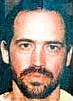
Mario Centobie
Murderer Russell Ellwood
Murderer · USA · 1991
Russell Ellwood was a former taxi driver. Authorities suspected him of killing…
20 victims
Russell Ellwood
Murderer · USA · 1991
Russell Ellwood was a former taxi driver. Authorities suspected him of killing…
20 victims
 Robert Martines Perez
Murderer · USA · 1994
Name: Robert Martines Perez · Other name used in proceedings: Robert Martinez P…
15 victims
Robert Martines Perez
Murderer · USA · 1994
Name: Robert Martines Perez · Other name used in proceedings: Robert Martinez P…
15 victims
 Billy Frank Vickers
Murderer · USA · 1993
Billy Frank Vickers Vickers was executed by lethal injection in Texas on Januar…
14 victims
Billy Frank Vickers
Murderer · USA · 1993
Billy Frank Vickers Vickers was executed by lethal injection in Texas on Januar…
14 victims
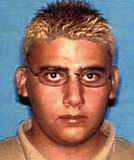 Jason Bautista
Murderer · USA · 2003
Jason Bautista killed his mother, Jane Bautista. Jane Bautista was 41 years old…
1 victim
Jason Bautista
Murderer · USA · 2003
Jason Bautista killed his mother, Jane Bautista. Jane Bautista was 41 years old…
1 victim
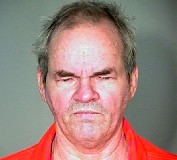 Warren Summerlin
Murderer · USA · 1981
Defendant: Warren Wesley Summerlin Victim: Brenna Jean Bailey On April 29, 1981…
1 victim
Warren Summerlin
Murderer · USA · 1981
Defendant: Warren Wesley Summerlin Victim: Brenna Jean Bailey On April 29, 1981…
1 victim
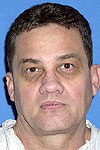 George Anderson Hopper
Murderer · USA · 1983
George Anderson Hopper was convicted of capital murder for the October 1983 str…
1 victim
George Anderson Hopper
Murderer · USA · 1983
George Anderson Hopper was convicted of capital murder for the October 1983 str…
1 victim
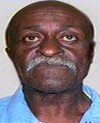 Wilbur Lee Jennings
Serial killer · USA · 1981
Wilbur Lee Jennings was a serial killer who was convicted of killing four women…
4 victims
Wilbur Lee Jennings
Serial killer · USA · 1981
Wilbur Lee Jennings was a serial killer who was convicted of killing four women…
4 victims
- Gender
- male
- Country
- USA
- Location
- St. Clair County, Alabama, USA
- Date of birth
- January 26, 1966
- Age at first offence
- 32
- Characteristics
- fugitive, kidnapping, rape, police officer
- Victim profile
- Keith Turner, 29 (Moody police officer)
- Method of murder
- Shooting
- Date(s) of murder
- June 26, 1998
- Years active
- 1998
- Date of arrest
- July 5, 1998
- Status
-
Executed
Executed by lethal injection in Alabama on April 28, 2005
Case overview
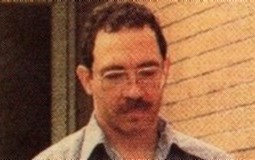
Mario Centobie was executed by lethal injection in Alabama on April 28, 2005.
Centobie had been convicted of capital murder and was sentenced to death for killing Moody police officer Keith Turner in 1998 while on duty.
Timeline
- 1993 — Centobie received accolades in Mobile County for helping rescue victims of the Amtrak disaster on Bayou Canot in 1993 that killed 47 passengers and crew.
- 1995 — Centobie was convicted of kidnapping his ex-wife and his son and was sentenced to 40 years in prison, despite his claims that they accompanied him voluntarily; at the time, they were in protective custody because of previous domestic violence by Centobie.
- 1996 — Centobie began serving his 40-year sentence for kidnapping his estranged wife and 6-year-old son.
- June 25, 1998 — Centobie and fellow inmate Jeremy Granberry overpowered Jones County Sheriff Maurice Hooks and Ray Butler while they were transporting them from Parchman Prison to court hearings in Jones County; Hooks and Butler were left tied to poles; Centobie fled in Hooks’s marked sheriff’s car, which coincidentally lacked a rear bumper due to an earlier accident.
- June 25, 1998 — Capt. Cecil Lancaster noticed the marked patrol car and pulled it over on I-359; Centobie shot and wounded Lancaster from the car’s passenger seat.
- June 27, 1998 — Officer Keith Turner stopped a vehicle in Moody; Centobie reached back into the car as if to retrieve his driver’s license, pulled the deputy’s stolen handgun, and shot Turner three times, including a fatal shot to the back of Turner’s head; Turner’s death was immediately caused by the fatal shot to the back of his head.
- July 4, 1998 — Centobie kidnapped Daniel Alexander from the parking lot of a small store at about 9:30 P.M. in order to effect his escape from the Moody area; after the kidnapping, Centobie forced Alexander to drive toward Mobile and Alexander escaped from Centobie at a rest area near the Alabama Mississippi state line west of Mobile.
- July 5, 1998 — Centobie was captured on the Mississippi coast near Biloxi riding in a van on I-10; at the time of his capture, Centobie was still armed with Sheriff Hooks’s .45 Ruger; Granberry was soon captured and later pleaded guilty to the crimes against him.
- January 8, 1999 — Centobie was on death row.
- May 14, 1999 — Centobie was convicted of capital murder for the death of Turner.
- June 1999 — A makeshift handcuff key was discovered under his tongue during a court appearance in Tuscaloosa.
- October 8, 1998 — Donna Hawkins permitted Centobie to escape from the Etowah County maximum-security jail by opening electronically locked doors.
- July 2000 — Granberry was sentenced to three life terms.
- Wednesday, April 27, 2005 — A next appeal was rejected Wednesday night by the 11th U.S. Circuit Court of Appeals in Atlanta.
- April 28, 2005 — A U.S. Supreme Court denied to stay the execution; Centobie was executed by lethal injection in Alabama at 6:22 p.m. CST.
Background
At the time of Centobie’s sentencing for kidnapping, his ex-wife and son had been in protective custody because of previous domestic violence by Centobie, and Centobie claimed they accompanied him voluntarily.
Centobie began serving a 40-year sentence in 1996 for kidnapping his estranged wife and Dominic, described as a 6-year-old son. He was said to have later become known for escapes and for offenses that followed his kidnapping conviction.
Centobie also had work history described as a former firefighter and a rescue diver who had helped rescue victims of the Amtrak disaster on Bayou Canot in 1993; that wreck killed 47 passengers and crew.
Centobie was abandoned by his father at the age of four after his parents divorced. His mother sought a divorce on grounds of habitual cruel and inhuman treatment by Centobie’s father.
At the age of 20, Centobie shot himself in the stomach with a shotgun because he was distraught. He married and later divorced. His wife requested a restraining order citing habitual cruel and inhuman treatment.
The offence
Killing of Officer Keith Turner
On June 27, 1998, Officer Keith Turner stopped a vehicle in Moody.
Centobie returned to the front seat of the vehicle under the guise of getting his license and registration. Turner continued to approach the vehicle, and when he was next to Centobie and the vehicle, Granberry jumped from the vehicle. Centobie pulled the .45 and shot Turner three times: one shot lodged in Turner’s vest, one shot hit Turner in the hip area, and the third shot was fired directly into the back of Turner’s head. Turner’s death was immediately caused by the fatal shot to the back of the head.
In additional details, it was stated that, after speaking with Turner, Centobie reached back into the car as if to retrieve his driver’s license; instead, he pulled the deputy’s stolen handgun and shot Turner three times. One bullet hit Turner’s bullet resistant vest, another entered his hip, and the last struck the back of his head.
Wounding of Capt. Cecil Lancaster
Capt. Cecil Lancaster of the Tuscaloosa Police Department pulled over the marked patrol car on I-359 after noticing its damaged back bumper and that neither occupant acknowledged him.
As Lancaster approached, Centobie fired from within the vehicle through the back driver’s side window, striking Lancaster twice. It was stated that the first shot struck Lancaster’s midsection but a bullet clip on his belt stopped the round, and that a second bullet went through his side, shattered two ribs, and exited his back. Lancaster managed to fire shots into the rear window of the vehicle, and it immediately fled the scene.
Kidnapping and escape-related events involving other individuals
Sheriff Maurice Hooks and Ray Butler were overpowered during the transport of Centobie and Jeremy Granberry from Parchman Prison to court hearings in Jones County. Centobie pulled Hooks’s Ruger .45 automatic pistol from his holster and forced Hooks and Butler at gunpoint to an isolated area where they were left tied to poles. Centobie kept Hooks’s Ruger as he and Granberry fled in Hooks’s marked sheriff’s car.
After Centobie and Granberry shot and wounded Lancaster, they abandoned the sheriff’s patrol vehicle and stole a 1981 Mercury vehicle belonging to Brandon Blake from Marguerite’s Lounge in Tuscaloosa.
On July 4, 1998, Centobie kidnapped Daniel Alexander from a small store parking lot at about 9:30 P.M. to effect his escape from the Moody area. Alexander escaped from Centobie at a rest area near the Alabama Mississippi state line west of Mobile and alerted law enforcement.
Statements about what Centobie said during interactions after the killing
The record reflected that, upon being returned to the Etowah County jail after the murder of Officer Turner, the victim’s widow, Brandi Turner, was at the sheriff’s department searching for information concerning her husband’s death. After being informed that Centobie was at the jail, Mrs. Turner was granted permission to speak with him.
Mrs. Turner asked “Why?” in the presence of law-enforcement officials. Centobie sent the law-enforcement personnel away and answered her question. Mrs. Turner did not inform authorities of the content of their conversation until several days later. She told authorities that when she asked Centobie, “Why did you murder my husband?” Centobie replied that he did not murder Officer Turner, he merely shot him. Upon further questioning, Centobie informed her that he shot Officer Turner in the head because “he had to.”
In the affidavit rejecting any appeal, it was stated that Centobie said it was a “luxury” knowing when he would die because it gave him time to prepare. It was also stated that he said an unsolicited appeal by federal defender Katherine Puzone was adding “torture and stress” to his final days.
It was stated that Centobie also agreed in an affidavit taken by Clay Crenshaw that he did not want Puzone to represent him. The statement included the quotation: “I told her that I did not want her to represent me. I have told my family not to talk to Ms. Puzone because I don't want her to represent me,”
Centobie was also described as saying: “The only kind of mental condition that I may be suffering from is depression”
Investigation
Centobie’s killing of Officer Keith Turner made him the focus of a manhunt.
It was described that, for eight days after Turner’s murder, more than 750 lawmen descended on Moody in one of the largest manhunts in state history, and that Granberry was quickly found while Centobie eluded search efforts for a week.
It was described that, after his capture, evidence included that Centobie was still carrying Sheriff Hooks’s .45 Ruger used during the earlier events.
Investigators also described that Centobie had been traced and recaptured near Atlanta through love letters sent to guard Donna Hawkins.
Arrest and custody events
After the shooting, Centobie avoided capture for several days and was later captured near Biloxi, Mississippi, on July 5, 1998, while riding in a van on I-10; at the time of capture, he was still armed with Sheriff Hooks’s .45 Ruger.
Centobie later escaped from a jail after being helped by a prison guard. It was stated that investigators believed he charmed guard Donna Hawkins, convincing her to open electronically locked doors, allowing Centobie to walk out on October 8, 1998.
Hawkins was sentenced to 18 months in prison for permitting or facilitating Centobie’s escape.
The record also noted that Centobie had escaped again while being transferred between jails in June 1998, overpowering two law officers taking them to a court appearance in Laurel, Mississippi; those officers were found the next day unharmed and shackled to posts at a dilapidated barn.
Trial
Charge and verdict
Centobie was indicted and convicted of capital murder for intentionally causing the death of Officer Keith Turner, a police officer, while he was on duty, under § 13A-5-40(a)(5), Ala. Code 1975.
The trial court accepted the jury’s advisory verdict recommending death by electrocution and sentenced Centobie to death by electrocution.
The jury trial took place after venue was changed from St. Clair County to Elmore County on Centobie’s motion.
After testifying in his own behalf and admitting to having committed all of the elements of the charged offense, Centobie was found guilty as charged.
Evidence and trial issues on appeal
In direct appeal review, the Court of Criminal Appeals affirmed the conviction and death sentence.
The court held that Centobie’s statement to police was knowing and voluntary and not obtained in violation of Miranda, and that Miranda warnings were not required before Centobie’s conversation with victim’s wife at jail.
The court held that evidence of Centobie’s escape from jail after the murder was admissible as consciousness of guilt.
The court held that evidence of uncharged crimes was admissible to show that all of Centobie’s criminal acts were part of one continuous criminal adventure.
The court held that allowing an additional number of law enforcement officers to be seated in the courtroom was not an abuse of discretion, and that photographs depicting gunshot wounds were admissible to corroborate medical examiner’s testimony.
The court held that failure to sequester the jury was not plain error, and that a prospective juror who heard about the case was not required to be removed for cause.
The court held that sufficient foundation existed to admit a still photograph copied from a surveillance camera at a restaurant.
The court held that the death sentence was proper.
Aggravating and mitigating circumstances
The appellate decision stated that the trial court correctly found four aggravating circumstances:
- The capital offense was committed by a person under a sentence of imprisonment.
- The defendant had been previously convicted of another capital offense or felony involving the use of threat of violence to a person.
- The capital offense was committed while the defendant was engaged in, or was an accomplice in the commission of, or an attempt to commit, or flight after committing or attempting to commit a robbery and kidnapping.
- The capital offense was committed for the purpose of avoiding or preventing a lawful arrest or effecting an escape from custody.
The trial court considered statutory mitigating circumstances and found that none existed.
The trial court found two nonstatutory mitigating circumstances:
- That the defendant was at one time a public servant—a firefighter—with an outstanding record of public service, including meritorious service in protecting members of the public.
- The circumstances of the defendant’s upbringing as related in detail in the presentence report.
The trial court weighed the mitigating circumstances and aggravating circumstances and determined that aggravating circumstances outweighed mitigating circumstances. The appellate court independently weighed the aggravating and mitigating circumstances and agreed that the death sentence was appropriate.
The appellate court concluded the death sentence was neither disproportionate nor excessive compared to similar cases.
Sentencing
After a sentencing hearing, the jury returned an advisory verdict recommending death by electrocution. The final sentencing hearing was before the trial court, which accepted the jury’s recommendation and sentenced Centobie to death by electrocution.
Centobie’s previous sentence was described as a 40-year prison sentence for kidnapping his estranged wife and 6-year-old son.
Granberry was later described as pleading guilty to the crimes against him and in July 2000 was sentenced to three life terms.
Appeals
Direct appeal
The Court of Criminal Appeals affirmed Centobie’s conviction and death sentence.
The appellate decision referenced that Centobie raised 17 issues on appeal, and it stated that the court addressed plain error even where issues were not timely objected to because a death sentence had been imposed.
The decision stated that the judgment was affirmed.
“Next friend” and competency-related habeas proceedings
Attorney Katherine Puzone of the Federal Defenders of Alabama filed a “next friend” habeas petition on behalf of Centobie, asserting that Centobie was suffering from a mental disease that rendered him incompetent to be executed or to waive his appeals.
State moved to dismiss. The district court dismissed on standing grounds, and Puzone sought a certificate of appealability (COA) to appeal.
The Court of Appeals held that:
- Attorney Puzone did not have “next friend” standing to bring habeas corpus petition.
- Centobie was competent to accept execution of his death sentence.
The Court of Appeals denied the COA and denied a stay of execution.
The appellate decision discussed “next friend” standing and stated that it concluded Puzone was not “truly dedicated to the best interests of the person on whose behalf [s]he seeks to litigate” and did not have “some significant relationship with the party in interest.”
It also held that even if Puzone had standing, it found no substantial showing that Centobie was incompetent, noting that Centobie’s evidence was speculative and inconclusive and contrasted it with the conclusions of mental health professionals observed during competency evaluation prior to trial. It concluded that Centobie understood his legal options and rationally chose to accept execution.
The decision included DENIED.
Outcome
It was described that he had no final statement before his execution.
Witnesses included the victim’s friends and family, eight uniformed Moody police officers, and Centobie’s mother and brother.
St. Clair County District Attorney Richard Minor said: “He chose his path,” and “Under the laws of the state of Alabama, he got his just punishment.”
Retired Moody Police Chief Bobby Clements said he was glad the “antiseptic, professional execution” was over and hoped it would bring closure to the families involved.
It was described that Centobie stared at the ceiling throughout the execution process and never looked toward the witnesses.
The execution was described as occurring at 6:22 p.m. CST, after Centobie’s mother sat directly in front of the viewing window with another of her sons who kept one arm around his mother as her body trembled slightly.
Other details
Final meal and final words
It was stated that Centobie did not make a request for a last meal, but prison officials said he ate heartily.
Lunch items included: Chili and rice, okra and corn tomato soup, cornbread, gingerbread cake and fruit punch.
Snack items included: Pizza, poor boy and Philly cheesesteak sandwiches and three sodas from prison vending machines.
Dinner items included: Barbecue chicken, egg noodles with butter, turnip greens, candied sweet potatoes and a strawberry soda for dinner at 3 p.m.
Centobie’s final words were described as “None.”
Unsolicited attempt to block execution
Centobie rejected an unsolicited attempt to block his execution by lethal injection and said in an affidavit he preferred death over a life in prison.
He also expressed disapproval of a Montgomery attorney who filed an unsolicited appeal on his behalf claiming that he was mentally ill.
He stated: “The only kind of mental condition that I may be suffering from is depression, which is just a condition of being on death row. The crimes I have committed have also caused me to have some depression,”
The U.S. Supreme Court denied to stay the execution after an earlier rejection by the 11th U.S. Circuit Court of Appeals.
Assistant Attorney General Clay Crenshaw responded to the attempt by saying that Katherine Puzone did not represent Centobie, and that in the affidavit taken by Crenshaw, Centobie agreed.
Visits and activities before execution
It was described that Centobie spent his final day with his own family, meeting with his mother, two brothers and a sister until 4:30 p.m., along with two members of Kairos, a prison ministry group, and that he ordered a final meal of barbeque chicken, turnip greens, candied sweet potatoes, egg noodles with butter and cornbread.
It was described that Centobie left his television and radio to other death row inmates.
He also rejected an unsolicited attempt to block his execution, saying he preferred death over life in prison and that he was ready to die.
Communion
At 4:10 p.m., it was stated that Centobie was served communion by Rev. Raymond McDonough, a Catholic priest from Birmingham.
Witnesses and remarks by people associated with the victims and sentencing
Lancaster was described as making statements about forgiving Centobie and about his own perspective, including: “I realize how close I came to death and I'm trying to make the most of the second chance God has given me,”
and “Mario Centobie shot the uniform; he didn't shoot me personally. And that's what he did to Keith Turner.”
It also stated that Lancaster said: “I hope Mario has made peace with God and is ready to walk into eternity,”
and “I hold no ill will toward him and wish him the best he can possibly have.”
The widow was described as planning to witness the execution and as saying she was glad Centobie would soon die because he would not be able to escape again and threaten the public; Brandy Phillips was quoted as stating: "It's a constant worry right now that he is going to escape and hurt another police officer or an innocent victim,"
and also: "I am sad that somebody is losing a father and somebody is losing a son. He has a mother, and I know it is hard on her."
Another quoted statement by Lancaster included: “It won’t bring back the young officer.”
It was also stated that Retired Tuscaloosa Police Capt. Cecil Lancaster, who was shot by Centobie, said: “Mario Centobie chose the path he went down. Nobody ever made him make one of these decisions.”
Additional procedural and legal references
Centobie v. State, 861 So.2d 1111 (Ala. Crim. App. 2001) (Direct Appeal) affirmed the conviction and sentence.
Centobie v. Campbell, ___ F.3d ___ (11th Cir. 2005) (Next Friend/Stay) denied a certificate of appealability and denied a stay of execution.
Hawkins was sentenced to an 18-month prison sentence for permitting or facilitating Centobie’s escape.
Granberry pleaded guilty and was sentenced in July 2000 to three life terms.
Spotted an error, or have more information about this case?