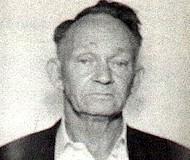
Robert Chambliss
Mass murderer Francisco Paula Gonzales
Mass murderer · USA · 1964
Francisco Paula Gonzales was a passenger on Pacific Air Lines Flight 773. Gonza…
44 victims
Francisco Paula Gonzales
Mass murderer · USA · 1964
Francisco Paula Gonzales was a passenger on Pacific Air Lines Flight 773. Gonza…
44 victims
 John Gilbert Graham
Mass murderer · USA · 1955
John “Jack” Gilbert Graham was born on January 23, 1932, at Denver, Colorado. H…
44 victims
John Gilbert Graham
Mass murderer · USA · 1955
John “Jack” Gilbert Graham was born on January 23, 1932, at Denver, Colorado. H…
44 victims
 Thomas Doty
Mass murderer · USA · 1962
Thomas G. Doty was a passenger on Continental Airlines Flight 11. He was a marr…
44 victims
Thomas Doty
Mass murderer · USA · 1962
Thomas G. Doty was a passenger on Continental Airlines Flight 11. He was a marr…
44 victims
 Julian Andrew Frank
Mass murderer · USA · 1960
6 January 1960 — National Airlines Flight 2511 exploded and crashed 1-1/2 miles…
33 victims
Julian Andrew Frank
Mass murderer · USA · 1960
6 January 1960 — National Airlines Flight 2511 exploded and crashed 1-1/2 miles…
33 victims
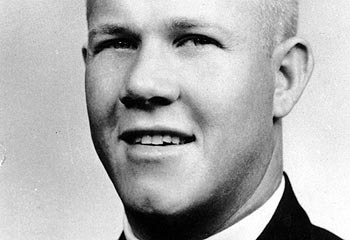 Charles Whitman
Mass murderer · USA · 1966
Charles Joseph Whitman (June 24, 1941 – August 1, 1966) shot and killed 14 peop…
15 victims
Charles Whitman
Mass murderer · USA · 1966
Charles Joseph Whitman (June 24, 1941 – August 1, 1966) shot and killed 14 peop…
15 victims
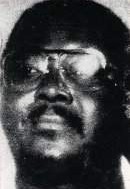 James Edward Pough
Mass murderer · USA · 1971
James Edward Pough (1948 – 18 June 1990) was an American mass murderer. On 18 J…
12 victims
James Edward Pough
Mass murderer · USA · 1971
James Edward Pough (1948 – 18 June 1990) was an American mass murderer. On 18 J…
12 victims
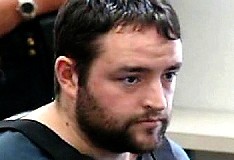 Peter James Wilson
Murderer · USA · 2010
Peter James Wilson was 29 years old. He was from Abbotsford, B.C., and had both…
1 victim
Peter James Wilson
Murderer · USA · 2010
Peter James Wilson was 29 years old. He was from Abbotsford, B.C., and had both…
1 victim
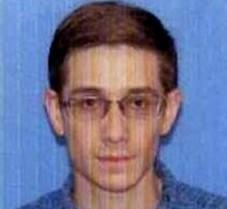 Matthew Murray
Spree killer · USA · 2007
Matthew J. Murray was an American gunman who on December 9, 2007 killed four pe…
4 victims
Matthew Murray
Spree killer · USA · 2007
Matthew J. Murray was an American gunman who on December 9, 2007 killed four pe…
4 victims
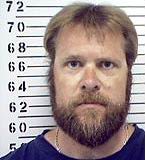 Jason Wayne Rose
Murderer · USA · 1988
Jason Wayne Rose was a state prisoner who appealed the denial of his 28 U.S.C.…
1 victim
Jason Wayne Rose
Murderer · USA · 1988
Jason Wayne Rose was a state prisoner who appealed the denial of his 28 U.S.C.…
1 victim
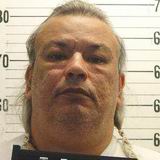 Donald Wayne Strouth
Murderer · USA · 1978
Donald Wayne Strouth was sentenced to death for murdering a Kingsport merchant…
1 victim
Donald Wayne Strouth
Murderer · USA · 1978
Donald Wayne Strouth was sentenced to death for murdering a Kingsport merchant…
1 victim
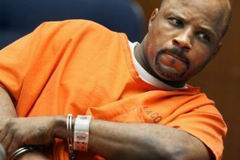 Steven Anthony Jones
Murderer · USA · 2004
Steven Anthony Jones was sentenced to death for killings connected to a robbery…
2 victims
Steven Anthony Jones
Murderer · USA · 2004
Steven Anthony Jones was sentenced to death for killings connected to a robbery…
2 victims
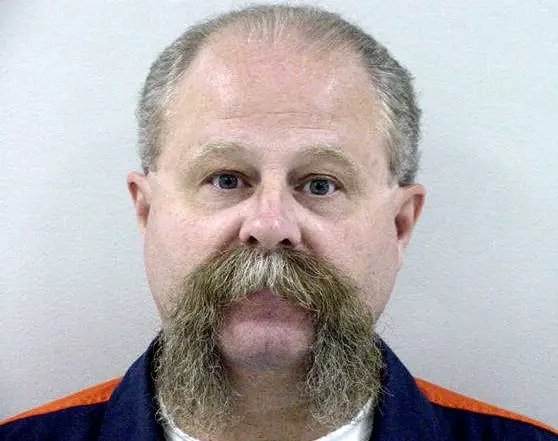 Leslie Allen Williams
Serial killer · USA · 1991
Leslie Allen Williams was sentenced to life in prison without parole on one cou…
4 victims
Leslie Allen Williams
Serial killer · USA · 1991
Leslie Allen Williams was sentenced to life in prison without parole on one cou…
4 victims
- Gender
- male
- Country
- USA
- Location
- Birmingham, Alabama, USA
- Date of birth
- January 14, 1904
- Age at first offence
- 59
- Characteristics
- —
- Victim profile
- Denise McNair, 11 / Addie Mae Collins, 14 / Cynthia Wesley, 14 / Carole Robertson, 14
- Method of murder
- P lanting 19 sticks of dynamite in the basement of the church
- Date(s) of murder
- September 17, 1963
- Years active
- 1963
- Date of arrest
- —
- Status
-
Died in custody
Sentenced to life in prison in 1977; died in prison on October 29, 1985
Case overview
Robert Edward Chambliss (also known as “Dynamite Bob”) (January 14, 1904–October 29, 1985) was a truck driver for an auto parts company. He joined the Ku Klux Klan at age 20 and firebombed the houses of black families throughout the 1940s to the 1960s, culminating in the 16th Street Baptist Church bombing in 1963.
Timeline
- September 15, 1963 — A bomb exploded at 16th Street Baptist Church during Youth Day activities, killing four young girls.
- September 17, 1963 — A witness identified Robert Chambliss as the man who placed the bomb under the church steps.
- September 24, 1977 — Robert Edward Chambliss was indicted and charged with murder for the 1963 16th Street Baptist Church bombing.
- October 8, 1963 — Chambliss was found “Not Guilty Of Murder,” and received a $100 fine and a six month jail sentence for the dynamite charge.
- November 18, 1977 — Robert Chambliss was convicted of murder and sentenced to life in prison.
- October 29, 1985 — Chambliss died in an Alabama prison.
The offence
On the early Sunday morning of September 15, 1963, Youth Day activities were underway at 16th Street Baptist Church. On that morning, five girls were changing into their choir robes in the church basement. At 10:19 a.m., a bomb exploded, killing four of the girls and injuring twenty people.
The four girls killed were:
- Denise McNair (11)
- Addie Mae Collins (14)
- Carole Robertson (14)
- Cynthia Wesley (14)
The explosion blew a hole in the east side of the church, shattered windows, walls, doors, and left the air filled with a thick cloud of dust and soot. As community members dug through the debris in search of survivors, they discovered the bodies of the four victims.
The blast destroyed the back steps and left intact only the frames of all but one stained-glass window. The lone window that survived the concussion depicted Jesus Christ leading young children, though Christ’s face was destroyed. Five cars behind the church were damaged, two of them completely destroyed, and windows in the laundry across the street were blown out.
Investigation
The FBI led the initial investigation into the bombing. A 1965 FBI memorandum to director J. Edgar Hoover determined that Robert E. Chambliss, Bobby Frank Cherry, Herman Frank Cash, and Thomas E. Blanton Jr. had planted the bomb. Based on the investigation, the Birmingham FBI office recommended prosecuting the suspects. Hoover blocked their prosecution by rejecting the recommendation that the federal prosecutor receive the testimony that identified the suspects. By 1968, charges had not been filed and the FBI closed the case.
More than a decade later, Alabama Attorney General Bill Baxley reopened the case. Years later it was found that the FBI had accumulated evidence against the bombers that had not been revealed to the prosecutors, by order of Hoover.
After the case against Chambliss, the case was reopened again in 1988, and in July 1997, after the FBI received a tip. The narrative also describes that Herman Frank Cash remained a prime suspect and died in 1994 before a case could be established against him.
Arrest and charges involving Chambliss
Robert Edward Chambliss was initially charged for the murders, but there was no conviction at first.
He was arrested and charged with murder and for being in possession of 122 sticks of dynamite without a permit.
Trial and outcome (Chambliss)
Chambliss was found “Not Guilty Of Murder” on October 8, 1963, but he received a $100 fine and a six month jail sentence for the dynamite charge.
In November 1977, Chambliss was re-tried. At age 73, he was found guilty and sentenced to life in prison.
The account describes that on November 18, 1977, Robert Chambliss was convicted of murder and sentenced to life in prison.
Victims
Denise McNair was born November 17, 1951. She was the first child of photo shop owner Chris and schoolteacher Maxine McNair. Her playmates called her Niecie. She was a pupil at Center Street Elementary School and had many friends. She held tea parties, was a member of the Brownies, and played baseball. She helped raise money to support muscular dystrophy by creating plays, dance routines, and poetry readings, and these events became an annual event. People gathered in the yard to watch the show in Denise’s carport, the main stage. Children donated their pennies, dimes, and nickels. Denise was a schoolmate and friend of Secretary of State Condoleezza Rice.
Cynthia Wesley was born April 30, 1949. She was the first adopted daughter of Claude and Gertrude Wesley, who were both teachers. Her mother made her clothes because of her petite size. Cynthia attended school at Ullman High School, which no longer exists. She excelled in math, reading, and band. Cynthia held parties in her backyard for all her friends. Upon her death she was so mutilated that the only way to identify her was by the ring she wore, which was recognized by her father.
Carole Robertson was born April 24, 1949. She was the third child of Alpha and Alvin Robertson. Her sister was Dianne and her brother was Alvin. Her father was a band master at the local elementary school, and her mother was a librarian, avid reader, dancer, and clarinet player. Carole, like her mother, enjoyed reading. She excelled at school and was a straight-A student, a member of Parker High School marching band and science club. She was also a Girl Scout and belonged to Jack and Jill of America. When she was at Wilkerson Elementary School she sang in the choir. Her legacy helped create the Carole Robertson Center for Learning in Chicago, a social service agency that serves children and their families.
Addie Mae Collins was born April 18, 1949, the daughter of Oscar and Alice. Her father was a janitor and her mother a homemaker. She was one of seven children. Addie was the peacemaker between the bunch, and she was also an avid softball player. A youth center dedicated to Addie and her ideals was created in Alabama.
Aftermath
Outrage at the bombing and grief that followed resulted in violence across Birmingham, with two more African-American youths dead by the end of the day. Sixteen-year-old Johnnie Robinson was shot and killed by police after throwing stones at cars with white people inside. Thirteen-year-old Virgil Ware was killed by two whites riding on a motor scooter.
Three days after the tragedy, former Birmingham police commissioner Bull Connor inflamed matters by saying to a crowd of 2,500 people at a Citizen's Council meeting:
"If you're going to blame anyone for getting those children killed in Birmingham, it's your Supreme Court."
Connor recalled that in 1954, after the Brown v. Board of Education decision had been reached, he said:
"You're going to have bloodshed, and it's on them (the Court), not us."
He also proposed that African-Americans may have set the bomb deliberately to provoke an emotional response, saying:
"I wouldn't say it's above (Dr. Martin Luther) King's crowd."
White strangers visited the grieving families to express their sorrow. At the funeral of three of the girls (with one family preferring a separate, private funeral), Martin Luther King spoke about life being “as hard as crucible steel.” More than 8,000 mourners, including 800 clergymen of both races, attended the service. The account also includes a statement that at the funeral of three of the girls, Martin Luther King gave the eulogy, which was witnessed by 8,000 mourners, both white and black.
The narrative describes that bomb threats had been made in the past, and in those instances the church had been able to take special precautions; this time, no threat had been made.
The account describes the event as a racially motivated terrorist incident at 16th Street Baptist Church in Birmingham, Alabama, and as a turning-point in the U.S. civil-rights movement of the mid 20th century. It states that the attack was intended to instill fear in those supporting equal civil rights without regard to race, and that it spurred the civil-rights movement to further success.
Remembrances and cultural references
The song “Birmingham Sunday,” composed by Richard Farina and recorded by Joan Baez, chronicled the events and aftermath of the bombing. The song “Mississippi Goddam” was composed and sung by Nina Simone in reaction to the racially-motivated bombings.
A 1997 documentary about the bombing, 4 Little Girls, directed by Spike Lee, was nominated for an Academy Award for “Best Documentary.” The song “Alabama' on John Coltrane's Live at Birdland (recorded November 18, 1963) served as an elegy to the bombing.
The song “Ronnie & Neil” on Drive-By Truckers' double album, Southern Rock Opera, references the event in the opening line of the song:
"Church blows up in Birmingham/ Four little black girls killed/ For no goddamned good reason."
The novel The Watsons Go to Birmingham: 1963 by Christopher Paul Curtis mentions very vividly the events of the bombing. The poem “The Ballad of Birmingham” by Dudley Randall is also mentioned. The song “American Guernica” by Adolphus Hailstork is also mentioned.
A 2002 television drama Sins of the Father, directed by Robert Dornhelm, is described as being based on the events of the bombing.
Related proceedings (additional defendants mentioned in the narrative)
The narrative describes that in 2000, the FBI assisted the state authorities in bringing charges against Cherry and Thomas Blanton. It states that Blanton and Cherry were convicted by state court juries of all four murders and sentenced to life in prison. It adds that although Cherry publicly denied involvement, relatives and friends testified that he “bragged” about being part of the bombing, and that his ex-wife testified, “He said he lit the fuse.”
The narrative also describes that Bobby Frank Cherry’s trial was postponed after the judge ruled that he was mentally incompetent to assist his attorney. After Cherry was found competent to stand trial, on May 22, 2002 he was found guilty of four counts of murder and sentenced to life in prison.
It also describes that Thomas Blanton Jr. was tried, convicted, and sentenced to life in prison on May 1, 2001. It states that for the jurors who convicted him, the 1964 taped conversations the FBI secretly recorded weighed heavily on their decision, and that the tapes remained secret until 1997, when the case was reopened. It includes this detail: in one recorded conversation between Blanton and his wife, Blanton told her that he was at the Klan meeting where both the bombing was planned and the bomb was made; in another recorded conversation, Blanton spoke about the bombing to an FBI informant while driving in a car.
Other details
The narrative states that Robert Chambliss firebombed the houses of black families throughout the 1940s to the 1960s. It also identifies the Ku Klux Klan group “United Klans of America” and names Bobby Frank Cherry, Thomas Blanton, and Robert “Dynamite Bob” Chambliss as having planted 19 sticks of dynamite in the basement of the church.
It also describes that Chambliss was convicted of having 122 sticks of dynamite without a permit.
Further reading items are listed:
- Branch, Taylor (1988). Parting the Waters: America in the King Years, 1954 -1963 . New York: Simon & Schuster. ISBN 0-671-68742-5.
- Sikora, Frank (April 1991). Until Justice Rolls Down: The Birmingham Church Bombing Case . Tuscaloosa, AL: University of Alabama Press. ISBN 0-8173-0520-3.
- Cobbs, Elizabeth H.; Smith, Petric J. (April 1994). Long Time Coming: An Insider’s Story of the Birmingham Church Bombing that Rocked the World . Birmingham, AL: Crane Hill. ISBN 1-881548-10-4.
- Hamlin, Christopher M.: 1998, Behind the Stained Glass: A History of Sixteenth Street Baptist Church, Crane Hill Publishers, Birmingham, AL.
Spotted an error, or have more information about this case?