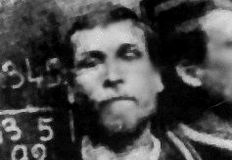
Albert Milsom
Murderer William Henry Bury
Murderer · United Kingdom · 1888
William Henry Bury was executed by hanging in Dundee on April 24, 1889. He was…
2 victims
William Henry Bury
Murderer · United Kingdom · 1888
William Henry Bury was executed by hanging in Dundee on April 24, 1889. He was…
2 victims
 Herbert John Bennett
Murderer · United Kingdom · 1900
Herbert John Bennett was convicted of murdering his wife, Mrs Bennett. · 22 Jul…
1 victim
Herbert John Bennett
Murderer · United Kingdom · 1900
Herbert John Bennett was convicted of murdering his wife, Mrs Bennett. · 22 Jul…
1 victim
 Israel Lipski
Murderer · United Kingdom · 1887
Israel Lipski Israel Lipski (1865 - 1888) was born Israel Lobulsk. He was of Po…
1 victim
Israel Lipski
Murderer · United Kingdom · 1887
Israel Lipski Israel Lipski (1865 - 1888) was born Israel Lobulsk. He was of Po…
1 victim
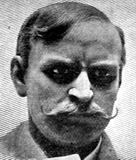 James Canham Read
Murderer · United Kingdom · 1894
James Canham Read was a middle-aged married bookkeeper at the London Docks. He…
1 victim
James Canham Read
Murderer · United Kingdom · 1894
James Canham Read was a middle-aged married bookkeeper at the London Docks. He…
1 victim
 Robert Edward Maury
Serial killer · USA · 1985
Robert Edward Maury was sentenced to death on October 27, 1989. · October 27, 1…
3 victims
Robert Edward Maury
Serial killer · USA · 1985
Robert Edward Maury was sentenced to death on October 27, 1989. · October 27, 1…
3 victims
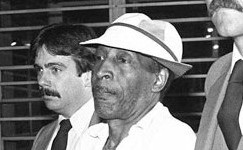 Marvin Pentz Gay
Homicide · USA · 1984
Marvin Pentz Gay, Sr. (October 1, 1914 – October 10, 1998) was an American fund…
1 victim
Marvin Pentz Gay
Homicide · USA · 1984
Marvin Pentz Gay, Sr. (October 1, 1914 – October 10, 1998) was an American fund…
1 victim
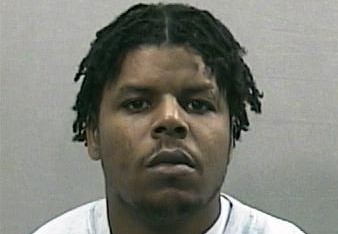 Rasheed Muhammad
Murderer · USA · 1995
April 4, 1995 — A 29-year-old homeless man, Rasheed Muhammed, was described as…
1 victim
Rasheed Muhammad
Murderer · USA · 1995
April 4, 1995 — A 29-year-old homeless man, Rasheed Muhammed, was described as…
1 victim
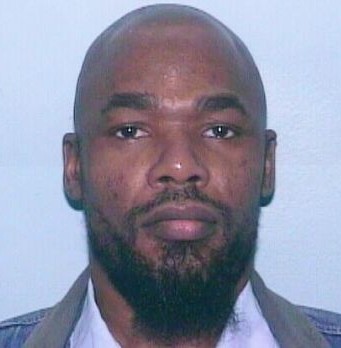 Gregory Clepper
Murderer · USA · 1996
1991 — The killings began. · April 24, 1996 — Patricia Scott was found in a tra…
1 victim
Gregory Clepper
Murderer · USA · 1996
1991 — The killings began. · April 24, 1996 — Patricia Scott was found in a tra…
1 victim
 Juha Valjakkala
Murderer · Sweden · 1988
Juha Veikko Valjakkala (born June 13, 1965) was convicted of the murder of a fa…
3 victims
Juha Valjakkala
Murderer · Sweden · 1988
Juha Veikko Valjakkala (born June 13, 1965) was convicted of the murder of a fa…
3 victims
- Gender
- male
- Country
- United Kingdom
- Location
- London, England, United Kingdom
- Date of birth
- 1862
- Age at first offence
- 34
- Characteristics
- burglary, robbery, torture
- Victim profile
- Henry Smith, 79
- Method of murder
- Beating
- Date(s) of murder
- February 14, 1896
- Years active
- 1896
- Date of arrest
- April 12, 1896
- Status
-
Executed
Executed by hanging at Newgate Prison on June 9, 1896
Case information
Albert Milsom (33) was executed by hanging at Newgate Prison on June 9, 1896.
Timeline
- 14 February 1896 — The body of Henry Smith (79) was discovered battered to death in the kitchen of his home at Muswell Hill; he had been bound and gagged.
- Friday 14th February 1896 — Police had been called to the Muswell Lodge home of Henry Smith by his gardener, Charles Webber; Webber found Smith’s body in his night-shirt lying on the kitchen floor.
- Two days prior to the murder — Two men were seen hanging around the Muswell Lodge area.
- Sunday 12 April 1896 — Milsom and Henry Fowler were arrested in Monmouth Street, Bath.
- 19 May 1896 — Their trial opened at the Old Bailey.
- 9 June 1896 — Milsom and Henry Fowler were hanged at Newgate Prison, along with a third man named Warbrick (also described elsewhere as John Goodman Levy’s housekeeper’s murderer’s co-sentenced prisoner, William Seaman).
- 1902 — Newgate Prison was demolished with the gallows being removed to Pentonville.
- 1910 — Edward Abinger wrote an autobiography recounting the moment after Seaman made his comment (as recalled by Abinger).
Background
Henry Smith was a 79-year-old widower and a wealthy retired engineer who lived alone at Muswell Lodge, a large house at Muswell Hill with a gardener working during the daytime. Smith had a fear of burglars and had set up alarms and mantraps in the garden of the large decaying mansion. The sitting-room and scullery windows showed marks of being tampered with before the killers gained entry via the kitchen window.
The offence
Henry Smith’s body was discovered battered to death in the kitchen of his home. Smith was still in his night-shirt when the body was found. His arms had been tied to his sides with strips of a tablecloth and he had been gagged. Noise had disturbed him when he came to investigate, and he had been bludgeoned when he came to investigate. Two penknives and a small toy lantern were found next to the body, one either side. Evidence suggested Smith had been beaten to death. Smith’s safe in his bedroom had been opened and rifled, and Smith’s bedroom had been torn apart. The combination of details led investigators to suspect the killers had likely attempted to reveal the combination of Smith’s safe.
Investigation
Investigations revealed that two men had been seen hanging around the Muswell Lodge area two days prior to the murder, and descriptions of these men fitted Milsom and Fowler. When the killers had gained entry, the alarms and mantraps set up in the garden had not been set off. Weeks of police efforts did not immediately identify the killers, and the toy lantern was described as the best clue. Hundreds of toy lanterns existed.
A Detective named William Burrell was aware of a burglar named Albert Milsom who had disappeared from his neighbourhood. Burrell was aware that Milsom had recently been seen in the company of one Henry Fowler. Burrell was aware of the younger brother-in-law of Milsom reportedly having a toy lantern, but understood he could not question him or other members of the family about it without tipping them off about its significance. A trap was set at a nearby candy store, where the lantern was set up.
Henry Miller, described as Milsom’s brother-in-law and a 15-year-old, identified the toy lantern as belonging to him, which led to the police starting a manhunt for Milsom and Fowler. The men were later located together in a small travelling waxworks that journeyed to fairs around the country, with Fowler acting as the strong man in the circus. A police raid captured both men at Bath.
Arrest
Milsom and Henry Fowler were arrested in Monmouth Street, Bath on Sunday 12 April 1896. Fowler put up fierce resistance and had to be subdued with the butt of a police revolver. Descriptions at the time identified both men as having vanished from their usual haunts.
Milsom was described as a 33-year-old petty criminal and lived in the King’s Cross district of London as a labourer by trade. Fowler was described as a 31-year-old huge, vicious brute of a man who was on parole and also worked as a labourer. During questioning, Milsom and Fowler were together while travelling with their show. They both admitted involvement in the robbery but accused the other of committing the murder. Milsom made a full confession after cracking under interrogation, and he admitted involvement in the robbery, though he said his partner had done the killing. Fowler denied knowing anything about the murder.
People involved
- Henry Smith (79) — victim; wealthy retired engineer murdered at his home in Muswell Hill at Muswell Lodge.
- Charles Webber — gardener of Henry Smith; found Smith’s body and alerted police.
- Albert Milsom (33) — defendant executed on June 9, 1896; labourer; petty criminal; described as a burglary associate.
- Henry Fowler (31) — defendant on parole; labourer; arrested with Milsom; fought with police during arrest.
- Henry Miller (15) — Milsom’s brother-in-law; identified the toy lantern.
- William Burrell — detective involved in identifying the relevance of Milsom and using the toy lantern clue.
- Ridley Webster, M.D. — local doctor called by Charles Webber after discovering the body.
- Mr. Justice Sir Henry Hawkins — judge before whom the trial was held.
- James Billington — executioner who hanged Milsom and Fowler (and a third man) at Newgate Prison.
- Warbrick — named as a third man hanged at Newgate Prison on 9 June 1896.
- William Seaman — identified in the narrative as the third man sentenced to death and placed between Milsom and Fowler on the gallows.
- Amelia Dyer — described as a person supposed to be hanged with them, but hanged the following day.
- Mrs. Sarah Gale — housekeeper named in the narrative involving a separate double murder.
- John Goodman Levy — pawnbroker named in the narrative involving a separate double murder.
- Frederick Porter Wensley — future Chief Constable of Scotland Yard who subdued William Seaman while Seaman was cornered on a roof.
- Edward Abinger — barrister who wrote an autobiography recalling a detail about the scaffold moment.
Trial
Their trial opened at the Old Bailey on 19 May 1896. The evidence was described as overwhelming, and the jury had no problem finding them both guilty. The trial was described as being held in front of Mr. Justice Sir Henry Hawkins. The evidence was described as streamlined because of Milsom’s confession, while Fowler kept denying the truth.
During a break in the trial, Fowler jumped up in the dock and started throttling Milsom. Policemen interfered and pulled Fowler off Milsom.
When asked if they had anything further to say, Fowler told the court that there were two miscarriages of justice for which he was responsible, naming two recent convictions of two burglars for whose crimes Fowler claimed responsibility. Fowler asked the court to keep these in mind for reviewing those two sentences. The narrative also stated Fowler was lying and that the evidence against the two burglars was stronger than Fowler thought.
Fowler collapsed when he heard the guilty verdict against him, while Milsom collapsed when he heard the guilty verdict against him (with Fowler described elsewhere as laughing at the failure of Milsom’s scheme). Fowler mimicked his partner’s protesting of the verdict.
Both men were sentenced to death.
Sentencing
Albert Milsom and Henry Fowler were sentenced to death.
Appeals
No appeals were described.
Outcome
On 9 June 1896, Milsom and Henry Fowler were hanged at Newgate Prison, along with a third man named Warbrick. The hanging at Newgate Prison on 9 June 1896 was described as a triple execution and as the last triple execution at that prison. The gallows were later removed to Pentonville when Newgate Prison was demolished in 1902.
The narrative described the placement of William Seaman as the third man between Milsom and Fowler on the gallows built at Newgate Prison on 9 June 1896. The narrative also described the scaffold exchange:
“Well this is the first time in my life I've ever been a bloody peacemaker.”
Fowler came out onto the scaffold after Milsom and Seaman were set up, asked if Milsom was there, and was satisfied to see he was. After Seaman’s comment, Edward Abinger recalled that Fowler signaled he wanted to say something, and Abinger wrote that Fowler said:
“Well this is the first time in my life I've ever been a bloody penitent.”
The narrative described that Amelia Dyer had been supposed to be hanged with them, but that she was decided to be hanged the following day, and she was taken out of the prison and taken for a police wagon ride until after the three men were executed.
Aftermath
Newgate Prison was demolished in 1902, with the gallows being removed to Pentonville.
Other details
The narrative described the case as a classic “cut-throat” case involving a pair of killers who each put forth a defence that the other was guilty. Another example was described as Frederick Guy Browne and William Kennedy for the murder of Police Constable George Gutteridge in 1928.
The narrative described a separate double murder involving a pawnbroker named John Goodman Levy and his housekeeper, Mrs. Sarah Gale, committed in the Whitechapel section of London by a burglar named William Seaman. Seaman was cornered while still in Levy’s home on the roof and was subdued in a violent fight by future Chief Constable of Scotland Yard, Frederick Porter Wensley. Seaman was sentenced to death and placed between Milsom and Fowler on the gallows on 9 June 1896, with him initially unaware of why he was being placed as he was between the Muswell Hill murderers.
Spotted an error, or have more information about this case?