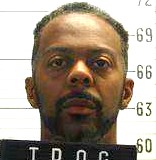
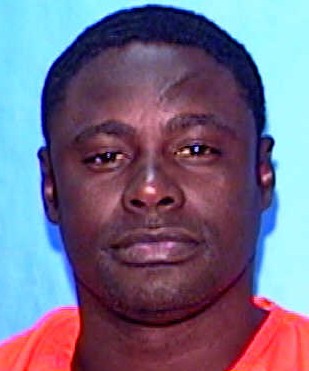
Michael Angelo Coleman
Murderer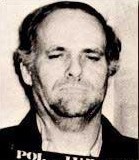 Ervil LeBaron
Murderer · USA · 1972
Ervil Morrell LeBaron (1925 to August 16, 1981) was the leader of a polygamous…
35 victims
Ervil LeBaron
Murderer · USA · 1972
Ervil Morrell LeBaron (1925 to August 16, 1981) was the leader of a polygamous…
35 victims
 Brian Kevin Rosenfeld
Murderer · USA · 1985
Brian Kevin Rosenfeld Brian Kevin Rosenfeld was sentenced to three concurrent l…
23 victims
Brian Kevin Rosenfeld
Murderer · USA · 1985
Brian Kevin Rosenfeld Brian Kevin Rosenfeld was sentenced to three concurrent l…
23 victims
 Marvin Gray
Murderer · USA · 1975
Marvin Gray was convicted killer who claimed responsibility for 23 slayings and…
23 victims
Marvin Gray
Murderer · USA · 1975
Marvin Gray was convicted killer who claimed responsibility for 23 slayings and…
23 victims
 Yahweh ben Yahweh
Murderer · USA · 1980
Yahweh ben Yahweh was born and legally named Hulon Mitchell Jr. (October 27, 19…
23 victims
Yahweh ben Yahweh
Murderer · USA · 1980
Yahweh ben Yahweh was born and legally named Hulon Mitchell Jr. (October 27, 19…
23 victims
 Roger Severs
Murderer · United Kingdom · 1993
Roger Severs was sentenced to two life sentences in prison on December 6, 1994.…
2 victims
Roger Severs
Murderer · United Kingdom · 1993
Roger Severs was sentenced to two life sentences in prison on December 6, 1994.…
2 victims
 Johannes de Jager
Murderer · South Africa · 2008
Johannes Christiaan de Jager was sentenced to life in prison on May 27, 2014. ·…
2 victims
Johannes de Jager
Murderer · South Africa · 2008
Johannes Christiaan de Jager was sentenced to life in prison on May 27, 2014. ·…
2 victims
 Elena Kiejliches
Murderer · USA · 2000
Defendant: Elena Kiejliches (Russian émigré) · Victim: Borys Kiejliches (also d…
1 victim
Elena Kiejliches
Murderer · USA · 2000
Defendant: Elena Kiejliches (Russian émigré) · Victim: Borys Kiejliches (also d…
1 victim
 Alofa Time
Murderer · USA · 2006
Alofa Time was from Boise, Idaho. His wife was Theresa Lee Time, and his estran…
3 victims
Alofa Time
Murderer · USA · 2006
Alofa Time was from Boise, Idaho. His wife was Theresa Lee Time, and his estran…
3 victims
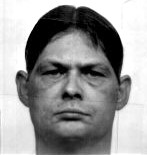 Johnny James
Murderer · USA · 1985
Johnny James was executed by lethal injection in Texas on September 3, 1993. He…
1 victim
Johnny James
Murderer · USA · 1985
Johnny James was executed by lethal injection in Texas on September 3, 1993. He…
1 victim
- Gender
- male
- Country
- USA
- Location
- Shelby County, Tennessee, USA
- Date of birth
- November 11, 1957
- Age at first offence
- 22
- Characteristics
- robbery
- Victim profile
- Leon Watson, 69
- Method of murder
- Shooting
- Date(s) of murder
- May 2, 1979
- Years active
- 1979
- Date of arrest
- Same day
- Status
-
Sentenced to death
Sentenced to death on June 17, 1980
Case record: Michael Angelo Coleman
Background
Michael Angelo Coleman appealed his conviction of murder in the first degree in the perpetration of a robbery and his sentence of death. He also appealed following the Supreme Court of Tennessee’s review of the death sentence.
Michael Angelo Coleman and his co-defendant, Michael Anthony Bell, were convicted of the killing of Leon Watson during a robbery.
The offence
Coleman was convicted of the killing of Leon Watson, 69, during a robbery.
Leon Watson left his home to go to a nearby grocery store. He did not return.
The killing occurred in Memphis, Tennessee, on May 2, 1979. Blood was found on the seat and floor of a white 1964 Buick automobile, and a bullet was found in the left door.
Mrs. Watson was contacted by a representative of the Memphis Police Department at about 10:00 p.m. and was taken to view a white 1964 Buick automobile, which she identified as her husband’s. After the killing, Watson’s empty billfold was on the ground near his body, and items from Watson’s automobile were strewn around the body, indicating the automobile had been ransacked before it was driven from the scene.
Coleman directed officers to the scene where they found the body of Leon Watson in a field near Third Street in Memphis.
Investigation
Coleman told police of finding a body of a black man in a field near Third Street in Memphis and directed officers to the scene where they found Leon Watson’s body.
Coleman was advised again of his Miranda rights after directing officers to the body’s location. He thereafter confessed to shooting and killing Leon Watson in Leon Watson’s automobile.
Coleman admitted going through the victim’s billfold after the shooting and stated he had removed the C.B. radio from the automobile but had decided not to keep it.
The empty billfold was on the ground near Watson’s body, and the items from Watson’s automobile were strewn around the body, indicating the automobile had been ransacked before it was driven from the scene.
Arrest
Coleman and co-defendant Bell were arrested about one hour later on another charge.
Trial
Coleman appealed the denial of his motion to sever his trial from that of his codefendant, Michael Anthony Bell.
Coleman also appealed the refusal of the trial court to remove a juror for alleged cause.
He appealed the admission in evidence of his confession and that of his codefendant.
He also appealed the sufficiency of the convicting evidence generally.
Coleman and Bell were advised of their Miranda rights at about 5:15 a.m. on the next morning.
In his statement to the police and in his testimony at trial, Michael Anthony Bell named Coleman as the man who shot and killed Leon Watson.
Bell testified that a pistol belonging to Leon Watson was taken after the shooting and that Coleman had taken the gun to his grandmother’s house.
Coleman insisted that statements given by him to police officers were not given freely and voluntarily and should not have been admitted in evidence.
The trial judge held a pretrial hearing on Coleman’s motion to suppress and denied the motion “upon the testimony of Patrolman A.C. Speight and Sergeant L.A. Simpson.” The transcript of the suppression hearing was not in the record, but both officers testified in the trial and were examined concerning the circumstances attendant the giving of statements by Coleman.
The trial court found that Coleman’s confession was freely given and was voluntary.
Sentencing
A jury imposed the sentence of death.
In addition to finding that Coleman was guilty of murder in the first degree in the perpetration of a robbery, the jury found that Coleman had been “previously convicted of one or more felonies other than the present charge which involved the use or threat of violence to the person.”
The jury specifically found that there were no mitigating circumstances sufficiently substantial to outweigh the statutory aggravating circumstances.
Coleman’s sentence was fixed at death.
The sentencing hearing included testimony by Dr. John Hutson, a professor of psychiatry at the University of Tennessee Center for the Health Sciences. Dr. Hutson’s testimony was confined to the results of his examination of Coleman before trial.
Dr. Hutson found “no evidence of any serious mental illness which would have affected appellant's ability to appreciate either the wrongfulness of his actions or his ability to conform his behavior to the requirements of the law at that time.” Dr. Hutson also expressed the opinion that Coleman was fully able to appreciate the charges against him and had the ability to confer with an attorney in preparation of his defense.
Appeals
Coleman challenged the constitutionality of sections of T.C.A. § 39-2404 dealing with punishment for first degree murder and also challenged the Tennessee Death Penalty Act in a number of respects.
The Supreme Court of Tennessee considered and rejected Coleman’s issues.
The Supreme Court addressed prior decisions including State v. Berry, 592 S.W.2d 553 (Tenn. 1980), and Houston v. State, 593 S.W.2d 267 (Tenn. 1980), cert. denied, 101 S.Ct. 251 (1980), and referenced State v. Dicks, 615 S.W.2d 126 (Tenn. 1981), State v. Groseclose, et al., 615 S.W.2d 142 (Tenn. 1981), and other cited authorities.
On severance, the Supreme Court held that a motion for severance is addressed to the discretion of the trial judge and would not be reversed absent prejudice. It noted that Bell’s guilty plea standing alone did not require severance because the plea did not implicate Coleman. It also noted that Bell’s out-of-court statement raised the specter of a Bruton violation, which could have been avoided by severance, but that the specter was removed by Bell taking the witness stand and subjecting himself to examination by Coleman’s counsel.
On juror removal, the Supreme Court found that the transcript of voir dire examination was not contained in the record and did not show that the unnamed juror was other than impartial. The assignments of error were overruled.
Outcome
The Supreme Court of Tennessee affirmed the judgment of conviction and the sentence imposed.
The sentence was to be carried out as provided by law on January 14, 1982, unless otherwise stayed or modified by appropriate authority.
Costs were taxed against Coleman.
The Supreme Court’s judgment stated:
- Appellant and his co-defendant were convicted of the killing of Leon Watson during a robbery.
- The Supreme Court found no reversible error in the trial.
- The Supreme Court found T.C.A. § 39-2404 constitutional.
- The verdict and sentence were sustained by the evidence.
Other details
The opinion was authored by Cooper, Justice.
Concur: Harbison, C.J., Fones, and Drowota, JJ.
Brock, J. concurred on all issues except the death penalty.
The Supreme Court’s opinion was delivered by Cooper and included discussion of the standard for reviewing a death sentence under T.C.A. § 39-2406(c), including whether the sentence was imposed in an arbitrary fashion, whether evidence supports jury findings of aggravating circumstances, whether evidence supports the absence of mitigating circumstances sufficiently substantial to outweigh aggravating circumstances, and whether the sentence was excessive or disproportionate to penalties in similar cases.
The judgment referenced the requirement that a jury may impose the death penalty only upon finding one or more listed aggravating circumstances present and that such circumstance or circumstances were not outweighed by mitigating circumstances under T.C.A. § 39-2404(i).
Spotted an error, or have more information about this case?