
Elena Kiejliches
Murderer Megan Huntsman
Murderer · USA · 1996
Megan Huntsman was 40 at sentencing. She was a mother of three children who wer…
6 victims
Megan Huntsman
Murderer · USA · 1996
Megan Huntsman was 40 at sentencing. She was a mother of three children who wer…
6 victims
 Angela Johnson
Murderer · USA · 1993
Angela Jane Johnson was convicted in federal court of aiding and abetting the m…
5 victims
Angela Johnson
Murderer · USA · 1993
Angela Jane Johnson was convicted in federal court of aiding and abetting the m…
5 victims
 Michele Kalina
Murderer · USA · 1996
Michele Kalina pleaded guilty to murder for one of five infants she initially w…
5 victims
Michele Kalina
Murderer · USA · 1996
Michele Kalina pleaded guilty to murder for one of five infants she initially w…
5 victims
 Tiffany Hall
Murderer · USA · 2006
Tiffany Hall was 24 when she was charged in September 2006. She later entered a…
5 victims
Tiffany Hall
Murderer · USA · 2006
Tiffany Hall was 24 when she was charged in September 2006. She later entered a…
5 victims
 Banita Jacks
Murderer · USA · 2007
Banita Jacks was a Washington, DC resident convicted of murdering her four daug…
4 victims
Banita Jacks
Murderer · USA · 2007
Banita Jacks was a Washington, DC resident convicted of murdering her four daug…
4 victims
 Susan Eubanks
Murderer · USA · 1996
Susan Dianne Eubanks, also referred to as Susan Eubanks, was convicted by a jur…
4 victims
Susan Eubanks
Murderer · USA · 1996
Susan Dianne Eubanks, also referred to as Susan Eubanks, was convicted by a jur…
4 victims
 Milton Griffin-El
Murderer · USA · 1986
Milton Griffin-El was executed by lethal injection in Missouri on March 25, 199…
2 victims
Milton Griffin-El
Murderer · USA · 1986
Milton Griffin-El was executed by lethal injection in Missouri on March 25, 199…
2 victims
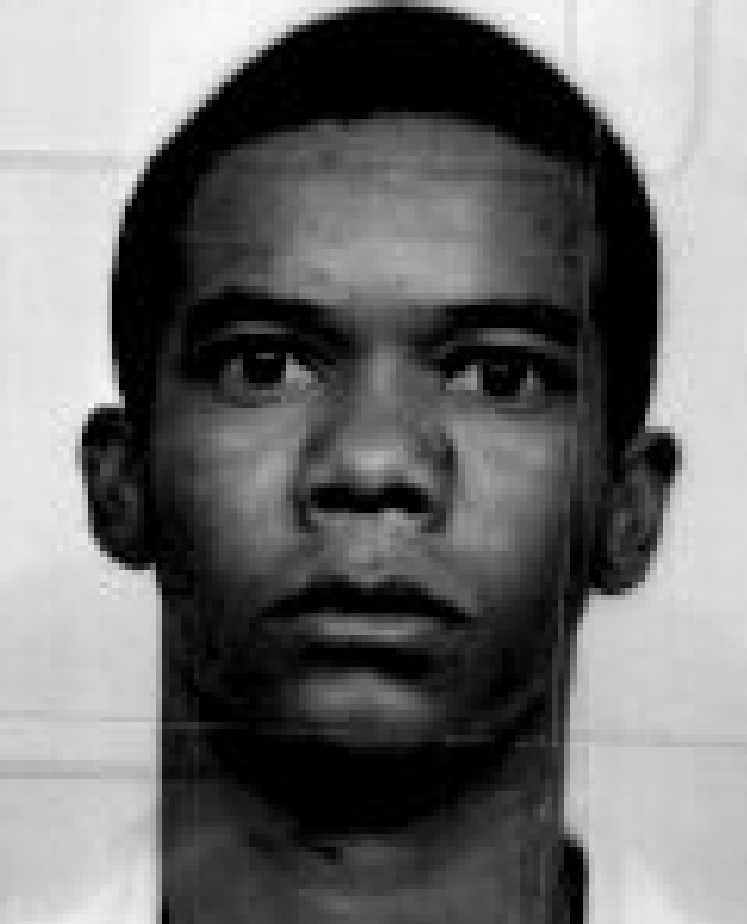 Tony Chambers
Murderer · USA · 1990
Tony Neyshea Chambers — defendant; convicted and sentenced to death by the Stat…
1 victim
Tony Chambers
Murderer · USA · 1990
Tony Neyshea Chambers — defendant; convicted and sentenced to death by the Stat…
1 victim
 Thozamile Taki
Serial killer · South Africa · 2007
Thozamile Taki (born 1971), also known as the Sugarcane Killer, was a South Afr…
13 victims
Thozamile Taki
Serial killer · South Africa · 2007
Thozamile Taki (born 1971), also known as the Sugarcane Killer, was a South Afr…
13 victims
 Lawrence Lee Buxton
Murderer · USA · 1980
Lawrence Lee Buxton (also known as Buxton), executed inmate. · Age: 38 (28) · E…
1 victim
Lawrence Lee Buxton
Murderer · USA · 1980
Lawrence Lee Buxton (also known as Buxton), executed inmate. · Age: 38 (28) · E…
1 victim
- Gender
- female
- Country
- USA
- Location
- Staten Island, Richmond County, New York, USA
- Date of birth
- April 15, 1966
- Age at first offence
- 34
- Characteristics
- domestic violence, love triangle
- Victim profile
- Her millionaire husband, Borys Kiejliches, 49 (Russian businessman)
- Method of murder
- Shooting
- Date(s) of murder
- March 24, 2000
- Years active
- 2000
- Date of arrest
- May 5, 2000
- Status
-
Life imprisonment
Sentenced to 22 years to life in prison on September 24, 2002
Case information
- Defendant: Elena Kiejliches (Russian émigré)
- Victim: Borys Kiejliches (also described as a millionaire husband, a jet-fuel magnate, and aged 48; also described as aged 49)
- Court (federal habeas petition): United States District Court, E.D. New York (Eastern District of New York)
- District judge (habeas): Nicholas G. Garaufis
- Petitioner (habeas): Elena Kiejliches (“Kiejliches”), proceeding pro se
- Respondent (habeas): A. Perez, Superintendent, Bedford Hills Correctional Facility
Timeline
- March 24, 2000 — Kiejliches went up to the room where her husband, Borys Kiejliches, was sleeping and shot him in the head; she then called Messiah Justice (“Justice”), her lover, frantic and needing him to come to the house.
- March 28, 2000 — Borys Kiejliches was last seen near his home at 91 East Loop Road in the Todt Hill section of Staten Island.
- April 25, 2000 — Borys’s body was found wrapped in bedding and towels in a cardboard barrel in a marsh near the Belt Parkway on the Brooklyn-Queens border; the body was found floating in a marsh in Queens.
- May 5, 2000 — Justice was arrested in connection with the death of Borys Kiejliches.
- May 11, 2000 — Justice entered into a cooperation agreement with the People.
- May 15, 2000 — Kiejliches was arrested for her husband’s murder.
- June 5 to June 25, 2002 — Trial took place.
- June 25, 2002 — Kiejliches was convicted by a trial jury of second-degree murder and tampering with physical evidence.
- April 4, 2006 — The Second Department of the Appellate Division affirmed the judgment.
- June 7, 2006 — Leave to appeal to the New York Court of Appeals was denied.
- May 21, 2007 — Kiejliches filed a C.P.L. § 440 motion in the Supreme Court of New York in Richmond County.
- June 11, 2007 — Kiejliches petitioned for a writ of habeas corpus under 28 U.S.C. § 2254 challenging her 2002 state-court conviction for second-degree murder and tampering with physical evidence.
- February 5, 2010 — Leave was granted to amend the habeas petition to incorporate newly exhausted claims.
- March 31, 2011 — The court granted Kiejliches thirty days to submit a reply and show good cause for failure to exhaust an ineffective assistance of trial counsel claim in state court.
- April 25, 2011 — Kiejliches responded to the court’s March 31, 2011 order.
- May 4, 2011 — Respondent filed an affidavit in opposition to Kiejliches’s motion for a second stay of her habeas petition.
- July 29, 2011 — The habeas petition was denied by District Judge Nicholas G. Garaufis.
- September 24, 2002 — Kiejliches was sentenced to 22 years to life in prison.
- August 1, 2011 — Federal judge denied convicted Staten Island murderess’ bid to overturn conviction (reported context).
Background
Russian émigré Elena Kiejliches lived in Staten Island in the Todt Hill neighborhood and was described as having two children and a millionaire husband. Prosecutors contended that the Kiejliches marriage was falling apart, with Elena in the throes of a love affair with Brooklyn ex-convict and aspiring rapper Messiah Justice. Prosecutors also contended that the relationship and financial disputes were tied to motive, including an argument over money, divorcing, and her affair with Messiah Justice. Police learned she had been having an affair with Messiah Justice, described as an aspiring rapper and con artist.
The victim, Borys Kiejliches, was described as aged 48 and also described as aged 49, and as a jet-fuel magnate whose net worth was estimated at $3 million.
The couple had been married for eight years and had two children: a boy (described as 8 at the time of the murder and later as Edward) and a girl (described as 5 at the time of the murder and later as Sonia). The Kiejlicheses had a history of domestic violence.
Kiejliches took the children on a planned vacation to Disney World before reporting her husband missing.
The offence
Killing of Borys Kiejliches
On the night of March 24, 2000, Kiejliches went up to the room where her husband, Borys Kiejliches (“Borys”), was sleeping and shot him in the head.
After the shooting, Kiejliches wrapped Borys’s body with beddings and towels. She wrapped his head in a black garbage bag and tied the body with an electrical cord.
Disposal of the body and evidence tampering
On March 24, 2000, Kiejliches called Messiah Justice (“Justice”), her lover, frantic and saying she needed him to come to the house in a hurry. When Justice arrived a few hours later, Kiejliches led him to the basement and told Justice that she had killed Borys and needed Justice’s help.
Justice testified that he saw a large bundle of sheets wrapped up on the floor next to red stains. They loaded Borys’s body into a Range Rover along with toys and teddy bears that had been stained with blood. They cut out a stained portion of the carpet and placed it in a black plastic bag, but that was not placed in the Range Rover.
They both drove to Brooklyn. Justice disposed of the toys in a dumpster of a school and then discarded the body in an abandoned building. Justice later returned to the body, and with another person’s assistance, put the wrapped body in a barrel and dumped it in the water in East New York.
On April 25, 2000, the body was found wrapped in bedding and towels similar to those found by police during a search of Kiejliches’s house.
Kiejliches was convicted of both second-degree murder and tampering with physical evidence.
Shots described as execution-style and “contact” wound questions
Prosecutors described the killing as an execution-style killing and as a single gunshot into the back of her husband’s head while the children slept upstairs.
A ballistics expert testified at trial about the distance from the firearm to the impact site and whether the gun shot wound on Borys’s head was a contact wound. Trial testimony included that the wound was a contact wound, or at least a close-to-contact wound.
Missing murder weapon
The murder weapon was not recovered.
Investigation
Police first suspected the Russian mob in Borys’s death. The focus then shifted to Elena after investigators learned she had an affair with Messiah Justice.
On April 25, 2000, when the body was found, prosecutors and police connected the wrapping and materials to what had been present in Kiejliches’s house.
Investigators said a section of carpet was missing from the home, suggesting someone removed it to conceal evidence.
Kiejliches declined to talk to investigators about her husband’s disappearance and hired a lawyer.
The case was investigated by detectives from Staten Island and Queens homicide squads and was prosecuted on Staten Island because investigators believed the killing took place in the basement of the couple’s home.
Arrest
- Justice: Justice was arrested in connection with the death of Borys Kiejliches on May 5, 2000.
- Kiejliches: Kiejliches was arrested for her husband’s murder on May 15, 2000.
Trial
Trial dates and charges
A trial took place from June 5 to June 25, 2002. On June 25, 2002, a trial jury convicted Kiejliches of:
- Second-degree murder
- Tampering with physical evidence
Prosecution evidence and witnesses
Justice was the main witness at trial. He testified about the facts surrounding Kiejliches’s murder of Borys.
Justice testified that Kiejliches told him that Borys had already taken a million dollars from her and that he wanted to take everything from her, including the kids. Justice also testified that Kiejliches called him on the night of March 24, 2000, to help her because she had killed Borys. Justice testified about helping move the body and how it was eventually dumped in the water in East New York.
Several other witnesses testified at trial, including:
- Dr. Henry Nields (“Nields”): the City Medical Examiner who conducted the autopsy on Borys; he testified about the autopsy and toxicology test results he did not perform himself.
- Detective Robert Tamburri: ballistics expert who testified about the distance from the firearm to the impact site and whether the gunshot wound on Borys’s head was a contact wound.
- Yuri Sverdlov (“Sverdlov”): Borys’s stockbroker and financial consultant; he testified about motive.
Sverdlov testified that in January of 2000, when Borys attempted to remove Kiejliches from a joint account, Borys and Kiejliches had a loud argument over the phone. Sverdlov testified that Borys informed Kiejliches he was going to remove her from the account and others because he knew she was having an affair.
Defence evidence and arguments
The defense portrayed Justice as seeking to cut a deal with the DA.
Defense counsel included John Murphy, who argued to the jury that Justice fired the fatal bullet into Borys.
Defense attorney John Murphy Jr. portrayed Kiejliches as a victim of Justice.
Kiejliches did not testify.
Sentencing
Kiejliches was sentenced to 22 years to life in prison on September 24, 2002.
Prosecutors argued that Kiejliches snuffed out Borys because he had threatened financial ruin after they argued over money and divorce, and due to her affair with Messiah Justice.
In a later report of the sentencing proceeding, it was noted that Messiah Justice had disappeared while awaiting sentencing on charges of hindering prosecution and that he faced one to seven years under his plea agreement.
Appeals and habeas corpus
State appeals
The Second Department of the Appellate Division affirmed the judgment on April 4, 2006. Leave to appeal to the New York Court of Appeals was denied on June 7, 2006.
Federal habeas corpus (28 U.S.C. § 2254)
Kiejliches filed a habeas corpus petition challenging her 2002 state-court conviction for second-degree murder and tampering with physical evidence, and the petition was denied.
The federal petition raised multiple issues, including:
- Weight and legal sufficiency of the evidence claims
- Confrontation Clause claims concerning toxicology testimony, motive testimony, and claims about confronting Justice
- Due process claims, including reliability of Justice’s testimony as a cooperating witness and expert testimony issues
- Brady claims (including phone call timing and loss of a microcassette tape)
- Claims related to alleged perjury
- Juror misconduct claims
- Ineffective assistance of counsel claims
The court denied the petition, concluding that Kiejliches’s claims failed under the standards applicable to habeas review.
Confrontation Clause: toxicology testimony by Nields
Nields was the autopsy toxicology witness, but the toxicology testing was performed by other laboratory technicians in the Office of the Chief Medical Examiner. The toxicology report revealed traces of Phenobarbital in blood and possibly urine and alcohol in blood and urine.
Kiejliches argued the reports were erroneously admitted as hearsay and that she was unable to confront the actual tester. The court concluded there was no confrontation clause violation under applicable Supreme Court precedent and that, even if there were error, it was harmless.
Confrontation Clause: motive testimony from Sverdlov
Kiejliches claimed the court allowed admission of Sverdlov’s hearsay testimony regarding her alleged motive in violation of the right to confront witnesses. The court concluded there was no confrontation clause issue because out-of-court statements were admitted for purposes other than proving the truth of the matter asserted.
Confrontation Clause: cross-examination of Justice
Kiejliches also claimed her right to confront Justice was violated because cross was interrupted when Justice fled without completing his testimony for the defense. The court concluded cross-examination was not cut short and that defense counsel had an opportunity to cross and re-cross examine Justice and stated there were “no further questions.”
Outcome
The federal habeas petition under 28 U.S.C. § 2254 was denied. Kiejliches’s conviction and sentencing remained in place at the time of the habeas decision, and the status remained that she was serving the sentence imposed.
Other details
Numbers and items referenced
- Borys’s body was found stuffed in a barrel and floating in Jamaica Bay.
- Kiejliches’s badly decomposed corpse was bound and wrapped in towels in the barrel.
- The body was found in a cardboard barrel floating in a marsh in Queens.
- The police found the body about a month after the disposal.
- Borys was described as shot once in the head with a large-caliber pistol.
- Kiejliches’s $125,000 Mercedes-Benz was recovered near the Brighton Beach Boardwalk.
- The Mercedes-Benz was found at the end of Coney Island Avenue, near the Brighton Beach boardwalk.
- Borys was last seen on March 28, 2000 near his home at 91 East Loop Road.
- Investigators recovered/identified toys and teddy bears stained with blood loaded into a Range Rover.
Relationship and conduct details
- Prosecutors described Justice as a “smooth-talking, streetwise felon” and an aspiring rapper and con artist.
- Justice testified that Kiejliches admitted the murder, saying: "He hit me. I killed him because I couldn't take it anymore."
- Justice testified that Kiejliches met him at the door “with a red substance” on her hands and blue spandex pants.
- Justice testified that the basement contained a body wrapped in sheets tied with cord.
- Justice testified that when he asked how it happened, Kiejliches replied: "Don't worry, it's not your business. You're not involved in this, and I'm going to take care of you, sweetie. But you have to help me. I'd help you."
- Justice testified that while he was in Florida, Kiejliches called him nearly 100 times to make sure everything was taken care of, including: "She said, 'This is important. It's my life. He can't be found.'"
- Justice testified that Kiejliches put an $8,000 down payment on a $300,000 Bentley, but the check bounced.
- Justice described that he and Kiejliches met when they stopped next to each other at a traffic light on Seventh Ave. in Manhattan and exchanged smiles, then phone numbers.
Juror and evidentiary disputes in habeas proceedings
- Kiejliches challenged the veracity of Justice’s testimony against her.
- The court addressed claims that Justice’s testimony was “impermissibly unreliable” due to his cooperation agreement.
- The court addressed allegations that prosecutors withheld exculpatory evidence and juror misconduct.
- Evidence included a microcassette tape memorializing a post-murder phone conversation between Kiejliches and Justice; prosecutors lost the cassette.
- The court described an adverse inference instruction given at jury charge, allowing jurors to infer that if the tape had been produced it may not have supported or may even have contradicted witness testimony.
- The court addressed jury misconduct allegations including:
- Prejudicial pre-deliberation comments made among jurors
- Juror perjury during voir dire about whether she knew any of the parties
- A juror’s prior knowledge of Staten Island Assistant District Attorney DeOliveira before trial
- Jurors reading newspaper accounts of the case
Quotes from prosecutors and judges included in the habeas record narrative
District Attorney Daniel Donovan said:
"We presented overwhelming evidence to a Staten Island jury that the defendant murdered her husband, Borys Kiejliches, and they returned a guilty verdict in less than three hours,"
and also:
"I am confident that verdict will be upheld by every judge at every stage of the appeal process."
The court quoted its own reasoning about cooperating witnesses and reviewing credibility, including:
"This claim has no merit,"
and:
"It is axiomatic that using a cooperating witness does not violate due process."
and:
" [Mrs. Kiejliches] makes no showing that Justice was too uncredible for the jury to credit his testimony,"
and:
"It is axiomatic that using a cooperating witness does not violate due process. The jury was instructed by the court that they were to scrutinize Justice’s testimony in light of the fact that Justice was a cooperating witness, and may receive a benefit for testifying."


Spotted an error, or have more information about this case?