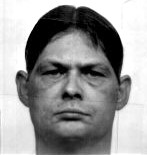
Johnny James
Murderer Brian Kevin Rosenfeld
Murderer · USA · 1985
Brian Kevin Rosenfeld Brian Kevin Rosenfeld was sentenced to three concurrent l…
23 victims
Brian Kevin Rosenfeld
Murderer · USA · 1985
Brian Kevin Rosenfeld Brian Kevin Rosenfeld was sentenced to three concurrent l…
23 victims
 Marvin Gray
Murderer · USA · 1975
Marvin Gray was convicted killer who claimed responsibility for 23 slayings and…
23 victims
Marvin Gray
Murderer · USA · 1975
Marvin Gray was convicted killer who claimed responsibility for 23 slayings and…
23 victims
 Yahweh ben Yahweh
Murderer · USA · 1980
Yahweh ben Yahweh was born and legally named Hulon Mitchell Jr. (October 27, 19…
23 victims
Yahweh ben Yahweh
Murderer · USA · 1980
Yahweh ben Yahweh was born and legally named Hulon Mitchell Jr. (October 27, 19…
23 victims
 Russell Ellwood
Murderer · USA · 1991
Russell Ellwood was a former taxi driver. Authorities suspected him of killing…
20 victims
Russell Ellwood
Murderer · USA · 1991
Russell Ellwood was a former taxi driver. Authorities suspected him of killing…
20 victims
 Bobby Allen Raleigh
Murderer · USA · 1994
Name: Bobby Allen Raleigh · Date of birth: 07/22/74 · Jurisdiction: Seventh Jud…
2 victims
Bobby Allen Raleigh
Murderer · USA · 1994
Name: Bobby Allen Raleigh · Date of birth: 07/22/74 · Jurisdiction: Seventh Jud…
2 victims
 Anthony Darrell Hines
Murderer · USA · 1985
Anthony Darrell Hines was tried in the Supreme Court of Tennessee (State of Ten…
1 victim
Anthony Darrell Hines
Murderer · USA · 1985
Anthony Darrell Hines was tried in the Supreme Court of Tennessee (State of Ten…
1 victim
 Kenneth Manuel Stewart
Murderer · USA · 1991
Kenneth Manuel Stewart Jr. was sentenced to death and was executed by electrocu…
2 victims
Kenneth Manuel Stewart
Murderer · USA · 1991
Kenneth Manuel Stewart Jr. was sentenced to death and was executed by electrocu…
2 victims
 Ronald Allen Smith
Murderer · USA · 1982
Ronald Allen Smith (born September 7, 1957) was a Canadian man. He was sentence…
2 victims
Ronald Allen Smith
Murderer · USA · 1982
Ronald Allen Smith (born September 7, 1957) was a Canadian man. He was sentence…
2 victims
 Volkert Van der Graaf
Murderer · Netherlands · 2002
Volkert van der Graaf (born July 9, 1969) was a confessed murderer of Dutch pol…
1 victim
Volkert Van der Graaf
Murderer · Netherlands · 2002
Volkert van der Graaf (born July 9, 1969) was a confessed murderer of Dutch pol…
1 victim
- Gender
- male
- Country
- USA
- Location
- Chambers County, Texas, USA
- Date of birth
- January 30, 1954
- Age at first offence
- 31
- Characteristics
- kidnapping, rape, robbery
- Victim profile
- Barbara Mayfield (female, 47)
- Method of murder
- Shooting (.38 caliber pistol)
- Date(s) of murder
- October 22, 1985
- Years active
- 1985
- Date of arrest
- —
- Status
-
Executed
Executed by lethal injection in Texas on September 3, 1993
Case record: Johnny James
Status and execution
Johnny James was executed by lethal injection in Texas on September 3, 1993. He was pronounced dead at 12:17 A.M. about eight minutes after an executioner started the flow of lethal chemicals into catheters attached to his arms. He had no last statement. His eyes remained closed as he gasped twice when the chemicals began flowing into his arms. About two dozen people, including relatives of Johnny James who met with him earlier in the day, stood outside the prison holding a vigil while the execution was carried out.
The offence
Johnny James was convicted of kidnapping Barbara Mayfield, 47, from BJ's Lounge near High Island, about 50 miles south of Houston, in October 1985 and murdering her.
Barbara Mayfield was the owner of the nightclub, and Johnny James had once worked there. After shooting the woman in the foot, Johnny James put Barbara Mayfield in the trunk of her car and drove her to a convenience store about 15 miles away in Winnie, stole $300, and kidnapped a female clerk. Johnny James forced the women to engage in sexual acts with each other before sodomizing and raping the store clerk, according to court records. He then shot both women at least twice in the head with a .38-caliber pistol and left them on the side of the road. The clerk survived the shooting and identified Johnny James as the killer, according to court records.
Investigation, evidence, and identification
The store clerk survived the shooting and identified Johnny James as the killer, according to court records.
Trial and conviction
Johnny James was sentenced to death for kidnapping and killing a woman in 1985. His conviction and sentence have been upheld by Texas state courts.
Appeals
Johnny James sought a stay of execution in proceedings that reached the United States Supreme Court. The United States Supreme Court voted 6 to 3 on Wednesday not to halt the execution. The Court’s new Justice, Ruth Bader Ginsburg, joined the minority voting to stay the execution.
Johnny James’s lawyers raised a challenge to the Texas death penalty law and asked the Court to overrule the two recent decisions. Because neither the majority nor the dissenters wrote opinions explaining their votes today, there was no way to know whether the Court considered the underlying issues or whether, by contrast, the application was rejected for essentially procedural reasons.
The United States Court of Appeals for the Fifth Circuit in New Orleans rejected Johnny James’s petition for a writ of habeas corpus that challenged the constitutionality of his death sentence, as well as for a stay of execution.
Sentencing context and legal arguments
Johnny James argued that he was a recovering alcoholic who had been abused by an alcoholic father. Lawyers for Johnny James said he was a recovering alcoholic who had been abused by an alcoholic father.
Johnny James argued that he was an alcoholic who had been drunk when he committed the crime and that the Texas death penalty law unconstitutionally limited the jury’s ability to evaluate his alcoholism as a factor that lessened his moral culpability, therefore arguing against imposing a death sentence.
Four years earlier, in the case Penry v. Lynaugh, the Supreme Court had found that the Texas law was constitutionally flawed because it did not permit a jury to give adequate weight to a capital defendant’s mental retardation. The Texas law, which has since been amended, required the jury to decide whether a convicted murderer presented a future danger to society. In the Penry case, the Court found that this requirement made it more likely that a jury would weigh retardation as an argument for the death penalty rather than as a factor against it.
Statements and quotes
“A Moral Victory”
Brent Newton, a lawyer with the Texas Resource Center in Houston who represented Johnny James, said he interpreted Justice Ginsburg’s vote as an indication that she might be willing to reconsider the recent precedents that upheld the Texas law. "Getting her vote is a moral victory for us," Mr. Newton said.
Other details
Johnny James was a native of Arkansas. He dressed in a blue prison uniform for his execution. He forced the women to engage in sexual acts with each other before sodomizing and raping the store clerk, according to court records.

Spotted an error, or have more information about this case?