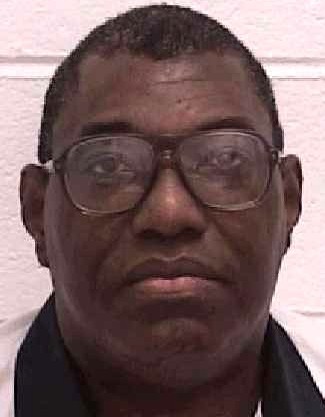
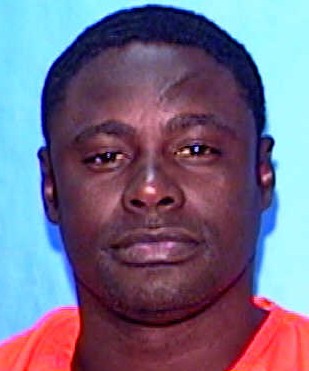
Robert Lewis Collier
Murderer Ervil LeBaron
Murderer · USA · 1972
Ervil Morrell LeBaron (1925 to August 16, 1981) was the leader of a polygamous…
35 victims
Ervil LeBaron
Murderer · USA · 1972
Ervil Morrell LeBaron (1925 to August 16, 1981) was the leader of a polygamous…
35 victims
 Brian Kevin Rosenfeld
Murderer · USA · 1985
Brian Kevin Rosenfeld Brian Kevin Rosenfeld was sentenced to three concurrent l…
23 victims
Brian Kevin Rosenfeld
Murderer · USA · 1985
Brian Kevin Rosenfeld Brian Kevin Rosenfeld was sentenced to three concurrent l…
23 victims
 Marvin Gray
Murderer · USA · 1975
Marvin Gray was convicted killer who claimed responsibility for 23 slayings and…
23 victims
Marvin Gray
Murderer · USA · 1975
Marvin Gray was convicted killer who claimed responsibility for 23 slayings and…
23 victims
 Yahweh ben Yahweh
Murderer · USA · 1980
Yahweh ben Yahweh was born and legally named Hulon Mitchell Jr. (October 27, 19…
23 victims
Yahweh ben Yahweh
Murderer · USA · 1980
Yahweh ben Yahweh was born and legally named Hulon Mitchell Jr. (October 27, 19…
23 victims
 Michael Ray White
Murderer · USA · 1987
Michael Ray White was Caucasian. White and Susan Minter were lovers. Minter was…
1 victim
Michael Ray White
Murderer · USA · 1987
Michael Ray White was Caucasian. White and Susan Minter were lovers. Minter was…
1 victim
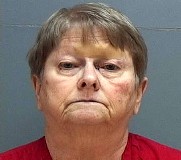 Mary Nance Hanson
Murderer · USA · 2010
Mary Nance Hanson was accused of fatally shooting her former daughter-in-law. ·…
1 victim
Mary Nance Hanson
Murderer · USA · 2010
Mary Nance Hanson was accused of fatally shooting her former daughter-in-law. ·…
1 victim
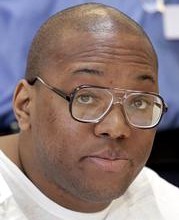 Terrick Nooner
Murderer · USA · 1993
Terrick Nooner was sentenced to death on September 28, 1993. At approximately 1…
1 victim
Terrick Nooner
Murderer · USA · 1993
Terrick Nooner was sentenced to death on September 28, 1993. At approximately 1…
1 victim
 Nancy Seaman
Murderer · USA · 2004
Nancy Seaman was born on May 13, 1952. She was a teacher at Longacre Elementary…
1 victim
Nancy Seaman
Murderer · USA · 2004
Nancy Seaman was born on May 13, 1952. She was a teacher at Longacre Elementary…
1 victim
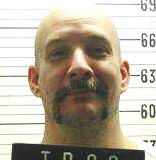 David Keen
Murderer · USA · 1990
David M. Keen was the appellant in State v. Keen in the Tennessee Supreme Court…
1 victim
David Keen
Murderer · USA · 1990
David M. Keen was the appellant in State v. Keen in the Tennessee Supreme Court…
1 victim
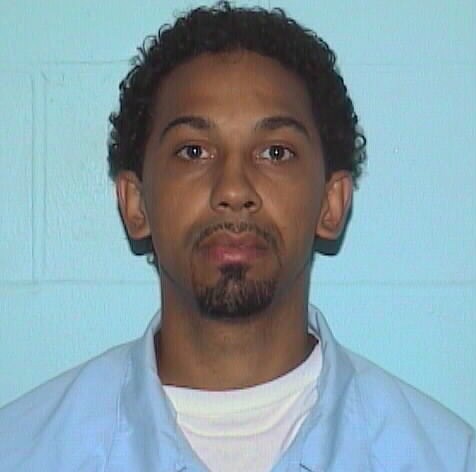 Kevin Taylor
Spree killer · USA · 2001
Kevin Taylor was 27 years old when Chicago police arrested him on the South Sid…
4 victims
Kevin Taylor
Spree killer · USA · 2001
Kevin Taylor was 27 years old when Chicago police arrested him on the South Sid…
4 victims
- Gender
- male
- Country
- USA
- Location
- Catoosa County, Georgia, USA
- Date of birth
- 1941
- Age at first offence
- 37
- Characteristics
- armed robbery, convicted rapist
- Victim profile
- Baxter Shavers, 24 (sheriff's deputy)
- Method of murder
- Shooting
- Date(s) of murder
- April 14, 1978
- Years active
- 1978
- Date of arrest
- Next day
- Status
-
Life imprisonment
Commuted to life in prison without parole
Case record: Robert Lewis Collier
STATUS and procedural history
Robert Lewis Collier was sentenced to death in August 1978. His death sentence was commuted to life in prison without parole.
Collier v. The State was decided in 1979. Collier v. Francis was decided in 1983.
Collier’s second federal appeal challenging the fairness of his conviction was pending in the 11th U.S. Circuit Court of Appeals.
Other case identifiers
- COLLIER v. THE STATE. 35063. (244 Ga. 553) (261 SE2d 364) (1979)
- COLLIER v. FRANCIS. 39670. (251 Ga. 512) (307 SE2d 485) (1983)
Background
Robert Lewis Collier was an unemployed ironworker. He left his home in South Pittsburgh, Tennessee and drove toward Georgia on April 14, 1978. He carried a brown paper grocery sack and a .32 caliber revolver.
Darlene Hurt was a witness for the state and observed Collier as he got out of his car in the parking lot of the shopping center prior to the robbery at the florist shop.
Sheriffs Investigator Baxter Shavers was killed. Investigator Shavers was investigating a robbery call on April 14, 1978, when he was shot to death.
Investigator Shavers was married with one son. Jeremy Shavers later followed in his father’s footsteps and became a sheriff’s deputy in Catoosa County.
The offence
On April 14, 1978, Collier left his home in South Pittsburgh, Tennessee and drove toward Georgia with the express purpose of perpetrating an armed robbery. He did not have a specific victim in mind.
When Collier arrived at Fort Oglethorpe, Georgia, he parked his car in a shopping center a short distance from the Plain and Fancy Florist and Bakery. He left his car, taking the brown paper grocery sack containing the revolver.
Robbery at the florist shop
Inside the florist shop, Collier approached Nancy Alonso, an employee, and asked her the price of one dozen roses. As she began to tell him the price, he pulled his revolver from the sack, pointed it at her, and said "Let's go."
Collier took Nancy Alonso behind the counter where two other female employees were working and announced that he wanted their money. At that time, Collier noticed that the owner of the shop was in the store’s kitchen. He had one of the other employees call her to the front of the store.
Collier made two employees, Pat Higdon and Gladys Amos, put the money they had in their purses in the sack he was carrying. He then forced the owner to give him the money in the cash drawer.
Collier forced the women to lie face down while he left the store.
Leaving the scene
Collier walked back to his automobile and left the shopping center, driving toward Chattanooga, Tennessee at a normal rate of speed.
Investigation
Within minutes of the robbery, the Catoosa County Sheriff’s Department in Ringgold, Georgia was notified.
Sheriff’s Investigator George Brown responded to the call and began to drive to the scene. Deputy Sheriff Baxter Shavers also responded and drove to the scene from a different location.
While driving to Fort Oglethorpe, Investigator Brown received a description of the robber and the car he was driving from a radio broadcast. Still enroute, approximately five miles from the scene of the crime, Investigator Brown saw a car and driver matching the description coming from the direction of the shopping center where the crime occurred.
Investigator Brown turned his car around and gave chase. When Collier saw the blue lights, he stopped his car.
Arrest and detention
Collier stepped out of his car with his wallet in his hand and started to walk back toward Investigator Brown. Investigator Brown drew his gun but held it at his side and instructed Collier to put his hands on his car and "spread eagle." Collier complied.
Deputy Baxter Shavers arrived and approached them with his gun drawn. Investigator Brown put his gun away and began to "pat down" Collier.
Investigator Brown was at the point of "patting down" one of Collier’s legs when Collier grabbed for Deputy Shavers’ gun and took it away from him. Collier, who weighed over 300 pounds, threw Investigator Brown off of him and fired two shots as Investigator Brown attempted to draw his gun.
One shot hit Investigator Brown in the hip and he fell face down on the pavement.
Deputy Shavers, who was then unarmed, ran back toward his car. Collier shot once at the fleeing officer, killing him instantly. Collier continued to fire at the officer as he was lying on the road. Deputy Shavers did not receive more than one direct hit, but he sustained multiple wounds from fragments of bullets that broke apart upon impact with the roadway.
The officer’s pistol had all six rounds expended when it was recovered.
Investigator Brown recovered his weapon and fired six shots into Collier’s automobile as Collier drove away, fearing he would be run over. Collier drove back to his house in South Pittsburgh, Tennessee.
On the way back, Collier threw the officer’s gun out of the car as well as the grocery bag and some of his clothing. These items were subsequently recovered.
After arriving at his house, Collier took his wife and two children and fled to Alabama. He stayed overnight and attempted to return the next afternoon to his home in Tennessee.
A lookout had been placed on Collier’s automobile. Local authorities received a report from Alabama authorities that a car matching the description of the one used in the robbery was entering their jurisdiction. Tennessee authorities spotted Collier’s car and gave chase. Collier attempted to elude them by passing traffic on the shoulder of the road but was eventually forced to stop the car.
Collier was arrested, placed in a patrol car, and given his constitutional rights. He was transported to the local jail.
Within approximately one hour after his arrest, Collier gave a statement to a Tennessee State Trooper implicating himself in the crimes. Collier then requested by name an attorney who had represented him before. The attorney came to the jail and conferred with Collier regarding the case.
Collier was placed in a lineup with his attorney present and was identified as the man who perpetrated the robbery and murder. Thereafter, over his attorney’s advice but with his attorney present, and after signing a waiver of rights, Collier gave a complete confession to the authorities.
Collier waived extradition and was returned to Georgia.
Trial
Charges and indictment
Collier appealed his conviction and sentence for murder and appealed his convictions for aggravated assault and three counts of armed robbery.
In Count 1 of the indictment, Collier was charged with murder while in the commission of a felony, to wit: armed robbery. Code Ann. 26-1101 (b).
Count 3 alleged the armed robbery of the owner of the florist shop. Counts 4 and 5 alleged the armed robberies of the employees of the florist shop.
The indictment did not specify which armed robbery was the felony that formed the basis of the felony murder in Count 1.
Evidence described at trial
From the evidence presented at trial, the jury was authorized to find the facts regarding:
- the robbery of Nancy Alonso, Pat Higdon, Gladys Amos, and the owner of the florist shop,
- forcing the women to lie face down,
- Collier’s return to the automobile,
- the pursuit and the encounter with Investigator Brown and Deputy Shavers,
- the shootings that killed Deputy Shavers and injured Investigator Brown,
- Collier’s flight to Alabama with his wife and two children,
- the recovery of the officer’s gun, the grocery bag, and clothing,
- Collier’s statement and confession after arrest and lineup identification.
Hypnosis-related events and rulings
A witness, Darlene Hurt, observed Collier as he got out of his car in the parking lot prior to the robbery at the florist shop and gave a physical description of the person and the car to local law enforcement authorities immediately after the robbery.
The day after the robbery and murder, but prior to Collier’s capture, Darlene Hurt was taken to Dalton, Georgia and was hypnotized by a psychiatrist, Dr. Biggers. Law enforcement authorities requested such a procedure to enhance Hurt’s memory to enable apprehension of the suspect.
An attempt had been made to hypnotize Investigator Brown for the same purpose but was unsuccessful due to the pain of his injury.
On his own motion, the trial judge issued an order directing that:
- no evidence of hypnotism or the use of hypnotic trances was to be mentioned by counsel for the defendant, counsel for the state, or any person called upon to testify as a witness;
- no evidence obtained by the "State or any other party" from any witness under the influence of hypnosis was to be admissible;
- defense counsel could not cross examine any witness to test his credibility by making any inquiry as to hypnosis.
Collier objected and made an offer of proof in a pretrial hearing. The offer of proof included the following:
"For the record, but for the court's ruling prohibiting our cross-examination of the witness on hypnosis, and introducing any evidence about hypnosis, we would have called Dr. Biggers, in addition to cross-examining various of the State's witnesses. "Dr. Biggers informed me over the phone that he made an attempt to hypnotize several of the State's witnesses, and several of them may very well have been hypnotized, even if the witnesses themselves thought that they were not hypnotized, that they themselves could know whether they were hypnotized or not, and he further stated that there was a tremendous potential for abuse while a person is in a hypnotic trance, particularly when the questioning is not done by a medical doctor, and even then, the person is in a state of susceptibility, or suggestion, so that after the effort to hypnotize a witness, a witness may seriously and honestly believe that they witnessed events which they did not witness at all, suggestions which were merely planted there by the suggestion of hypnosis and in this particular case, several of the prosecution witnesses, including, but not limited to Deputy Brown, attempts were made to hypnotize them, and they were questioned by other law enforcement officers, other than Dr. Biggers."
At the conclusion of the district attorney’s examination of the first witness, Darlene Hurt, the trial court rescinded its order and allowed cross examination as to hypnosis for the purpose of testing credibility.
Defense counsel moved for a continuance until the next term based on the need to obtain Dr. Biggers and seek other experts. The trial court denied the motion.
Collier also argued that a mistrial should have been granted because the district attorney violated the pretrial order by calling a witness who had been hypnotized. The court found no manifest abuse of discretion in refusing to grant a mistrial.
Jury instructions contested on appeal
Collier challenged multiple instructions and rulings on appeal, including the following charge given during the guilt-innocence phase:
"You see, the homicide must stem from the commission of the felony in this case which is charged, that being Armed Robbery, and of course, as I said there's got to be some logical connection from the evidence, some logical connection between the offense and the alleged homicide."
Collier also contested the court’s charge on malice. The court’s charge included:
"I instruct you that malice may be express or it may be implied. It is express when it is manifested by external circumstances capable of proof. Malice may also exist even though there be no evidence of express malice, and this is what is known as malice implied."
Collier argued error in inclusion of malice despite felony murder.
Collier also argued about the trial court’s refusal to include certain written requests, including a request related to the effect of discarding the weapon. The written request was:
"I charge you that if you should find that the defendant discarded his weapon, so that he was no longer armed, then you may consider this as a circumstance in determining whether or not the offenses of armed robbery terminated prior to the commission of any other offenses for which the defendant is charged."
Collier’s sentence was subject to sentence review.
Sentencing phase mitigation testimony
During sentencing, defense counsel asked Shelly Jordan as a character witness: " at has been your association with Mr. Collier?" The witness answered:
"Well, we were always close friends, and always got along well, and had a lot of mutual respect for each other."
Defense counsel asked: "[d]o you have respect for him now?" The state objected and the court sustained the objection.
The court later discussed mitigation evidence and constitutional considerations.
Defense counsel also challenged the trial court’s refusal to charge the following written request on determining a death sentence:
"I charge you that in determining whether or not to impose the death sentence upon this defendant you are authorized to take into consideration the personal characteristics of this individual that mitigate against capital punishment, including, but not limited to, the extent of his co-operation with the police, his emotional state at the time of the trial, his age and family circumstances."
The trial court instead charged the jury to consider all evidence submitted in both phases, including mitigating circumstances.
Appeals
State appeal: affirmance and partial reversal
Collier’s appeal involved multiple enumerations of error. The state appellate court addressed hypnosis evidence, denial of continuance, refusal to grant mistrial, jury instructions, felony-murder underlying felony termination arguments, and sentencing issues.
On the armed robbery underlying-felony issue, the appellate court held the remedy was reversal of the conviction of the underlying felony. It reversed the conviction for armed robbery alleged in Count 3 of the indictment and vacated the sentence imposed as to that count.
The appellate court affirmed the rest of Collier’s convictions and upheld the death sentence after sentence review.
During sentence review, the appellate court found the evidence supported the jury’s findings of statutory aggravating circumstances:
- that the murder was committed while the offender was engaged in the commission of another capital felony, Code Ann. 27-2534.1(b)(2);
- that the murder was committed against a peace officer while engaged in the performance of his official duties, Code Ann. 27-2534.1(b)(8);
- that the murder was committed for the purpose of preventing a lawful arrest of himself, Code Ann. 27-2534.1(b)(10).
The appellate court concluded the death sentence was not imposed under the influence of passion, prejudice, or any other arbitrary factor.
State habeas: denial
Collier filed habeas corpus relief in Butts Superior Court. The habeas court denied relief. The appellate court affirmed that denial.
Collier’s habeas arguments included:
- an issue about prospective juror questioning on bias or prejudice in favor of the death penalty. The habeas court found error but held it harmless as to a single juror. The appellate court noted the reverse Witherspoon issue was not raised on direct appeal.
- an allegation that an unrecorded ruling placed additional restrictions on presenting evidence during sentencing. The habeas court found Collier failed to carry his burden of proof as to the allegation, and the appellate court affirmed.
In the habeas appeal, the appellate court quoted voir dire exchange involving prospective juror Brown. The exchange included the following:
"MR. BENNETT: And I assume from your previous answers that you have not had an occasion to form an opinion in this case? "MR. BROWN: No, sir. "MR. BENNETT: Do you see -- do you feel that you can fairly and impartially set (sic) in judgment of this defendant? "MR. BROWN: I feel that I can, yes, sir. "MR. BENNETT: Do you feel that in every case where a person has been killed that the person who did the killing should be punished by death? "MR. BROWN: Would you -- "MR. BENNETT: (Interposing) Did you understand my question? "MR. BROWN: No, sir, I did not. "MR. BENNETT: It's directed to the old eye for an eye theory, do you believe that because one person kills another one, that he of necessity should be put to death? "MR. BROWN: Not of necessity. "MR. BENNETT: Do you believe in every case of murder, if the evidence should show that it is murder, that the punishment should be death? "THE COURT: Are you asking him to prejudge the case on his own qualifications, aren't you asking him really basically, technical questions of law which would be difficult for a layman to answer without a proper charge of the Court as to the law in a particular case, aren't you doing that? "MR. BENNETT: Well, let me attempt to rephrase it, Your Honor, I am sorry. "THE COURT: All right, sir. "MR. BENNETT: Do you feel that you would be able to follow the Court's charge, and of course, I am not -- you are to get the charge from the Court, not what I say here now, but if the Court should charge you to the effect that in order to find -- in order to sentence a man to the electric chair, it would be necessary for you to find a certain aggravating circumstances, would you follow the Court's instructions in this regard, and unless you found those aggravating circumstances, impose some lesser sentence, does that sound -- "THE COURT: (Interposing) That's not the law, that's not what the Court would charge, Mr. Bennett, you are not aware of what the Court would charge, you should have a little better knowledge of what I would charge, but that wouldn't be inclusive. "We are concerned now with the guilt or innocence of the defendant, but now, you are stating portions of what the Court might charge, but you are not going all the way, the Court cannot give a charge at this time, because I don't know what the evidence will disclose, and I don't think that's a proper question, I don't see how he could answer that, he is not aware of all the Court would charge on that point, you see. "MR. BENNETT: Yes, sir. "THE COURT: I think if you would ask him if he would follow the charge of the Court, and he would accept the law from the Court as being the law, and apply it to the case and to the evidence, and ascertain whether or not he would, or wouldn't. "MR. BENNETT: Mr. Brown, are you related in any way to any other juror that has been called today? "MR. BROWN: No, sir."
With 383 pages of transcript reporting voir dire examination, Collier pointed to no other attempt to raise juror bias in favor of the death penalty. The appellate court found no error.
Outcome
- The appellate court reversed the conviction for armed robbery alleged in Count 3 of the indictment and vacated the sentence imposed as to that count.
- The appellate court affirmed Collier’s death sentence for the murder.
- In later proceedings, Collier sought habeas corpus relief, and the denial was affirmed.
- Collier’s death sentence was commuted to life in prison without parole.
Other details
Parties and judges mentioned
- Catoosa Superior Court; before Judge Coker.
- Butts Superior Court; before Judge Crumbley.
- Chief Justice Nichols authored the decision in 1979.
- Gregory, Justice authored the 1983 decision.
Counsel mentioned
For appellee in the 1979 decision:
- William M. Campbell, District Attorney
- Arthur K. Bolton, Attorney General
- Nicholas G. Dumich, Assistant Attorney General
For appellant in the 1979 decision:
- J. Donald Bennett
- James A. Secord
- Alston, Miller & Gaines
- Jay D. Bennett
For appellant in the 1983 decision:
- Alston & Bird
- Jay D. Bennett
- J. Donald Bennett
For appellee in the 1983 decision:
- David L. Lomenick, Jr., District Attorney
- Michael J. Bowers, Attorney General
- Nicholas G.
Dates of appellate argument and decision
- Argued September 11, 1979 — Decided October 30, 1979 (in COLLIER v. THE STATE)
- Decided October 4, 1983 (in COLLIER v. FRANCIS)
Note about convictions (as stated)
A note identified that Collier was also convicted of the offenses of armed robbery (three counts) and aggravated assault, and that one count of armed robbery was set aside on appeal.
Spotted an error, or have more information about this case?