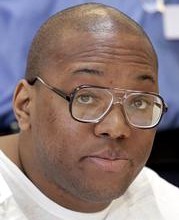
Terrick Nooner
Murderer Brian Kevin Rosenfeld
Murderer · USA · 1985
Brian Kevin Rosenfeld Brian Kevin Rosenfeld was sentenced to three concurrent l…
23 victims
Brian Kevin Rosenfeld
Murderer · USA · 1985
Brian Kevin Rosenfeld Brian Kevin Rosenfeld was sentenced to three concurrent l…
23 victims
 Russell Ellwood
Murderer · USA · 1991
Russell Ellwood was a former taxi driver. Authorities suspected him of killing…
20 victims
Russell Ellwood
Murderer · USA · 1991
Russell Ellwood was a former taxi driver. Authorities suspected him of killing…
20 victims
 Robert Martines Perez
Murderer · USA · 1994
Name: Robert Martines Perez · Other name used in proceedings: Robert Martinez P…
15 victims
Robert Martines Perez
Murderer · USA · 1994
Name: Robert Martines Perez · Other name used in proceedings: Robert Martinez P…
15 victims
 Billy Frank Vickers
Murderer · USA · 1993
Billy Frank Vickers Vickers was executed by lethal injection in Texas on Januar…
14 victims
Billy Frank Vickers
Murderer · USA · 1993
Billy Frank Vickers Vickers was executed by lethal injection in Texas on Januar…
14 victims
 Antoinette Scieri
Serial killer · France · 1924
Antoinette Scieri was born in Italy and emigrated to France as a child. In the…
12 victims
Antoinette Scieri
Serial killer · France · 1924
Antoinette Scieri was born in Italy and emigrated to France as a child. In the…
12 victims
 Huang Yong
Serial killer · China · 2001
Huang Yong was born in 1974 in Henan, China. He was executed on December 26, 20…
17 victims
Huang Yong
Serial killer · China · 2001
Huang Yong was born in 1974 in Henan, China. He was executed on December 26, 20…
17 victims
 John Salvi
Murderer · USA · 1994
John C. Salvi III (March 2, 1972 – November 29, 1996) was identified as an anti…
2 victims
John Salvi
Murderer · USA · 1994
John C. Salvi III (March 2, 1972 – November 29, 1996) was identified as an anti…
2 victims
 Phillip McCollum
Murderer · USA · 1983
Phillip McCollum was sentenced to death on March 8, 1985. Phillip McCollum rece…
2 victims
Phillip McCollum
Murderer · USA · 1983
Phillip McCollum was sentenced to death on March 8, 1985. Phillip McCollum rece…
2 victims
 Gary Wayne Sutton
Murderer · USA · 1992
Gary Wayne Sutton was one of the defendants convicted of killing Tommy Griffin…
2 victims
Gary Wayne Sutton
Murderer · USA · 1992
Gary Wayne Sutton was one of the defendants convicted of killing Tommy Griffin…
2 victims
 Larry Wayne Wooten
Murderer · USA · 1996
Defendant: Larry Wayne Wooten Status: Executed by lethal injection in Texas on…
2 victims
Larry Wayne Wooten
Murderer · USA · 1996
Defendant: Larry Wayne Wooten Status: Executed by lethal injection in Texas on…
2 victims
- Gender
- male
- Country
- USA
- Location
- Pulaski County, Arkansas, USA
- Date of birth
- March 17, 1971
- Age at first offence
- 22
- Characteristics
- robbery
- Victim profile
- Scott Stobaugh (college student)
- Method of murder
- Shooting ( .22-caliber pistol)
- Date(s) of murder
- March 16, 1993
- Years active
- 1993
- Date of arrest
- —
- Status
-
Sentenced to death
Sentenced to death on September 28, 1993
Case information
Terrick Nooner was sentenced to death on September 28, 1993.
The offence
At approximately 1:30 a.m. on March 16, 1993, Scott Stobaugh, a college student, was washing clothes at the Funwash Laundromat on West Markham street in Little Rock. An assailant, in an apparent robbery attempt, shot Stobaugh seven times in the back at close range with a .22-caliber pistol, causing his death.
A surveillance camera captured a portion of the incident on videotape. The videotape showed the assailant and Stobaugh as Stobaugh raised his hands. Nooner took $20 and a checkbook.
Investigation
Two witnesses identified the person on the Laundromat video as Terrick Terrell Nooner, by clothing and appearance. Other testimony and ballistics evidence tied Nooner to the murder weapon.
Trial
A Pulaski County Circuit Court jury convicted Nooner of capital murder.
During the penalty phase, the jury heard testimony from several witnesses, including Stobaugh’s mother, who described the impact of Scot’s death on his family. The jury also heard mitigation testimony from Nooner’s stepfather.
The jury found two aggravating circumstances:
- that Nooner had previously committed another felony, an element of which was the use or threat of violence
- that the murder was committed for pecuniary gain
The jury found no mitigating circumstances.
Nooner was sentenced to death by lethal injection.
Nooner’s stepfather testified during the penalty phase. During the guilt phase, Nooner’s stepfather had been presented as an alibi witness that Nooner was home at the time of the murder.
Nooner’s mother was unable to testify at trial; her doctor advised her not to testify because of the emotional stress.
Co-defendant
Nooner’s co-defendant, Robert Rockett, pleaded guilty to first-degree murder in the slaying and was sentenced to 65 years in prison. He was also serving a life sentence without parole for a separate murder conviction.
Sentencing
Appeals
Direct appeal
The sentence and conviction were affirmed on direct appeal by Nooner v. State, 907 S.W.2d 677 (Ark. 1995). The petition for certiorari was denied, 517 U.S. 1143 (1996).
Post-conviction relief
Denial of post-conviction relief was affirmed by Nooner v. State, 4 S.W.3d 497 (Ark. 1999).
Federal habeas and competency to withdraw
Nooner v. Norris, 402 F.3d 802 (8th Cir. 2005), rehearing denied, 11/18/2005.
Nooner appealed from the district court’s dismissal of his petition for writ of habeas corpus under 28 U.S.C. § 2254. The district court found Nooner competent to withdraw his petition and, in the alternative, held that Nooner’s substantive claims were without merit.
The appellate court concluded that the district court erred in finding that Nooner’s motion to dismiss his petition was knowing and voluntary, and affirmed the rejection of the petition on the merits.
Competency hearing evidence
Dr. Richart L. DeMier evaluated Nooner and found him not competent. Dr. DeMier based his conclusion on two subjective indicators: disorganized speech that presented only when Nooner discussed his legal situation and an illogical belief that he would be exonerated by a “hidden or removed lawsuit” after he appeared before the clemency board. Dr. DeMier testified that he did not hold his opinion with his usual degree of confidence because Nooner was malingering to some extent.
Dr. Charles Mallory and Dr. Oliver W. Hall III of the Arkansas State Hospital also evaluated Nooner, and both found him competent. Dr. Mallory confirmed Dr. DeMier’s impression of strange speech patterns, and observed that the patterns occurred only when Nooner discussed his legal situation. Dr. Mallory noted Nooner realized that his ideas were strange. Both Dr. Mallory and Dr. Hall agreed Nooner was malingering.
The district court concluded Nooner was able to “make a rational choice among his options” and understood “his legal positions and options available to him.”
Verbatim quotations from the habeas opinion’s described testimony include:
- Dr. DeMier testimony (as quoted): “I was never able to understand his rationale for this reported belief.”
- A quotation attributed to Nooner in Dr. Mallory’s account: “Dr. DeMier, he said I was delusional, seeing things that aren't true. I don't know if he found me incompetent.”
- Another quotation attributed to Nooner in Dr. Mallory’s account: “I got air bubbles in my body.”
- Mallory’s account: “No. The only problem I have is being toyed with when I know my rights.”
- Mallory’s account: “I'm suffering from anguish because I have glands on my penis.”
- Dr. Mallory’s testimony quotation: “[ Nooner ] showed that he wants to present this information in some kind of forum, maybe the clemency board or review board. He has an idea, among others, that because he and another man were caught in a stolen car — that's when he was arrested — that he wasn't charged with car theft or anything else, he was just charged with murder — first of all, he thinks there's something wrong with the justice system and he should have been charged with murder — I mean, of car theft or something else first, and since he wasn't, they've concealed this lawsuit.”
- A quote attributed to Nooner in Dr. DeMier’s testimony (as quoted): “What [ Nooner ] told me very clearly is that he never asked to be executed. He did not want to be executed.”
- Dr. Mallory’s quoted statement (as described): “He's told Dr. Simon, `I don't want to die.' And he's indicated that in other ways, too.”
- Dr. DeMier’s quoted characterization (as described): “It was almost as though he were employing what we sometimes call magical thinking. That's a trait you see in two and three year-olds. They think that because they want something to happen, it will happen. And he wasn't able to tell me in any detail or in any what that I can understand what would transpire there.”
The appellate court held the record did not support a finding that Nooner’s withdrawal was knowing and voluntary, noting that the district court made no inquiry like that in O’Rourke and that two doctors testified Nooner did not want to be executed. The appellate court further noted that Nooner believed withdrawing the habeas petition would trigger events leading to a “hidden or removed lawsuit” that would exonerate him.
Merits issues addressed in the habeas appeal
The habeas petition raised three collateral challenges:
- admission of victim impact evidence pursuant to Arkansas’ victim impact statute violated the ex post facto clause
- Arkansas’ victim impact statute was constitutionally infirm
- ineffective assistance of trial counsel for failing to investigate and present mitigating evidence at sentencing
The appellate court addressed and rejected these claims on the merits.
Victim impact evidence ex post facto arguments
The appellate court stated the Arkansas legislature enacted Ark. Code Ann. § 5-4-602(4) in response to Payne v. Tennessee. The statute was enacted after Stobaugh’s murder but prior to Nooner’s trial.
The appellate court concluded that the victim impact evidence statute was procedural in nature and did not offend the ex post facto clause, reasoning that it did not alter the potential penalty faced by any defendant and did not alter the state’s burden of proof.
Vagueness, Eighth Amendment, and due process arguments
The appellate court evaluated vagueness challenges on the particular facts and concluded the Constitution did not require a state to ascribe specific weight to aggravating or mitigating factors in capital sentencing. The appellate court concluded Nooner failed to show how the admitted testimony differed from that in Payne or how it unduly prejudiced him, and held the state court rejection comported with Supreme Court precedent.
Ineffective assistance of counsel (mitigation and psychiatric evidence)
The appellate court described Nooner’s trial counsel’s alleged deficiencies as including failure to seek a psychiatric expert appointed, failure to obtain school or hospital records, and failure to interview family members, social workers, or foster parents. It held Nooner had procedurally defaulted on all claims except the claim related to “the psychiatric evidence.”
The appellate court summarized the Rule 37 hearing testimony of Nooner’s trial counsel, including verbatim quotations from Lea Ellen Fowler:
“ [T]hat was something that we looked long and hard to find things and ... as the Court is aware, there are some statutory criteria and Mr. Nooner did not meet any of those criteria. He was not from a broken home. Even though the ... man that raised him was not his biological father, that was the man that had raised him from, I believe, the time that he was two (2) years old. And ... his parents had done all they could to provide for him. He didn't suffer from alcoholism or drug abuse, or you know, any of those standard mitigating circumstances. The fact that he spent time in Rivendell; I believe that we went into that. I believe that his parents testified about the troubles that he had had in school and ... any possible circumstance that could be raised.”
“There was not anything in this to be mitigating towards you, Mr. Nooner . This was detrimental to you. The ... doctors at Rivendell concluded that you were the cause of all of your problems and it was your unwillingness to adapt your behavior to societal norms that was causing you these problems. I ... don't think that that was of any benefit to you and ... we discussed whether or not to bring somebody from Rivendell and it was the opinion of all of us that that would be detrimental to you.”
The appellate court discussed the Rivendell Report generated when Nooner was discharged from the facility in 1986, which described Nooner being referred for increasing oppositional behavior, running away from home, and violent outbursts; parents informing staff of numerous fights; staff impressions of mood and behavior; and that Nooner did not take any psychotropic medication.
The appellate court concluded the Arkansas Supreme Court’s conclusion that counsel judgments did not render counsel ineffective was not an unreasonable application of Strickland. It noted that even if it determined an unreasonable application, it could not grant habeas relief without prejudice, and it reviewed de novo the prejudice question. It concluded Nooner failed to establish prejudice regarding both his “difficult childhood” and psychiatric/mental problems.
The appellate court affirmed the judgment dismissing the petition for habeas corpus on its merits.
Separate opinions
Judge LAY concurred with Part II and stated he agreed Arkansas victim impact evidence was constitutional, but dissented from Part III-C regarding ineffective assistance. Judge BYE, Circuit Judge, dissented in part and concurred in part, arguing he would have granted Nooner’s request to dismiss his habeas petition and discussing that he found counsel was not ineffective under the standard applied.
Other proceedings and motions
- Pro se motions to lift stay of execution were denied as moot (since no stay was in effect).
- See Nooner v. State, 101 S.W.3d 834 (Ark. 2003).
- The appellate court references multiple unpublished petitions handled by the Arkansas Supreme Court, including holdings that pro se petitions for writs of mandamus, prohibition, and requests for immediate execution were premature and that petitioner’s status had not changed since a March 1, 2007 petition in Nooner v. State, 2007 WL 10028796 (April 5, 2007) (unpublished).
- Arkansas Supreme Court holdings also characterized a request for prohibition and immediate execution as premature in Nooner v. State, 2007 WL 616023 (March 1, 2007) (unpublished).
- The Arkansas Supreme Court held a petition for writ of mandamus and motion for execution of sentence without delay was premature in Nooner v. State, 2006 WL 1516411 (June 1, 2006).
Timeline
- March 16, 1993 (approximately 1:30 a.m.) — Scott Stobaugh was shot seven times in the back at close range with a .22-caliber pistol at the Funwash Laundromat on West Markham street in Little Rock; Nooner took $20 and a checkbook.
- September 28, 1993 — Nooner was sentenced to death by lethal injection.
- 1986 — Nooner was discharged from Rivendell (when the Rivendell Report was generated, as described).
- 1995 — The Arkansas Supreme Court affirmed Nooner v. State, 907 S.W.2d 677 (Ark. 1995).
- 1996 — Certiorari was denied, 517 U.S. 1143 (1996).
- 1999 — Nooner v. State, 339 Ark. 253, 4 S.W.3d 497 (Ark. 1999) affirmed denial of post-conviction relief.
- 2003 — Nooner v. State, 101 S.W.3d 834 (Ark. 2003) is referenced.
- April 4, 2005 — Nooner v. Norris was filed in the Eighth Circuit.
- November 18, 2005 — Rehearing denied in Nooner v. Norris.
- January 12, 2004 — Submission date referenced for Nooner v. Norris.
- January 12, 2004 / April 4, 2005 — Eighth Circuit procedural dates referenced.
- June 1, 2006 — Nooner v. State, 2006 WL 1516411 referenced as holding a mandamus petition and motion for execution without delay were premature.
- March 1, 2007 — Nooner v. State, 2007 WL 616023 referenced as holding a pro se petition for writ of prohibition and for immediate execution was premature.
- April 5, 2007 — Nooner v. State, 2007 WL 10028796 referenced as holding a pro se petition for writ of mandamus was premature and petitioner’s status had not changed.
- August 2007 — A federal stay in an execution scheduled next week was issued in August 2007 for Terrick Nooner, with a referenced scheduled execution date and later procedural references.
Aftermath
A federal judge issued a stay in an execution scheduled next week for an Arkansas death-row inmate convicted of killing a university student at a coin-operated laundry in 1993. Judge J. Leon Holmes issued the stay for inmate Terrick Nooner, who faced a September 18, 2007 execution date. The stay followed an Eighth U.S. Circuit Court of Appeals ruling that a request for mental-health professionals to examine Nooner should be reconsidered in court.
The stay was described as arising after lawyers argued their request for mental examinations was not an appeal of the original conviction in Pulaski County court, but an attempt to get examinations the Arkansas Department of Correction had denied over the last year and a half. Julie Brain, a federal public defender for Nooner, declined to comment on the judge’s stay.
Since his incarceration, Nooner made “rambling legal filings and statements” about people poisoning his food, sexually assaulting him, performing witchcraft, and “shooting up my blood” with drugs and poisons.
Other details
Nooner was described as an Arkansas death-row inmate in August 2007 and as being 36 years old in the referenced August 2007 photograph caption.
The appellate opinion and concurring/dissenting opinions referenced Nooner’s “turbulent and troubled childhood,” including child abuse, foster home placements, emotional and behavioral problems, school problems, substance abuse, and hospitalizations at psychiatric institutions during his early teenage years. The appellate opinion also described his time at Rivendell, his reported lack of psychotropic medication during that stay, and mention of a stay at Bridgeway.
Nooner’s trial involved capital sentencing where the jury heard aggravating circumstances and mitigation testimony from Stobaugh’s mother and Nooner’s stepfather, with no mitigating circumstances found.
Spotted an error, or have more information about this case?