Darnell Collins
Spree killer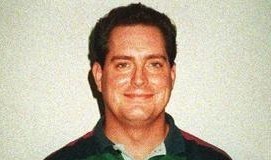 Mark Barton
Spree killer · USA · 1999
Mark Orrin Barton (1955 – July 29, 1999) committed a spree killing in Stockbrid…
12 victims
Mark Barton
Spree killer · USA · 1999
Mark Orrin Barton (1955 – July 29, 1999) committed a spree killing in Stockbrid…
12 victims
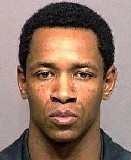 John Allen Muhammad
Spree killer · USA · 2002
John Allen Muhammad carried out the 2002 D.C. sniper attacks with his 17-year-o…
10 victims
John Allen Muhammad
Spree killer · USA · 2002
John Allen Muhammad carried out the 2002 D.C. sniper attacks with his 17-year-o…
10 victims
 Jeffrey Weise
Spree killer · USA · 2005
Jeffrey Weise, a 16-year-old student at Red Lake High School in Red Lake, an un…
9 victims
Jeffrey Weise
Spree killer · USA · 2005
Jeffrey Weise, a 16-year-old student at Red Lake High School in Red Lake, an un…
9 victims
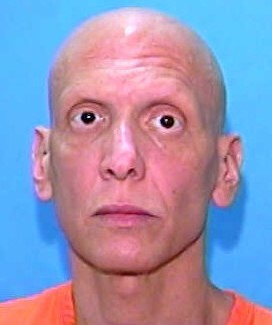 Manuel Pardo
Spree killer · USA · 1986
Manuel Pardo, Jr. was a former police officer who was convicted of nine counts…
9 victims
Manuel Pardo
Spree killer · USA · 1986
Manuel Pardo, Jr. was a former police officer who was convicted of nine counts…
9 victims
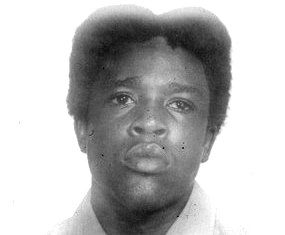 James Dupree Henry
Murderer · USA · 1974
James Dupree Henry was sentenced by Florida state courts to be executed for the…
1 victim
James Dupree Henry
Murderer · USA · 1974
James Dupree Henry was sentenced by Florida state courts to be executed for the…
1 victim
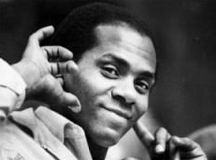 Franklin Lynch
Serial killer · USA · 1987
Franklin Lynch was involved in the case prosecuted as a serial murder matter co…
3 victims
Franklin Lynch
Serial killer · USA · 1987
Franklin Lynch was involved in the case prosecuted as a serial murder matter co…
3 victims
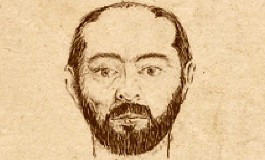 Manuel Blanco Romasanta
Murderer · Spain · 1845
Manuel Blanco Romasanta (18 November 1809 — 14 December 1863) was Spain’s first…
9 victims
Manuel Blanco Romasanta
Murderer · Spain · 1845
Manuel Blanco Romasanta (18 November 1809 — 14 December 1863) was Spain’s first…
9 victims
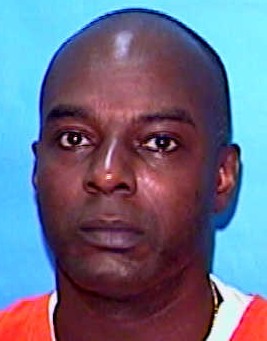 Clarence James Jones
Murderer · USA · 1988
Clarence James Jones Clarence Jones was a known escapee from a Maryland prison…
1 victim
Clarence James Jones
Murderer · USA · 1988
Clarence James Jones Clarence Jones was a known escapee from a Maryland prison…
1 victim
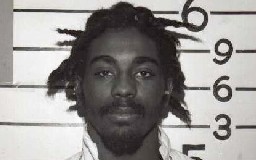 Larry Hicks
Murderer? · USA · 1978
Larry Hicks · Larry Hicks was sentenced to death on September 1, 1978. · At ret…
2 victims
Larry Hicks
Murderer? · USA · 1978
Larry Hicks · Larry Hicks was sentenced to death on September 1, 1978. · At ret…
2 victims
- Gender
- male
- Country
- USA
- Location
- New Jersey / New York, USA
- Date of birth
- 1961
- Age at first offence
- 34
- Characteristics
- robbery, domestic violence
- Victim profile
- His former girlfriend, April Gates, 30, and her mother, Shirley Gates, 51 / William Dawson, 41 / Jose Gabriel Escarpetta, 38 / Jeffrey Roork, 26, and David Roth, 54 / Emmanuel Malan
- Method of murder
- Shooting (.22-caliber revolver)
- Date(s) of murder
- June 17-21, 1995
- Years active
- 1995
- Date of arrest
- —
- Status
-
Died in custody
Killed during a shoot-out with the police on June 21, 1995
Case details
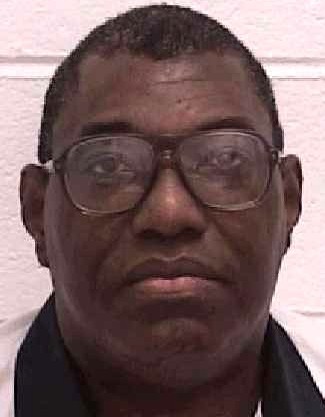
Darnell Collins, also known as Mwanza Kamau, was a 33-year-old parolee who killed seven people and injured three others during a five-day spree before being shot and killed by police beneath a bridge in Nutley, N.J. on June 21, 1995.
Timeline
- June 21, 1995 — Collins was pronounced dead at 10:13 A.M. at University Hospital in Newark after a shoot-out with police in Nutley, N.J.
- June 20, 1995 — A police chase ended with Collins firing and attempting to evade officers near Kingsland Street Bridge in Nutley, N.J.
- June 19, 1995 — Collins was killed early on June 21 after murders earlier in Harlem and a shooting spree in New York.
- June 22, 1995 — The New York Times reported the spree and Collins’s death.
- June 23, 1995 — The New York Times reported on parole supervision issues and details about warrants and drug testing.
Background
Collins was born in New York and spent most of his life in New Jersey. He was unemployed and picked up money by buying decorative pictures in New York and reselling them on the streets of Atlantic City. Acquaintances depicted him as a drug user whose personality turned diabolical when he was under the influence.
Collins had an ex-girlfriend, April Gates, a 30-year-old blackjack dealer at the Trump Castle Casino Resort who lived with her young son at her mother’s house in Atlantic City. Collins and Gates broke up about six months before the restraining order episode. Collins also stalked Gates.
Gates sought a temporary restraining order barring Collins from any contact with her. It became final last Thursday. A warrant was issued for Collins’s arrest after Gates went to the police when he showed up at her house.
A friend of the family described the gun used during the confrontation at Gates’s mother’s house as belonging to Shirley Gates.
Collins’s parole status at the time of the spree was described as flawed, with an apparent lack of coordination regarding protection orders.
The offence
During the spree, Collins killed:
- Shirley Gates, 51, once above the ear and once below with a .22-caliber six-shot Smith & Wesson revolver.
- Alicia Chappell’s acquaintance April Gates, who was shot once near her ear and twice more in the stomach.
- William Dawson, 41, shot to death with a bullet in the chest.
- Stacey Smith, 27, shot in the neck, critically wounded.
- Jose Gabriel Escarpetta, 38, shot with three bullets into his arm and shoulder, killing him.
- Jeffrey Roork, 26, shot in the head in an elevator and died instantly.
- David Roth, 54, shot in the head and pronounced dead yesterday at St. Vincent’s Hospital and Medical Center.
- Norma Acosta, 39, shot once in the head.
Collins shot the livery driver Emmanuel Malan in the back of the head after a dispute over the fare, and Malan’s body was found at 177 East 101st Street.
In addition to killings, the spree injured three others, with two injured critically described during the overall account.
Collins repeatedly committed robberies and made demands for money at multiple locations, including the Shell gas station on Route 130 and Nicholson Road, a parking lot at West 26th Street near the Avenue of the Americas, and the area near Canaan Land Christian Church of Christ.
Investigation
Police described Collins as having moved from city to city and leaving blood behind at each location during his violent episode.
Detective Robert M. Saunders of the Haddon Township police provided an account of Collins’s actions at the Shell gas station, including the demand for money and the attendant’s pushback before Collins struck him.
Law-enforcement authorities said they believed a domestic squabble ignited Collins’s fury, and other aspects suggested he was on drugs during much of the crime spree.
Drugs were found in the motel room at the Star Motel, and police said at least one victim was a drug dealer. A surviving woman told police that she had smoked crack with Collins on Tuesday night.
Arrest
No arrest of Collins was described during the spree. The narrative described him as a parolee and recounts earlier warrants and supervision events, but it did not describe a specific arrest during the spree itself.
People
Victims and related individuals
- April Gates (30) — Collins’s ex-girlfriend and a blackjack dealer at the Trump Castle Casino Resort. She was shot and killed.
- Shirley Gates (51) — April Gates’s mother. Collins tied her up and shot her.
- Alicia Chappell — A friend of April Gates who was at the birthday party. She described Collins being enraged at Gates for reporting him for violating the restraining order.
- Stacey Smith (27) — Lived with William Dawson and had a 4-year-old son. She was critically wounded.
- William Dawson (41) — Drug dealer identified by police. He was shot to death.
- Mark Cotton (23) — A barber who said he saw the killing of Shirley Gates and described threats and broken car windows. He also said Collins threatened to kill April Gates within three days.
- Badri Awsi (60) — Attendant at the Shell gas station. Collins demanded money and struck him.
- Jose Gabriel Escarpetta (38) — Parking lot attendant killed during the robbery at West 26th Street near the Avenue of the Americas.
- Jeffrey Roork (26) — A computer graphics designer shot in the head in an elevator and died instantly.
- David Roth (54) — An architect shot in the head in an elevator and pronounced dead at St.
- Norma Acosta (39) — Shot once in the head at an apartment on East 126th Street.
- Emmanuel Malan — Livery driver shot in the back of the head; his body was found at 177 East 101st Street.
- Rev. Robert Gethers (46) — Pastor at the Canaan Land Christian Church of Christ. Collins demanded Gethers’s wallet.
- Joseph Johnson — A deacon at the church. He said he had no money.
- Arlene Kraus — A neighbor who described watching the exchange with police from a bathroom window.
- Tootsie — A woman in the building who said she saw the bleeding woman stagger downstairs after calling for help.
- T he unnamed woman who reported three armed men — A woman who called the Newark police in the city’s North Ward to report three people with a gun were bothering a woman.
Other people named in relation to parole and supervision
- John Goodman — Collins’s parole officer who was described as unaware of warrants and a protection order.
- Patricia Mulcahy — Spokesman for the New Jersey Department of Corrections.
- Victor D’Ilio — Chief of the State Bureau of Parole.
- Jeffrey S. Blitz — Atlantic County Prosecutor.
- Robert M. Egles — Executive director of the State Parole Board.
- Mary Keating DiSabato — Chairwoman of the parole board.
- Gov. Christine Todd Whitman — Signed a “three strikes and you’re in” bill at a ceremony at the Garden State Youth Correctional Facility in Yardville.
- Michael Costens (44) — Frequent visitor to a park near Bacarat Boulevard and gave statements about Collins seeking rehabilitation.
- Anthony Black — Friend of Collins’s brother who reported friends’ accounts about the night April Gates was murdered.
- Keith L. Cundiff — Said he rode by Collins earlier the night of the first two murders on a bicycle.
- Alicia T. Chappell — Described Collins as enraged and gave an account of his statements.
- Mark Cotton — Gave statements about Collins’s violence and drug use.
People who provided descriptions of parole history and earlier offences
- Prison officials — Described a tale prison officials said was untrue.
- Parole hearing officer — Decided not to revoke parole when Collins tested positive for drugs.
- Corrections officials — Provided information on supervision frequency and drug testing.
Trial
No trial court proceedings were described for the June 1995 spree.
Sentencing
In 1984, Collins was sentenced to 20 years in prison for armed robbery and burglary. After 10 years, he was released on parole on Jan. 11, 1994.
His original 15-year prison sentence was extended after he was found guilty of stabbing a fellow inmate.
No additional sentencing outcomes for the June 1995 killings were described, because Collins was killed during a shoot-out with police.
Appeals
No appeals were described.
Outcome
Collins was pronounced dead at 10:13 A.M. at University Hospital in Newark. Police described there were 14 gunshot wounds in his head, torso, legs and arms. The police fired back during a confrontation beneath the Kingsland Street Bridge.
Aftermath
The narrative described oversight issues around parole monitoring and protection orders, and described multiple drug tests previously showing no trace of drug use, alongside accounts from acquaintances describing heavy drug use.
Gov. Christine Todd Whitman signed a “three strikes and you’re in” bill at a ceremony at the Garden State Youth Correctional Facility in Yardville. The bill mandated that if someone was convicted of three serious violent crimes, the person must serve at least 35 years and reach the age of 70 before seeking parole.
Other details
Collins had previously served juvenile detention and correctional terms, including:
- His first detention came at age 9 for assault, shoplifting, larceny, attempted arson and “incorrigibility,” according to corrections records.
- In 1975, when he was 13, he was sent to a correctional center for a second time for assault.
Collins’s parole monitoring was described as follows:
- In January 1994, he was released after serving the 10 years for armed robbery and placed on intensive supervision, which involved meeting with a parole officer three to five times a week.
- That parole status was changed in August 1994 to regular parole, which could mean meeting with a parole officer as little as once a month.
- After a few weeks, Collins tested positive for drugs and was jailed for two weeks at the Atlantic City jail for a parole violation.
- A parole hearing officer decided not to revoke parole, and Collins was released with regular parole status again.
- In October, the parole board chairwoman Mary Keating DiSabato upheld the hearing officer’s decision not to revoke parole.
Drug testing details included:
- A random urine test administered on May 17 showed no trace of drug use.
- Earlier urine tests on Jan. 19 and last Sept. 28 and Oct. 5 were negative for drug use.
A domestic violence-related component included:
- Last Thursday, the restraining order became final.
- “Early this month,” April Gates sought the temporary restraining order barring Collins from any contact.
- On Friday, when he showed up at her house, Gates went to the police, and a warrant was issued for his arrest.
- On the day of the warrants described in the later reporting, there were two fresh arrest warrants for violating protection orders when Collins called his parole officer to say he was changing his address, but the parole officer was unaware of the warrants and the court order.
Verbatim statements
“It was a quick ending to an extraordinarily violent episode,” said the New York City Police Commissioner, William J. Bratton.
“He said, 'Give me your money,' ” Mr. Awsi said.
“I had 80 or a hundred dollars in my pocket. I gave that to him. He pushed me with his gun in my back. Then I said, 'No money in the cash register.' I pushed his gun, and he hit me in my head and my face.”
“He said, 'Give me your money or I'll shoot you,' ” the pastor said.
“I just pulled it out and gave it to him.”
“But then I saw the taillights keep going,” he said.
“But apparently the parole officer, John Goodman, was unaware of either warrant or that the Atlantic City police were searching for Mr. Collins or that a court order had been issued the day before that barred Mr. Collins from having any contact with his girlfriend, April Gates.”
Patricia Mulcahy, a spokesman for the New Jersey Department of Corrections, which oversees monitoring of parolees, said no mechanisms exist requiring court officials to notify parole officials of fresh restraining orders in cases of domestic violence.
“When I look to see who messed up in this case, the only one was Darnell Collins. I know that won't sound right for the families of his victims, but everything in this case got according-to-Hoyle treatment,” said Robert M. Egles.
“I think he was high every day,” said Alicia T. Chappell, a close friend of Mr. Collins's slain girlfriend.
“He had an expensive habit and he had to do it. He needed it to get by.”
“They used to go to movies together; they used to go up the road to bars. After a while, he didn't go out. He just wanted drugs, so he didn't want to go any more.”
“Everybody knew it. He would go from Dr. Jekyl to Mr. Hyde. One time, he gave a guy a problem for $4.”
“He said the deterioration in recent months was obvious.”
“As soon as the coke hit, he got all paranoid and he started moving around and grabbing at a gun he had. I think she got real scared.”
“I was riding past him and he didn't recognize me,” Mr. Cundiff said.
“You could look right in his face and it was frightening. He was sweating bullets. When you do coke like that, it makes you paranoid.”
“He certainly in his lifetime had numerous violent offenses.”
“are not appalled when a drug addict slips occasionally,” Mr. Egles said.
“He started losing it,” Mr. Cotton said.
“He was always doing drugs -- cocaine -- and he was real abusive when he was doing it.”
“He just started losing it.”
“Help me! Help me!”
“got paranoid” and shot her.
“He said, 'Why'd you tell?' ”
Spotted an error, or have more information about this case?