Theodore Edward Coneys
Murderer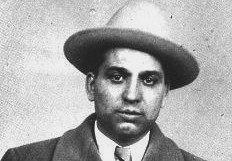 Harry Maione
Murderer · USA · 1937
Harry “Happy” Maione (1908 – February 19, 1942) was a New York mobster who serv…
12 victims
Harry Maione
Murderer · USA · 1937
Harry “Happy” Maione (1908 – February 19, 1942) was a New York mobster who serv…
12 victims
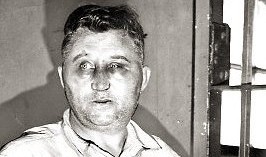 Harry Powers
Murderer · USA · 1931
Harry Powers was executed by hanging on March 18, 1932, at the West Virginia Pe…
5 victims
Harry Powers
Murderer · USA · 1931
Harry Powers was executed by hanging on March 18, 1932, at the West Virginia Pe…
5 victims
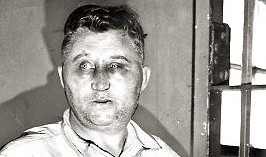 Herman Drenth
Murderer · USA · 1931
Herman Drenth was also known by the aliases Harry F. Powers and Cornelius O. Pi…
5 victims
Herman Drenth
Murderer · USA · 1931
Herman Drenth was also known by the aliases Harry F. Powers and Cornelius O. Pi…
5 victims
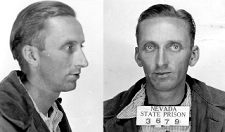 Luther Jones
Murderer · USA · 1936
Luther Jones Luther Jones was executed by asphyxiation-gas in Nevada on January…
4 victims
Luther Jones
Murderer · USA · 1936
Luther Jones Luther Jones was executed by asphyxiation-gas in Nevada on January…
4 victims
 Albert Dyer
Murderer · USA · 1937
Albert Dyer was a 32-year-old WPA crossing guard and traffic guard at Centinela…
3 victims
Albert Dyer
Murderer · USA · 1937
Albert Dyer was a 32-year-old WPA crossing guard and traffic guard at Centinela…
3 victims
 Yahweh ben Yahweh
Murderer · USA · 1980
Yahweh ben Yahweh was born and legally named Hulon Mitchell Jr. (October 27, 19…
23 victims
Yahweh ben Yahweh
Murderer · USA · 1980
Yahweh ben Yahweh was born and legally named Hulon Mitchell Jr. (October 27, 19…
23 victims
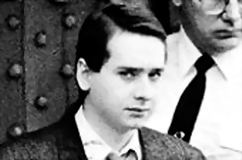 Robert Sartin
Homicide · United Kingdom · 1989
Robert Sartin was found to be unfit to stand trial and was being held in Moss S…
1 victim
Robert Sartin
Homicide · United Kingdom · 1989
Robert Sartin was found to be unfit to stand trial and was being held in Moss S…
1 victim
 Donato Anthony Corbo
Homicide · Australia · 2011
Name: Donato Anthony Corbo · Age at time of incident: 39 · 2:30 a.m. — April 29…
3 victims
Donato Anthony Corbo
Homicide · Australia · 2011
Name: Donato Anthony Corbo · Age at time of incident: 39 · 2:30 a.m. — April 29…
3 victims
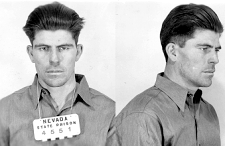 Raymond Plunkett
Murderer · USA · 1942
Raymond Plunkett was executed in the Nevada State Prison on June 30, 1944. He w…
1 victim
Raymond Plunkett
Murderer · USA · 1942
Raymond Plunkett was executed in the Nevada State Prison on June 30, 1944. He w…
1 victim
- Gender
- male
- Country
- USA
- Location
- Denver, Colorado, USA
- Date of birth
- November 10, 1882
- Age at first offence
- 59
- Characteristics
- —
- Victim profile
- Philip Peters, 73
- Method of murder
- Beating with a heavy iron stove shaker
- Date(s) of murder
- October 17, 1941
- Years active
- 1941
- Date of arrest
- J uly 30, 1942
- Status
-
Died in custody
Sentenced to life in prison on November 18, 1942; died at the Prison Hospital on May 16, 1967
Case record: Theodore Edward Coneys
Timeline
- September 1941 — Theodore Edward Coneys intended to ask former acquaintance Philip Peters for a handout at his home on Moncrieff Place in Denver, Colorado; Coneys broke into the house in Peters' absence to steal food and money and then decided to occupy an attic cubbyhole without Peters' knowledge.
- October 17, 1941 — Coneys panicked when he came upon Philip Peters in the kitchen and bludgeoned the 73-year-old Peters to death with a heavy iron stove shaker; Coneys returned to the attic cubbyhole.
- October 17, 1941 — Philip Peters' body was discovered later the same day after a neighbor, concerned Peters had not come by for dinner, called the police.
- July 30, 1942 — A routine police check resulted in an officer hearing a lock click on the second floor; police caught sight of Coneys' legs as he was going through the trapdoor and took him into custody; Coneys confessed to the crime.
- November 18, 1942 — Coneys entered the prison and was sentenced to life imprisonment at the Colorado State Penitentiary in Cañon City, Colorado.
- May 16, 1967 — Theodore Edward Coneys died at the Colorado State Penitentiary prison hospital.
Background
Theodore Edward Coneys was born November 10, 1882, in Petersburg, Illinois, to T. H. Coneys, a Canadian immigrant who owned a hardware store in Petersburg, and his wife. Some time after the elder Coneys passed away in 1888, Mrs. Coneys and her son moved to Denver, Colorado.
Coneys suffered from poor health and had been told by doctors not to expect to see his 18th birthday, so he did not finish high school. As an adult, he worked in advertising and as a salesman but spent much of his adult life homeless. Coneys resented the way he was treated by others for his frail condition, later expressing that he wanted a place where he could be alone and free from the judgment of others.
The offence
In September 1941, 59-year-old Theodore Coneys intended to ask former acquaintance Philip Peters for a handout at Peters' home on Moncrieff Place in Denver, Colorado. Coneys broke into the house in Peters' absence to steal food and money.
In the ceiling of a closet, Coneys found a small trapdoor that led to a narrow attic cubbyhole and decided to occupy the small space without Peters' knowledge. Coneys lived in Peters' house undiscovered for about five weeks.
On October 17, 1941, Coneys thought he heard Peters leave the house, but Peters was only taking a nap. Coneys came upon Peters in the kitchen and panicked. Coneys picked up a heavy iron stove shaker and bludgeoned the 73-year-old Peters to death. Coneys then returned to the attic cubbyhole.
The police later found evidence in the home including all of the home's doors and windows locked, and there was no other sign of forced entry. They noted the trapdoor but believed a normal-sized person could not fit through it. The police also found that the front door had been locked with a key and further secured with a chain, which could have only been done from inside the home, and the back door had been locked as well. They found 2 cast iron shakers in the kitchen, one with lots of dust collected on it and the other newly cleaned, as well as a damp towel with blood stains on it.
Investigation
A neighbor, concerned Peters had not come by for dinner, called the police, and Peters' body was discovered later the same day after the killing.
During the period of Coneys' occupation, Peters' wife had been in the hospital recuperating from a broken hip during and prior to Coneys' occupation of the attic. When she returned to live in the house with a housekeeper, both women would often hear strange sounds in the house. The housekeeper resigned after becoming convinced the house was haunted, and Mrs. Peters moved to western Colorado to live with her son.
After Mrs. Peters moved away, Coneys remained in the vacant house with occasional signs of his occupation written off as an apparition or local pranksters. Police continued routine checks.
On July 30, 1942, one of the police officers heard a lock click on the second floor. Running upstairs, the police caught the sight of Coneys' legs as he was going through the trapdoor. Coneys was taken into police custody and confessed to the crime. Local newspapers dubbed him the famous "Denver Spider Man of Moncrieff Place".
Arrest
On July 30, 1942, police caught sight of Coneys' legs as he was going through the trapdoor and took him into police custody.
Trial
Coneys was tried and convicted.
Sentencing
Coneys was sentenced to life imprisonment at the Colorado State Penitentiary in Cañon City, Colorado. He entered the prison on November 18, 1942.
Death and afterward
Theodore Edward Coneys died on May 16, 1967, at the Colorado State Penitentiary prison hospital.
Two episodes of popular American television shows appeared to have been inspired by the Denver Spiderman story, including the CSI: Las Vegas episode "Stalker" and The Simpsons episode "The Ziff Who Came to Dinner". Lowall, Gene (1946), "1942: the spider man", in Casey, Lee: Denver Murders. New York: Duell, Sloan and Pearce. OCLC 1446053 was listed under further reading. Carl Sifakis (1982), The Encyclopedia of American Crime, New York: Facts on File. ISBN 0-8317-2767-5. OCLC 9377647 was also listed under further reading. References to Wikipedia.org and PrisonMuseum.org were included.
Other details
- Coneys occupied the attic of Philip Peters' home for nine months.
- Peters' wife had been recuperating from a broken hip during and prior to Coneys' occupation of the attic.
- Coneys described his prison role later as the prison librarian at the Canon City Penitentiary.
- The narrative included additional material describing Coneys as "also known as Matthew Cornish."

Spotted an error, or have more information about this case?