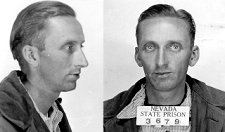
Luther Jones
Murderer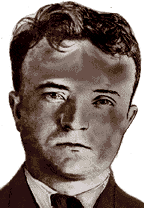 Paul Jaworski
Murderer · USA · 1926
Paul Jaworski was born in Poland as Paul Poluszynski in 1900. He later immigrat…
20 victims
Paul Jaworski
Murderer · USA · 1926
Paul Jaworski was born in Poland as Paul Poluszynski in 1900. He later immigrat…
20 victims
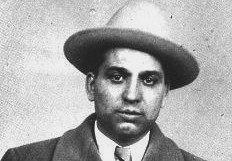 Harry Maione
Murderer · USA · 1937
Harry “Happy” Maione (1908 – February 19, 1942) was a New York mobster who serv…
12 victims
Harry Maione
Murderer · USA · 1937
Harry “Happy” Maione (1908 – February 19, 1942) was a New York mobster who serv…
12 victims
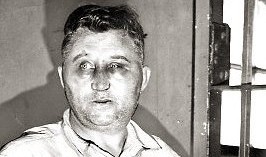 Harry Powers
Murderer · USA · 1931
Harry Powers was executed by hanging on March 18, 1932, at the West Virginia Pe…
5 victims
Harry Powers
Murderer · USA · 1931
Harry Powers was executed by hanging on March 18, 1932, at the West Virginia Pe…
5 victims
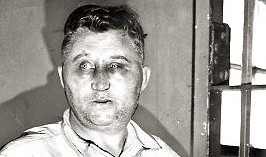 Herman Drenth
Murderer · USA · 1931
Herman Drenth was also known by the aliases Harry F. Powers and Cornelius O. Pi…
5 victims
Herman Drenth
Murderer · USA · 1931
Herman Drenth was also known by the aliases Harry F. Powers and Cornelius O. Pi…
5 victims
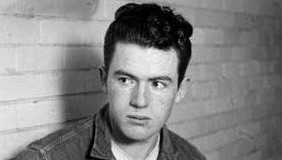 William Edward Hickman
Murderer · USA · 1926
William Edward Hickman was a man who tried to solve his financial problems by k…
5 victims
William Edward Hickman
Murderer · USA · 1926
William Edward Hickman was a man who tried to solve his financial problems by k…
5 victims
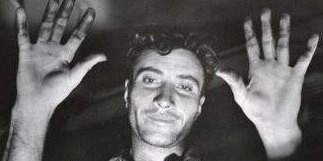 Albert Dyer
Murderer · USA · 1937
Albert Dyer was a 32-year-old WPA crossing guard and traffic guard at Centinela…
3 victims
Albert Dyer
Murderer · USA · 1937
Albert Dyer was a 32-year-old WPA crossing guard and traffic guard at Centinela…
3 victims
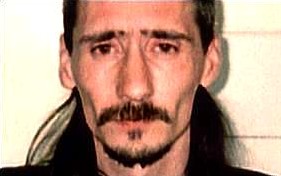 Lee Ford
Mass murderer · United Kingdom · 2000
Lee Ford · Lesley Ford (wife) · Michael Tranter (natural father of four childre…
5 victims
Lee Ford
Mass murderer · United Kingdom · 2000
Lee Ford · Lesley Ford (wife) · Michael Tranter (natural father of four childre…
5 victims
 Diana Lumbrera
Serial killer · USA · 1976
Diana Lumbrera (1976–1990) systematically suffocated 6 of her own children and…
7 victims
Diana Lumbrera
Serial killer · USA · 1976
Diana Lumbrera (1976–1990) systematically suffocated 6 of her own children and…
7 victims
 Christine Malèvre
Serial killer · France · 1997
Christine Malèvre Christine Malèvre (born 1970) was a French serial killer. She…
30 victims
Christine Malèvre
Serial killer · France · 1997
Christine Malèvre Christine Malèvre (born 1970) was a French serial killer. She…
30 victims
- Gender
- male
- Country
- USA
- Location
- Elko, Nevada, USA
- Date of birth
- 1904
- Age at first offence
- 32
- Characteristics
- —
- Victim profile
- Manuel Arrascada, Walter Godecke, Otto Heitman, and Johnny Elias
- Method of murder
- Shooting (.22 caliber pistol)
- Date(s) of murder
- October 1936
- Years active
- 1936
- Date of arrest
- —
- Status
-
Executed
Executed by asphyxiation-gas in Nevada on January 26, 1937
Name
Luther Jones
Status
Luther Jones was executed by asphyxiation-gas in Nevada on January 26, 1937.
Background
Luther Jones was born in Amboy, Indiana in 1904 and had a long criminal record. He had been released from the Montana State Penitentiary, traveled to Utah, and about six days after his release from the prison in Montana forced a taxi driver at gun point to drive him to Montello, Nevada. He let the taxi driver go but kept his cab. He eventually went to a ranch outside of Elko and held up three men. In the midst of this hold-up a fourth man stumbled on to the crime. Jones shot this man and then killed the other three men he was robbing. He was arrested shortly afterwards in Carlin.
The offence
Jones was convicted of killing Walter Godecke in Elko County in eastern Nevada in October of 1936. Jones’s victims were Manuel Arrascada of Elko, Walter Godecke, Otto Heitman, and Johnny Elias. The killings occurred during a botched robbery attempt.
Jones was walking west along the highway toward Carlin when he saw two men near the corrals. He headed toward them with robbery on his mind. Another man (Arrascada) joined the stockmen as Jones intercepted them. Pulling his pistol, he took $40 from the three men and forced them to walk to a nearby stand of willows. Jones said his intention was to tie them up in the bushes and leave them there, but things got out of hand. They came to a small shack and Jones herded them into the cramped quarters. He made the man who lived there, Elias, tie the stockmen up. When Jones tried to put a rope around Elias’ wrist, Elias began fighting back, and Jones shot Elias in the head with his .22 caliber pistol. Elias fell on the other three.
Jones then shot the three, covering them afterward. He got some clothes hanging in the shack and covered them up. Jones shut the door and put some wood in front of it, then went to the highway where he hitched a ride to Carlin where he was arrested.
Investigation
While Jones was sitting in jail, local law enforcement officers searched for three missing ranchers. A railroad official told them he had seen Jones and three men walking away from the corrals on the eastern outskirts of Elko.
FBI agent P.S. Bailey, Jr., and Jailer Ed Kendrick went hunting for the bodies but did not find them at first. They returned to the jail where Jones gave them detailed instructions. Along with Deputy Guidici, they returned to the stockyards area and found the cabin.
When the door was opened, there was a “horrible scene.” Deputy Guidici said: “The men's bodies were lying in a heap - one on top of the other, soaked in blood, dead and stiff, it being over 24 hours since shot.”
The lawmen pulled Johnny Elias’ body off first. Elias had been shot in the back of his neck and in back of his left ear. Arrascada was next. His hands were tied in the back with a belt, and he had been shot in the left cheek. Heitman was pulled off the pile; his hands were also secured by a belt. Heitman had been shot in the left belly, under his right eye, between his eyes, and through his left cheek. Godecke was on the bottom with bullets through his left hand, two in the left arm, in back of his left ear, and through his right temple. Godecke’s hands were also secured by a belt. Unless some slugs tore through more than one body, Jones had “over killed” with at least twelve shots.
There was strong talk about lynching Luther Jones. Between 150 to 200 angry citizens gathered outside the jail entrance. Sheriff Charles A. Harper told them that no good would come from vigilante violence. Frank Arrascada, brother of victim Manuel, and Joe Orbe talked to the mob and eventually calmed them down.
Arrest
Jones was playing cards at Max Sperlich’s Saloon in Carlin when a bystander saw a pistol fall from his pocket and notified the night constable. With help from bar patrons, the lawman subdued Jones and took the gun away from him. He was taken to Elko where he was sentenced to 180 days for resisting an officer.
Officials found Jones had bounced a ten dollar check in Elko. Jones asked Constable A.H. Berning how they executed killers in Nevada, and Berning told him gas was used for capital punishment; the question aroused suspicion in the constable.
Jones received a bulletin from Ogden, Utah, police asking lawmen to be on the lookout for a stolen car and kidnapped driver. The car was found in an Elko garage, and Jones was identified as the person who brought the vehicle in for repairs. Jones had forced the driver out of the car in Montello. The automobile owner hopped an eastbound freight train back to Ogden.
Deputy S.O. Giudici confronted Jones in his cell. The prisoner immediately caved in and started talking. Jones admitted to stealing the car and told Giudici the car had broken down east of Elko and he had the vehicle towed to town. He said he cashed the bad check.
Trial
A quick hearing was held with no one in the courtroom but officials and the accused. District Judge James Dysart appointed local attorney C.B. Tapscott to defend Jones. Elko County’s district attorney, D.A. Castle, prosecuted the case.
At the beginning of his three day trial, Jones recanted his confession and blamed the whole episode on a friend, Bert Wilson. Witness after witness soon disproved Jones’s new claim.
Gertrude Roberts, a Pocatello, Idaho, hardware clerk, said Jones purchased a gun from her earlier in the week of the murders. She said he was alone.
Gertrude Roberts testified about observations on the morning of the crimes: Jones saw Wellington Weiland pay Manuel Arrascada $57.50 for a bull. Weiland said he saw the defendant watching them. Later in the day, Roberts testified further that Weiland added that he saw Jones again trying to thumb a ride out to the stockyards. She said he was alone.
Patrolman Frank Carpenter noticed Jones on the highway after the killings; Carpenter said he was alone.
Manuel’s cousin, Domingo Arrascada, remembered seeing Luther at the stockyards watching cattle loading operations on the day of the shootings. Domingo Arrascada said Jones was alone.
Jones changed his plea to not guilty, by reason of insanity. On the stand, Jones claimed he had severe headaches brought on by sunstroke suffered when he was 14. He also claimed he had a fractured skull from a fight with another prisoner in Montana. Jones said he used aliases and that he had served four sentences in Indiana and Montana prisons. He claimed the headaches caused him lapses in memory and that he was foggy about exactly what happened. Despite the claimed fuzzy memory, the jury was told he had given an accurate account of the killings in his confession.
In 35 minutes the jury found Jones guilty of first degree murder.
On the day following his trial, jailers found a pistol in his cell. Jones had carved it from a bar of soap with a razor blade and colored it with a pencil. He had drilled a hole in the barrel and pushed in a small screw below the opening. It looked real. A matchbox filled with pepper was also confiscated, and Jones planned to blow it into the jailer’s eyes.
Sentencing
On November 23, 1936, Judge Dysart sentenced Luther Jones to death by lethal gas at the state prison in Carson City.
Jones was taken to Carson City the following morning. He cried several times during the 300 mile trip and repeatedly asked what would happen to his body.
Appeals
No appeal information was included.
Outcome
Jones was executed in the Nevada State Prison on January 26, 1937 after only two months on Death Row. Only 103 days had passed from the day of the murders.
Aftermath
Jones requested coconut cream pie and a quart of milk at midnight, then slept soundly until awakened by Warden William Lewis just minutes before his execution. Jones stepped in the gas chamber at 6:10 a.m. Heavy leather straps held him in the chair.
When asked if he had any last words, he replied, “I would like to take the sheriff with me.”
With those words, lethal gas began rising from beneath the chair. His face turned bright red as he breathed the first deadly fumes. Jones gasped twice and was unconscious in two minutes. The man who was arrested before his murders were even discovered was dead in 12 minutes.
Spotted an error, or have more information about this case?