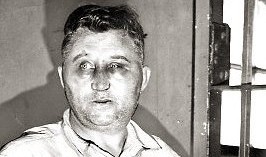
Harry Powers
Murderer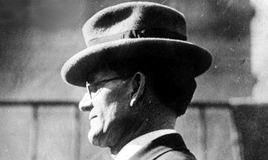 William Hale
Murderer · USA · 1921
Name: William Hale · Known as: the so-called "King of the Osage Hills" · Occupa…
24 victims
William Hale
Murderer · USA · 1921
Name: William Hale · Known as: the so-called "King of the Osage Hills" · Occupa…
24 victims
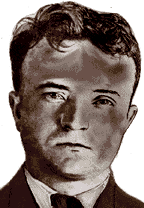 Paul Jaworski
Murderer · USA · 1926
Paul Jaworski was born in Poland as Paul Poluszynski in 1900. He later immigrat…
20 victims
Paul Jaworski
Murderer · USA · 1926
Paul Jaworski was born in Poland as Paul Poluszynski in 1900. He later immigrat…
20 victims
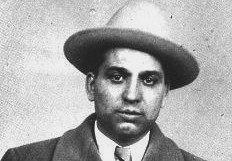 Harry Maione
Murderer · USA · 1937
Harry “Happy” Maione (1908 – February 19, 1942) was a New York mobster who serv…
12 victims
Harry Maione
Murderer · USA · 1937
Harry “Happy” Maione (1908 – February 19, 1942) was a New York mobster who serv…
12 victims
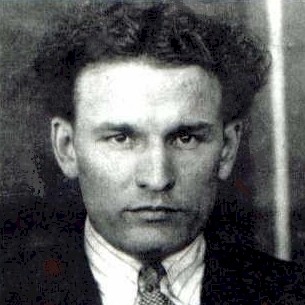 William Kenneth Wagner
Murderer · USA · 1924
William Kenneth (Kinnie) Wagner (born February 18, 1903 in Scott County, VA) wa…
6 victims
William Kenneth Wagner
Murderer · USA · 1924
William Kenneth (Kinnie) Wagner (born February 18, 1903 in Scott County, VA) wa…
6 victims
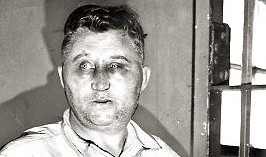 Herman Drenth
Murderer · USA · 1931
Herman Drenth was also known by the aliases Harry F. Powers and Cornelius O. Pi…
5 victims
Herman Drenth
Murderer · USA · 1931
Herman Drenth was also known by the aliases Harry F. Powers and Cornelius O. Pi…
5 victims
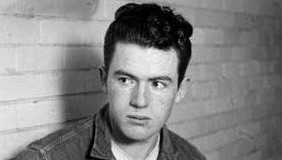 William Edward Hickman
Murderer · USA · 1926
William Edward Hickman was a man who tried to solve his financial problems by k…
5 victims
William Edward Hickman
Murderer · USA · 1926
William Edward Hickman was a man who tried to solve his financial problems by k…
5 victims
 Carman Jenkins
Murderer · USA · 2008
Carman Jenkins pleaded guilty to murder in the death of Mekole Harris and was s…
1 victim
Carman Jenkins
Murderer · USA · 2008
Carman Jenkins pleaded guilty to murder in the death of Mekole Harris and was s…
1 victim
 George Mercer
Murderer · USA · 1978
George C. "Tiny" Mercer (August 31, 1944 – January 6, 1989) was convicted of th…
1 victim
George Mercer
Murderer · USA · 1978
George C. "Tiny" Mercer (August 31, 1944 – January 6, 1989) was convicted of th…
1 victim
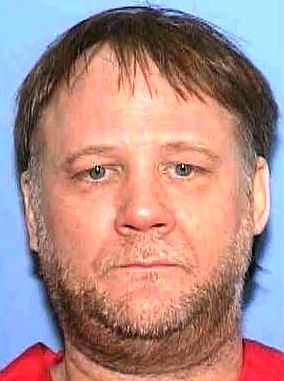 Earl Wesley Berry
Murderer · USA · 1987
Earl Wesley Berry was convicted of capital murder and sentenced to death for th…
1 victim
Earl Wesley Berry
Murderer · USA · 1987
Earl Wesley Berry was convicted of capital murder and sentenced to death for th…
1 victim
 Cody Legebokoff
Serial killer · Canada · 2009
Cody Legebokoff (born c. 1990) was tried in the Supreme Court of British Columb…
4 victims
Cody Legebokoff
Serial killer · Canada · 2009
Cody Legebokoff (born c. 1990) was tried in the Supreme Court of British Columb…
4 victims
- Gender
- male
- Country
- USA
- Location
- Quiet Dell, West Virginia, USA
- Date of birth
- 1889
- Age at first offence
- 42
- Characteristics
- bluebeard
- Victim profile
- Aster Eicher, 50, and her children Greta, 14; Harry, 12, and Anabel, 9 / Dorothy Lemke, 50
- Method of murder
- Hanging - Hitting with a hammer
- Date(s) of murder
- July 1931
- Years active
- 1931
- Date of arrest
- —
- Status
-
Executed
Executed by hanging on March 18, 1932, at the West Virginia Penitentiary in Moundsville
Case overview
Harry Powers was executed by hanging on March 18, 1932, at the West Virginia Penitentiary in Moundsville.
Background
Harry F. Powers used aliases, including “Cornelius O. Pierson.” He was known as a “Bluebeard of Quiet Dell,” and he operated through matrimonial and “lonely hearts” correspondence schemes.
Accounts described Powers as a rural resident and as a man who traveled and used written correspondence to attract widows and women seeking courtship and possible marriage. The investigation and later discussion connected him to luring women under assumed names, taking their money, and keeping victims in a property described as having an underground or enclosed killing chamber beneath his garage, along with an “operations room.”
Powers had a wife, Luella, and was described as having been legally married in Clarksburg while traveling for his scheme. The case materials also described tensions about his marital status and accounts that he pursued widows while maintaining a cover of business trips.
The execution-day reporting described his appearance in the death chamber: he was dressed in a black suit with a pin stripe, and wore a bright light blue necktie, and a white broadcloth shirt. Another account described him as being dressed in a black suit with a pin stripe and wearing a gaudy blue tie and a white collar.
The offence
Powers was accused and convicted of first degree murder as charged in the within indictment, with the punishment set as death by hanging.
The jury conviction described the murder of five persons—two women and three children:
- Mrs. Dorothy Pressler Lemke, of Northboro, Mass.
- Asta Eicher and her three children.
The killing location was described as being near Powers’ “chamber of horrors” garage and on his wife’s deserted farm in Quiet Dell near Clarksburg. The bodies of the victims were described as being buried in a narrow drainage ditch near the garage. Another account described that five corpses were unearthed from a garden and later dug up in a drainage ditch beside Powers’ garage.
During police questioning and later reporting, Powers’ confession and the details attributed to it included that he bound victims and killed them, with the materials describing methods including gassing and bludgeoning with a claw hammer, and that he watched as they died.
One execution-day newspaper account stated that Powers confessed to the murders of Mrs. Dorothy Pressler Lemke, Mrs. Asta Buick Eicher, and the three children of Asta Eicher, and that the bodies had been buried in a narrow ditch near Powers’ garage.
Investigation
Investigation began after relatives and neighbors became suspicious and after missing persons were reported. The investigation involved:
- Police being contacted after a boarder, William O’Boyle, found that Eicher and her children were gone and that the man he knew as “Pierson” was emptying the house.
- Investigators following letters and clues from love letters found at the victims’ residence.
- Police tracing an alias to a post office box and connecting it to Powers’ presence in Quiet Dell.
- A search of Powers’ property that revealed items connected to the victims and a property described as having an enclosed killing chamber.
One account described that two months earlier, Powers had built a garage on the property. Investigators found jewelry, clothes, and other items that had belonged to Eicher. Another account described that a farmer complained about noxious odors from a “lab,” and that police found two rooms: a killing chamber where victims were bound and lethal gas was piped in, and an adjoining “operations room” with an observation window.
Five bodies were described as being found near the garage area:
- Aster Eicher and her three children from Park Ridge, Illinois.
- Dorothy Lemke from Northboro, Massachusetts. The materials also described that it could not be proved that Powers killed more than the five buried in his yard.
Confession and disputed scope of victims
After his arrest, Powers was described as confessing to killing the five whose bodies were found buried near the garage. He was also described as being questioned about how many victims he had killed, and he stated:
“You've got me on five, what good would fifty more do?”
Other accounts included claims that he was suspected of as many as fifty victims, but the materials also stated it could not be proved that he killed more than the five buried in his yard.
Arrest
Powers was arrested after an anonymous tip and after investigation linked the alias “Cornelius O. Pierson” to Quiet Dell and to the garage property.
In one account, Asta Eicher and her children were described as disappearing after a man called “Cornelius O. Pierson” entered her home and then the family disappeared. When police probed further, they found love letters that led to a property near Quiet Dell where “Pierson” lived as “Harry Powers” with his wife Luella.
Trial
Venue and timing
Interest in Powers’ trial was described as intense, and the trial was held in a specially constructed courtroom at Moore’s Opera House in Clarksburg.
One account described that the trial started on Dec. 7, 1931. Another account described trial proceedings as moving quickly and included reference to argument, deliberation, and return of the verdict.
Verdict
The jury found Powers guilty of first degree murder as charged in the within indictment.
An excerpted courtroom record quoted the verdict language and established the indictment and the alias used:
“We, the jury, find the defendant, Harry F. Powers, alias Cornelius O. Pierson, guilty of first degree murder as charged in the within indictment.”
Jurors deliberated and initially considered mercy recommendations in deliberations described as taking a certain duration in one account.
One account stated the jury returned the guilty verdict after one hour and 50 minutes of deliberation. Another account described the jury deliberating for an hour and 47 minutes. The materials also described multiple ballots considered by the jurors.
Motion for new trial and exception
A defense attorney, J. E. Law, asked for a new trial and argued “sympathy, justice, and mercy.” The state demanded the death penalty.
An excerpt from the transcript of record included an order on a later date. It stated that:
- A motion to set aside the verdict returned by the jury on the 10th day of December, 1931, and to grant a new trial was argued and considered.
- The motion was overruled and the new trial denied.
- The defendant duly excepted to the ruling.
Sentencing
After denial of the motion for a new trial, the court pronounced sentence:
“... it is considered and ordered by the Court that he, the said Harry F. Powers, alias Cornelius O. Pierson, be hung by the neck until he is dead, and the execution of this judgment to be done upon him, the said Harry F. Powers, alias Cornelius O. Pierson, by the Warden of the penitentiary of this State at Moundsville on Friday, the 18th day of March, in the year Nineteen Hundred and Thirty-two; said execution to take place within the walls of said penitentiary according to law.”
The order also described that custody would be retained by Sheriff and jailer of Harrison County until properly authorized guards conveyed him to the penitentiary at Moundsville.
The excerpt included that Powers expressed a desire to apply for a writ of error and supersedeas, and that execution was suspended until the first day of the March Term, 1932, to enable such application.
Appeals
Writ of error and supersedeas
The sentencing order excerpt recorded Powers’ expressed desire to apply for a writ of error and supersedeas, and it recorded that the execution was suspended until the first day of the March Term, 1932.
No further appellate outcome was provided in the materials beyond the fact that he was executed on March 18, 1932.
Outcome
Harry F. Powers was executed by hanging at the West Virginia Penitentiary in Moundsville on March 18, 1932.
Execution details
A Camden Courier-Post account described that he went to his death on the gallows with “his lips sealed,” and it described:
- A prison announcement that the trap was sprung at 9:00 o’clock.
- Five physicians declaring him dead eleven minutes later.
- The murder for which he was convicted being identified as that of Mrs.
- His legs and hands being strapped securely as he stood behind a curtain before the trap release.
The account described the warden, A. C. Scroggins, and the prison chaplain, E. M. Giesey, and stated that the warden asked Powers if he had any farewell statement to make. Powers answered:
“No”
The chaplain’s statement was given verbatim:
“We commit Harry Powers's soul to Thee and ask that Thou pardon his sins,” chanted the chaplain.
It also stated that a guard slipped the black death cap over Powers’ head quickly, and that at the signal of Deputy E. C. Brill, captain of the prison guards, Powers dropped through the trap. The same account described physicians using stethoscopes and a stop watch, and it described that Powers died without a tremor.
A different newspaper account described that Powers was strapped securely, stood behind the dark curtain at first from the gaze of the forty-two spectators, and that the warden and prison chaplain were positioned beside him. That account stated he had been prepared before the march started for the death house and described people present, including “state officials, prison officials, doctors, policemen, even one of the jurors who convicted the man.”
It also described Powers told a “fantastic story of how two mysterious men were responsible” for the death of Mrs. Dorothy Pressler Lemke, the woman he was convicted of murdering.
Official pronouncement
Powers was officially pronounced dead eleven minutes later by Dr. R. A. Ashworth, prison physician, and Dr. O. P. Wilson, the latter’s assistant. Another doctor, Dr. H. H. Haynes, of Clarksburg, who witnessed the hanging, helped the prison physicians make their examinations.
A report also stated that after the trap had sprung, Dr. Haynes disclosed he had Powers’ written confession admitting in detail the murder of five persons.
Aftermath
Reports of confession and last-minute statements
After his death, physicians and law enforcement officials were described as discussing Powers’ confession.
A newspaper account described that Dr. Haynes and Sheriff W. B. Grimm told newspaper men that Powers described in detail how he killed his victims and that Dr. Haynes had financed part of Powers’ defense, with proceeds intended to reimburse him.
That account described an envelope addressed to Warden Scroggins being opened after Powers’ body was removed, and it stated that the letter protested Powers’ innocence and attacked capital punishment and the fairness of the trial.
The materials included an account attributed to Sheriff Grimm about what Powers said regarding his refusal to sign a confession:
“because it involves my wife and her sister.”
Powers later said:
“Sure, I'll sign it.”
The narrative further described Powers’ statement about being sworn on the Book of God regarding his innocence regarding a particular set of jewelry questions:
“With my hand on this Book of God, I swear by the teachings of my mother, that I know nothing about it.”
Claims about further murders and an alleged confession to another case
One execution-day account described that Dr. W. A. Marsh of Greenlawn, near Adamston, stated he had it “from a reliable source” that Powers in one statement admitted to the murder of Dudley C. Wade, carpet sweeper salesman, who disappeared so mysteriously, May 10, 1928. The materials also stated Wade was never found and that officers felt certain he either was dead or living under an assumed name.
Burial arrangements
Another account described that Powers’ body was not claimed by his widow and stated that it would be buried in the prison potter’s field in dismal Toms Run valley.
Other details
People named in connection with the case and proceedings
- Nathan Richards, described as a Bridgeport farmer, was quoted as delivering the verdict.
- Clerk Ben B. Jarvis read the verdict and was mentioned in the courtroom order excerpt.
- Judge John C. Southern of Harrison County criminal court was named in relation to motions and sentencing timing.
- Judge Birk S. Stathers of Harrison County circuit court was named in relation to new trial proceedings.
- Prosecuting Attorney Will E. Morris and his assistant William G. Stathers were described as presenting the state’s case.
- Defense attorney J. E. Law was described as pleading for mercy and as arguing for a new trial.
- Sheriff W. B. Grimm was named in relation to confession discussion and incarceration custody.
- Warden A. C. Scroggins was named in relation to the execution.
- Prison chaplain E. M. Giesey was named in relation to the chaplain’s remarks.
- Deputy E. C. Brill, captain of the prison guards, was named as the signal officer for the trap.
- Dr. R. A. O. P. Wilson, assistant, pronounced death eleven minutes later.
- Dr. H. H. Haynes, of Clarksburg, witnessed the hanging and handled examinations; he was also described as disclosing Powers’ written confession after the execution.
- Dr. W. A. Marsh, of Greenlawn, near Adamston, was named in connection with a claim about Dudley C. Wade.
- T. A. Hoganson, Grundy county, Illinois coroner, was quoted about his belief Powers killed an unidentified woman at Morris, Illinois.
Aliases and connections
The materials included that Powers was known by an assumed name “Cornelius O. Pierson” and that police determined he had befriended the two women under the assumed name.
In one account, a boarder, William O’Boyle, was described as contacting police after discovering Eicher and her children were gone and that the man emptying the house identified himself as “Cornelius O. Pierson, of the Fairmont Hotel, Fairmont, W.Va.”
Items found and correspondence
Police found love letters and personal effects of one of his victims, and later discovered a trunk-load of correspondence from more than 100 women. A roll of film left in a camera was developed with images of Lemke and Powers together.
One account described that investigators found a trunk-load of correspondence from more than 100 love-starved widows and spinsters and described letters and photos suggesting he had operated as a love racketeer for more than a decade.
Trial evidence and references in the record excerpt
A courtroom record excerpt described the defendant in custody, represented by J. E. Law, and included the denial of the motion for new trial and sentence scheduling for Friday, the 18th day of March, 1932.
Execution witnesses and crowd
Accounts described that the prison had a holiday-like festive appearance in preparation for the execution and included that a crowd gathered outside the prison and that automobiles were lined up for blocks. Another account described forty-two spectators inside.
Quotations and claims about Powers’ personal beliefs
The materials described that while in the Clarksburg jail, Powers claimed to be an atheist, and it also stated that several days earlier he expressed belief in a Supreme Being and sought solace in religion.
Additional narrative elements included in the materials
The materials contained various narrative descriptions of the scheme’s operation, including:
- that Powers constructed a sound-proof concrete underground chamber in his house, or an enclosed chamber described as beneath his garage,
- that he confided to police that it gave him sexual excitement to hear victims’ screams from within the chamber at night,
- that he would throw victims, including children, down the chamber and use buckets to send down victims for signatures on letters withdrawing money and liquidating assets,
- that he usually killed children right away with a hammer and either let women starve or beat them to death,
- that police suspected he may have killed as many as “fifty” women in all.
Powers was also described as having built the garage in Quiet Dell, and that prosecutors and investigators believed the investigation found evidence of multiple victims.
Spotted an error, or have more information about this case?