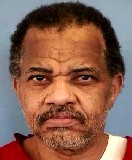
Ronnie Lee Conner
Murderer Brian Kevin Rosenfeld
Murderer · USA · 1985
Brian Kevin Rosenfeld Brian Kevin Rosenfeld was sentenced to three concurrent l…
23 victims
Brian Kevin Rosenfeld
Murderer · USA · 1985
Brian Kevin Rosenfeld Brian Kevin Rosenfeld was sentenced to three concurrent l…
23 victims
 Yahweh ben Yahweh
Murderer · USA · 1980
Yahweh ben Yahweh was born and legally named Hulon Mitchell Jr. (October 27, 19…
23 victims
Yahweh ben Yahweh
Murderer · USA · 1980
Yahweh ben Yahweh was born and legally named Hulon Mitchell Jr. (October 27, 19…
23 victims
 Russell Ellwood
Murderer · USA · 1991
Russell Ellwood was a former taxi driver. Authorities suspected him of killing…
20 victims
Russell Ellwood
Murderer · USA · 1991
Russell Ellwood was a former taxi driver. Authorities suspected him of killing…
20 victims
 Robert Martines Perez
Murderer · USA · 1994
Name: Robert Martines Perez · Other name used in proceedings: Robert Martinez P…
15 victims
Robert Martines Perez
Murderer · USA · 1994
Name: Robert Martines Perez · Other name used in proceedings: Robert Martinez P…
15 victims
 Ronnie Hyde
Murderer · USA · 1998
Ronnie Hyde (TDCJ Number: 999357) was born on 10/21/1958. · Date received: 5/24…
1 victim
Ronnie Hyde
Murderer · USA · 1998
Ronnie Hyde (TDCJ Number: 999357) was born on 10/21/1958. · Date received: 5/24…
1 victim
 Carlyle Harris
Murderer · USA · 1891
Carlyle Harris was executed by electrocution at Sing Sing Prison on May 7, 1893…
1 victim
Carlyle Harris
Murderer · USA · 1891
Carlyle Harris was executed by electrocution at Sing Sing Prison on May 7, 1893…
1 victim
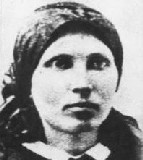 Anna Mansdotter
Murderer · Sweden · 1889
Anna Månsdotter was executed by beheading with an axe in Kristianstad on August…
1 victim
Anna Mansdotter
Murderer · Sweden · 1889
Anna Månsdotter was executed by beheading with an axe in Kristianstad on August…
1 victim
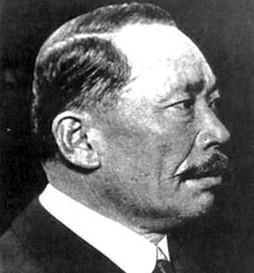 Lock Ah Tam
Murderer · United Kingdom · 1925
Lock Ah Tam was 54 when he killed his wife and two daughters. He had been a suc…
3 victims
Lock Ah Tam
Murderer · United Kingdom · 1925
Lock Ah Tam was 54 when he killed his wife and two daughters. He had been a suc…
3 victims
 Ivan Ray Murphy
Murderer · USA · 1989
January 9, 1989 — Ivan Ray Murphy and Douglas Stoff went to Lula Mae Denning’s…
1 victim
Ivan Ray Murphy
Murderer · USA · 1989
January 9, 1989 — Ivan Ray Murphy and Douglas Stoff went to Lula Mae Denning’s…
1 victim
- Gender
- male
- Country
- USA
- Location
- Lauderdale County, Mississippi, USA
- Date of birth
- May 1, 1959
- Age at first offence
- 31
- Characteristics
- kidnapping, robbery, crack addict, history of mental illness
- Victim profile
- Celeste Brown
- Method of murder
- Cutting her throat
- Date(s) of murder
- January 1, 1990
- Years active
- 1990
- Date of arrest
- Next day
- Status
-
Sentenced to death
Sentenced to death on July 25, 1990
Case details
Ronnie Lee Conner was convicted of capital murder for the kidnap, robbery and murder of an elderly woman, Celeste Brown, by a court of the Lauderdale County, Mississippi. In a separate hearing, he was sentenced to death by lethal injection.
Timeline
- New Year’s Day of 1990 (mid-afternoon) — Children spotted a light green car parked beside a dirt road on the outskirts of Meridian, Mississippi, and found an elderly white female slumped over on the passenger side with a slashed throat and dead.
- New Year’s Day of 1990 (shortly after 3:00 p.m.) — Emergency personnel arrived on the scene; the body of the victim, later identified as Celeste Brown, was still warm.
- New Year’s Day of 1990 (about 2:30 p.m.) — Brown was supposed to have picked up a friend at the Meridian Amtrak station around 2:30 p.m.
- New Year’s Day of 1990 (1:02 p.m.) — A Wal-Mart receipt was generated at 1:02 p.m. on New Year’s Day, 1990 and was among items collected from Brown’s car.
- New Year’s Day of 1990 (around 10:00 a.m.) — Earnest Stevens testified that Conner came to the Greyhound bus station and was seen by Frank Blair at about 10:00 a.m. while they drank wine.
- New Year’s Day of 1990 (around 12:00 noon to 12:30 p.m.) — James Perkins testified he saw Conner sitting in the pool hall section of Perkins’ Grocery and Pool Hall between 12:00 and 12:30 p.m.
- New Year’s Day of 1990 (about 1:00 p.m.) — Conner and Stevens left Dubose’s apartment; Stevens testified Conner showed him a “blade” which looked like a silver steak knife in front of the Union Hotel.
- New Year’s Day of 1990 (approximately 1:00 p.m.) — Earnest Stevens testified that while approaching the Terminal Cafe area, Conner approached an old lady, discussed money, and then made her get off into her car.
- New Year’s Day of 1990 (afternoon) — Conner visited Smitty’s Grocery and shown a ring to clerks; Evelyn Cole recalled selling him beer in the afternoon of January 1, 1990.
- New Year’s Day of 1990 (sometime later in the afternoon, beginning to get dark) — Vicky Gulley left Eastern Gardens and later sold the ring to Fred Parnell at the Chantiki Club for fifteen dollars and bought a rock of crack cocaine.
- New Year’s Day of 1990 (evening, after returning to Eastern Gardens) — Gulley returned to Conner’s apartment and found Conner, Will McNeil, and “Rex, a guy that sells the cocaine,” with cocaine smoke in the apartment; Conner boasted about committing murder that day.
- January 1, 1990 (around 4:30 p.m.) — Robert Brown testified that Conner came by, went into Brown’s bedroom, and left a bag of nails for “Pooky,” Taylor’s son.
- January 2, 1990 — Earnest Stevens testified that Conner was again seen at the Plasma Center; Blair testified Conner told him “Man, I got into some shit.” Police procured a warrant and searched Conner’s apartment on January 2.
- January 2, 1990 (the following day after New Year’s Day findings) — Police collected and tested evidence including items seized from Conner’s apartment and from Brown’s car; the crime lab found no blood on the seized clothing, but recovered hair from the corduroy coat and fragments of Negroid hair from Brown’s car passenger seat and from the victim’s clothing.
- January 4, 1990 — Frank Blair’s written prior statement was referenced as having been given on January 4, 1990.
- March 21, 1990 — Conner was admitted to a state mental hospital for evaluation of his competency to stand trial and sanity at the time of the crime.
- May 3, 1990 — A letter to the trial judge reported evaluation findings: Conner was competent to stand trial at that time and staff concluded he knew the difference between right and wrong at the time of the crime.
- July 23, 1990 — Trial was held on July 23, 1990.
- July 25, 1990 — Conner was sentenced to death on July 25, 1990.
- December 2, 1993 — Supreme Court of Mississippi issued the EN BANC decision in Ronnie Lee Conner v. State of Mississippi.
- Wednesday, January 19, 1994 — Wednesday, January 19, 1994, was set for the execution of the sentence by the infliction of the death penalty in the manner provided by law.
Background
Celeste Brown, an elderly white female, was found dead after a light green car was spotted beside a dirt road on the outskirts of Meridian, Mississippi. Brown had a slashed throat and was dead when children found her. The spot where Brown was found dead in her car was about 2.2 miles from the Amtrak station and only a very short distance from Eastern Gardens, an apartment complex where Ronnie Lee Conner lived.
The offence
The State presented evidence that Conner killed Celeste Brown while she was engaged in circumstances involving kidnapping and robbery.
Victim and possessions
After talking with Celeste Brown’s family, the police learned that Brown was wearing a diamond cluster ring and carrying approximately two hundred dollars in cash on the day of the murder. Both the ring and the cash were missing.
Injury and autopsy findings
Dr. Steven Hayne, a pathologist and forensic scientist, conducted an autopsy and concluded that the neck wound perforated Brown’s jugular vein and entered her oral cavity, which caused death. Hayne testified that given Brown’s posture and the location of the injury, blood would have flowed from the wound at a relatively slow rate. In Hayne’s opinion, Brown could have lived for five to ten minutes after the attack. Hayne also thought the wounds were inflicted by a small knife with a single edge.
Investigation and evidence
Items collected from the vehicle
Police collected several items from the interior of the car, including:
- “a four-inch, blood stained knife blade without a handle which was lying on the front floorboard;”
- “a brown purse, open, with its contents strewn on the front floorboard; and”
- “several shopping bags, one of which contained a receipt from Wal-Mart generated at 1:02 p.m. on New Year's Day, 1990.”
Statement implicating Conner
The following day, a black male named Earnest Stevens came to the Meridian Police Headquarters and gave a statement implicating Ronnie Conner in the murder.
Search of Conner’s apartment
On the afternoon of January 2, 1990, police procured a warrant and searched Conner’s apartment. The police seized as possible evidence “a tan corduroy jacket and a multicolored shirt” along with “an aluminum can and two lengths of pipe which appeared to be crack cocaine paraphernalia.” The jacket, the shirt, and several items taken from Celeste Brown’s car were forwarded to the State Crime Lab. The crime lab found no blood on the seized clothing, but a hair of Caucasian origin was recovered from the corduroy coat, and the hair was insufficient for comparison purposes. Several fragments of Negroid hair were recovered from the passenger seat of Celeste Brown’s car and from the victim’s clothing, but those fragments were insufficient for comparison purposes.
Conner’s questioning and denial
Conner was carried to the police station for questioning immediately following the search. He categorically denied any knowledge of the crime and, according to Officer James Brown, gave an account of his whereabouts the previous day. Conner stated that he had awakened around 10:00 a.m. on New Year’s Day and did not leave his apartment until sometime between 10:00 and 11:00 a.m. He then proceeded to the bus station where he met “Frank.” He and Frank went to the Terminal Cafe and sat around drinking wine for about half an hour. Conner stated that upon leaving the Terminal Cafe, he walked to the Davis Court area and from there to the Red Line area where he stayed for about an hour. After lunch, he walked back to Eastern Gardens and slept until after dark. Conner was unable to provide the names of anyone who might have seen him during his excursions.
Arrest
Conner was carried to the police station for questioning immediately following the January 2, 1990 search of his apartment.
Trial
Parties and proceedings
Conner was tried in the Circuit Court of Lauderdale County, Mississippi, on a charge of capital murder, and was found guilty.
Guilt phase: jury finding
After hearing all the evidence, the jury retired and found Conner guilty of capital murder.
Prosecution evidence at trial
Eyewitness testimony of kidnapping
Earnest Stevens testified that sometime prior to 1:00 p.m. on New Year’s Day, 1990, Conner came to the Union Hotel where Stevens had been living with Jessie Dubose. At approximately 1:00 p.m., Stevens and Conner left Dubose’s apartment. While walking down the stairs, Conner showed Stevens a “blade” which looked like a silver steak knife. While standing in front of the Union Hotel, the two observed “a dude called Snuff” coming up the street. As Snuff approached, Conner told Stevens that he was “fixing to get him up” (meaning Snuff) and see if he had any money. After Snuff had passed, Stevens “talked him out of that” by telling him there “ain’t no use in getting in trouble.”
Stevens testified that Conner then walked down the street toward the Terminal Cafe and Stevens followed a few minutes later. Stevens, Conner, and “Frank” sat in front of the Cafe and talked for about ten or fifteen minutes. Frank then left. About that time, a light green car pulled up across the street at the Amtrak station, and an old lady got out. Stevens testified that Conner walked across the street and approached the lady. After the two talked for a moment, the lady reached in her purse and gave Conner something. Stevens testified that Conner then “put something to her in the back and just made her get off into her car.” Conner then climbed into the driver’s seat and drove away.
Testimony about ring and cash shortly after
Vicky Gulley testified that on New Year’s Day, 1990, she went to visit her uncle, Charlie Clark, at Eastern Garden apartments. She encountered Conner later in the afternoon and he asked her if she wanted to drink beer. Conner had two quarts in a paper bag. Gulley and Conner went inside her uncle’s apartment and sat around drinking the beer for about half an hour. Gulley observed that Conner had blood on his hand and Conner explained he had gotten hurt at work. Gulley testified that Conner was wearing a brown corduroy coat but the coat did not appear to have any blood on it. Gulley testified that Conner produced “a gold ring with a diamond on top.” She said Conner stated he had found it at work. Gulley and her uncle teased Conner about the ring not being real, and Conner told Gulley she “could have the ring, because it wasn't going to do him no good if it wasn't real.”
Gulley further testified that in addition to the ring, Conner carried a large amount of cash which included “a hundred dollar bill, a fifty and some twenties.” Gulley testified that Conner asked her if she wanted to “get high,” and that she agreed. Conner told her that he first had to go take a shower and wash up. After Conner walked over to his own apartment, Gulley left with a “male friend” to go to Davis Court apartments to trade the ring for some cocaine. Gulley recalled it was beginning to get dark when she left Eastern Gardens. She eventually wound up at the Chantiki Club where she sold the ring to Fred Parnell, the club owner, for fifteen dollars. She used the fifteen dollars to buy a rock of crack cocaine. Gulley returned to Eastern Gardens and went to Conner’s apartment, where she found Conner, Will McNeil, and “Rex, a guy that sells the cocaine.” She testified that the air was thick with cocaine smoke. Gulley testified that Conner then boasted about committing murder that day, and her trial testimony included the following verbatim exchange:
Q. Now, what happened or what did y'all do when you got to Ronnie's house?
A. I asked Ronnie did he have any more dope left and Ronnie had you [sic] rock left. So, we started smoking rock. So I took a hit. . . .
Q. Now, if you would, tell us what happened then and tell us what Ronnie told you to the best of your recollection in the exact words that Ronnie told it to you.
A. I took a hit off the cocaine and then Ronnie took a hit off the cocaine. He started grinning all of a sudden. I said what is wrong with you? He said, "Guess what, Joe-Joe?" I said, "What?" He said, "I done killed me a mother fucker."
Q. He said what?
A. I done killed me a mother fucker.
Q. Did you ask him what he meant by that?
A. I told him if that is going to make you cheer up like that, you need to leave it alone and stop smoking it.
Q. So, you thought -
A. It was the cocaine making him say that.
Q. You didn't think he was telling the truth at that time?
A. No.
Q. So what happened after that?
A. So, he said, well, I am out to get my revenge because I am tired of sitting around and waiting on people to give me mine, so I am going to start getting mine.
Q. What did he mean by that?
A. I don't know. I guess he was talking about getting whatever he wants.
Q. So, after he told you that, what did you do?
A. He said I done killed one and I don't mind killing another. So, I told him I was fixing to get ready to go.
Q. Did it scare you?
A. It did, and I just told him that I was getting ready to go.
Ring identification
Both Clarice Williams, Celeste Brown’s daughter, and Chuck Sanders, a custom jeweler who made Celeste Brown’s ring, identified the ring at trial as the one belonging to Celeste Brown. The police recovered the ring from Fred Parnell’s wife, and the prosecution introduced it as evidence.
Testimony about Conner’s nervousness and statement about trouble
Frank Blair testified that he encountered Ronnie Conner at the Greyhound bus station on New Year’s Day at about 10:00 a.m. Blair testified that while he and Conner were drinking wine, Conner told him that he needed some money and that “I got to get hold of a little something.” According to a written statement taken three days after the murder, Blair also told Conner, “Man, you only have a few more days before you get your check.” Blair testified at trial that he could not remember saying anything about a check. Blair further testified that he saw Conner again on January 2 at the Plasma Center. Conner told him, “Man, I got into some shit.” According to Blair, Conner appeared nervous.
Evidence linking Conner to vicinity of crime and to a knife
Darrell Barfield, a clerk at Smitty’s Grocery, a combination package/grocery store located across the street from Eastern Gardens apartments, testified that he was working the evening shift in the package store on New Year’s Day, 1990. Barfield testified that Conner came into the package store while it was still day, showed Barfield a ring, and asked him if he thought it was real. Barfield testified that the ring looked real but had no carat markings. He told Conner to check with a jewelry store or pawn shop.
Evelyn Cole testified that Conner came into the store on the afternoon of January 1, 1990, at “like about three o'clock or three-thirty or somewhere along there or four o'clock,” and she recalled selling him some beer.
The State presented evidence intended to show the knife blade found in Brown’s car could fit the description of the knife Earnest Stevens saw on Conner’s person shortly before the murder, along with the Caucasian hair found on his coat and the bloody knife blade.
Defendant’s case
Alibi defense witnesses
Ronnie Conner relied primarily on an alibi defense.
Jimmy Evans testified that he lived at the corner of 31st Avenue and Davis Street in Meridian and that he saw Conner walk past his house around 10:00 a.m. on January 1, 1990. Evans did not see Conner again that day.
In rebuttal, the prosecution produced Renee Watson, an employee at the Plasma Center, who testified that she knew Ronnie Conner because he was a regular donor at the Center. She testified that on the morning of January 1, 1990, around 10:00 a.m., she was traveling down Front Street past the Amtrak station and the Terminal Cafe on her way to a funeral and saw Ronnie Conner standing on the street corner.
T.C. Taylor, Conner’s uncle, testified that he lived at the corner of 11th Street and 32nd Avenue in Meridian. Taylor testified that Conner came to his house on foot at 1:30 p.m. on January 1, 1990. Taylor testified he was sitting on his front porch; Conner walked up the porch steps, spoke, and then strolled off in the direction of 12th Street. Taylor testified on cross-examination that he was seventy-six years old and that his normal daily routine was to sit on his porch most of the day and “look at cars go by and people go by.” He stated, “If I get sleepy,” “I go in the house and turn the TV on and probably take a nap or fall off to sleep.”
On cross-examination, Taylor testified he knew Conner came by at 1:30 p.m. because he had his watch on. Taylor also testified he knew Conner came by at about 1:30 p.m. because he had been watching “The Price is Right” and Bob Barker on television immediately before going out to the porch on the morning of January 1, 1990.
In rebuttal, the prosecution called Dawn Walker, program director for WTZH-TV in Meridian, who testified that “The Price is Right” and Bob Barker did not air on January 1, 1990, and that the station ran two CBS specials: the Cotton Bowl Parade and the Tournament of Roses Parade.
Additional defense testimony and impeachment
James Perkins, owner of Perkins’ Grocery and Pool Hall on the corner of 12th Street and 31st Avenue, testified that he saw Ronnie Conner sitting in the pool hall section of his establishment between 12:00 and 12:30 p.m. on January 1, 1992, with Dorothy Neal, another customer. Perkins testified he saw Conner coming in and out of the store on five other occasions throughout the day and last saw Conner at about 5:00 p.m. Perkins explained that his store was located about thirteen blocks from the Amtrak station.
Dorothy Neal testified she was Conner’s sister-in-law. She testified that on January 1, 1990, she was with Conner at Perkins’ Grocery from between 12:00 noon and 1:00 p.m. until almost 4:00 p.m., keeping track of the clock because she had to be somewhere at 4:00. She testified that Michael Helen arrived at about 2:30, and the three sat around talking until about 3:15 when Helen left. Michael Helen testified he arrived at Perkins’ at about 2:00 or 2:30 p.m. on January 1, 1990, joined them for a beer, and stated he could not remember when he left Perkins’ on January 1 or whether he left on foot or by car. He testified he had a watch and knew he arrived at about 2:30 because he was always looking at his watch. Helen testified he and Neal had never discussed what happened on January 1, 1990, but acknowledged he had spoken to Conner’s family prior to giving a statement.
Robert Brown testified that he lived with T.C. Taylor, the uncle who allegedly saw Conner at 1:30 on his front porch. Brown testified that he spent most of January 1 sitting in his bedroom listening to music. Around 4:30 p.m., Conner came by, went into Brown’s bedroom, and left a bag of nails for “Pooky,” Taylor’s son. Brown testified he had no clock in his room and did not own a watch, and that he knew what time Conner came by because he always went into Taylor’s room and checked the time. Brown testified that someone else had come by that day and had drunk beer with him in his room but he could not remember who it was. Brown acknowledged that the first time he mentioned Conner’s January 1 visit to anyone was seven months later, about a week before trial. During the period around January 1, 1990, Brown testified he was unemployed and stayed home in his room most of every day.
Witnesses about ring and Conner’s visits
Charlie Clark testified that his niece, Vicky Gulley, had visited his apartment on New Year’s Day, 1990, and that Ronnie Conner had also come, produced a ring, and asked Gulley if it was real.
Sentencing
Conner was sentenced to death by lethal injection.
Sentencing phase aggravating factors
Instruction S-17 enumerated five aggravating factors the jury could consider when deciding whether to impose the death penalty:
- Whether the capital offense was committed while the Defendant was engaged in the crime of Kidnapping.
- Whether the capital offense was committed while the Defendant was engaged in the crime of Robbery.
- Whether the capital offense was committed for pecuniary gain.
- Whether the capital offense was especially heinous, atrocious, or cruel.
- Whether the Defendant was previously convicted of a felony involving the use of [sic] threat of violence to the person.
Instruction S-18 informed the jury that “Robbery is a crime of violence.”
The jury’s sentencing verdict stated that the aggravating circumstances of:
- whether the capital offense was committed while engaged in kidnapping,
- whether it was committed while engaged in robbery,
- whether it was committed for pecuniary gain,
- whether it was especially heinous, atrocious, or cruel, and were sufficient to impose the death penalty and that there were insufficient mitigating circumstances to outweigh the aggravating circumstances, and that the jury unanimously found the defendant should suffer death.
Appeals
Supreme Court of Mississippi decision
The Supreme Court of Mississippi stated that finding no reversible error in both the record of Conner’s guilt trial and sentence hearing, it affirmed his conviction and sentence.
The court addressed multiple appellate issues at the guilt phase and sentencing phase, including:
- whether the trial court erred in not ordering a competency hearing;
- whether the evidence was legally sufficient;
- whether disjunctive language in the capital murder jury instruction required reversal;
- whether Conner was entitled to a lesser included offense instruction;
- whether the trial court erred in denying a proposed defense instruction on the quantum of proof at the first phase;
- references to a polygraph during trial;
- admission of Frank Blair’s written prior inconsistent statement;
- admission and use of Conner’s statement into evidence;
- impeachment on collateral matters during cross-examination of Dorothy Neal and T.C. Taylor;
- denial of opportunity to confront a State’s witness through calling Velma Griffin;
- peremptory challenges and jury selection issues;
- whether the prosecutor’s closing argument shifted the burden of proof;
- exclusion of mitigation evidence;
- instructions regarding “robbery is a crime of violence;”
- whether pecuniary gain aggravator application was vague and overbroad;
- whether the “especially heinous, atrocious, or cruel” instruction was vague and overbroad;
- whether instructions impermissibly limited consideration of mitigating evidence;
- whether the jury’s written findings complied with Miss. Code Ann. 99-19-101 (7);
- admission of evidence of cocaine use as other bad acts;
- cross-examination about a crime allegedly not committed;
- denial of motion to compel disclosure of information relating to mitigating circumstances;
- limitation of closing argument;
- whether the prosecutor argued for conviction and death out of vengeance and sympathy;
- whether failure to make findings as to mitigating circumstances required reversal;
- whether sentencing instructions shifted the burden of proof.
Outcome
The judgment of the circuit court was affirmed.
Aftermath
Wednesday, January 19, 1994, was set for the execution of the sentence by the infliction of the death penalty in the manner provided by law.
Hawkins, C.J., Lee, P.J., Prather, P.J., Sullivan, Pittman, Banks, Roberts and Smith, JJ., concurred as to guilt phase. Lee, P.J., Pittman, Roberts and Smith, JJ., concurred as to sentencing phase. Hawkins, C.J., dissented to part XIV with a separate written opinion joined by Prather, P.J., Sullivan and Banks, JJ.
Spotted an error, or have more information about this case?