
John Wayne Conner
Homicide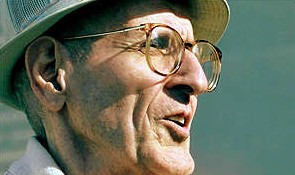 Jack Kevorkian
Homicide · USA · 1990
Jack Kevorkian (born May 26, 1928) was a controversial American pathologist. He…
130 victims
Jack Kevorkian
Homicide · USA · 1990
Jack Kevorkian (born May 26, 1928) was a controversial American pathologist. He…
130 victims
 Edward Charles Allaway
Homicide · USA · 1976
Edward Charles Allaway Edward Charles Allaway was found not guilty by reason of…
7 victims
Edward Charles Allaway
Homicide · USA · 1976
Edward Charles Allaway Edward Charles Allaway was found not guilty by reason of…
7 victims
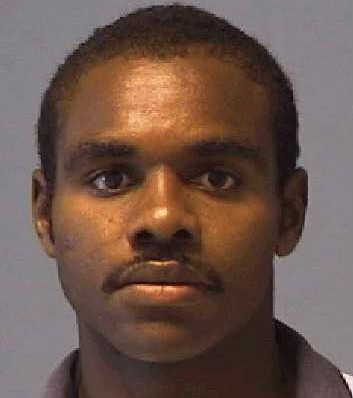 Clinton Bankston
Homicide · USA · 1987
15 August 1987 — Ann Morris (63), her sister Sally Nicholson (59), and Sally’s…
5 victims
Clinton Bankston
Homicide · USA · 1987
15 August 1987 — Ann Morris (63), her sister Sally Nicholson (59), and Sally’s…
5 victims
 John Raymond Travers
Murderer · Australia · 1986
John Raymond Travers (born February 27, 1967) was an Australian murderer. He wa…
1 victim
John Raymond Travers
Murderer · Australia · 1986
John Raymond Travers (born February 27, 1967) was an Australian murderer. He wa…
1 victim
 Joe Angel Cordova
Murderer · USA · 1982
Feb. 27, 1982 — Cordova, his 16-year-old nephew, and two other teens abducted M…
1 victim
Joe Angel Cordova
Murderer · USA · 1982
Feb. 27, 1982 — Cordova, his 16-year-old nephew, and two other teens abducted M…
1 victim
 Michael King
Murderer · USA · 2008
Michael King abducted Denise Amber Lee in the U.S. state of Florida on January…
1 victim
Michael King
Murderer · USA · 2008
Michael King abducted Denise Amber Lee in the U.S. state of Florida on January…
1 victim
 Mark Duane Edwards
Murderer · USA · 2002
Mark Duane Edwards Jr., 24, was convicted for killing Larry A. Bobish, Sr., 50,…
3 victims
Mark Duane Edwards
Murderer · USA · 2002
Mark Duane Edwards Jr., 24, was convicted for killing Larry A. Bobish, Sr., 50,…
3 victims
- Gender
- male
- Country
- USA
- Location
- Telfair County/Dodge County, Georgia, USA
- Date of birth
- 1956
- Age at first offence
- 26
- Characteristics
- alcohol, arson
- Victim profile
- James T. White, 29 (his friend)
- Method of murder
- Beating with his fist, a whiskey bottle and a stick
- Date(s) of murder
- January 10, 1982
- Years active
- 1982
- Date of arrest
- Next day
- Status
-
Sentenced to death
Sentenced to death on July 1982
Case name
John Wayne Conner
Status
John Wayne Conner was sentenced to death in July 1982.
Timeline
- January 9, 1982 — John Wayne Conner and Beverly Bates rode with friends, including the victim, J. T. White, to a party in Eastman; after spending the evening drinking and smoking marijuana, they returned to Milan around midnight.
- January 9, 1982 (soon afterwards) — J. T. White exited the vehicle with Conner and Ms. Bates at their house; Conner and J. T. left on foot taking a nearly empty bottle of bourbon Conner purchased the night before; Conner and J. T. asked Pete Dupree to take them to get more whiskey; Dupree refused; Conner and J. T. walked away, and Conner stated that a fight occurred that continued over to an oak tree where Conner said he hit J. T. with a quart bottle and then used a stick to beat him.
- January 10, 1982 (next day) — J. T. White’s body was found in a drainage ditch near the Milan Elementary School.
- May 24, 1983 — The case was decided.
- June 28, 1983 — Rehearing was denied.
- December (most recent appeal action) — Conner’s state appeal challenging the fairness of his trial was denied.
- Sept. 2004 — A U.S. district court denied a discovery motion.
- July 1982 — Conner was sentenced to death in Telfair County.
- Six months before July 1982 — Conner was drinking with his friend, James T. White, 29, when he became enraged and started beating Mr. White with his fist, a whiskey bottle and a stick.
Background
At the time of the murder, John Wayne Conner lived with his girl friend, Beverly Bates, in Milan. On the evening of January 9, 1982, they rode with friends, including the victim, J. T. White, to a party in Eastman. After spending the evening drinking and smoking marijuana, the group returned to Milan around midnight. J. T. Bates at their house, and soon afterwards Conner and J. T. White left the house on foot, taking with them a nearly empty bottle of bourbon that Conner had purchased the night before.
The offence
Conner and J. T. White walked to the home of Pete Dupree, woke him up, and asked Dupree to take them to get more whiskey; Dupree refused. Conner then described the events:
"[M]e and J. T. left and went down the road. J. T. made the statement about he would like to go to bed with my girl friend and sol got mad and we got into a fight and fought all the way over to the oak tree and I hit him with a quart bottle. He run over there to the fence trying to get through or across, I reckon, so I run over there and grabbed him and pulled him back and hit him again and he fell in the water and he grabbed my leg. I was down there at him right there in the ditch where he was at and he was swinging trying to get up or swinging at me to try to hit me one, and there was a stick right there at me, and I grabbed it and went to beating him with it."
The next day, J. T. Injuries on his forehead bore the pattern of the sole of a tennis shoe. His nose was broken, both his cheekbones were fractured, his eyes were swollen, and his left ear was severely damaged. He had been hit so hard in the face with a blunt object that teeth, as well as portions of the bone to which they were attached, were broken away from his upper and lower jaws.
Dr. Larry Howard conducted the autopsy and testified that the trauma to J. T.’s head and face caused brain damage and bleeding in and around the brain which extended into his lungs, causing him to drown in his own blood.
Beverly Bates had gone to bed when Conner and J. T. White left. When Conner returned, he woke her up and told her that they had to leave; he had had a fight with J. T. and thought he was dead. Conner ripped off his shirt and threw it into the fire. Conner told Ms. Bates that he knew where a car was with its keys in it. The car was parked in front of the school. Before they left town, Conner told Ms. Bates that "he had to be sure," and walked toward the ditch. She heard a thud. Conner returned and said now he was sure, let's go. They stopped to get gas in Eastman. Ms. Bates gave Conner $20 to buy gas with; in return, he gave her a bloody $5 bill. They were caught in Butts County.
A whiskey bottle and a tree limb found near the body were subsequently analyzed and found to have blood on them that was consistent with that of the victim and inconsistent with that of Conner. The analysis was described as understandable since Conner suffered no injuries during the "fight." The $5 bill, as well as a whiskey bottle and a tree limb found near the body, were analyzed and found consistent with the victim’s blood and inconsistent with Conner’s blood.
Conner presented no evidence, either at the guilt-innocence phase, or (against the advice of his attorney) at the sentencing phase of his trial.
Investigation
The case involved physical evidence including injuries consistent with a beating and the discovery of J. T. White’s body in a drainage ditch near the Milan Elementary School. The subsequent analysis of the $5 bill, a whiskey bottle, and a tree limb found near the body found blood consistent with the victim and inconsistent with Conner. The evidence included injuries whose patterns included the pattern of the sole of a tennis shoe.
In a pre-trial statement, Conner told an investigator that the $5 bill had been in the breast pocket of his shirt and had become saturated with the victim’s blood during the fight.
Arrest
Conner was caught in Butts County.
Trial
John Wayne Conner was indicted in Telfair County for murder, armed robbery and motor vehicle theft. Because the state sought the death penalty for the murder, Conner’s trial was conducted under the Unified Appeal Procedure set forth at 246 Ga. A-1 (1980), as amended, 248 Ga. 906 (1982). The trial occurred in Telfair Superior Court before Judge West.
Conner was convicted on all three counts and sentenced to death for the murder.
Conviction review
On appeal, Conner did not challenge the sufficiency of the evidence, but the court was required under Rule IV (B) (2) of the Unified Appeal Procedure to determine whether the verdicts were supported by the evidence according to law. The appellate court found the evidence sufficient to support convictions for murder and motor vehicle theft, but it concluded that it could not conclude that any rational trier of fact could have found all elements of armed robbery beyond a reasonable doubt.
The court quoted the statutory definition:
"A person commits the offense of armed robbery when, with intent to commit theft, he takes property of another from the person or immediate presence of another by use of an offensive weapon . . ."
It also addressed that the taking of property was an essential element and identified the property alleged by the state to have been taken in the armed robbery as the bloody $5 bill which appellant subsequently gave to Ms. Bates. The appellate court stated that no competent evidence was presented to show that prior to his murder, J. T. had money, or that appellant did not. The court said the only circumstances supporting an inference that Conner took $5 from J. T. or from his immediate presence were two: (1) the money had J. T.’s blood on it, and (2) an empty leather pouch was found approximately eight and one-half feet from his body.
The court noted the leather pouch had no blood on it and was not connected to J. T. except by its proximity to his body. It cited the standard for conviction on circumstantial evidence:
"To warrant a conviction on circumstantial evidence, the proved facts shall not only be consistent with the hypothesis of guilt, but shall exclude every other reasonable hypothesis save that of the guilt of the accused."
The appellate court concluded that the evidence in this case did not meet that standard and stated:
"Only by speculation and conjecture could we assume that [appellant] . . . took the money, and speculation and conjecture will not sustain a conviction."
As a result, the appellate court reversed Conner’s armed robbery conviction.
Jury instructions issues
Conner enumerated as error the trial court’s refusal to give three of his requests to charge.
(a) The trial court did not err in refusing to charge on self-defense. The appellate court stated that Conner’s own statement refuted a theory of self-defense and that no other evidence supported such a claim. The court also stated that self-defense was not the only defense raised due to lack of evidence.
(b) The trial court did not err in refusing to charge on good character as a defense. The court explained that a defendant may present evidence of good character as a substantive fact indicative of innocence, and where evidence was not introduced, charging good character would give the defendant the benefit of evidence never introduced.
(c) The trial court did not err by failing to charge involuntary manslaughter, misdemeanor grade. The appellate court discussed that the offense involved causing death without intention by unlawful manner likely to cause death or great bodily harm, and it described Conner’s theory as self-defense with excessive force. The court stated there was no evidence Conner acted in self-defense and quoted:
" ' "[T]he number of wounds inflicted leaves no doubt on the question of intent or voluntariness." ' "
Sentencing
Statutory aggravating circumstance found
At the sentencing phase, the jury found a statutory aggravating circumstance:
"The offense of murder was outrageously and wantonly vile, horrible and inhuman in that it did involve depravity of mind and aggravated battery to the victim."
The appellate court stated the evidence supported the finding, citing that Conner chased an unarmed, intoxicated victim; dragged him back to the drainage ditch; used a whiskey bottle, a heavy stick and his feet to beat and stomp the victim to death; and left him to die, lying in the water. It stated the evidence showed unnecessary and wantonly inflicted serious physical abuse prior to death and said the facts distinguished the case from those where such a finding would not be appropriate.
Sentence review and jury instruction issue
The appellate court addressed an alleged instruction error. The trial court had charged:
"Please be mindful of the previous instruction that whether or not you find the aggravating circumstances, you still then have the further duty to decide whether or not the death penalty should be imposed or whether the defendant should be sentenced to life imprisonment."
The appellate court stated the italicized portion was incorrect and quoted the instruction issue and correction in substance by referencing that the instruction should have said "even if" instead of "whether or not." It concluded that the charge, considered as a whole, clearly instructed the jury it could not recommend a sentence of death unless it found at least one statutory aggravating circumstance, and that even if it found an aggravating circumstance, it could nonetheless refuse to recommend a sentence of death. The appellate court found no reversible error.
Independent review for passion, prejudice, or arbitrary factors
The appellate court described the mandated independent review of death sentences under:
"was imposed under the influence of passion, prejudice, or any other arbitrary factor."
It then reviewed the entire record, including matters dealt with in Divisions 1 and 6 of the opinion, and concluded that the sentence of death was not imposed under the influence of passion, prejudice, or other arbitrary factors.
The appellate court discussed federal precedent and mentioned Hance v. Zant and described the prosecutor’s closing argument in that case as a “dramatic appeal to gut emotion,” saying such a sentence could not be carried out. It then stated that while there were similarities between the arguments, it held that the "passion" proscribed by its law did not encompass all emotion but only that engendered by prejudice, particularly racial prejudice, or other arbitrary factors. It cited Horton v. State and referenced examples of when death penalties had been set aside for specific procedural issues.
The appellate court then stated that it had not invalidated a death penalty simply because the prosecutor made an impassioned argument during sentencing and concluded that the Eighth Amendment and the Georgia statute did not forbid a death penalty based in part on an emotional response to factors in evidence that implicated valid penological justifications.
Prosecutor’s comments about prior experience and death penalty seeking
The appellate court addressed prosecutor comments informing the jury that he had been involved in criminal law for seven years and that as district attorney for the circuit he had prosecuted nine murder cases. It stated he told the jury he had never before sought the death penalty, but was seeking it now. The appellate court quoted authorities on counsel’s arguments and on the condemnation of going outside the facts.
It concluded that the portion of the prosecutor’s argument referring to his prior criminal experience and frequency of seeking the death penalty was not supported by any evidence and was not relevant to any issue, making the argument improper. It also stated that no objection had been made, and because it was a death penalty case, it reviewed and concluded the remarks were not so prejudicial or offensive as to require reversal of Conner’s death sentence on the basis that it was impermissibly influenced by passion, prejudice, or any other arbitrary factor.
Excessiveness and proportionality
The appellate court stated Conner’s sentence was not excessive or disproportionate to the penalty imposed in similar cases, considering the crime and the defendant, and said the similar cases listed in the appendix supported affirmance of the death penalty.
Appeals
In the most recent appeal action, Conner’s state appeal challenging the fairness of his trial was denied in December. That decision was being appealed to the state Supreme Court.
A U.S. district court denied a discovery motion in Sept. 2004 and had not as yet issued a separate finding on procedural default.
The appellate decision included references to:
- CONNER v. THE STATE. 39325. ( 251 Ga. 113 ) ( 303 SE2d 266 ) (1983)
- GREGORY, Justice.
- DECIDED MAY 24, 1983 — REHEARING DENIED JUNE 28, 1983.
Other details
People named
- John Wayne Conner — defendant; sentenced to death.
- James T. White (29) — Conner’s friend referenced in the account that six months before the sentencing Conner became enraged and beat him with his fist, a whiskey bottle and a stick.
- J. T. White (victim; age 29 as referenced) — the murder victim whose body was found near the Milan Elementary School drainage ditch; injuries included broken nose, fractured cheekbones, swollen eyes, and severe damage to the left ear; the appellate court referenced blood on the $5 bill.
- Beverly Bates — Conner’s girl friend; slept during the time Conner and J. T. White left; Conner returned, told her to leave, ripped off his shirt and threw it into the fire, gave her a bloody $5 bill after she gave him $20 for gas, and she described hearing a thud when Conner walked toward the ditch.
- Pete Dupree — woken up by Conner and J. T. White and asked to take them to get more whiskey; refused.
- Dr. Larry Howard — conducted the autopsy.
- Tim Vaughn — Oconee Judicial Circuit District Attorney; described the murder as the “stomping” death and described the tennis-shoe print left on White’s forehead.
- W. Dennis Mullis — for appellant.
- James L. Wiggins — District Attorney, for appellee.
- Michael J. Bowers — Attorney General, for appellee.
- Janice C. Hildenbrand — Staff Assistant Attorney General, for appellee.
- Judge West — presided over Conner’s trial.
- GREGORY, Justice — authored the appellate opinion, as identified in the case citation.
Places named
- Telfair County — where Conner was indicted and sentenced to death.
- Milan — Conner lived here with Beverly Bates; the group returned here around midnight.
- Eastman — where the group went to a party and where they stopped to get gas.
- Milan Elementary School — near which the drainage ditch where J. T. White’s body was found.
- Butts County — where Conner was caught.
- Oconee Judicial Circuit — referenced in connection with District Attorney Tim Vaughn’s description.
- Telfair Superior Court — the trial court.
Evidence and physical details
- Injuries included forehead pattern of a tennis shoe sole; broken nose; fractured cheekbones; swollen eyes; severely damaged left ear; teeth and bone portions broken away from upper and lower jaws; brain damage and bleeding in and around the brain extending into the lungs, causing drowning in his own blood.
- A whiskey bottle purchased the night before was taken; a quart bottle was used in the beating as described by Conner.
- A whiskey bottle and a tree limb found near the body were analyzed for blood consistency.
- An empty leather pouch was found approximately eight and one-half feet from the body.
- Conner gave Ms. Bates a bloody $5 bill in exchange for her $20 for gas.
- Conner suffered no injuries during the "fight," as referenced by the appellate discussion of blood consistency.
Court-held findings on conviction components
- The appellate court reversed Conner’s armed robbery conviction due to insufficient evidence beyond a reasonable doubt for elements of armed robbery.
- The appellate court affirmed that the evidence supported convictions for murder and motor vehicle theft.


Spotted an error, or have more information about this case?