
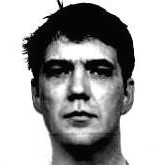
Ronnie Hyde
Murderer Russell Ellwood
Murderer · USA · 1991
Russell Ellwood was a former taxi driver. Authorities suspected him of killing…
20 victims
Russell Ellwood
Murderer · USA · 1991
Russell Ellwood was a former taxi driver. Authorities suspected him of killing…
20 victims
 Robert Martines Perez
Murderer · USA · 1994
Name: Robert Martines Perez · Other name used in proceedings: Robert Martinez P…
15 victims
Robert Martines Perez
Murderer · USA · 1994
Name: Robert Martines Perez · Other name used in proceedings: Robert Martinez P…
15 victims
 Billy Frank Vickers
Murderer · USA · 1993
Billy Frank Vickers Vickers was executed by lethal injection in Texas on Januar…
14 victims
Billy Frank Vickers
Murderer · USA · 1993
Billy Frank Vickers Vickers was executed by lethal injection in Texas on Januar…
14 victims
 Joseph Savino
Murderer · USA · 1988
Joseph Savino was sentenced to death and was executed by lethal injection in Vi…
1 victim
Joseph Savino
Murderer · USA · 1988
Joseph Savino was sentenced to death and was executed by lethal injection in Vi…
1 victim
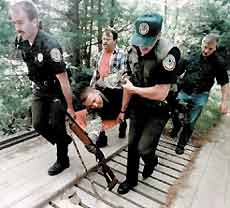 Carl Drega
Spree killer · USA · 1997
Carl Drega (January 19, 1935 – August 19, 1997) was from Columbia, New Hampshir…
4 victims
Carl Drega
Spree killer · USA · 1997
Carl Drega (January 19, 1935 – August 19, 1997) was from Columbia, New Hampshir…
4 victims
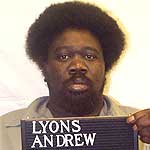 Andrew Lyons
Murderer · USA · 1992
Andrew Lyons (defendant) As of September 1992, Andrew Lyons and Bridgette Harri…
3 victims
Andrew Lyons
Murderer · USA · 1992
Andrew Lyons (defendant) As of September 1992, Andrew Lyons and Bridgette Harri…
3 victims
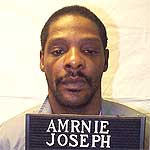 Joseph Amrine
Murderer ? · USA · 1985
Joseph Amrine was a death row inmate in Missouri. He was housed with the victim…
1 victim
Joseph Amrine
Murderer ? · USA · 1985
Joseph Amrine was a death row inmate in Missouri. He was housed with the victim…
1 victim
 Mark Howard McClain
Murderer · USA · 1994
Mark Howard McClain was a white male. He was known by the aliases “A.K.A. MALAC…
1 victim
Mark Howard McClain
Murderer · USA · 1994
Mark Howard McClain was a white male. He was known by the aliases “A.K.A. MALAC…
1 victim
- Gender
- male
- Country
- USA
- Location
- Grimes County, Texas, USA
- Date of birth
- October 21, 1958
- Age at first offence
- 40
- Characteristics
- robbery, burglary
- Victim profile
- A 72 year old white male
- Method of murder
- Hitting with a hammer
- Date(s) of murder
- August 8, 1998
- Years active
- 1998
- Date of arrest
- —
- Status
-
Sentenced to death
Sentenced to death on May 24, 2000
Case record: Ronnie Hyde
Identifiers and custody information
- Ronnie Hyde (TDCJ Number: 999357) was born on 10/21/1958.
- Date received: 5/24/2000.
- Age at receipt: 41.
- Education level: 0.
- Date of offense: 5/8/1998.
- Age at the offense: 39.
- County: Grimes.
- Race: (victim described as white male in the case facts); Ronnie Hyde was described as white male.
- Gender: male.
- Hair color: blonde.
- Height: 5 ft 9 in.
- Weight: 244.
- Eye color: blue.
- Native county: Native.
- Native state: Native.
- Prior occupation: Harris Texas laborer.
- Prior prison record: #540968 on a 20 year sentence from Cherokee County for 1 count of Criminal Attempt of Murder (involved Hyde and one co-defendant Kidnapping a 33 year old white male at gun point from his residence, binding him with electrical and duct tape and forcing him into the trunk of his car and pushing it into the Nueces River. The car did not completely submerge and the victim survived.), released on mandatory supervision on 9/1/1994 to Cherokee County.
Procedural posture and appellate court
- The case was heard in the Court of Criminal Appeals of Texas.
- Case number: No. 73,950.
- Ronnie Hyde v. The State of Texas.
- Appeal type: On Direct Appeal from Grimes County.
- Judgment: The Court affirmed.
- The opinion was delivered by Hervey, J., with Keller, PJ., Meyers, Womack, Keasler, Holcomb, and Cochran, JJ., joining; Price, and Johnson, JJ., concurred.
- The trial court sentenced him to death pursuant to the jury's answers to the special issues at the punishment phase.
The offence
- Ronnie Hyde was convicted of capital murder.
- The conviction was based on murdering the victim during the course of committing or attempting to commit robbery or burglary.
- The victim was a white male, age 72, in poor health.
- The victim often hired local men, including Hyde, to assist him with household chores.
- The victim was known to carry large amounts of cash.
- The victim was murdered in his bedroom.
- The death was caused by at least sixteen blows to the head with a claw hammer.
- Most, if not all, of these blows occurred while the victim was lying in bed.
- The crime scene revealed no evidence of a struggle.
Confession and accounts of the events
- Hyde told a couple of acquaintances that he went to the victim's home to get money and, while there, hit the victim with a hammer.
- In his confession to the police, Hyde stated that he went to the victim's home to get money from the victim.
- Hyde stated that after knocking on the door and receiving no answer, he entered the victim's home and found the victim in his bedroom.
- Hyde stated that the victim attacked him and hit him "upside the head" with some unidentified object.
- Hyde grabbed a claw hammer, which he claimed was on the victim's bed, and hit the victim once with it.
- Hyde stated that he did not remember striking the victim fifteen other times with the claw hammer.
- Hyde took the victim's wallet and money that was on the victim's bedside table.
Trial and sufficiency issues
Sufficiency of the evidence at guilt or innocence
- Appellant raised eleven points of error in an automatic direct appeal.
- In the first point of error, he contended that the evidence was legally insufficient to show that he committed murder during the course of robbing the victim or during the course of burglarizing the victim's home.
- In reviewing legal sufficiency, the Court looked at all the evidence in the light most favorable to the verdict to determine whether any rational trier of fact could have found the essential elements of the offense beyond a reasonable doubt.
- Appellant's first point of error was overruled.
- The Court stated the evidence showed that Hyde entered the victim's home without permission and stole money from him after hitting the victim with a claw hammer, causing his death.
- The Court held this supported the State's theories that Hyde murdered the victim during the course of burglarizing the victim's home or during the course of robbing the victim.
Sufficiency of the evidence at punishment
- In the eleventh point of error, Hyde alleged the evidence was legally insufficient to support the jury's finding that he would be a continuing threat to society.
- The Court stated that, in reviewing sufficiency of the evidence at punishment, it looked at the evidence in the light most favorable to the verdict to determine whether any rational juror could have believed beyond a reasonable doubt that Hyde would probably commit criminal acts of violence that would constitute a continuing threat to society.
- At punishment, the State presented evidence that Hyde was previously convicted of attempted murder.
- The State presented that Hyde locked the victim of that offense in the trunk of a car with his feet and hands bound, then rolled the car into a lake, leaving the victim inside the trunk to drown.
- The victim survived because the car lodged on a large rock and did not sink.
- The State also presented evidence that Hyde assaulted a man in front of his child, assaulted a former girlfriend, and, while incarcerated, unlawfully possessed weapons.
- The Court held that the facts of the instant case and Hyde's history permitted a rational juror to conclude that he would continue to be a threat to society.
- The Court held the evidence was legally sufficient to support the jury's affirmative answer to the future dangerousness issue.
- Hyde's eleventh point of error was overruled.
Hearsay and related rulings
Third and fourth points of error
- In his third and fourth points of error, Hyde claimed that the trial court erred by overruling his hearsay objections to the testimony of Sharon Wooley (point three) and James Thomas (point four).
Sharon Wooley testimony
- Wooley testified that, several days before the victim's murder, she saw bruises on the victim's arms.
- Wooley testified that the victim told her that he was afraid of Hyde.
- The opinion included the following questioning and answers:
Q. Mrs. Wooley, I just want to ask you a couple more questions. You indicated earlier in your testimony that you had spent the Monday prior to [the victim's] death, he spent most of that day with you, correct?
A. Yes.
Q. And that's when you noticed the bruising on his arms?
Q. At that time, did he indicate to you how he felt or any feelings towards [appellant]?
A. He told me he was scared of him.
Q. He was scared of him?
A. Right.
Appellant's objection grounds described
- The opinion described that Hyde objected only to the portion of Wooley's testimony about the victim's out-of-court statement to her about being afraid of Hyde.
- Hyde claimed the testimony was hearsay and irrelevant, and that if relevant, its probative value was far outweighed by prejudicial value.
- The opinion reported Hyde's objection as follows:
Our objection would be, Number 1, that the statement is hearsay, that it's [sic] not in compliance with Article 3836 [sic] Code of Criminal Procedures in that that particular procedural rules goes specifically to the mind of the accused at the time of the offense. We also say, because of the testimony and the relationship of the parties established in this case, more specifically, the only witnesses that have testified have said that the parties were drinking and bumming around the day prior to the killing. There's been no evidence established that there's been any bad relationship between the accused and the deceased. Therefore, as the case stands now, we would say that the statement is not relevant under 401 and 402; and if relevant, that it's probative value is far outweighed by the prejudicial value. That's not to say that it may not become relevant at a later date if we were to offer evidence of a good relationship between the parties, but we have not done that; and if this is admissible, it can only be admissible in a rebuttal situation. That would be it.
James Thomas testimony
- Thomas testified that several days before the victim's murder he saw bruises on the victim.
- Thomas also testified that the victim told him that he was afraid of Hyde.
- Hyde made “the same objection as earlier.”
- Thomas also gave a nonresponsive answer that the victim told Thomas that Hyde beat the victim up.
- The trial court denied Hyde's motion for mistrial after instructing the jury to disregard Thomas' nonresponsive answer.
The opinion included the following questioning and answers and trial court actions:
Q. Okay. Did you notice anything about [the victims'] appearance?
A. It looked like he was badly beaten and bruised up and whelps [sic] all over him.
Q. Did he have any bruising in the arm area?
A. Yes, both arms looked like somebody took his hands and squeezed him real hard.
Q. When you were speaking to [the victim] that day did he indicate if he had any feelings in regards to [appellant]? [APPELLANT]: We have the same objection as earlier, Your Honor. [TRIAL COURT]: Is this going to be pretty much the same type thing. [PROSECUTION]: Yes, sir. A. Yes, he said he had beat him up. * * * * * * * * * * * * * * * * * * * * * * * [APPELLANT]: We object to the last question and answer as being hearsay, as previously discussed. [TRIAL COURT]: Sustained. [APPELLANT]: We ask that the jury be instructed to disregard the witness' last answer to the question. [TRIAL COURT]: The jury is so instructed to disregard the last answer given by this witness. [APPELLANT]: And because we believe that an instruction at this point in time would not cure the defect or harm that it's caused, we request a mistrial. [TRIAL COURT]: Request for mistrial is denied.
Q. Mr. Thomas, did [the victim] indicate how he felt about [appellant]?
Q. What did he indicate to you that he felt about [appellant]?
A. That he was scared of him.
Q. Now, later that evening, did you have an opportunity, as you were returning to your home, to see the [victim]?
A. Yes, ma'am.
- Hyde requested again prior to proceeding:
Before we go any further, just again, with regard to the last question and answer, we renew our objection previously made.
- The court stated:
Same ruling, and your objection is denied.
Appellant's arguments on appeal (as written in the opinion)
- Hyde conceded on appeal that the victim's out-of-court statements to Wooley and Thomas about being afraid of Hyde were properly admitted into evidence on the issue of the victim's consent to entry into his home.
- Hyde argued the “bruise” testimony and “fear” testimony were used to get into evidence through backdoor hearsay that Hyde had previously beat the victim up.
- Hyde argued that the admission of backdoor hearsay was non-constitutional error affecting a substantial right because it had “a substantial and injurious effect or influence in determining the jury's verdict.”
- Hyde argued the erroneously admitted backdoor hearsay:
- served to undermine his claim that the victim was the first aggressor, that the victim struck Hyde “upside the head” with an object before Hyde reacted to defend himself.
- may have led the jury to believe Hyde acted in conformity with past conduct when he murdered the victim.
- bolstered a weak theory that the homicide occurred in the course of a burglary.
- enhanced the State's robbery theory.
- The opinion stated that any error in admitting this evidence was harmless in light of overwhelming evidence contradicting Hyde's self-defense claim.
- The opinion overruled Hyde's third and fourth points of error.
Ineffective assistance of counsel
Fifth point of error
Hyde claimed in his fifth point of error that trial counsel was ineffective for failing to preserve error of the indirect hearsay offered through Wooley and Thomas.
Hyde argued trial counsel failed to object specifically “to the testimony that the [victim] was bruised and appeared 'badly beaten'” several days before the victim's death.
Hyde also argued trial counsel failed to timely object to Thomas' testimony that the victim told him that he was afraid of Hyde.
The Court overruled the fifth point of error, stating the record was silent on counsel's motives and that Hyde could not overcome the strong presumption of reasonable professional assistance.
Seventh, eighth, and ninth points of error
Hyde argued that counsel was ineffective because counsel failed to object to testimony of Andre Fordeson, Andrew Black, and Larry White.
Fordeson and Black testified that, the day before the victim's murder, Hyde asked if they wanted to steal guns from the victim's house.
White testified that, on the same day, Hyde asked if he wanted to purchase a gun that was “hot.”
White testified further that he had heard Hyde was known to steal.
The Court overruled the seventh, eighth, and ninth points of error.
The opinion stated counsel's reasons for not objecting did not appear in the record and presumed it was reasoned trial strategy.
The opinion also stated the testimony of Black and Fordeson was relevant to show Hyde's pre-meditated intent to burglarize Roberson's home, and cited Tex. R. Evid. 403.
Tenth point of error
- Hyde claimed that the cumulative effect of counsel's alleged errors in points of error seven through nine deprived him of a fair trial.
- The Court overruled the tenth point of error because Hyde did not show ineffective assistance, so he could not show an adverse cumulative effect.
Jury charge and self-defense
Sixth point of error
- Hyde claimed the trial court erred by limiting the instruction of self-defense in the jury charge.
- At trial, Hyde requested an instruction on self-defense stating that a person justified in using force against another when and to the degree he reasonably believed the force was immediately necessary to protect himself against the other person's use or attempted use of unlawful force.
- Hyde's requested instruction also included deadly force justification and the requirement that a reasonable person in defendant's situation would not have retreated.
The opinion quoted the requested instruction (as written in the case record):
Upon the law of self-defense, you are instructed that a person is justified in using force against another when and to the degree he reasonably believes the force is immediately necessary to protect himself against the other person's use or attempted use of unlawful force. A person is justified in using deadly force against another if he would be justified in using force against the other in the first place, as above set out, and when he reasonably believes that such force is immediately necessary to protect himself against the other person's use or attempted use of unlawful deadly force, and if a reasonable person in defendant's situation would not have retreated.
- The State objected that Hyde was not entitled to the instruction because the evidence did not raise the issue of self-defense, citing Davis v. State.
- The trial court overruled the objection and included the self-defense instruction.
- The State requested additional instructions, and the trial court included them in the jury charge.
The opinion quoted the additional instructions (as written):
You are further instructed that a person in lawful possession of land or tangible movable property is justified in using force against another when and to the degree he reasonably believes the force is immediately necessary to prevent or terminate the other's trespass on the land or unlawful interference with the property. A person is justified in using deadly force against another to protect his land or tangible, moveable property, and the possession thereof: (1) if he would be justified in using force in the first place, as herein above set forth; (2) when and to the degree he reasonably believes the deadly force is immediately necessary, as viewed from his standpoint at the time, to prevent the other person's imminent commission of the burglary, robbery, theft during the nighttime, or criminal mischief during the nighttime; and (3) he reasonably believes that (a) his land or property cannot be protected by any other means or (b) the use of force other than deadly force to protect his land or property would expose him or other persons to a substantial risk of death or serious bodily injury. You are further instructed that under our law a person defending his habitation with deadly force against a person who is at the time of the use of force committing an offense of unlawful entry in the habitation of the person so defending is under no legal obligation to retreat irrespective of whether a reasonable person would have so acted.
- Hyde contended these instructions were requested to show the jury that “if the deceased was using force or deadly force to protect his property at the time of the confrontation, then appellant would not have had the legal right to use deadly force to prevent the attack.”
- The Court held the instructions were not objectionable because the issues presented were raised by the evidence and they were a correct statement of law.
- Hyde's sixth point of error was overruled.
Investigation and incident details
- The incident occurred in Bedias on 5/8/1998.
- On that date, Hyde burglarized the residence of a 72 year old white male.
- Hyde had worked for the victim in previous weeks and was acquainted with him.
- Hyde beat the victim in the head with a hammer, killing him.
- Hyde took $1,000 and fled on foot.
Background (prior case involving attempted murder and kidnapping)
- Hyde had a prior conviction for Criminal Attempt of Murder from Cherokee County with a co-defendant.
- The prior case involved kidnapping a 33 year old white male at gun point from his residence.
- Hyde and the co-defendant bound the victim with electrical and duct tape.
- They forced the victim into the trunk of the car and pushed it into the Nueces River.
- The car did not completely submerge and the victim survived.
- Hyde was released on mandatory supervision on 9/1/1994 to Cherokee County.
Other details
- The jury convicted Hyde of capital murder.
- The Court of Criminal Appeals affirmed the trial court judgment.
- The opinion delivery date included in the record was January 29, 2003.

Spotted an error, or have more information about this case?