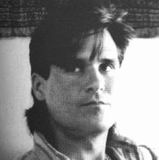
Adolfo de Jesús Constanzo
Serial killer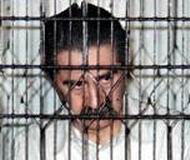 Gabriel Garza Hoth
Serial killer · Mexico · 1991
1991 — Soledad Valdez, Gabriel Arturo Garza Hoth’s first wife, died; doctors be…
3 victims
Gabriel Garza Hoth
Serial killer · Mexico · 1991
1991 — Soledad Valdez, Gabriel Arturo Garza Hoth’s first wife, died; doctors be…
3 victims
 Sara María Aldrete
Serial killer · Mexico · 1987
Sara María Aldrete (born September 6, 1964 in Matamoros, Tamaulipas, Mexico) wa…
15 victims
Sara María Aldrete
Serial killer · Mexico · 1987
Sara María Aldrete (born September 6, 1964 in Matamoros, Tamaulipas, Mexico) wa…
15 victims
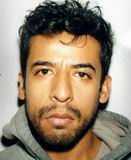 Cesar Armando Librado Legorreta
Serial killer · Mexico · 2011
Cesar Armando Librado Legorreta was a Mexican serial offender who worked as a c…
6 victims
Cesar Armando Librado Legorreta
Serial killer · Mexico · 2011
Cesar Armando Librado Legorreta was a Mexican serial offender who worked as a c…
6 victims
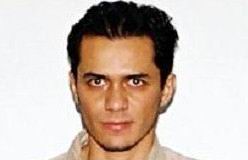 Raul Osiel Marroquin
Serial killer · Mexico · 2005
Raúl Osiel Marroquín Reyes was born around 1981 in Tampico, Tamaulipas. At the…
4 victims
Raul Osiel Marroquin
Serial killer · Mexico · 2005
Raúl Osiel Marroquín Reyes was born around 1981 in Tampico, Tamaulipas. At the…
4 victims
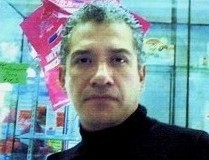 Jose Luis Calva Zepeda
Serial killer · Mexico · 2004
Jose Luis Calva Zepeda was an aspiring horror writer in Mexico City who was acc…
3 victims
Jose Luis Calva Zepeda
Serial killer · Mexico · 2004
Jose Luis Calva Zepeda was an aspiring horror writer in Mexico City who was acc…
3 victims
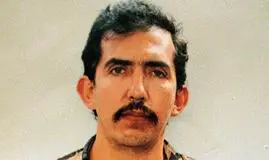 Luis Alfredo Garavito
Serial killer · Colombia/Ecuador · 1992
Luis Alfredo Garavito Cubillos, also known as "La Bestia" ("The Beast") or "Tri…
192 victims
Luis Alfredo Garavito
Serial killer · Colombia/Ecuador · 1992
Luis Alfredo Garavito Cubillos, also known as "La Bestia" ("The Beast") or "Tri…
192 victims
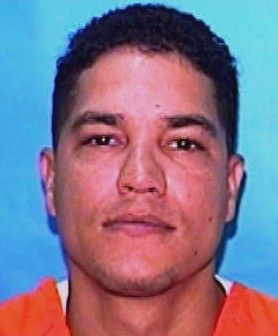 Richard England
Murderer · USA · 1987
Richard England (born 08/29/71) was the defendant in a Florida case from the Se…
2 victims
Richard England
Murderer · USA · 1987
Richard England (born 08/29/71) was the defendant in a Florida case from the Se…
2 victims
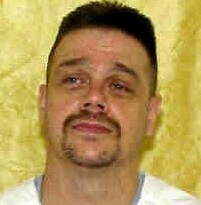 William Sapp
Murderer · USA
William Sapp was convicted of rape, kidnapping, and aggravated murder with deat…
3 victims
William Sapp
Murderer · USA
William Sapp was convicted of rape, kidnapping, and aggravated murder with deat…
3 victims
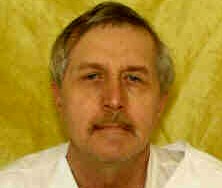 Ralph Lynch
Murderer · USA · 1998
Ralph Lynch was convicted in Ohio for the kidnapping, rape, and murder of 6-yea…
1 victim
Ralph Lynch
Murderer · USA · 1998
Ralph Lynch was convicted in Ohio for the kidnapping, rape, and murder of 6-yea…
1 victim
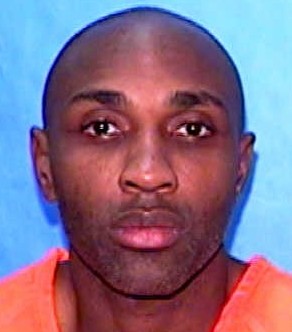 Richard Lee McCoy
Murderer · USA · 2000
Richard Lee McCoy was sentenced to death on August 9, 2001. The Florida Supreme…
1 victim
Richard Lee McCoy
Murderer · USA · 2000
Richard Lee McCoy was sentenced to death on August 9, 2001. The Florida Supreme…
1 victim
- Gender
- male
- Country
- Mexico
- Location
- Matamoros, Mexico
- Date of birth
- November 1, 1962
- Age at first offence
- 24
- Characteristics
- abduction, torture
- Victim profile
- Men (competing drug dealers, family members of drug dealers and cult members)
- Method of murder
- Shooting - St abbing with machete
- Date(s) of murder
- 1986 - 1989
- Years active
- 1986–1989
- Date of arrest
- —
- Status
-
Ordered one of the disciples to shoot him and Quintana Rodríguez on May 6, 1989; both were dead when police broke in
Case record: Adolfo de Jesús Constanzo
Identity
Adolfo de Jesús Constanzo, nicknamed “The Godfather of Matamoros,” was a serial killer and cult leader in Mexico. He was born on November 1, 1962, in Miami, Florida, United States, and died on May 6, 1989.
Background
Constanzo’s mother, Delia Aurora González del Valle, was a widowed Cuban immigrant. She gave birth to him when she was 15 years old and had three children in total, each with a different father. She moved to San Juan, Puerto Rico, after her first husband died, and remarried. While in San Juan, Constanzo was baptized Roman Catholic and served as an altar boy, but he was influenced by his mother’s participation in Palo mayombe. The family returned to Miami in 1972. His stepfather died soon after, leaving the family with some money. His mother soon remarried, and his new stepfather was involved in the local drug trade and the occult.
Constanzo and his mother were arrested several times for petty crimes, including theft, vandalism, and shoplifting. Constanzo graduated from high school but dropped out of junior college. His mother believed that he had psychic abilities for supposedly predicting the attempted assassination of Ronald Reagan in 1981.
As a teenager, Constanzo befriended a Haitian Palo mayombe priest who taught him skills necessary to be a drug dealer and con artist, training him for a career “profiting from evil.”
Constanzo was baptized a Catholic and served the church as an altar boy. He was introduced to the santeria cult around age nine, with side trips from Puerto Rico to Haiti for instruction in voodoo. In 1976, he was apprenticed to a practitioner of palo mayombe. His occult godfather imparted a philosophy: “Let the non-believers kill themselves with drugs. We will profit from their foolishness.”
Constanzo displayed psychic powers as a child and teenager, scanning the future to predict events such as the 1981 shooting of President Ronald Reagan. He also had problems foretelling his own future, including two 1981 arrests for shoplifting—one involving the theft of a chainsaw. He displayed bisexual inclinations with a strong preference for male lovers.
Adult life and cult activities
In 1983, Constanzo visited Mexico City, supporting himself as a tarot card reader. There, he recruited two younger men—Martín Quintana Rodríguez and Omar Chewe Orea Ochoa—as his servants, lovers, and disciples. Constanzo returned to Miami shortly thereafter, then moved to Mexico City in mid-1984. Over the next few years, he led a cult based in Matamoros, Tamaulipas, on the U.S.-Mexico border. The cult included drug dealers, musicians, and even police officers under his command.
The cult sold drugs, held high-priced occult ceremonies, and by at least 1987 murdered people for use in human sacrifices. Victims included those who fell along with the cult’s rivals in dealing drugs. Constanzo offered services including “ritual cleansings—” as described as “limpias” for those who felt they had been cursed by enemies. His journals recovered after his death documented 31 regular customers paying up to $4,500 for a single ceremony.
Constanzo established a menu for sacrificial beasts: roosters for $6 a head, goats for $30, boa constrictors at $450, adult zebras for $1,100, and African lion cubs listed at $3,100 each.
Constanzo “went out of his way to charm wealthy drug dealers,” helping them schedule shipments and meetings based on his predictions. For a price, he offered magic described as making dealers and their hit men invisible to police and bulletproof. One dealer in Mexico City paid him $40,000 for magical services rendered over three years time. At those rates, customers demanded “a show,” and Constanzo adapted to customers who carried Uzi submachine guns in armor-plated limousines.
In mid-1985, Constanzo and three of his disciples raided a Mexico City graveyard for human bones to start his own nganga—the traditional cauldron of blood employed by practitioners of palo mayombe.
The cult drew followers from many sectors of Mexican society. Constanzo’s clique of disciples included a physician, a real estate speculator, fashion models, and several transvestite nightclub performers.
At least four members of the Federal Judicial Police joined Constanzo’s cult in Mexico City. One of them, Salvador Garcia, was a commander in charge of narcotics investigations. Another, Florentino Ventura, retired from the federales to lead the Mexican branch of Interpol.
In 1986, Florentino Ventura introduced Constanzo to the drug-dealing Calzada family, then one of Mexico’s dominant narcotics cartels. Constanzo profited from contacts with the family. By early 1987, Constanzo paid $60,000 cash for a condominium in Mexico City and bought a fleet of luxury cars including an $80,000 Mercedes Benz.
When not working for the Calzadas or other clients, Constanzo staged scams. He once posed as a DEA agent to rip off a coke dealer in Guadalajara, selling the stash through police contacts for $100,000.
In 1987, Constanzo began feeding his nganga with the offering of human sacrifice. A final tally for victims was not available, but “twenty-three ritual murders” were described as well documented. Mexican authorities pointed to a rash of unsolved mutilation-slayings around Mexico City and elsewhere.
Constanzo demanded a full partnership in the Calzada syndicate in April 1987 and was refused. On April 30, Guillermo Calzada and six members of his household vanished under mysterious circumstances. They were reported missing on May 1, with police noting melted candles and other evidence of a strange religious ceremony at Calzada’s office. Six more days elapsed before officers began fishing mutilated remains from the Zumpango River. Seven corpses were recovered in the course of a week, bearing marks of sadistic torture—fingers, toes, and ears removed; hearts and sex organs excised; part of the spine ripped from one body; and two others missing their brains. The vanished parts were described as used to feed Constanzo’s cauldron of blood.
Matamoros base and later victims
Constanzo was introduced to another drug-running family by Salvador Garcia in July 1987. That family was led by brothers Elio and Ovidio Hernandez.
Constanzo met Sara Aldrete in Matamoros on the last days of July 1987. Sara was a 22-year-old Mexican national with resident alien status in the United States, where she attended college in Brownsville, Texas. She was dating Brownsville drug smuggler Gilberto Sosa at the time, but she soon wound up in Constanzo’s bed. Constanzo scuttled the old relationship with an anonymous call to Sosa revealing Sara’s infidelity. With nowhere else to turn, Sara became the madrina—godmother or head witch—of Constanzo’s cult and added her own twists to the torture of sacrificial victims.
Constanzo moved headquarters to a plot of desert called Rancho Santa Elena, twenty miles from Matamoros. There, on May 28, 1988, drug dealer Hector de la Fuente and farmer Moises Castillo were executed by gunfire. Back in Mexico City, Constanzo directed his disciples to dismember a transvestite named Ramon Esquivel and dump his remains on a public street corner.
In June 1988, Houston police raided a drug house, seizing numerous items of occult paraphernalia and the city’s largest-ever shipment of cocaine.
On August 12, Ovidio Hernandez and his two-year-old son were kidnapped by rival narcotics dealers. The family turned to Constanzo for help. That night, another human sacrifice was staged at Rancho Santa Elena. The hostages were released unharmed on August 13, and Constanzo claimed full credit for their safe return.
Florentino Ventura committed suicide in Mexico City on September 17, taking his wife and a friend with him in the same burst of gunfire.
In November 1988, Constanzo sacrificed disciple Jorge Gomez for accused snorting of cocaine in direct violation of “el padrino’s ban on drug use.”
In December 1988, Constanzo’s ties with the Hernandez family were cemented through initiation of Ovidio Hernandez as a full-fledged cultist, including ritual bloodletting and prayers to the nganga.
Competing smuggler Ezequiel Luna was tortured to death at Rancho Santa Elena on February 14, 1989. Two other dealers—Ruben Garza and Ernesto Diaz—wandered into the ceremony uninvited and “promptly wound up on the menu.”
Constanzo sometimes demanded a sacrifice on the spur of the moment. On February 25, Ovidio Hernandez joined a hunting party and picked off his own 14-year-old cousin, Jose Garcia, in the heat of the moment.
On March 13, 1989, Constanzo sacrificed yet another victim at the ranch and was described as being “gravely disappointed” when his prey did not scream and plead for mercy in the approved style. Constanzo then ordered an Anglo for the next ritual. His minions abducted 21-year-old Mark Kilroy outside a Matamoros saloon.
Two weeks later, the butchery of Sara Aldrete’s old boyfriend, Gilberto Sosa, followed.
On April 1, Victor Sauceda, an ex-cop turned gangster, was sacrificed at the ranch. Seven nights later, a half-ton of marijuana was moved across the border.
Investigation and discovery
By late March 1989, Mexican authorities were described as busy with anti-drug campaigns, erecting roadblocks and sweeping border districts.
On April 9, cultist Serafin Hernandez drove past a police roadblock without stopping, ignoring the cars that set off in hot pursuit. He was arrested along with cult member David Martinez and driven back to Rancho Santa Elena. A preliminary search turned up marijuana and firearms. Disciples Elio Hernandez and Sergio Martinez were captured while police were on hand. All four prisoners were interrogated through the evening, revealing tales of black magic, torture, and human sacrifice.
Next morning, police returned to the ranch. They discovered a shed where Constanzo kept his nganga, described as brimming with blood, spiders, scorpions, a dead black cat, a turtle shell, bones, deer antlers, and a human brain. Captive cult members directed searchers to Constanzo’s private cemetery, and excavation began, revealing fifteen mutilated corpses by April 16.
The body count included Mark Kilroy and other already named victims, along with two renegade federal narcotics officers—Joaquin Manzo and Miguel Garcia—and three men who were never identified.
Police raided Constanzo’s luxury home at Atizapan, outside Mexico City, on April 17. They discovered stockpiles of gay pornography and a hidden ritual chamber. Discoveries at Rancho Santa Elena made international headlines, and sightings of Constanzo were reported as far away as Chicago. However, Constanzo was described as already having returned to Mexico City and hiding out in a small apartment with Sara Aldrete and three other disciples.
On May 2, Sara tossed a note out the window. The note read: “Please call the judicial police and tell them that in this building are those that they are seeking. Give them the address, fourth floor. Tell them that a woman is being held hostage. I beg for this, because what I want most is to talk--or theyre going to kill the girl.”
A passerby found the note and kept it, believing it to be someones lame attempt at humor.
Arrest and death
On May 6, neighbors called police to complain of a loud, vulgar argument in Constanzo’s apartment, described as possibly accompanied by gunshots. As patrolmen arrived, Constanzo opened fire with an Uzi, touching off a 45-minute battle in which only one policeman was wounded.
Constanzo realized that escape was impossible. He handed his weapon to cultist Alvaro de Leon Valdez—nicknamed El Duby— with orders described as “bizarre new orders.”
El Duby recalled the scene:
He told me to kill him and Martin [Quintana]. I told him I couldnt do it, but he hit me in the face and threatened me that everything would go bad for me in hell. Then he hugged Martin, and I just stood in front of them and shot them with a machine gun.
Constanzo and Quintana were dead when police stormed the apartment. Police arrested El Duby and Sara Aldrete.
Legal proceedings against other cult members
In the aftermath of the raid, fourteen cultists were indicted on various charges including multiple murder, weapons and narcotics violations, conspiracy, and obstruction of justice.
In August 1990, El Duby was convicted of killing Constanzo and Quintana and received a 30-year prison term.
Cultists Juan Fragosa and Jorge Montes were convicted in the Ramon Esquivel murder and sentenced to 35 years each. Omar Orea, convicted in the same case, died of AIDS before he could be sentenced.
Sara Aldrete was acquitted of Constanzo’s murder but sentenced to a six-year term on conviction of criminal association.
A further trial occurred while Sara was nearing the end of her six-year sentence in 1994. She was convicted on multiple murder charges and sentenced to a 60-year prison term.
Aftermath and ongoing uncertainty
Mexican police were still uncertain of Constanzo’s final body count. Some officers tried to clear every ritualistic murder on the books by posthumously blaming Constanzo.
Martin Quintana’s sister told police in June 1989 that Adolfos first madrina was still at large and was practicing blood magic in Guadalajara.
From jail, before he died, Omar Orea said: “I don think that the religion will end with us, because it has a lot of people in it. They have found a temple in Monterrey that isnt even related to us. It will continue.”
People named in the case
Adolfo de Jesús Constanzo; Delia Aurora González del Valle; Martín Quintana Rodríguez; Omar Chewe Orea Ochoa; Sara María Aldrete; Mark Kilroy; Guillermo Calzada; Salvador Garcia; Florentino Ventura; Elio Hernandez; Ovidio Hernandez; Hector de la Fuente; Moises Castillo; Ramon Esquivel; David Martinez; Serafin Hernandez; Sergio Martinez; Victor Sauceda; Joaquin Manzo; Miguel Garcia; Alvaro de Leon Valdez (El Duby); Juan Fragosa; Jorge Montes; Omar Orea; Gilberto Sosa; Jose Garcia; Ruben Garza; Ernesto Diaz; Ezequiel Luna; Jorge Gomez; Guillermo Calzada’s household members (six members named only as “six members of his household”); Constanzo’s disciples referenced without full names where applicable.
Spotted an error, or have more information about this case?