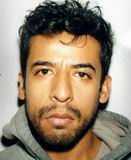
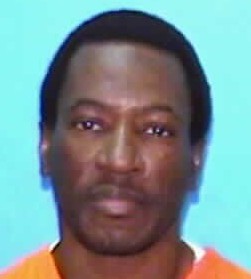
Cesar Armando Librado Legorreta
Serial killer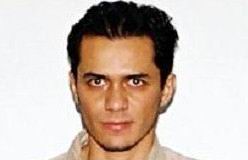 Raul Osiel Marroquin
Serial killer · Mexico · 2005
Raúl Osiel Marroquín Reyes was born around 1981 in Tampico, Tamaulipas. At the…
4 victims
Raul Osiel Marroquin
Serial killer · Mexico · 2005
Raúl Osiel Marroquín Reyes was born around 1981 in Tampico, Tamaulipas. At the…
4 victims
 Jose Luis Calva Zepeda
Serial killer · Mexico · 2004
Jose Luis Calva Zepeda was an aspiring horror writer in Mexico City who was acc…
3 victims
Jose Luis Calva Zepeda
Serial killer · Mexico · 2004
Jose Luis Calva Zepeda was an aspiring horror writer in Mexico City who was acc…
3 victims
 Adolfo de Jesús Constanzo
Serial killer · Mexico · 1986
Adolfo de Jesús Constanzo, nicknamed “The Godfather of Matamoros,” was a serial…
16 victims
Adolfo de Jesús Constanzo
Serial killer · Mexico · 1986
Adolfo de Jesús Constanzo, nicknamed “The Godfather of Matamoros,” was a serial…
16 victims
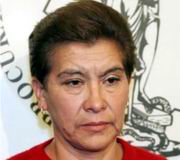 Juana Barraza
Serial killer · Mexico · 2002
Juana Barraza (born 1958) was a Mexican professional wrestler and serial killer…
11 victims
Juana Barraza
Serial killer · Mexico · 2002
Juana Barraza (born 1958) was a Mexican professional wrestler and serial killer…
11 victims
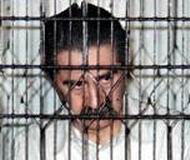 Gabriel Garza Hoth
Serial killer · Mexico · 1991
1991 — Soledad Valdez, Gabriel Arturo Garza Hoth’s first wife, died; doctors be…
3 victims
Gabriel Garza Hoth
Serial killer · Mexico · 1991
1991 — Soledad Valdez, Gabriel Arturo Garza Hoth’s first wife, died; doctors be…
3 victims
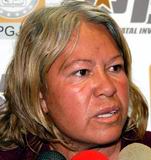 Silvia Meraz
Serial killer · Mexico · 2009
Silvia Meraz Moreno (born 1968) was a Mexican serial killer who was active from…
3 victims
Silvia Meraz
Serial killer · Mexico · 2009
Silvia Meraz Moreno (born 1968) was a Mexican serial killer who was active from…
3 victims
 Michel Bellen
Murderer · Belgium · 1964
Michel Bellen was a serial offender described as a rape-strangler of nurses who…
4 victims
Michel Bellen
Murderer · Belgium · 1964
Michel Bellen was a serial offender described as a rape-strangler of nurses who…
4 victims
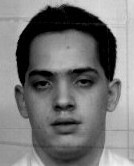 Steven Brian Alvarado
Homicide · 1991
Steven Brian Alvarado was a juvenile aged 17 at the time of the crimes. Alvarad…
2 victims
Steven Brian Alvarado
Homicide · 1991
Steven Brian Alvarado was a juvenile aged 17 at the time of the crimes. Alvarad…
2 victims
 Ann Bilansky
Murderer · USA · 1859
Ann Bilansky was executed by hanging in Minnesota on March 23, 1860 for the ars…
1 victim
Ann Bilansky
Murderer · USA · 1859
Ann Bilansky was executed by hanging in Minnesota on March 23, 1860 for the ars…
1 victim
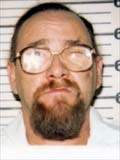 Marion Albert Pruett
Serial killer · USA · 1981
Marion Albert Pruett was born circa 1950 and was executed in Arkansas on April…
5 victims
Marion Albert Pruett
Serial killer · USA · 1981
Marion Albert Pruett was born circa 1950 and was executed in Arkansas on April…
5 victims
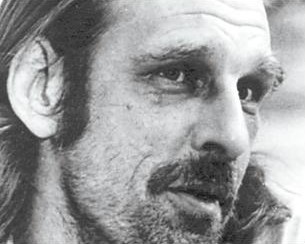 Richard Lee Whitley
Murderer · USA · 1980
July 25, 1980 — Richard Lee Whitley killed Phoebe Parsons, age 63, in her home…
1 victim
Richard Lee Whitley
Murderer · USA · 1980
July 25, 1980 — Richard Lee Whitley killed Phoebe Parsons, age 63, in her home…
1 victim
- Gender
- male
- Country
- Mexico
- Location
- State of Mexico, Mexico
- Date of birth
- June 16, 1982
- Age at first offence
- 29
- Characteristics
- rape, serial rapist, kidnapping, domestic violence, escape, drugs
- Victim profile
- Sireni Dayana Pulido García, 23 / Blanca Elia Quintero Magaña, 28 / Eva Cecilia Perez Vazquez, 16 / Fernanda Navarrete Valladares, 20 / Unknown woman, 20-25 / Patricia Briano Herrera, 35
- Method of murder
- Strangulation with a wrestling hold
- Date(s) of murder
- July 14, 2011 - January 18, 2012
- Years active
- 2011–2012
- Date of arrest
- February 19, 2012
- Status
-
Imprisoned
Sentenced to 240 years in prison on December 12, 2012
Case record: Cesar Armando Librado Legorreta
Background
Cesar Armando Librado Legorreta was a Mexican serial offender who worked as a city bus driver and later was referred to as having used his job to target victims. He was 29 years old at the time of his recapture.
The offence
Legorreta killed six women, and he raped the women he killed. One young woman survived his assault. The prosecution narrative included that Legorreta raped and then killed victims out of fear they would report him, and that only one victim survived “only because the criminal went away thinking she was dead.”
The account also described that Legorreta had committed rape of seven women in the State of Mexico and one case in Mexico City, and that he was charged with eight crimes.
Legorreta strangled his victims using a wrestling hold, according to prosecutors.
Victims and victim details mentioned
- Six women were reported as killed in the central state of Mexico.
- Seven victims were described as killed in the State of Mexico and one in Mexico City.
- A total of eight rapes were mentioned (seven in the State of Mexico and one in Mexico City).
- Delia White: her body was left in Cuautitlan Izcalli following an attack mentioned as “November 26.”
- Fidelia Ayala: her body was found Dec. 25 in Lake Guadalupe.
- A young woman discovered dead on the Mexico-Queretaro highway on December 31 was described as his “sixth victim.”
- Patricia Briano: Legorreta met Patricia Briano on January 18, described as his last victim.
- One young woman survived her encounter with Legorreta.
Investigation
The Federal District Attorney’s Office said that Legorreta acted “very friendly (with his victims) and offered to take them to their destination even if it was outside his route, raping and later killing them on the microbus once he had them alone.”
Legorreta told investigators that his victims were all young women who were sexually assaulted before being killed.
Arrest and escape
Legorreta was arrested on 23 February by police ministerial Attorney General of the State of Mexico (PGJEM). The account also stated that State of Mexico authorities announced detention until 27 February.
Legorreta escaped on the night of Feb. 26-27 before his appearance before the judge in Tlanepantla, Mexico state, who was investigating the murders. He removed his handcuffs and slipped out of the police station office where he was being guarded by three officers.
The account said that only one officer guarding him, Luis Alberto Cañedo Chaparro, was arrested as responsible for the escape, and that the other two officers were fugitives.
After escaping, Legorreta was said to have shed handcuffs and slipped out of the police station where he was in custody of three police officers, and that he committed his crimes while working as a city bus driver.
Injuries during escape
Legorreta received medical attention after his capture. Alfredo Castillo Cervantes, Attorney General of the State of Mexico, said: “health of the alleged femicide is delicate without being life threatening, in his escaped he fell and sustained multi-fractures in his right foot and compound fractures in the vertebrae lumbar.”
The account further stated that he escaped through a window located on the third floor, fell from that height, and dragged his body more than 200 meters to a street where a man gave him assistance and carried him home on the grounds that he had been kidnapped.
The narrative included that certified forensic pathologists, after CT scans, suggested that he required surgical intervention, but there was a risk he could be “paralyzed legs.” The diagnosis was described as almost impossible to reverse.
Recapture
Legorreta was recaptured on March 3 after his escape in late February, “just hours after a previous arrest.”
A separate account said that he was recaptured yesterday relative to March 4, 2012, and described a police operation in which more than 200 police officers participated.
The account described that the recapture was carried out in a residential colony of Malinche, in Magdalena Contreras, DF, during a police operation. The home was owned by a relative of the alleged femicide, and police cornered him in the home.
Legorreta was arrested in an apartment in Mexico City where he took refuge with an aunt and uncle. The account stated that they received him without knowing he fled from justice, and that later he recovered and left the house.
The narrative said the half brother kept him hidden, and that his father took him to his uncles, who were told their son had fallen from a third floor. The account stated that days later they realized the deception and asked him to leave. It also stated that Legorreta remained lying on the floor for three days due to the pain of fractures, complained to his half-brother when they notified their mother of the location of the femicide, and the mother alerted authorities.
Wallace amended the error: Isabel Miranda Wallace said: “I love, how good was the best we could have done for so many women injured and killed. Is the issue of femicide in the State of Mexico and in general in the country? “I think it’s an issue that is pending and to be served,” he said.”
Detention and medical condition after recapture
Legorreta was admitted to the prison of the same judicial district under the terms specified by the medical examiners and immobilized on a stretcher.
The account said that his health conditions were to be reported to prison authorities, who had to take charge of operations required for him, and that Mexico State Attorney was not responsible for his health.
He was sent to prison at Barrientos, with transfer to a hospital for surgery expected. The account also stated that his legal process might be decided by a judge that day regarding “linking process.”
Prosecutorial and legal actions described
The governor of the State of Mexico, Eruviel Villegas Avila, requested life in prison for Cesar Armando Librado Legorreta. A video message attributed to Avila stated: “I hope that local and federal courts will allow us to be the first to punish a criminal with a life sentence in the State of Mexico is the least we can ask for this criminal,”
In the same video message, Avila was quoted as saying: “no impunity and go after the criminals, whoever they are.”
The account said Avila offered families of victims to go with all the force of law and said: “and we’re showing.”
The governor congratulated Attorney General Alfredo Castillo and his staff, saying they enabled them to “relearn the femicide.”
The account also stated that local law reforms recently approved allowed judicial imposition of prison life for the crime of femicide, and that the Attorney General may request judicial imposition of prison life by femicides.
The account said Legorreta was taken to hospital Doctor Nicholas St. John, in Toluca, for medical evaluation to determine if he could be admitted to prison or be available to the judge in the same hospital.
Trials mentioned as pending
The account stated that Legorreta still had trials pending for:
- a homicide in Mexico City, and
- the rape of the young woman who survived.
Sentencing
A Mexican judge sentenced Cesar Armando Librado Legorreta to 240 years in jail for killing six women in the central state of Mexico.
The sentence was described as 40 years for each victim. The Attorney General’s Office official also stated that, in response to a lawsuit filed by victims’ families, Legorreta was fined 254,758 pesos ($20,012) and must pay an additional 567,090 pesos ($44,547) in compensation.
Other details: stated charges, methods, and incident timeline in the account
The account described the following pattern of attacks and dates:
- “In June 2010, committed his first rape. His victim survived the attack.”
- “One year after violating and murdering two women, one in Tlalnepantla and one in Cuauhtemoc.”
- “The November 26, attacks Delia White, whose body is left in Cuautitlan Izcalli.”
- “The body of Fidelia Ayala was found Dec. 25, in Lake Guadalupe.”
- “On December 31, a young woman was discovered 18 dead in Mexico-Queretaro highway: it was his sixth victim.”
- “On January 18, he met Patricia Briano, his last victim.”
- “On February 23, Edomex ministerial agents are stopped.”
- “On February 27, disclosed his capture and escape the same day.”
The account also described the modus operandi:
- Legorreta worked as a driver of a minibus with identification number 066, of Route 2 in the State of Mexico, which covered the course in Golden Valley Metro Chapultepec.
- He selected victims when they came to his unit and addressed them when left alone.
- He used deceit to earn their trust, deflect the path of the minibus, sexually abuse them, and then kill them.
Other people and named officials mentioned
- Alfredo Castillo Cervantes, Attorney General of the State of Mexico.
- Eruviel Villegas Avila, governor of the State of Mexico.
- Isabel Miranda Wallace, described as front-runner to GDF by the National Action Party.
- Luis Alberto Cañedo Chaparro, officer guarding the suspect who was arrested.
- Marco Antonio Hernandez Garcia, “Commander.”
- John Arthur Casas Rodriguez, “The Holiday.”
- Josefina Vazquez Mota, mentioned in connection with Miranda Wallace and a belief that families could resolve problems facing Mexico.
Spotted an error, or have more information about this case?