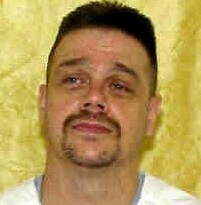
William Sapp
Murderer Clinton Lee Young
Murderer · USA
Clinton Lee Young (born July 19, 1983) was convicted of murdering two men in No…
2001 victims
Clinton Lee Young
Murderer · USA
Clinton Lee Young (born July 19, 1983) was convicted of murdering two men in No…
2001 victims
 Ivan Abner Cantu
Murderer · USA
Name: Ivan Abner Cantu · TDCJ number: 999399 · Date of birth: 06/14/1973 · Age…
2000 victims
Ivan Abner Cantu
Murderer · USA
Name: Ivan Abner Cantu · TDCJ number: 999399 · Date of birth: 06/14/1973 · Age…
2000 victims
 Michael John Yowell
Murderer · USA
Name: Michael John Yowell · TDCJ number: 999334 · Date of birth: 01/25/1970 · P…
1998 victims
Michael John Yowell
Murderer · USA
Name: Michael John Yowell · TDCJ number: 999334 · Date of birth: 01/25/1970 · P…
1998 victims
 Michael Duane Zack
Murderer · USA
Michael Duane Zack was convicted and sentenced to death for the 06/13/96 murder…
1996 victims
Michael Duane Zack
Murderer · USA
Michael Duane Zack was convicted and sentenced to death for the 06/13/96 murder…
1996 victims
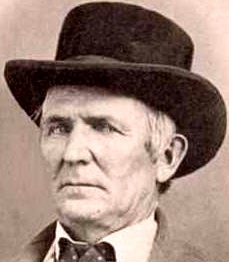 John Doyle Lee
Murderer · USA · 1857
Name: John Doyle Lee Lifespan: September 12, 1812 - March 23, 1877 Legal outcom…
120 victims
John Doyle Lee
Murderer · USA · 1857
Name: John Doyle Lee Lifespan: September 12, 1812 - March 23, 1877 Legal outcom…
120 victims
 Champ Ferguson
Murderer · USA · 1861
Champ Ferguson was born November 29, 1821 in Clinton County, Kentucky, near the…
100 victims
Champ Ferguson
Murderer · USA · 1861
Champ Ferguson was born November 29, 1821 in Clinton County, Kentucky, near the…
100 victims
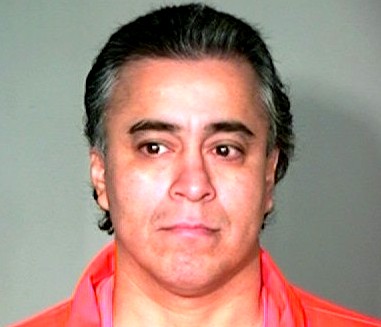 Angel Mayora Medrano
Murderer · USA · 1987
Angel Mayora Medrano was a defendant in a case involving rape. Medrano was at a…
1 victim
Angel Mayora Medrano
Murderer · USA · 1987
Angel Mayora Medrano was a defendant in a case involving rape. Medrano was at a…
1 victim
 Michael Durant
Murderer · Canada · 2003
Michael Durant was found guilty of two counts of first-degree murder in the dea…
2 victims
Michael Durant
Murderer · Canada · 2003
Michael Durant was found guilty of two counts of first-degree murder in the dea…
2 victims
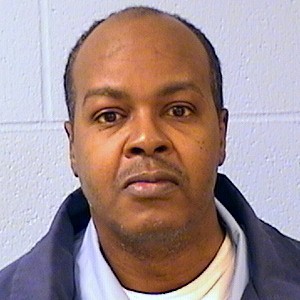 Andre Crawford
Serial killer · USA · 1993
Andre Crawford was convicted of rapes and murders of 11 women committed between…
11 victims
Andre Crawford
Serial killer · USA · 1993
Andre Crawford was convicted of rapes and murders of 11 women committed between…
11 victims
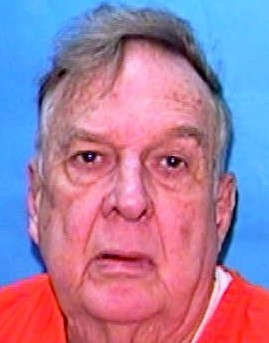 John Bruce Vining
Murderer · USA · 1987
John Bruce Vining John Vining was convicted and sentenced to death for the murd…
1 victim
John Bruce Vining
Murderer · USA · 1987
John Bruce Vining John Vining was convicted and sentenced to death for the murd…
1 victim
 Joseph M. Harris
Spree killer · USA · 1991
Joseph M. Harris committed a series of attacks after he was fired from his Post…
4 victims
Joseph M. Harris
Spree killer · USA · 1991
Joseph M. Harris committed a series of attacks after he was fired from his Post…
4 victims
- Gender
- male
- Country
- USA
- Location
- Clark County, Ohio, USA
- Date of birth
- March 22, 1963
- Characteristics
- serial rapist
- Victim profile
- Martha Leach, 11, and Phree Morrow, 12 / Belinda Anderson, 31
- Method of murder
- B attered in the head with an object picked up at the crime scene
- Date(s) of murder
- 1 992 / 199 3
- Years active
- —
- Date of arrest
- September 1996
- Status
-
Sentenced to death
Sentenced to death on October 21, 1999; Supreme Court of Ohio unanimously affirmed the convictions and death sentence in 2004
Case details
William Sapp was convicted of rape, kidnapping, and aggravated murder with death penalty specifications relating to the August 1992 kidnapping, rape and aggravated murders of 11-year-old Martha Leach and 12-year-old Phree Morrow near downtown Springfield, and the September 1993 assault and murder of 31-year-old Belinda Anderson in Springfield. He was also convicted of the December 1993 kidnapping, rape and attempted murder of Hazel Peterson in Springfield.
The Supreme Court of Ohio affirmed his convictions and death sentence.
Timeline
- August 1992 — Sapp kidnapped, raped, and murdered 11-year-old Martha Leach and 12-year-old Phree Morrow near downtown Springfield.
- 1993 — Sapp assaulted Hazel Pearson in December 1993 and was later convicted for rape and attempted murder in that matter.
- September 1993 — Sapp assaulted and murdered 31-year-old Belinda Anderson in Springfield.
- 1993 — Sapp assaulted and attempted to rape another Springfield woman in 1993 and was serving a prison sentence for that when he was tried in 1997.
- 1995 — Belinda Anderson’s body was discovered; it had been buried inside a neighbor's garage.
- 1996 — The crimes involving Sapp went unsolved until September 1996; in 1996 Sapp was connected through DNA testing.
- September 1996 — During interviews connected to the attempted rape of Una Timmons, local police learned Sapp might have been involved in a homicide in Jacksonville, Florida.
- Sept. 26, 1996 — During his interview with Florida officers after being read his Miranda rights and waiving them in writing, Sapp admitted that he had sexually assaulted and attempted to kill a woman in Springfield several years earlier and gave details matching the unsolved sexual attack and attempted murder of Hazel Pearson in December 1993.
- April 2, 1997 — Sapp agreed to be transported from state prison to the Springfield police department for additional questioning.
- 1997 — Sapp was tried for the rapes and aggravated murders of Martha Leach and Phree Morrow in August 1992, and for the rape and aggravated murder of Belinda Anderson in September 1993, and for the rape and attempted murder of Hazel Pearson in December 1993; the trial court denied pretrial defense motions including motions to sever charges and motions related to suppression and video recordings.
- 1999 — An appeal considered Sapp’s 1999 convictions and death sentences; Sapp was sentenced to death on October 21, 1999.
- 2004 — The Supreme Court of Ohio issued Supreme Court of Ohio opinion 2004-Ohio-7008 and unanimously affirmed the convictions and death sentence.
Background
At the time of Sapp’s trial in 1997, he was serving a prison sentence for assaulting and attempting to rape another Springfield woman in 1993.
After Sapp was convicted and sentenced for assaulting Una Timmons, Sapp agreed to be interviewed by detectives from the Duval County, Florida, Sheriff’s Department.
Sapp was connected to the rapes and murders through DNA testing in 1996.
The offence
Martha Leach and Phree Morrow (August 1992)
Sapp murdered 11-year-old Martha Leach and 12-year-old Phree Morrow near downtown Springfield.
He raped both girls and then beat them to death.
Local detectives later linked a unique “signature” element of the attack on Pearson—“the rapist's careful severing of seam stitches of the victim's jeans with a knife”—with evidence recovered from the unsolved 1992 rape and murder of Martha Leach and Phree Morrow near downtown Springfield.
Sapp confessed to a leading role in the group rape and killing of Leach and Morrow.
Justice Sweeney found similarities among the crimes, stating that each victim had been raped and left nude below the waist, each was battered in the head with an object picked up at the crime scene, and each suffered a fractured skull. Justice Sweeney also described what Sapp had called “signing his name” by removing the pants of the victims by slitting the seams with a knife.
Justice Sweeney wrote that Sapp’s statements to a fellow prisoner that “whenever he got … the taste for blood … he always went out (and) took care of his problems,” indicated that he committed all three attacks for pleasure, “to gratify his recurring ‘taste for blood.' … Under the totality of the circumstances, we find that the evidence in this case was legally sufficient to prove that the murder of Anderson and the attempted murder of Pearson were part of a single ‘course of conduct involving the more than one intentional killing or attempted killing.”
Belinda Anderson (September 1993; body discovered in 1995)
Sapp was convicted for the 1993 attempted murder of Hazel Pearson and was also convicted for the rape and aggravated murder of 31-year-old Belinda Anderson.
He confessed to his 1993 murder of Belinda Anderson. Anderson’s body was not discovered until 1995 because he had buried it inside a neighbor’s garage.
Justice Pfeifer wrote in a separate opinion that “The murder of Anderson occurred over a year after and was not related in any way to the murders of Morrow and Leach,” and that “(i)n this case, as in Scott , ‘there was ample evidence to support [an]other death penalty specification, rendering the course-of-conduct specification unnecessary.'”
Hazel Pearson (December 1993)
Sapp was convicted of the rape and attempted murder of Hazel Pearson in December 1993, and the crimes went unsolved until September 1996.
During interrogation after his September 1996 interview, Sapp provided details matching the unsolved sexual attack and attempted murder of Hazel Pearson in December 1993.
Investigation
The crimes for which Sapp was convicted went unsolved until September 1996.
After the attempted rape of Una Timmons was prosecuted and Sapp agreed to be interviewed by detectives from the Duval County, Florida, Sheriff’s Department, Florida officers interviewed him during which, on Sept. 26, 1996, he admitted sexually assaulting and attempting to kill a woman in Springfield several years earlier.
The Florida officers informed local detectives, who then joined the interrogation.
Sapp provided details that matched the unsolved sexual attack and attempted murder of Hazel Pearson in December 1993.
Local detectives obtained samples of Sapp’s blood, saliva, and hair for DNA testing after linking the unique “signature” element of Pearson’s attack—the careful severing of seam stitches of the victim’s jeans with a knife—with evidence from the unsolved 1992 rape and murder of Leach and Morrow near downtown Springfield.
The DNA testing produced a positive match with semen recovered from the bodies of both girls.
On April 2, 1997, after being Mirandized and signing a written waiver of his rights, Sapp was questioned by Springfield police into the evening and continuing the following morning about the deaths of Martha Leach and Phree Morrow.
After initially denying involvement and then offering different versions of events, Sapp was confronted with the DNA evidence and confessed to a leading role in the group rape and killing of Leach and Morrow and also confessed to his 1993 murder of Belinda Anderson.
Sapp described that Anderson’s body had been buried inside a neighbor’s garage.
Arrest and interrogation
Sapp’s statements were obtained during interrogations with Florida officers and then Springfield police detectives.
On Sept. 26, 1996, during his interview with Florida officers after being read his Miranda rights and waiving them in writing, Sapp admitted that he had sexually assaulted and attempted to kill a woman in Springfield several years earlier.
On April 2, 1997, Sapp agreed to be transported from state prison for additional questioning. After being Mirandized and signing a written waiver of his rights, Sapp was questioned into the evening and continuing the following morning about the deaths of Martha Leach and Phree Morrow.
Trial
Sapp was indicted on multiple counts of rape, kidnapping, and aggravated murder with death penalty specifications.
The trial court denied pretrial defense motions to sever the charges so that Sapp could be tried separately for his crimes against each victim.
After an eight-day hearing, the trial court also denied defense motions to prohibit the prosecution from introducing statements from Sapp’s police interrogations as evidence, and to prevent the prosecutor from showing the jury video recordings of Sapp’s interrogations.
After the state presented its case, including extensive evidence from Sapp’s police interrogations, the defense rested without presenting testimony by Sapp or calling any witnesses.
The jury convicted Sapp on all of the rape counts and all of the aggravated murder charges and death penalty specifications.
The jury also made a finding that the murders were committed during a “course of conduct involving the killings of two or more people.”
During the mitigation phase, the jury heard testimony about Sapp’s childhood abuse by his parents and others and about his treatment and medication for bipolar disorder and depression.
The jury found that the aggravating factors of Sapp’s crimes outweighed mitigating factors and imposed death sentences for each of the three killings.
Sentencing
The jury imposed death sentences for the killings.
Sapp received a death sentence for the aggravated murders of Martha Leach and Phree Morrow and for Belinda Anderson.
Sapp was sentenced to death on October 21, 1999.
Appeals
Second District Court of Appeals (Clark County)
Because the murders took place before 1995, Sapp’s case was reviewed by the 2nd District Court of Appeals.
The 2nd District Court of Appeals unanimously affirmed Sapp’s convictions and death sentence.
Supreme Court of Ohio (2004-Ohio-7008)
Attorneys for Sapp asked the Supreme Court to vacate the trial court judgment and remand the case for a new trial based on 16 allegations of legal and procedural errors.
Among the claims presented by Sapp’s attorneys were:
- The trial court erred in denying Sapp’s motions to suppress his statements under interrogation and the video of his confession because his waivers of the right to legal counsel and the right to remain silent were not “voluntary, knowing and intelligent,” based on questioning over an extended period of hours when police were aware that he suffered from bipolar disorder and was taking strong medication.
- Sapp’s counsel was ineffective because, when the trial court denied Sapp’s motion to suppress, counsel failed to request findings of fact and conclusions of law supporting the decision, damaging Sapp’s ability to later challenge the ruling on appeal.
- The trial court erred by not granting Sapp’s motion to sever the charges so he could be tried separately for each killing and for the attempted murder of Pearson.
- By allowing the prosecution to use evidence from the Leach-Morrow crimes to bolster the Anderson and Pearson case, and vice versa, the trial court allowed “other acts” evidence that prejudiced the jury and would not have been admissible if tried separately.
- Ineffective assistance of counsel occurred when trial lawyers failed to move again to sever charges at the end of the state’s case, waiving the issue for later appeals except under a demanding “plain error” standard.
- The trial court erred in allowing Sapp to be tried and convicted on a capital murder specification that his crimes were part of a “course of conduct” because there were substantial differences in the times, circumstances, weapons, and victims involved in the aggravated murders and attempted murder.
Prosecutors responded that:
- Sapp was clearly advised of Miranda rights before each interrogation session, stated he understood those rights, and signed a written waiver.
- The record showed the trial court gave careful consideration to arguments regarding Sapp’s mental status and medication, conducted an extended hearing, and ruled that Sapp’s waivers were valid and statements admissible.
- The “other acts” evidence would have been admissible in separate trials to show “motive, intent, plan or identity,” establishing Sapp’s motive and intent and identifying him by virtue of a “signature” element.
- The trial court acted within its discretion in trying the crimes in a single trial because the crimes were of the same or similar character and because they were part of a “course of criminal conduct” in which Sapp took female victims to a remote location, raped them, brutally beat them to death, hid the bodies, and disposed of other evidence to cover up the crimes.
Justice Francis E. Sweeney Sr. wrote that the Supreme Court overruled or held as harmless all 16 assignments of trial court error advanced by Sapp as grounds to overturn convictions or modify the death sentence.
In affirming the “course of conduct” death penalty specification, Justice Sweeney rejected Sapp’s argument that the 12 months that elapsed between deaths of Phree and Martha and the killing of Anderson and the different circumstances should have precluded a finding that the crimes were part of the same course of conduct.
Justice Sweeney cited State v. Cummings and Corwin v. State and wrote that the amount of time elapsed between offenses is a relevant factor but does not necessarily determine whether offenses form a course of conduct.
Justice Sweeney described that in State v. Cummings, the jury found that “two murders 26 months apart were part of the same course of conduct, because they had a common modus operandi, ‘similar if not identical motivations,' and the victims were sisters,” and that in Corwin v. State the court held that abduction, rape, and killing or attempting to kill five women “in more or less the same way” could be found to constitute a course of conduct.
Justice Sweeney also addressed Sapp’s “signing his name” by removing the pants by slitting the seams with a knife and noted the similarities including victims raped and left nude below the waist, battered in the head with an object picked up at the crime scene, and each suffered a fractured skull.
Justice Sweeney further addressed the severance issue, quoting State v. Benner (1988) and writing that “if Sapp's motion had been granted … ‘the evidence of all the offenses would have been admissible in each trial' … Because ‘each [murder] or attempted [murder] was relevant to the course-of-conduct specification,' evidence relating to each of the murders and attempted murders would have been admissible at separate trials of the Morrow-Leach murders and the Anderson murder.”
The Supreme Court’s opinion joined by Chief Justice Thomas J. Moyer and Justices Alice Robie Resnick, Evelyn Lundberg Stratton, Maureen O'Connor, and Terrence O'Donnell.
Justice Paul E. Pfeifer concurred in the majority affirmance of Sapp’s convictions and death sentence specifications arising from the murders of Phree Morrow and Martha Leach but disagreed with the majority finding that the killing of Belinda Anderson was part of a single “course of conduct,” as quoted above. Pfeifer also cited his own dissent in State v. Scott.
Outcome
The Supreme Court of Ohio unanimously affirmed Sapp’s convictions and death sentences.
Sapp’s conviction for the December 1993 kidnapping, rape and attempted murder of Hazel Peterson was upheld. The Supreme Court upheld death penalty specifications including a course-of-conduct specification.
Other details
Sapp’s case was styled as State v. Sapp, Case no. 2003-0135.
The appellate history included State v. Sapp, 2004-Ohio-7008; Clark App. No. 99CA84; 2002-Ohio-6863.
Spotted an error, or have more information about this case?