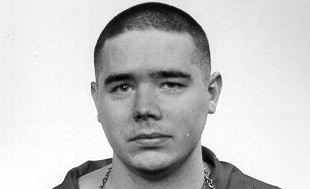
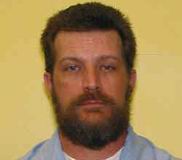
Joseph Corcoran
Mass murderer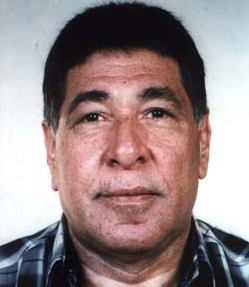 Gameel Al-Batouti
Mass murderer · USA · 1999
Gameel Al-Batouti (also rendered “Gamil ElBatouty” or “El Batouty” in U.S. offi…
216 victims
Gameel Al-Batouti
Mass murderer · USA · 1999
Gameel Al-Batouti (also rendered “Gamil ElBatouty” or “El Batouty” in U.S. offi…
216 victims
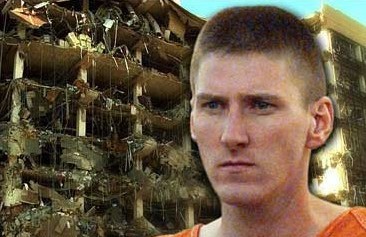 Timothy McVeigh
Mass murderer · USA · 1995
Timothy James McVeigh (April 23, 1968 – June 11, 2001) was a United States Army…
168 victims
Timothy McVeigh
Mass murderer · USA · 1995
Timothy James McVeigh (April 23, 1968 – June 11, 2001) was a United States Army…
168 victims
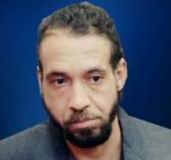 Julio Gonzalez
Mass murderer · USA · 1990
Julio Gonzalez was sentenced to 174 twenty-five-year sentences (a total of 4,35…
87 victims
Julio Gonzalez
Mass murderer · USA · 1990
Julio Gonzalez was sentenced to 174 twenty-five-year sentences (a total of 4,35…
87 victims
 David Burke
Mass murderer · USA · 1987
David Augustus Burke (May 18, 1952–December 7, 1987) was an employee of USAir,…
43 victims
David Burke
Mass murderer · USA · 1987
David Augustus Burke (May 18, 1952–December 7, 1987) was an employee of USAir,…
43 victims
 George Jo Hennard
Mass murderer · USA · 1991
George Jo Hennard carried out a mass killing at a Luby’s Cafeteria in Killeen,…
23 victims
George Jo Hennard
Mass murderer · USA · 1991
George Jo Hennard carried out a mass killing at a Luby’s Cafeteria in Killeen,…
23 victims
 James Franklin Rose
Murderer · USA · 1976
James Franklin Rose was convicted of kidnapping (Count I) and first-degree murd…
1 victim
James Franklin Rose
Murderer · USA · 1976
James Franklin Rose was convicted of kidnapping (Count I) and first-degree murd…
1 victim
 Evan Savoie
Homicide · USA · 2003
Evan Drake Savoie was a 12-year-old boy from Ephrata, Washington. Craig Sorger…
1 victim
Evan Savoie
Homicide · USA · 2003
Evan Drake Savoie was a 12-year-old boy from Ephrata, Washington. Craig Sorger…
1 victim
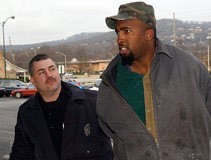 Emanuel Patterson
Mass murderer · USA · 2003
Emanuel Burl Patterson was 23 at the time of the shootings. Police said Patters…
4 victims
Emanuel Patterson
Mass murderer · USA · 2003
Emanuel Burl Patterson was 23 at the time of the shootings. Police said Patters…
4 victims
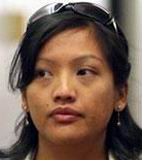 Giselle Esteban
Murderer · USA · 2011
Michelle Hoang Thi Le was a 26-year old nursing student who disappeared on May…
1 victim
Giselle Esteban
Murderer · USA · 2011
Michelle Hoang Thi Le was a 26-year old nursing student who disappeared on May…
1 victim
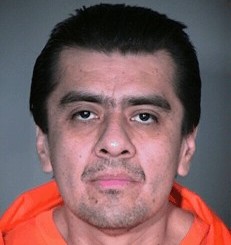 Albert Martinez Carreon
Murderer · USA · 2001
Albert Martinez Carreon was sentenced to death on May 1, 2003 (ADC#045169). Car…
1 victim
Albert Martinez Carreon
Murderer · USA · 2001
Albert Martinez Carreon was sentenced to death on May 1, 2003 (ADC#045169). Car…
1 victim
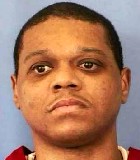 Anthony Doss
Murderer · USA · 1991
Anthony Doss was sentenced to death on March 31, 1993 for his role in the armed…
1 victim
Anthony Doss
Murderer · USA · 1991
Anthony Doss was sentenced to death on March 31, 1993 for his role in the armed…
1 victim
- Gender
- male
- Country
- USA
- Location
- Fort Wayne, Indiana, USA
- Date of birth
- April 18, 1975
- Age at first offence
- 17
- Characteristics
- parricide
- Victim profile
- His parents, Jack and Kathryn Corcoran / H is brother, James Corcoran, 30; Robert Scott Turner, 32; Douglas A. Stillwell, 30; and Timothy G. Bricker, 30
- Method of murder
- Shooting
- Date(s) of murder
- 1992 / 1997
- Years active
- 1992–1997
- Date of arrest
- J uly 26, 1997 (surrenders)
- Status
-
Acquitted / overturned
Sentenced to death on August 26, 1999; acquitted after a five-day trial in 1992
Overview
Joseph Corcoran was convicted of four counts of murder for shooting and killing four people in 1997 in a Fort Wayne home he shared with his brother and sister’s household. He was sentenced to death on August 26, 1999. In 1992, he had been acquitted after a five-day trial in relation to the shotgun slayings of his parents.
Timeline
- April 1992 — Corcoran’s parents, Jack and Kathryn, were shot-gunned to death in their home.
- 1992 — Corcoran was acquitted after a five-day trial.
- July 26, 1997 — Corcoran confronted his brother and others after he heard them talking about him; he placed his 7-year-old niece in an upstairs bedroom, loaded a semi-automatic rifle, and shot and killed his brother, Turner, and Bricker; Stillwell fled but was cornered and shot and killed; Corcoran laid down the rifle, went to a neighbor’s house, and asked them to call the police.
- July 28, 1997 — Fort Wayne resident Joseph Corcoran was charged with four counts of murder.
- May 14, 1999 — Defense lawyer John Nimmo announced that his client was guilty during the lead-up to trial for murdering his brother and three other men.
- May 1999 — A jury convicted Corcoran of four counts of murder and recommended he be put to death.
- August 26, 1999 — Corcoran was sentenced to death.
- Early-morning hours of July 21 — The Indiana Supreme Court ordered that convicted murderer Joseph Corcoran be put to death by lethal injection in the early-morning hours of July 21.
- Oct. 25 — Corcoran was given until Oct. 25 to file his appeal after the execution stay.
- Friday — A federal judge granted a stay of execution for a Fort Wayne man scheduled to be put to death in three weeks.
The offence
On July 26, 1997, Corcoran was upstairs while his brother and Turner sat in the living room with friends Timothy Bricker and Doug Stillwell. Corcoran said he heard them talking about him, so he went downstairs and confronted them.
Corcoran first placed his 7-year-old niece in an upstairs bedroom to protect her from the gunfire. He then loaded his semi-automatic rifle. Before they could move, he shot and killed his brother, Turner, and Bricker. Stillwell fled to the kitchen but was cornered and shot and killed.
After the killings, Corcoran laid down the rifle. He went to a neighbor’s house and asked them to call the police.
Police said Corcoran opened semiautomatic gunfire on the victims as they sat in a living room, eating pizza and watching television. Three were killed on couches in the living room. The fourth was shot in the kitchen as he attempted to escape.
The victims were named as follows:
- James Corcoran, 30 (Corcoran’s brother)
- Robert Scott Turner, 32 (his sister’s fiancé)
- Douglas A. Stillwell, 30
- Timothy G. Bricker, 30
Kelly Nieto was named as Corcoran’s sister. Her 7-year-old daughter was home but was upstairs; police did not believe she saw the shootings. Police carried her out with her eyes covered so she would not see the bodies. Nieto had been at the store at the time of the shootings.
Corcoran also asserted that the killings occurred because he overheard the men talking about him.
Investigation
A search of Corcoran’s room and secure attic, to which only he had access, revealed over 30 firearms, several munitions, explosives, guerilla tactic military issue books, and a copy of The Turner Diaries.
Officers later found 20 to 30 weapons in the upstairs and attic areas of the home. Police were trying to determine if Corcoran owned all of the weapons and if any were illegal.
Arrest and custody
After the shootings, Corcoran asked a neighbor across the street to call the police. When they arrived, Corcoran told them, “You might as well just arrest me.”
Corcoran was jailed on four counts of murder after giving a statement to police admitting a role in the slayings.
Sgt. Nancy Becher said:
“Suffice it to say,” Sgt. Nancy Becher said, “the suspect believed the victims were talking about him and he became angry.”
Trial
1992 trial and acquittal (parents)
Corcoran’s parents, Jack and Kathryn Corcoran, were shot-gunned to death in April 1992 in their home. Corcoran was described by neighbors as a quiet loner with “movie-star looks,” and he did not show much emotion when police pulled him out of class to tell him his parents were dead.
Police said Corcoran killed his parents because they were too strict, then got on a bus and went to school. Prosecutors had neither witnesses to the shootings nor the murder weapon. Their evidence was described as circumstantial.
It was stated that no one heard the family dog, fiercely protective of Kathryn Corcoran, bark to signal an intruder. It was also stated that Corcoran offered several friends a shotgun and money—up to $500 in one case—to kill his parents; the friends thought he was joking.
Jurors ultimately acquitted Corcoran after a five-day trial, stating there was not enough evidence to convict.
1997 trial (four counts of murder)
In May 1999, Corcoran was convicted of four counts of murder. A jury recommended he be put to death.
A jury from Porter County convicted Corcoran in May 1999 of four counts of murder and recommended he be put to death.
During the trial, Corcoran’s attorneys conceded their client’s guilt and tried to spare him from the death penalty by arguing he was mentally ill and couldn’t appreciate the impact of his actions.
On May 14, 1999, defense lawyer John Nimmo announced that his client was guilty. Nimmo said:
“What we’re here for, what it all boils down to, is the sentencing phase,” Nimmo said. “It’s going to be like an Al Pacino movie. I don’t let them convict my client. I’m going to convict my client.”
The record also stated that Corcoran, now 24, was accused of shooting his brother James Corcoran, 30; Robert Scott Turner, 32; Douglas A. Stillwell, 30; and Timothy G. Bricker, 30 because he could not stand to hear them talking about him.
Brother James had been described as one of Joseph Corcoran’s fiercest defenders when Joseph was accused of shooting his parents to death in 1992.
Sentencing
Corcoran was sentenced on August 26, 1999. The sentencing outcome was described as a death sentence.
Aggravating circumstances were listed as “b(8) Multiple Murders.”
Mitigating circumstances were listed as:
- Extreme mental / emotional disturbance
- Capacity to appreciate criminality impaired
- Unable to assist defense because of mental illness
- Fully cooperated with police, admitted guilt
- Good behavior in jail
- Protected 7 year old niece before murders
- No significant prior criminal conduct
- Remorseful, young age (22)
On the day of sentencing in Allen Superior Judge Fran Gull’s courtroom, Corcoran said he wanted to waive all his appeals. His attorney read a statement from Corcoran. The statement said:
“I can sincerely say I’m sorry. Not sorrow for me but sorrow for those who have good reason to hate me, because I am a horrible person, a person who needs to be punished. Though it may not be seen by others, I grieve in my own way. My sorrow remains, and I’m burdened with its shame. My actions were shameful, and they fill even me with contempt.”
Appeals and post-conviction proceedings
The Indiana Supreme Court upheld Corcoran’s sentence on direct appeal and turned down a post-conviction relief appeal because Corcoran did not authorize it by the imposed deadline.
Both the trial court and the state’s highest court found Corcoran competent even though he suffered from paranoid schizophrenia. They stated he wanted to die because he killed four people and deserved to be executed—not because of delusions.
Corcoran also was reported to believe prison guards had tortured him with the use of an ultrasound machine that caused him pain and uncontrollable twitching.
The Indiana Supreme Court ordered that Corcoran be put to death by lethal injection in the early-morning hours of July 21.
A federal judge granted a stay of execution for a Fort Wayne man scheduled to be put to death in three weeks. District Judge Allen Sharp granted a request to block the execution so that a federal court could review decisions made by state courts in the case.
Sharp’s order gave Corcoran until Oct. 25 to file his appeal, and the state attorney general’s office was to have 90 days to respond.
Corcoran’s attorney, Alan Freedman, filed the appeal Monday.
Among the decisions being challenged were rulings that Corcoran was competent to waive further challenges of his sentence even though he had been diagnosed as paranoid schizophrenic.
Outcome
Corcoran was convicted of four counts of murder for the July 26, 1997 killings and was sentenced to death on August 26, 1999.
Corcoran was acquitted after a five-day trial in 1992 in relation to the shotgun slayings of his parents.
Aftermath
Kelly Nieto said:
“I knew right then and there that he killed my parents... Everything's gone. He's ruined my life. I hope he fries... I just think he's sick. I don't know what made him do it... I don't know what it was ... maybe it was the heat.”
Ms. Nieto also said upon hearing of her brother’s death:
“I knew right then and there that he killed my parents. I know he did it,” Ms. Nieto said upon hearing of her brother's death. “I've cried so many tears, I'm dry. Everything's gone. He's ruined my life.”
Neighbors described Corcoran as a quiet loner with “movie-star looks” but no friends. Next-door neighbor Rose Heintzelman said:
“All I ever saw him do was work on cars,” said next-door neighbor Rose Heintzelman. “I never saw him have a friend over, a boy or a girl.”
Heintzelman said Corcoran seemed “paranoid.”
Donna Carr said she saw Corcoran carrying several guns into the house two years ago.
Margaret Anderson said:
“I think that's been on his mind and on his soul the last five years,” said neighbor Margaret Anderson. “And I think it finally caught up with him.”

Spotted an error, or have more information about this case?