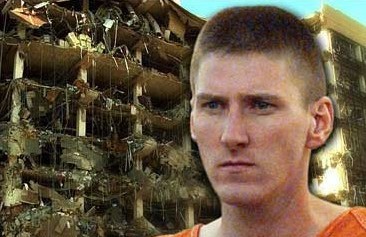
Timothy McVeigh
Mass murderer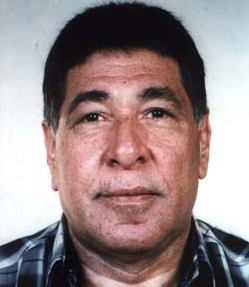 Gameel Al-Batouti
Mass murderer · USA · 1999
Gameel Al-Batouti (also rendered “Gamil ElBatouty” or “El Batouty” in U.S. offi…
216 victims
Gameel Al-Batouti
Mass murderer · USA · 1999
Gameel Al-Batouti (also rendered “Gamil ElBatouty” or “El Batouty” in U.S. offi…
216 victims
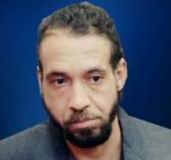 Julio Gonzalez
Mass murderer · USA · 1990
Julio Gonzalez was sentenced to 174 twenty-five-year sentences (a total of 4,35…
87 victims
Julio Gonzalez
Mass murderer · USA · 1990
Julio Gonzalez was sentenced to 174 twenty-five-year sentences (a total of 4,35…
87 victims
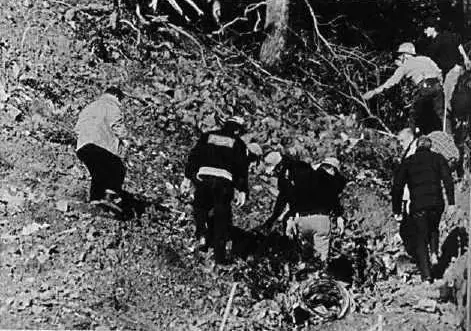 David Burke
Mass murderer · USA · 1987
David Augustus Burke (May 18, 1952–December 7, 1987) was an employee of USAir,…
43 victims
David Burke
Mass murderer · USA · 1987
David Augustus Burke (May 18, 1952–December 7, 1987) was an employee of USAir,…
43 victims
 George Jo Hennard
Mass murderer · USA · 1991
George Jo Hennard carried out a mass killing at a Luby’s Cafeteria in Killeen,…
23 victims
George Jo Hennard
Mass murderer · USA · 1991
George Jo Hennard carried out a mass killing at a Luby’s Cafeteria in Killeen,…
23 victims
 Ronald Gene Simmons
Mass murderer · USA · 1987
Ronald Gene Simmons was a retired United States Air Force sergeant. Over the Ch…
16 victims
Ronald Gene Simmons
Mass murderer · USA · 1987
Ronald Gene Simmons was a retired United States Air Force sergeant. Over the Ch…
16 victims
 Patrick Henry Sherrill
Mass murderer · USA · 1986
Patrick Henry Sherrill Patrick Henry Sherrill committed suicide by shooting him…
14 victims
Patrick Henry Sherrill
Mass murderer · USA · 1986
Patrick Henry Sherrill Patrick Henry Sherrill committed suicide by shooting him…
14 victims
 Chakaya Folborg
Murderer · USA · 2012
Chakaya Brittney Folborg pleaded guilty to the murder of her adopted sister, Ko…
1 victim
Chakaya Folborg
Murderer · USA · 2012
Chakaya Brittney Folborg pleaded guilty to the murder of her adopted sister, Ko…
1 victim
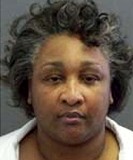 Kimberly McCarthy
Murderer · USA · 1988
Kimberly LaGayle McCarthy was convicted in Dallas, Texas, of capital murder inv…
3 victims
Kimberly McCarthy
Murderer · USA · 1988
Kimberly LaGayle McCarthy was convicted in Dallas, Texas, of capital murder inv…
3 victims
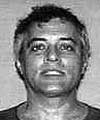 Todd Warzecha
Murderer? · USA · 1972
Todd Warzecha was a prime suspect in two unsolved Mid-Michigan murders. Michiga…
6 victims
Todd Warzecha
Murderer? · USA · 1972
Todd Warzecha was a prime suspect in two unsolved Mid-Michigan murders. Michiga…
6 victims
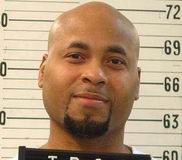 Gregory Robinson
Murderer · USA · 1997
Gregory Robinson was convicted by a Shelby County jury of premeditated first de…
1 victim
Gregory Robinson
Murderer · USA · 1997
Gregory Robinson was convicted by a Shelby County jury of premeditated first de…
1 victim
 Gary Edward Ladbrook
Murderer · New Zealand · 1992
Gary Edward Ladbrook was jailed for life after he raped and suffocated Mrs Sole…
1 victim
Gary Edward Ladbrook
Murderer · New Zealand · 1992
Gary Edward Ladbrook was jailed for life after he raped and suffocated Mrs Sole…
1 victim
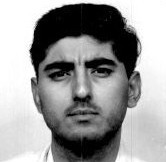 Eliseo Hernandez Moreno
Spree killer · USA · 1983
Eliseo Hernandez Moreno was executed by lethal injection in Texas on March 4, 1…
6 victims
Eliseo Hernandez Moreno
Spree killer · USA · 1983
Eliseo Hernandez Moreno was executed by lethal injection in Texas on March 4, 1…
6 victims
- Gender
- male
- Country
- USA
- Location
- Oklahoma County, Oklahoma, USA
- Date of birth
- April 23, 1968
- Age at first offence
- 27
- Characteristics
- revenge, white supremacist
- Victim profile
- Men, women and children (Alfred P. Murrah Federal Building)
- Method of murder
- Bombing (ammonium nitrate and nitromethane)
- Date(s) of murder
- April 19, 1995
- Years active
- 1995
- Date of arrest
- Same day
- Status
-
Executed
Executed by lethal injection at the Federal Penitentiary in Terre Haute, Indiana, on June 11, 2001
Overview
Timothy James McVeigh (April 23, 1968 – June 11, 2001) was a United States Army veteran and security guard who bombed the Alfred P. Murrah Federal Building in Oklahoma City. He was convicted of 11 United States federal offenses and was sentenced to death and executed for his role in the April 19, 1995 bombing. The bombing killed 168 people.
McVeigh claimed that the bombing was revenge for “what the U.S. government did at Waco and Ruby Ridge.”
Timeline
- April 19, 1995 — A massive explosion tore apart the Alfred P. Murrah Federal Building in Oklahoma City, killing a total of 168 people and injuring hundreds more.
- May 29, 1997 — Closing arguments were made.
- May 30, 1997 — The district court charged the jury.
- June 2, 1997 — A jury returned guilty verdicts on all eleven counts of the indictment.
- June 11, 2001 — McVeigh was executed by lethal injection at 7:14 a.m. at the U.S. Federal Penitentiary in Terre Haute, Indiana.
- June 11, 2001 — The cremated remains were given to his lawyer, who scattered them at an undisclosed location.
- June 10, 2001 — Ave Atque Vale was performed under David Woodard’s baton at St. Margaret Mary Church in Terre Haute at 7:00 p.m.
- March 8, 1999 — One appeal for certiorari was denied by the Supreme Court of the United States.
- April 23, 1968 — Timothy James McVeigh was born.
The offence
On April 19, 1995, McVeigh carried out the bombing of the Alfred P. Prosecutors said he drove a Ryder truck containing an ammonium nitrate-based explosive to the front of the building just as its offices and day care center opened. Prosecutors said he ran away from the truck after he ignited a timed fuse.
The explosion destroyed the north half of the nine-story building. The bombing killed 168 people and injured 450.
Fifteen of the victims were small children in the day care center on the ground floor of the building. Nineteen of the victims were children, including fifteen who were in the America’s Kids Day Care Center.
The explosion killed 163 people in the building and five people outside, according to trial-guilt-phase facts described on appeal. The explosion also killed eight federal law enforcement officials who were the subject of the individual murder counts.
The prosecution described emergency response and rescue efforts following the bombing.
Investigation and arrests
Investigators traced a Vehicle Identification Number (VIN) of a rear axle found in the wreckage to identify a Ryder Rental Junction City agency truck. Workers at the agency assisted an FBI artist in creating a sketch of the renter, who had used the alias “Robert Kling.” The sketch was shown in the area. That day manager Lea McGown of the Dreamland Hotel identified the sketch as Timothy McVeigh.
Shortly after the bombing, McVeigh was stopped by Oklahoma State Trooper Charles J. Hanger. Hanger noticed McVeigh’s yellow 1977 Mercury Marquis had no license plate. During the stop, Hanger discovered a bulge under McVeigh’s jacket and arrested him for carrying a loaded firearm. McVeigh’s concealed weapon permit was not legal in Oklahoma. McVeigh was wearing a T-shirt with a picture of Abraham Lincoln and the motto “Sic semper tyrannis,” along with other text including the Thomas Jefferson quote: “The tree of liberty must be refreshed from time to time with the blood of patriots and tyrants.”
Three days later, while still in jail, McVeigh was identified as the subject of the nationwide manhunt. On April 21, 1995, the federal government filed a complaint against McVeigh for unlawful destruction by explosives.
During the arrest period, Noble County authorities took custody of McVeigh’s clothing and property, including earplugs, and explosives residue was later found including PETN, EGDN, and nitroglycerine.
McVeigh demanded an attorney rather than talk to investigators about the bombing.
Two days after the bombing, Terry Nichols learned that FBI investigators were looking for him and turned himself in. After a nine-hour interrogation, Nichols was formally held in federal custody until his trial for involvement in the bombing.
Trial
Charges and indictment
On August 10, 1995, McVeigh was indicted on 11 federal counts. The indictment included:
- conspiracy to use a weapon of mass destruction,
- use of a weapon of mass destruction,
- destruction by explosives, and
- eight counts of first-degree murder.
Venue, presiding judge, and jury selection
The case was transferred from Oklahoma City to Denver, Colorado, on February 20, 1996, to be presided over by U.S. District Judge Richard Matsch.
Voir dire of prospective jurors began on March 31, 1997. A jury of twelve with six alternates was sworn in on April 24, 1997, and opening statements commenced that same day. The government presented evidence over twenty-three days of testimony at the guilt phase.
Guilt phase verdict
On June 2, 1997, McVeigh was found guilty on all eleven counts.
Penalty phase and death recommendation
On June 13, 1997, the jury recommended that McVeigh receive the death penalty.
The district court sentenced McVeigh to death on all eleven counts on August 14, 1997. McVeigh filed a timely notice of appeal that same day.
Sentencing
McVeigh was sentenced to death and executed for his role in the April 19, 1995 bombing.
During the penalty-phase process, the jury deliberated for two days and returned special findings recommending the death sentence.
Appeals and post-conviction proceedings
McVeigh appealed his conviction and sentence. In the described appeal, he argued issues including:
- pre-trial publicity,
- juror misconduct,
- exclusion of evidence that someone else may have been guilty,
- jury instructions,
- admission of victim impact testimony during the guilt phase,
- limitations on voir dire regarding juror bias as to sentencing,
- exclusion of mitigating evidence,
- exclusion of Waco-related mitigating evidence, and
- that the victim impact testimony produced a sentence based on emotion rather than reason.
The appellate court affirmed.
One of McVeigh’s appeals for certiorari to the Supreme Court of the United States was denied on March 8, 1999. McVeigh also requested a nationally televised execution and that request was denied. An internet company sued for rights to broadcast the execution.
McVeigh dropped his remaining appeals and executed without further delay being pursued by him.
Execution
McVeigh’s death sentence was delayed pending an appeal. His execution by lethal injection took place at 7:14 a.m. on June 11, 2001 at the U.S.
He was 33 years old. He made no final remarks but gave witnesses a handwritten copy of English poet William Ernest Henley’s 1875 poem “Invictus.”
Final statement (poem)
McVeigh gave witnesses a handwritten copy of “Invictus” with the following text: “In the fell clutch of circumstance I have not winced nor cried aloud. Under the bludgeonings of chance my head is bloody, but unbowed...” “I am the master of my fate; I am the captain of my soul.”
Last meal and related events
McVeigh’s last meal consisted of two pints of mint chocolate chip ice cream.
He invited California conductor/composer David Woodard to perform a pre-requiem (a Mass for those who were about to die) on the eve of his execution. Ave Atque Vale was performed under Woodard’s baton by a local brass choir at St. Margaret Mary Church, located near the Terre Haute penitentiary, at 7:00 p.m. on June 10.
He had been given the Catholic sacrament of Viaticum before his execution and requested a Catholic chaplain.
Execution witnesses and demeanor (as described)
McVeigh’s execution was witnessed by survivors and victims’ relatives from the April 19, 1995 bombing of the Murrah Federal Building. McVeigh chose six witnesses; the chosen witnesses included his lawyers Robert Nigh Jr. and Nathan Chambers, Cate McCauley, and Lou Michel. Gore Vidal was not able to attend.
After the drugs entered his veins, he was pronounced dead at 7:14 a.m.
Other people involved
Terry Nichols
Terry Nichols was convicted and sentenced to life in prison without parole in federal court for his role in the crime.
The described narrative indicates that Nichols was convicted separately and that other charges were addressed in a later trial in Oklahoma.
Michael Fortier
Michael Fortier testified against McVeigh and Nichols. Fortier was sentenced on May 27, 1998 to twelve years in prison and fined $200,000 for failing to warn authorities about the attack.
Investigative lead personnel and others named
The FBI led the official investigation known as OKBOMB. Weldon L. Kennedy acted as Special Agent in charge.
Prosecutors were led by Joseph Hartzler.
McVeigh’s defense counsel included Stephen Jones.
Quotes attributed to named individuals
McVeigh stated: “You can’t handle the truth. Because the truth is, I blew up the Murrah Building, and isn’t it kind of scary that one man could wreak this kind of hell?”
McVeigh maintained an attitude including the statement: “168 to 1” and said: “I am sorry these people had to lose their lives. But that's the nature of the beast. It's understood going in what the human toll will be.”
McVeigh stated: “I am sorry these people had to lose their lives.
McVeigh also stated: “If there is a hell, then I'll be in good company with a lot of fighter pilots who also had to bomb innocents to win the war.”
Psychiatrist John Smith concluded that McVeigh was a decent person who allowed rage to build up to the point that he lashed out in one terrible, violent act.
Relative of a victim Jay Sawyer said: “Without saying a word, he got the final word.”
Larry Whicher described McVeigh as having: “A totally expressionless, blank stare. He had a look of defiance, and that if he could, he'd do it all over again.”
Motive and beliefs
McVeigh claimed that his bombing was revenge for “what the U.S. government did at Waco and Ruby Ridge.” He visited Waco during the standoff and spoke to a news reporter about his anger over what was happening there.
McVeigh quoted and alluded to the white supremacist novel The Turner Diaries. The described narrative states that photocopies of pages sixty-one and sixty-two of The Turner Diaries were found in an envelope inside McVeigh’s car.
Aftermath
The bombing led to widespread rescue efforts and worldwide donations, according to the narrative described.
In response to the bombing, the United States government enacted legislation including the Antiterrorism and Effective Death Penalty Act of 1996.
The Victim Allocution Clarification Act of 1997 was signed on March 20, 1997.
The described narrative also includes that the federal government ordered barriers around federal buildings and that new federal buildings were required to be constructed with truck-resistant barriers and deep setbacks from surrounding streets.
An Oklahoma City memorial was dedicated on April 19, 2000, five years after the bombing.
From April 17 to April 24, 2005, the Oklahoma City National Memorial held a week-long series of events called the “National Week of Hope,” including a service at 09:02 CST with traditional 168 seconds of silence.
Citations and procedural record references included in the case material
The case material included references to multiple U.S. v. McVeigh decisions (e.g., media request to unseal documents, change of venue, discovery, suppression motions, severance motions, and stay of execution) and multiple appellate decisions culminating in affirmation of the conviction and sentence.
Spotted an error, or have more information about this case?