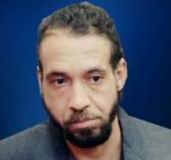
Julio Gonzalez
Mass murderer Gameel Al-Batouti
Mass murderer · USA · 1999
Gameel Al-Batouti (also rendered “Gamil ElBatouty” or “El Batouty” in U.S. offi…
216 victims
Gameel Al-Batouti
Mass murderer · USA · 1999
Gameel Al-Batouti (also rendered “Gamil ElBatouty” or “El Batouty” in U.S. offi…
216 victims
 Timothy McVeigh
Mass murderer · USA · 1995
Timothy James McVeigh (April 23, 1968 – June 11, 2001) was a United States Army…
168 victims
Timothy McVeigh
Mass murderer · USA · 1995
Timothy James McVeigh (April 23, 1968 – June 11, 2001) was a United States Army…
168 victims
 David Burke
Mass murderer · USA · 1987
David Augustus Burke (May 18, 1952–December 7, 1987) was an employee of USAir,…
43 victims
David Burke
Mass murderer · USA · 1987
David Augustus Burke (May 18, 1952–December 7, 1987) was an employee of USAir,…
43 victims
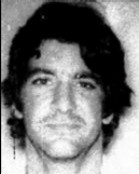 George Jo Hennard
Mass murderer · USA · 1991
George Jo Hennard carried out a mass killing at a Luby’s Cafeteria in Killeen,…
23 victims
George Jo Hennard
Mass murderer · USA · 1991
George Jo Hennard carried out a mass killing at a Luby’s Cafeteria in Killeen,…
23 victims
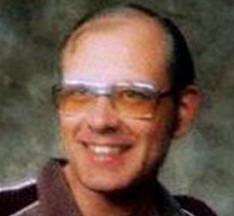 James Huberty
Mass murderer · USA · 1984
James Oliver Huberty was a 41-year-old unemployed security guard. He was born i…
21 victims
James Huberty
Mass murderer · USA · 1984
James Oliver Huberty was a 41-year-old unemployed security guard. He was born i…
21 victims
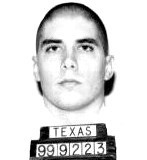 Daniel Reneau
Murderer · USA · 1996
Daniel Earl Reneau was convicted of capital murder in connection with a robbery…
1 victim
Daniel Reneau
Murderer · USA · 1996
Daniel Earl Reneau was convicted of capital murder in connection with a robbery…
1 victim
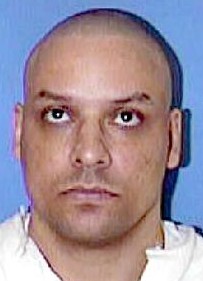 James Lee Clark
Murderer · USA · 1993
James Lee Clark (also referred to as James Lee Clark Jr.) was convicted in Dent…
2 victims
James Lee Clark
Murderer · USA · 1993
James Lee Clark (also referred to as James Lee Clark Jr.) was convicted in Dent…
2 victims
- Gender
- male
- Country
- USA
- Location
- New York City, New York, USA
- Date of birth
- October 10, 1954
- Age at first offence
- 36
- Characteristics
- arson
- Victim profile
- Men and women (most of the victims were ethnic Hondurans celebrating Carnival)
- Method of murder
- Spreading gasoline on the only staircase into the club
- Date(s) of murder
- March 25, 1990
- Years active
- 1990
- Date of arrest
- Next day
- Status
-
Imprisoned
Sentenced to 174 twenty-five-year sentences (a total of 4,350 years) on September 19, 1991
Case record: Julio Gonzalez (Happy Land Fire)
STATUS
Julio Gonzalez was sentenced to 174 twenty-five-year sentences (a total of 4,350 years) on September 19, 1991.
Background
Julio Gonzalez was born October 10, 1954 and was a Cuban refugee. He entered the U.S. from Cuba in the 1980 Mariel boatlift, where he had been imprisoned for military desertion. Ten years later, he lost his job packing boxes at a Queens lamp factory. His girlfriend of seven years, Lydia Feliciano, broke up with him. He met Lydia Feliciano in 1984; she worked in a social club named Happy Land in the East Tremont section of the Bronx. He later moved into her apartment and lived in anonymity for a number of years.
The offence
The Happy Land Fire involved an arson at an unlicensed social club called “Happy Land” in New York City. On March 25, 1990, the blaze killed 87 people trapped in the club. Most of the victims were ethnic Hondurans celebrating Carnival.
Before the fire, Happy Land was ordered closed for building code violations in November 1988. The violations included no fire exits, alarms, or sprinkler system. No follow-up by the fire department was documented in the material.
On the night of the fire, González argued with his former girlfriend Lydia Feliciano, a coat check girl at the club. Gonzalez was ejected by a bouncer. He was heard to scream drunken threats. He returned to the establishment with a plastic container of gasoline which he spread on the only staircase into the club. The fire exits had been blocked to prevent people from entering without paying the cover charge.
In the panic that followed, a few people escaped by breaking a metal gate over one door. Gonzalez then returned home, took off his gasoline-soaked clothes, and fell asleep. He was arrested a few hours later.
A medical examination found him to be sane.
Investigation
After the blaze, Gonzalez stood in front of the club and watched it burn. He then walked across the street and waited while fire apparatus arrived and firefighters began to work. EMS arrived soon after, parking the ambulance near where Gonzalez stood. He sipped his beer as the first body was carried out the front door of Happy Land. Gonzalez then boarded the #40 bus westbound to his home.
At an apartment at 31 Buchanan Place, Yvonne Torres later told police she saw him arrive at about 4:15 AM. Gonzalez knocked on a neighbor’s door, Pedro Rivera. Carmen Melendez, Rivera’s girlfriend, opened the door. Gonzalez told Carmen that he had trouble at Happy Land and started crying. He said that he killed Lydia and that he burned the club down. Carmen did not believe him, and because Gonzalez had been drinking, she told him to go home and go to sleep. He went to his apartment, removed his gasoline soaked clothes, and fell asleep.
A separate investigator, Det. Kevin Moroney, was told about the fire at a nearby social club. Moroney described being told that “80 people were killed in a fire” and his initial reaction. The material included the following verbatim quote from Moroney:
"I was doing a turnaround that night," he recently said, waiting for his next on-duty tour to begin. "One of the other detectives came running into my office and yelled that 80 people were killed in a fire. My first reaction was what the hell is he talking about? I never heard of such a thing, I didn't believe it at first," he said.
Moroney and his partner, Det. Andy Lugo, pieced together events. The material included another verbatim quote from Moroney:
"I never made it to the street. Witnesses had to be interviewed, statements had to be taken. We did not know what happened, all we knew was that lots of people were dead," the detective recalled.
Moroney said he spoke to Lydia Feliciano later that day and that she left the scene and never told anyone where she was.
"We finally spoke to Lydia Feliciano later that day. She left the scene and never told anyone where she was. In fact, at the time, no one even knew that she was vital to the case. As soon as she said that she had a fight with her ex-boyfriend and that he left the club angry just before the fire, we had strong suspicions" Det. Moroney said.
At about 4 PM that same day, Detectives Maroney and Lugo went to 31 Buchanan Place and knocked on the door of Gonzalez’ third floor apartment. The material included verbatim dialogue between detectives and an unidentified voice:
"Quien es?" a voice behind the door asked.
"Policia! Deceamos hablar contigo," replied Det. Lugo.
"Si," the voice replied.
When Gonzalez opened the door, detectives were overwhelmed by the odor of gasoline. They asked Gonzalez to come to the police station. Gonzalez agreed to talk about the fire. The material stated he was read Miranda Warnings in Spanish.
The material reported that Gonzalez confessed immediately. The material included a verbatim quote attributed to Gonzalez regarding his confession:
"I don't know, it looks like something bad got into me, it looks like the devil got into me!"
The material stated Gonzalez told police he set the fire for revenge against Lydia Feliciano because he was angry she broke up with him and would not take him back.
Arrest
Gonzalez was arrested a few hours after the fire.
The material described that he put on his gasoline soaked shoes and went with the detectives to the 4-eight precinct where he was read Miranda Warnings in Spanish and agreed to talk about the incident.
Trial
The trial of Julio Gonzalez was held in the Bronx in the summer of 1991. It involved evidence described in the material as including gasoline-soaked clothes, admissions to friends on the night of the event, a recovered container, witness statements, and a detailed confession to Moroney and Lugo. Testimony as to Gonzalez’ sanity was allowed; that avenue was rejected by the court.
On August 19, 1991, Gonzalez was found guilty. The material states he was found guilty of multiple counts including arson charges and murder counts for each of the 87 victims. The verdict was announced after four days of jury deliberations. The material provided a specific verbatim detail about the announcement:
The verdict, which took over 5 minutes to read, was announced at 1 PM when the jury foreman, Luis Rodriguez repeated the word "guilty" an unprecedented 174 times.
The material stated Gonzalez refused to make any statement in his own defense.
Sentencing
On September 19, 1991, Gonzalez was sentenced to 25 years to life on each of the 174 counts of murder. The material described that sentences would run concurrently by law.
The material provided the status of the sentence:
- 174 twenty-five-year sentences (a total of 4,350 years)
- Eligibility for parole in March 2015
- Parole eligibility also described as after 25 years in one passage
Outcome
Gonzalez was convicted of 87 counts of arson and 87 counts of murder, and he received 174 twenty-five-year sentences, served concurrently.
In addition to Gonzalez’ conviction, the material stated that the building’s owner, Alex DiLorenzo 3d, and leaseholders Jay Weiss and Morris Jaffe were found not criminally responsible. It stated they had tried to close the club and evict the tenant.
Other details
Setting and club details
The club “Happy Land” was located at the northwest corner of Southern Boulevard and East Tremont Avenue in the Bronx. Another location detail included the address “1959 Southern Boulevard.”
The street outside the former Happy Land social club was renamed “The Plaza of the Eighty-Seven” as a means of memorializing the victims.
People and roles mentioned
- Lydia Feliciano: described as Gonzalez’ former girlfriend and a coat check girl at Happy Land; she was one of only six survivors of the fire according to one passage.
- Jay Weiss: described as husband of actress Kathleen Turner and part of the building’s management.
- Kathleen Turner: quoted in connection with the fire.
- Alex DiLorenzo 3d: described as the building’s owner.
- Morris Jaffe: described as a leaseholder.
- Bouncer: described as escorting Gonzalez out of Happy Land.
- Ruben Valladarez: described as the D.J. who saw what was happening.
- Roberto Argueta: described as a person at Happy Land since midnight who was preparing to leave with Orbin Nunez Galea.
- Orbin Nunez Galea: mentioned in connection with Roberto Argueta preparing to leave.
- Dr. Yurta of the Medical Examiner’s Office: quoted about death mechanisms in the fire smoke.
- Mayor David Dinkins: arrived quickly and surveyed the scene in one passage.
- First Deputy Mayor Norman Siegel: quoted on bodies without signs of burns.
- Police Commissioner Lee Brown, Fire Commissioner Carlos Rivera, 1st Deputy Commissioner Ray Kelly, Chief of Detective Joseph Borelli: arrived at East Tremont and Southern Boulevard.
- Judge Burton B. Roberts: presided over sentencing; it also states he presided over a civil trial.
- Judge Alexander Hunter: handled Gonzalez’ arraignment appearance in front of him.
- Bronx District Attorney Robert Johnson: handled the court appearance himself in front of Judge Alexander Hunter.
- Jury foreman: Luis Rodriguez.
Quotes included verbatim
The material included a quote attributed to Kathleen Turner:
"the fire was unfortunate but could have happened at a McDonald's."
The material included a quote attributed to The New Yorker (through the Turner quote context) as above.
A firefighter quote from the material attributed to a firefighter later:
"There were no screams. There was no sound at all," a firefighter later told the N.Y. Post (Koleniak, p. 2) NY Post 3.26).
A quote attributed to Firefighter Craig Buccieri:
"What we saw was not unlike the after battle scene of any war movie. Only this was real," said Firefighter Craig Buccieri, Ladder Co. 33, assigned to relief duty at the club (W.N.Y.F, p. 4).
A quote attributed to Deputy Chief Kenneth Cerreta:
"As the smoke lifted, the magnitude of the tragedy was uncovered, so enormous, it was hard to fathom," reported Deputy Chief Kenneth Cerreta, Division 7 to the W.N.Y.F. (p. 2).
A quote attributed to Assistant Chief Frank Nastro:
"The scene was paralyzing. We stood there numbed. No one spoke. There were 69 bodies spread about this 24x50 foot area. They all could have been sleeping" (W.N.Y.F., p. 2).
A quote attributed to Lt. Richard J. Bittles:
"In their eyes was the hollow and distant look of men who could not believe what had occurred" (W.N.Y.F., p. 3).
A quote attributed to First Deputy Mayor Norman Siegel:
"It was shocking. None of the bodies I saw showed signs of burns" (Blumenthal, p. B4).
A quote attributed to Judge Roberts’ courtroom commentary as paraphrased in the material, attributed to him:
"There are many to be blamed," The Associated Press reported that Judge Roberts said, "not just Julio Gonzalez."
A quote attributed to one fireman:
"The worst! The worst!"
A quote attributed to Assistant Chief Frank Nastro is already included above; additional quotes included in the material also include the confession quote already included above.
A quote attributed to Dr. Yurta:
"If you consider together carbon monoxide poisoning, oxygen deprivation and the effects of toxic substances in the smoke, death could in some cases be almost immediate, within a matter of seconds" (Angier, p. 1).
A quote from Rev. Henry Mills:
"We pray this evening that the Lord may strengthen our understanding. We hope the Lord eternal will lead them to his home!" he said (Scwwartzman, p.2).
Verbatim Spanish phrases and related dialogue:
- Gonzalez’ threat: "Regresare, ha cerrar esto!" (I will be back! I'll shut this place down!) Julio screamed as he walked off into the night.
- A threat quote included as “I will be back! I'll shut this place down!”
- Coat check area shout: Feliciano began to scream "Fuego!"
- Outside dialogue during police arrival: "Quien es?", "Policia! Deceamos hablar contigo", "Si"
- Rivera-area funeral quote: "Por que? Por que?" and "Llevame contis!" appear as verbatim lines within the funeral procession description.
Victim and community impact
The material stated:
- 87 people died in the blaze.
- More than 60 of the people who died were of Honduran descent.
- More than 90 children became orphans.
- More than 40 parents lost their children, with some losing more than one.
- Seventeen players on the county league’s soccer teams were killed.
- Five students at Theodore Roosevelt High School died in the smoke and flames.
- It described that in Honduras the towns and villages of those who were killed were plunged into mourning.
It also stated a memorial service at Theodore Roosevelt High School was held in April 1990.
Memorial and media references
The material stated the event was the subject of the Duran Duran song “Sin of the City” and a Joe Jackson song, Happyland. It also stated it was mentioned in the Jay-Z song “You, Me, Him, and Her”. A fictionalized version of the case, where it was described as an arson for fire insurance scam, was featured on Law & Order.
Civil outcome
The material stated that in 1995, a civil suit was settled for $15 million. It stated that Burton Roberts presided over the civil trial as well, and that the funds were to be distributed to each of the victim’s families.

Spotted an error, or have more information about this case?